No region generates more confident opinion per unit of actual knowledge than the Middle East. The headlines arrive pre-narrated, every source has a flag, and the history that would make sense of it all is scattered across a century of scholarship. That is exactly why order matters here: start with the post-Ottoman settlement and everything after acquires a plot; start with a current conflict and you inherit someone's framing before you have the tools to notice it.
One honest note: this is contested history. On Israel and Palestine especially, serious scholars disagree not just on interpretation but on emphasis and evidence. This path deliberately includes clashing perspectives — reading them against each other is the method, not a flaw.
Stage 1: the map is a decision someone made
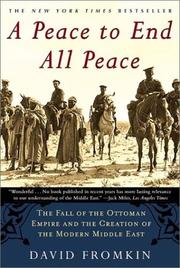
Begin with A Peace to End All Peace by David Fromkin, the classic account of how Britain and France carved the modern Middle East out of the collapsing Ottoman Empire between 1914 and 1922. Most of today's borders, and many of today's grievances, date from this decade. Then The Arabs by Eugene L. Rogan widens the lens: five centuries of Arab history told from Arab sources, the indispensable inside-out counterweight to great-power narratives.
Stage 2: faith and revolution
No god but God by Reza Aslan is a lucid history of Islam that doubles as an argument about its ongoing internal reformation — read it for the vocabulary of the region's religious politics. Follow with The Shia Revival by Vali Nasr on the Sunni-Shia divide as a geopolitical fault line, and All the Shah's Men by Stephen Kinzer on the 1953 CIA coup in Iran, the compact case study in how one covert intervention echoes for seventy years.
Stage 3: Israel and Palestine, in stereo
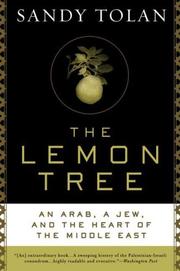
Read three books that disagree. The Lemon Tree by Sandy Tolan humanizes both peoples through one house in Ramla shared across generations. Israel by Martin Gilbert gives the sympathetic mainstream Zionist historiography of the state's founding and wars. The Ethnic Cleansing of Palestine by Ilan Pappé argues the revisionist case that 1948's displacement was deliberate policy — a thesis other historians dispute sharply. Holding Gilbert and Pappé in mind at once is uncomfortable, and that discomfort is the education.
Stage 4: the recent past
The Looming Tower by Lawrence Wright remains the definitive narrative of al-Qaeda's road to 9/11. Then The New Middle East by Paul Danahar carries the story through the Arab Spring and its aftermath, and The Arab Cold War by Malcolm H. Kerr — a short classic — explains the inter-Arab rivalries that still structure regional politics.
How to actually study this
Keep a timeline and a map open as you read; the region's history is geography plus chronology. For every major claim, note which author asserts it and who would dispute it — a habit this subject rewards more than any other. And resist the urge to pick a team by stage 3; the goal is a working model, not a jersey.
The staged plan with study notes is the full reading path. Adjacent routes — geopolitics, world religions — live on the subject hub.
Ready to learn something deeply?
Build a reading path — free