Most of us know one religion from the inside — or from having left it — and the rest from news coverage and secondhand summaries. That produces a strange confidence: people hold firm opinions about traditions they could not describe for two minutes. Religious literacy is genuinely hard to acquire, because every tradition is vast, internally diverse, and best understood through both its texts and its lived practice. The way in is a deliberate reading order: a sympathetic map, then a sharp counterargument, then the primary sources themselves.
World Religions Books: A Curious Reader's Path Through Faith
July 11, 2026 · 3 min read
Why order matters here
Surveys without primary texts leave you with a tourist's knowledge; primary texts without a map leave you lost in unfamiliar assumptions. And reading only one framing — whether "all religions point to one truth" or "religions are rivals making incompatible claims" — quietly settles a live scholarly debate before you have seen the evidence. This path is built to give you both framings early and let the primary texts adjudicate.
The path, stage by stage
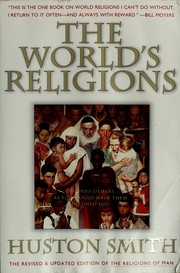
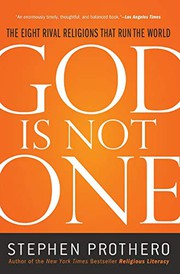
Start with the classic map. The World's Religions by Huston Smith is the beloved survey — Hinduism, Buddhism, Confucianism, Taoism, Islam, Judaism, Christianity, and more — written from deep sympathy, presenting each tradition at its best. Then immediately read its counterargument: God Is Not One by Stephen Prothero, which contends that the great religions ask fundamentally different questions and that pretending they agree flattens them. Holding these two books in tension is the single most educational move on this path — treat "do religions converge?" as an open question, not a settled one.
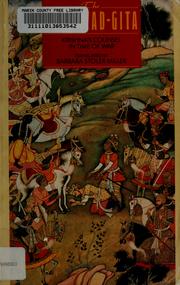
Then go to the sources. The Bhagavad-Gita in Barbara Stoler Miller's translation is the essential Hindu text — duty, action, and devotion in seven hundred verses. The Dhammapada in Eknath Easwaran's edition distills the Buddha's teaching into aphorisms you can actually carry. The Essential Rumi opens Sufism, Islam's mystical tradition, through poetry that has outsold most poets in English. Reading even these three changes you from someone who has read about traditions to someone who has read them.
Now add depth and history. A History of God by Karen Armstrong traces how Jews, Christians, and Muslims have reimagined God across four millennia — a masterclass in how doctrines evolve. Her Buddha is a graceful short biography that situates the man in his world. The Hindus by Wendy Doniger is an alternative history of Hinduism's astonishing diversity; be aware it has been genuinely controversial, especially in India, which itself teaches you something about who gets to narrate a tradition.
Finish with the scholars' questions. The Varieties of Religious Experience by William James takes religious experience seriously as data — still the great psychological study a century on. The Meaning and End of Religion by Wilfred Cantwell Smith questions whether "religions" as bounded things exist at all, and Patterns in Comparative Religion by Mircea Eliade hunts the recurring symbols beneath traditions. These reframe everything you read before them.
The staged sequence with study plans is at the full reading path.
How to actually study this
Keep a comparison journal with the same questions per tradition: What is the human problem? What is the solution? What does practice actually look like on an ordinary Tuesday? Note where Smith and Prothero would disagree about your answers. If you can, pair the reading with observation — most traditions welcome respectful visitors, and one service or ceremony teaches what chapters cannot.
Start at the world religions hub, or browse related paths on Buddhism and philosophy to follow whichever thread pulls you.
FAQ
- What is the best single book on world religions?
- The World's Religions by Huston Smith remains the classic survey — sympathetic and readable. Pair it with Stephen Prothero's counterpoint so you get both sides of the "do religions agree?" debate.
- Should I read religious primary texts or books about religion?
- Both, in that order of dependence: a survey first for context, then primary texts like the Bhagavad-Gita and Dhammapada. The texts are where secondhand knowledge becomes real.
- Can I study religions respectfully as a non-believer?
- Yes — religious studies is built on exactly that. Sympathetic attention without belief is a skill, and this path is designed to train it.
Get the books
- 1The World's ReligionsAmazon ↗Huston Smith
- 2God Is Not OneAmazon ↗Stephen Prothero
- 3The Bhagavad-gitaAmazon ↗Barbara Stoler Miller
- 4The DhammapadaAmazon ↗Eknath Easwaran
- 5The essential RumiAmazon ↗Rumi (Jalāl ad-Dīn Muḥammad Balkhī)
- 6A history of GodAmazon ↗Karen Armstrong
As an Amazon Associate we earn from qualifying purchases. Some book links are affiliate links; you pay the same price and we may earn a small commission.
Follow the full reading path
World religions: a curious reader's tour
Beginner11books107 hrs5 stages
Ready to learn something deeply?
Build a reading path — free