Best Books on Tibetan Buddhism, in Reading Order
Tibetan Buddhism reaches most Western readers through a small number of popular books and a persistent romantic image of Tibet, so this path deliberately puts the scholarship and the primary texts alongside the bestsellers. You start with an academic orientation and an account of how the Western picture was built, then read the two books that shaped the tradition's Western reception, then the classical Tibetan works themselves, then the social and political history, and finally the specialist ground of Dzogchen and the death literature.
Orientation, and the Tibet in your head
BeginnerLearn the basic architecture — the four main lineages, tantra and the tulku system, monastic and yogic paths — and become aware of how much of the popular Western image of Tibet is a construction.
▸ Study plan for this stage
Pace: Four weeks. Kapstein's Very Short Introduction is 130 pages and should be read in two or three sittings for the shape of the thing. Powers's Concise Introduction is 160 pages and is a reference rather than a narrative — read it once through in a week, then keep it beside you for the rest of the path
- The four principal lineages — Nyingma, Kagyu, Sakya and Geluk — plus Bön, and the fact that what separates them is mainly transmission lineage and institutional history rather than doctrine
- The two diffusions: the imperial-period translations, the collapse, and the later diffusion from the eleventh century that produced the schools you will read about
- Sutra and tantra as a graded scheme rather than as alternatives, which is the framework every later book on this path assumes without restating
- The tulku system — recognised reincarnate teachers — as a Tibetan institutional invention for transmitting authority and property across generations, and therefore as much an economic device as a doctrinal one
- The clerical and yogic strands as two respectable careers within one religion, which becomes the organising idea of Samuel's book in the fourth stage
- Lopez's central case: that a Western Tibet of pure spirituality was assembled out of Theosophy, mistranslation and Cold War politics, and that it now constrains what Tibetans are allowed to say to be heard
- Lopez's chapter on the mantra om mani padme hum as the model case — a phrase whose Western career is a two-hundred-year chain of confident mistranslation
- Why Lopez belongs before the popular books rather than after: read afterwards he is a correction, read first he is an inoculation
- Name the four lineages and say what actually distinguishes them. Is the difference doctrinal, institutional, or a matter of practice transmission?
- What is a tulku, and what institutional problem was the system invented to solve? What problems did it create?
- How does the tradition itself describe the relationship between sutra and tantra? Give Powers's account rather than the popular one
- What are Lopez's strongest and weakest examples of Western invention? Name one of each and say why the weak one is weak
- What, in Lopez's argument, does the Shangri-La image cost actual Tibetans politically? Is he claiming sympathy is harmful, or something narrower?
- Build a lineage chart: the four schools plus Bön, each with founding figure, period, defining text or practice, and principal monasteries. Keep it open for the remaining four stages
- Make a working glossary of thirty terms from Powers that later books will assume — bardo, ngöndro, terma, tertön, yidam, mahamudra, dzogchen, geshe, lama, and the rest. Add to it as you go rather than looking terms up twice
- Take Lopez's treatment of om mani padme hum and write out the mistranslation history as a dated timeline of who said what
- Before opening the next stage, write down in 300 words what you currently believe Tibetan Buddhism is, and date it. You will be asked to return to this page at the end of the path
- Find one claim in Kapstein and the corresponding treatment in Powers, and note where a specialist writing short differs from a textbook writing systematically
Next up: You now have the tradition's architecture and a working scepticism about how it reached the West — which is exactly the equipment needed to read the two books that did most of the reaching.
A short scholarly introduction by one of the leading Tibetologists, covering doctrine, institutions and history without either apologetics or debunking. The fastest way to get the vocabulary you will need for everything else.

The standard university survey, going systematically through Indian background, the schools, tantra and the major practice systems. Use it as the reference you return to when a later book assumes a term you do not have.
Lopez traces how Western readers invented a Tibet of pure spirituality — through Theosophy, mistranslated texts and Cold War politics — and what that fantasy costs actual Tibetans. Reading it third inoculates you against most of what follows in the popular literature.
The books that carried the tradition west
BeginnerRead the two hugely influential presentations of Tibetan Buddhism written for Western audiences, and see how they translate a monastic tradition into a lay one.
▸ Study plan for this stage
Pace: Three weeks. The Tibetan Book of Living and Dying is 425 pages written to be read devotionally and slowly; two weeks is right, and it is worth reading with Powers open for the technical terms. Cutting Through Spiritual Materialism is 250 pages of transcribed lectures and reads fast, but its argument
- The bardo scheme as Sogyal presents it for a lay Western audience: the intervals of this life, of dying, of reality, and of becoming, taught as a framework for living rather than only for dying
- The specific translation move the book makes — Dzogchen material fused with the vocabulary of the modern hospice and death-awareness movement — which is why it reached readers no Tibetan text had reached
- That this is a devotional presentation and not a scholarly one, so its historical claims should be checked against Kapstein and Van Schaik rather than accepted
- The facts about the author, which belong in an honest reading: substantiated allegations of abuse, a letter from senior students in 2017, and his resignation from the organisation he founded
- Trungpa's core idea: ego does not oppose spiritual practice, it absorbs it, and every attainment can be converted into a possession
- The three lords of materialism — form, speech and mind — as a diagnostic that applies as sharply to reading books about Buddhism as to anything else
- Trungpa's insistence that disappointment is the good news, because it is the only thing ego cannot recruit
- The uncomfortable fact that the man who wrote the sharpest available critique of spiritual authority exercised it in ways that remain contested, and that the book's own argument gives you the tools to think about that
- Define spiritual materialism in Trungpa's terms, then produce an example from your own study or practice — including, if it applies, from this reading path
- Reconstruct Trungpa's argument that disappointment is good news. What is it disappointing, and why does that matter?
- Sogyal fuses Dzogchen instruction with Western hospice language. What is gained by the translation and what is lost or distorted?
- Which specific claims in The Tibetan Book of Living and Dying would Lopez identify as shaped by Western expectation rather than by Tibetan tradition?
- Both authors' conduct sits badly with their teaching. What is the reader's obligation — to separate text from author, to discount the text, or to read the gap as evidence about something?
- Go through Sogyal and list every instruction that is an actual practice instruction rather than a description of one. Then mark which of them the tradition itself considers to require transmission from a teacher
- Apply Trungpa's three lords of materialism to contemporary secular mindfulness — a page each. The exercise works because he was writing before that industry existed
- Take one topic covered by both Sogyal and Kapstein and read the two accounts side by side, noting exactly where the devotional and the scholarly registers part company
- Write 400 words setting out what you think an honest reader's position on these two books should be, and keep it. Revisit it after the classical texts in the next stage
- Find the passage in Trungpa on the guru relationship and write a paragraph on how it reads given what is now known about his own students' experience
Next up: You have now read the tradition as it was packaged for you — the next stage reads it in its own voice, at its own length, on its own assumptions.
The single most widely read book on Tibetan Buddhism in English, presenting the Dzogchen teachings on dying and the bardo for a general audience. Two things should be said plainly: the book is a devotional presentation rather than a scholarly one, and its author was the subject of substantiated abuse allegations and resigned from his organisation in 2017 — facts worth knowing whatever value you find in the text.
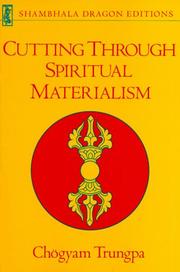
Trungpa's lectures on the ways ego colonises spiritual practice remain the sharpest thing written on the subject in English, and they shaped how a whole generation of Western students understood the path. His own conduct as a teacher was and remains controversial, which the book's argument makes an unusually pointed irony.
The classical Tibetan texts
IntermediateRead the tradition in its own voice — a yogi's life story, a stages-of-the-path manual, and the standard preliminary-practice commentary — rather than only in Western summaries of it.
▸ Study plan for this stage
Pace: Eight weeks, and this is the stage that separates people who have read about Tibetan Buddhism from people who have read it. The Life of Milarepa is 262 pages and reads like a novel; two weeks. The Jewel Ornament of Liberation is 520 pages of systematic treatise and needs three, taken chapter by chap
- Namthar as a genre: a 'liberation story' told to be useful rather than to be accurate, so the miracles are structural rather than incidental and should not be argued about as biography
- Milarepa's arc — sorcery and mass murder, then Marpa's brutal apprenticeship, then years of solitary retreat — and the fact that the tradition's most beloved figure begins as a killer
- That the text is a late compilation by Tsangnyön Heruka, the 'madman of Tsang', in the fifteenth century, so it is a shaped literary work and not a contemporary record
- The songs, which are the point: Milarepa teaches in spontaneous verse, and the doctrinal content is delivered inside a poetic form
- Gampopa's synthesis — the Kadam stages-of-the-path structure joined to Kagyu Mahamudra — which is what happened to Milarepa's yogic transmission once it was institutionalised, and Gampopa was his student
- The lamrim architecture: buddha-nature as the cause, human birth as the basis, the spiritual friend as the condition, and the graded path that follows from it
- Patrul's ngöndro structure — the four thoughts that turn the mind, then refuge, bodhicitta, Vajrasattva, mandala offering and guru yoga — which is the actual curriculum a Tibetan practitioner starts with
- Patrul's temperature: extended contemplation of impermanence and the hell realms, delivered in an oral, earthy, anecdote-heavy register that no Western presentation reproduces
- What is a namthar for, and how should a reader handle its miracles without either literalism or condescension?
- Marpa's treatment of Milarepa would be described as abuse in any other frame. How does the tradition read it — and what do you make of that reading after the previous stage?
- State Gampopa's framework in its own terms and say what work each of its elements does. Where does the Mahamudra material actually enter?
- Name the four thoughts that turn the mind and explain why the tradition puts them before anything else
- Patrul devotes many pages to the hell realms. What is that material for, and does it do anything a modern reader can honestly use?
- Reconstruct Milarepa's life as a timeline in four phases, marking every point at which the miraculous enters and what it is doing there
- Diagram Gampopa's whole framework on a single page. If it does not fit on one page you have not understood the structure
- Do one of the four thoughts exactly as Patrul instructs — one session, following the text literally rather than adapting it — and write down what actually happened
- Take one of Milarepa's songs, write out its argument in flat prose, and then write a paragraph on what the verse was doing that the prose cannot
- Set Gampopa's treatment of the six perfections beside Trungpa's treatment of any one of them, and note what a systematic treatise does that a lecture cannot, and vice versa
Next up: You have read the tradition from inside its own literature — the next stage puts that literature back into the monasteries, economies and politics that produced it.
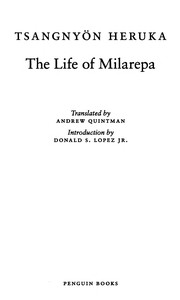
Tibet's most beloved biography, the story of a murderer who becomes the archetypal yogi, in a modern translation with a scholarly introduction. It gives you the narrative and imaginative world the doctrinal texts operate inside.

The twelfth-century stages-of-the-path treatise that organised Kagyu teaching and remains a core curriculum text. Read it after Milarepa, because Gampopa was Milarepa's student and this is what the lineage looked like once it was systematised.

The classic Nyingma commentary on the preliminary practices, and probably the most-used practice manual in the tradition. It is demanding and full of vivid contemplations of impermanence and hell realms, which is precisely why it conveys the tradition's actual temperature.
History and society
IntermediateSituate the religion in a real place — monastic economies, sectarian politics, the relationship between shamanic and clerical strands, and the twentieth-century catastrophe.
▸ Study plan for this stage
Pace: Seven weeks. Tibet: A History is 324 pages and is the more urgent of the two; three weeks, and read the modern chapters carefully because they are where the contested ground is. Civilized Shamans is 725 pages of anthropological theory and takes four; it is legitimate to read Samuel's opening theoret
- The Tibetan empire of the seventh to ninth centuries as a genuine military power, and the imperial sponsorship that brought Buddhism in from the top down
- The collapse of the empire and the later diffusion, which is when the schools you have been reading about actually formed
- The priest–patron relationship as the recurring Tibetan solution to the problem of religious authority and secular power — first with the Mongols and the Sakya, later with the Qing
- The Fifth Dalai Lama and the establishment of the Ganden Phodrang: the point at which one lineage acquired the government
- The monastic economy — estates, tenants, a very large share of the male population in robes — which is the material base the doctrinal literature never discusses
- The twentieth century: the 1913 declaration, the ambiguity of Tibet's international status, 1950–51, 1959, the Cultural Revolution and the exile institutions, handled by Van Schaik without either nationalist framing
- Samuel's clerical–shamanic axis: monastic scholastic Buddhism at one pole, the wandering yogic practitioner at the other, with the whole institutional history readable as a negotiation between them
- Samuel's structural claim that Tibet's weak central state left room for the shamanic strand to survive, and the standard objection that the dichotomy is an imposed analytical category
- Explain the priest–patron relationship. Is it a religious concept, a political one, or a device for not having to choose?
- On Van Schaik's evidence, what can be said about Tibet's status before 1950 — and what does each side's claim require that the evidence does not supply?
- State Samuel's clerical–shamanic distinction, then name a Tibetan institution or figure that sits awkwardly on the axis and say what the awkwardness shows
- How did the great monasteries actually support themselves, and what does that imply about the relationship between the religion and the peasantry?
- After Van Schaik, which parts of Lopez's Shangri-La critique look strongest, and is there any part of it that the political history undercuts?
- Build a twenty-five-entry timeline of Tibetan political history from Songtsen Gampo to 1959, and mark on it when each of the four schools rose to prominence
- Map the four lineages onto their political patrons across time. The correlation is the argument the doctrinal books never make
- Place five figures or institutions on Samuel's clerical–shamanic axis and justify each placement in two sentences. Milarepa and a Geluk monastic college are the easy ones; find three that are not
- Write 500 words on the priest–patron relationship as an answer to the question 'was Tibet part of China', showing where the question's categories fail rather than answering it directly
- Return to your lineage chart from the first stage and add a column for political patron and one for the region each school dominated
Next up: With the institutions and the politics in place you can read the most rarefied material on the path — the Great Perfection and the death literature — as things produced by particular people in particular monasteries rather than as timeless wisdom.

The best single-volume political and cultural history of Tibet from the empire to the present, written by a Tibetologist and even-handed on the modern Chinese period. Religion becomes much more legible once you can see the states and institutions it was embedded in.
An anthropologist's argument that Tibetan religion runs on a tension between clerical monastic Buddhism and shamanic yogic practice, and that the tension explains much of its institutional history. Long and theoretical, and the most illuminating single framework in the literature.
Specialist ground: Dzogchen and the bardo
IntermediateApproach the Great Perfection teachings and the death literature with enough historical and doctrinal context to read them as the tradition does rather than as exotica.
▸ Study plan for this stage
Pace: Six weeks. Approaching the Great Perfection is 417 pages of manuscript-based scholarship and takes three to four weeks; it is the hardest book on the path and assumes everything in the previous four stages. Thurman's translation of the Bardo Thodol is shorter and can be read in two weeks, but read i
- Dzogchen's distinctive claim about the relationship between path and result, and why a tradition that says the result is already present sits awkwardly inside an institution built on graded training
- Jigme Lingpa and the Longchen Nyingtik as the specific case Van Schaik works on, and the finding that Jigme Lingpa harmonised Dzogchen with tantric and monastic practice rather than setting it against them
- Terma and tertön — revealed treasure and its revealer — as a mechanism that lets a tradition innovate while claiming continuity, and one of the more remarkable devices in the history of religions
- The Dzogchen technical vocabulary you will meet everywhere once you have it: the three series, and the distinction between trekchö and tögal
- Van Schaik's method: arguing from Tibetan manuscript sources about what an author actually wrote, which is the scholarly counterpart to the devotional Dzogchen presented in the second stage
- What the Bardo Thodol actually is — a portion of a larger terma cycle attributed to Padmasambhava and revealed by Karma Lingpa, functioning as a funerary text read aloud beside a body
- Its Western reception as the model case of everything Lopez warned about: the 1927 Evans-Wentz edition and its Theosophical framing, the psychological reading, and the psychedelic reading, each of which found what it brought
- Thurman's translation choices — including rendering bardo as 'between' — as one defensible reading among several, and the general point that a translation is an argument
- What does Dzogchen claim about path and result, and why does that claim create an institutional problem for a monastic tradition?
- What is a terma, and what does the mechanism allow a tradition to do that open innovation would not?
- What is Van Schaik's evidence that Jigme Lingpa was harmonising rather than opposing? What would evidence to the contrary have looked like?
- The Bardo Thodol is a manual read aloud to the dead. How does knowing its liturgical function change what you make of its contents?
- Compare Thurman's rendering with the bardo material as Sogyal presented it in the second stage. Which is closer to the text, and on what basis can you tell?
- Map the Bardo Thodol's own scheme of the intervals, then set it beside Sogyal's presentation section by section and mark every addition, omission and softening
- Using Lopez, write the reception history of this text as a dated timeline — Evans-Wentz, the psychological readings, the psychedelic readings, the modern scholarly translations — and note what each generation needed it to say
- Trace one Dzogchen technical term through all four stages: Kapstein's gloss, Sogyal's, Patrul's usage, and Van Schaik's manuscript account. The drift is the lesson
- Retrieve the dated 300 words you wrote at the end of the first stage and write a reply to it. Be specific about which sentences you would now cut
- Write 800 words on whether a Western reader without a teacher can read these texts responsibly, arguing it with reference to at least one book from every stage of this path
Next up: This closes the path; the natural continuations are Longchenpa in translation, the rimé movement of nineteenth-century Kham, contemporary Tibetan Studies scholarship, and — if the interest is practical rather than academic — a qualified teacher, which no book on this list is a substitute for.

A study of how Dzogchen was reconciled with tantric and monastic practice in the writings of Jigme Lingpa, based on Tibetan manuscript sources. It is the scholarly counterpart to the Dzogchen material presented devotionally earlier in the path.

The Bardo Thodol itself, in one of the standard modern translations. Save it for last, because its Western reception is precisely the case study in projection that the first stage warned you about, and reading it with that awareness is a different experience from reading it cold.
Discussion
Keep reading
Paths that share books, cover the same subject, or open a related topic.