Physics is the purest case for reading in order that exists. Every idea stands on the one before it: you cannot meaningfully read about quantum mechanics without the mathematics of waves, or field theory without quantum mechanics. The good news is that the staircase is well-mapped — generations of physicists climbed the same books.
From Feynman to quantum field theory: teaching yourself physics
July 6, 2026 · 1 min read
Wonder first — it's fuel, not fluff
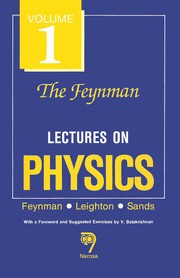
Our physics path opens with The Feynman Lectures on Physics, Vol. 1, Six Easy Pieces, and Hawking's A Brief History of Time. This stage isn't decoration. The math stages ahead are genuinely hard, and what carries people through them is a vivid sense of what the machinery is for. Nobody supplies that like Feynman.
The path, stage by stage
The mathematical language. Thompson's century-old Calculus Made Easy remains the friendliest calculus book ever written ("what one fool can do, another can"), and University Physics pairs the math with problems — because physics is learned through the end-of-chapter problems, not the prose.
Classical physics, properly. Griffiths' Introduction to Electrodynamics (widely considered the best-written physics textbook, period), Schroeder's Thermal Physics, and Goldstein's Classical Mechanics — where you meet the Lagrangian formulation that quietly runs all of modern physics.
The modern revolution. Griffiths again for Quantum Mechanics, and Carroll's Spacetime and Geometry for general relativity.
The summit. Weinberg's The Quantum Theory of Fields — a genuine frontier text. And the path ends with "Surely You're Joking, Mr. Feynman!", which is exactly right: after the climb, the reminder that physics is also joy.
The honest timeline
This is the longest path on ReadingSherpa — around 150 hours of reading, and several times that in problem-solving, spread over two or three years. That's not a bug. It's a physics education for the price of a dozen books, and every stage delivers its own payoff along the way.
Follow the path, browse the physics hub, and when Goldstein fights back, our guide to reading hard books applies almost verbatim.
FAQ
- Do I have to do the problems?
- For the textbook stages, yes — physics understanding is built in the problems, not the reading. A chapter without problems is a documentary, not a lesson.
- How much math do I need before starting?
- None beyond algebra. Stage 1 needs no math at all, and stage 2 exists precisely to build the calculus you’ll use from stage 3 on.
Get the books
- 1The Feynman Lectures on Physics Vol 1Amazon ↗Richard Phillips Feynman
- 2Six Easy PiecesAmazon ↗Richard Phillips Feynman
- 3A Brief History of TimeAmazon ↗Stephen Hawking
- 4Calculus Made EasyAmazon ↗Silvanus Phillips Thompson
- 5University physicsAmazon ↗Francis Weston Sears
- 6Introduction to electrodynamicsAmazon ↗David Jeffrey Griffiths
As an Amazon Associate we earn from qualifying purchases. Some book links are affiliate links; you pay the same price and we may earn a small commission.
Follow the full reading path


How to learn Physics
Beginner12books151 hrs5 stages
Ready to learn something deeply?
Build a reading path — free