Cosmology is what happens when you point physics at everything at once. It's one of the most awe-inducing subjects there is and one of the easiest to bounce off, because the popular books gesture at ideas the textbooks spend years deriving. Read in the right order, though, the gap closes: wonder pulls you in, physics gives the ideas teeth, and the math — if you want it — makes them real.
Learn cosmology from books: how to read your way to the Big Bang
July 6, 2026 · 1 min read
The path, stage by stage
Our cosmology path climbs from awe to equations.
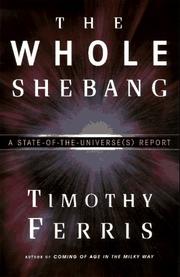
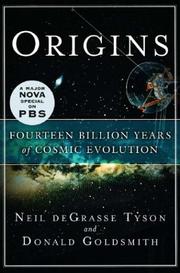
First light — wonder and orientation. Hawking's A Brief History of Time, Ferris's The Whole Shebang, and Tyson's Origins. The map of the whole story, told to be enjoyed.
Foundations — physics you must know. Feynman's Six Easy Pieces and Greene's The Elegant Universe. Cosmology is built on relativity and quantum theory; this stage gives you both in words.
Going deeper — the standard model of cosmology. Greene's The Fabric of the Cosmos, Guth's The Inflationary Universe (from the man who proposed inflation), and Dark Matter and the Dinosaurs.
Quantitative cosmology. Ryden's Introduction to Cosmology and Weinberg's Cosmology — the equations behind the pictures, for readers ready to compute.
The frontier. Penrose's The Road to Reality and Tegmark's Our Mathematical Universe — the open questions and the wildest current ideas.
The habit: keep a scale ladder
The hardest thing in cosmology is scale. Keep a running ladder of sizes and times — from the Planck length to the observable universe, from the first microsecond to the heat death — and place each concept on it as you read. It's the difference between reciting "13.8 billion years" and feeling it.
Around 135 hours. Follow the path or browse the cosmology hub. For the mathematical spine underneath it, see teaching yourself physics.
FAQ
- Cosmology or astronomy — what’s the difference?
- Astronomy studies objects (stars, galaxies, planets); cosmology studies the universe as a whole — its origin, structure, and fate. They overlap, and the paths share several books.
- Can I do cosmology without the math?
- The first three stages, absolutely — they’re conceptual. The quantitative stage needs calculus and physics, but it’s optional; plenty of readers stop at the conceptual frontier.
Get the books
- 1A Brief History of TimeAmazon ↗Stephen Hawking
- 2The Whole ShebangAmazon ↗Timothy Ferris
- 3OriginsAmazon ↗Neil deGrasse Tyson
- 4Six Easy PiecesAmazon ↗Richard Phillips Feynman
- 5The Elegant UniverseAmazon ↗Brian Greene
- 6The Fabric of the CosmosAmazon ↗Brian Greene
As an Amazon Associate we earn from qualifying purchases. Some book links are affiliate links; you pay the same price and we may earn a small commission.
Follow the full reading path

How to learn Cosmology
Beginner12books134 hrs5 stages
Ready to learn something deeply?
Build a reading path — free