Bayesian statistics has a reputation for being hard, but the difficulty is usually one of order rather than content. Start with a measure-theoretic textbook and you will drown; start with the intuition of updating beliefs with evidence and it feels almost obvious. The other trap is the reverse: staying at the intuitive level and never learning the computation that makes Bayesian methods usable on real problems. You need both, in sequence.
The path moves from gentle intuition, to hands-on computation in code, to serious modeling, and finally to the rigorous theory for those who want the foundations. Each stage earns the next.
Build the intuition
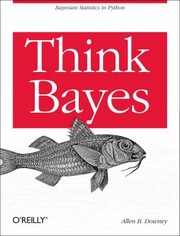
Start with Bayesian Statistics the Fun Way, which teaches the core idea, updating probabilities as evidence arrives, using playful, concrete examples and almost no heavy math. It makes the Bayesian worldview click. Then Think Bayes keeps things intuitive but adds code, letting you compute posterior distributions in Python so the ideas become tangible and executable.
Learn to model in practice
With the intuition solid, move to real modeling. Doing Bayesian Data Analysis by John Kruschke is famously approachable, walking through Bayesian analysis step by step with worked examples and code, and it is many people's bridge from concept to practice. Statistical Rethinking by Richard McElreath is the standout of the field: it rebuilds statistical thinking from Bayesian foundations with unusual clarity and a strong emphasis on scientific reasoning. If you read one book on this list slowly, make it this one.
To ground the modeling in modern tools, Bayesian Modeling and Computation in Python covers the probabilistic-programming workflow end to end, from model building to diagnostics.
Reach the rigorous core
For those who want the deep foundations, the path turns theoretical. Bayesian data analysis by Gelman and colleagues is the definitive graduate reference, comprehensive and demanding, and worth returning to as your skills grow. Probability Theory by E. T. Jaynes makes the philosophical case for Bayesian reasoning as an extension of logic, a bracing and influential read. Pattern Recognition and Machine Learning connects Bayesian methods to machine learning, and Monte Carlo Statistical Methods covers the sampling algorithms that make modern Bayesian computation possible.
Follow the full path and Bayesian statistics stops feeling like a barrier and becomes a natural way to reason under uncertainty. You end able to build, fit, and check real models, with as much theoretical depth as you care to pursue. Note that these books teach method and reasoning, not a substitute for domain expertise in the problems you apply them to.
Follow the full reading path →
Ready to learn something deeply?
Build a reading path — free