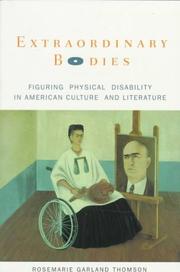
Extraordinary bodies
Rosemarie Garland Thomson · 1997 · 224 pages
As an Amazon Associate we earn from qualifying purchases. Some book links are affiliate links; you pay the same price and we may earn a small commission.
About this book
As the first major critical study to examine literary and cultural representations of physical disability, Extraordinary Bodies situates disability as a social construction, shifting it from a property of bodies to a product of cultural rules about what bodies should be or do. Rosemarie Garland Thomson examines disabled figures in sentimental novels such as Harriet Beecher Stowe's Uncle Tom's Cabin and Rebecca Harding Davis's Life in the Iron Mills, African-American novels by Toni Morrison and Audre Lorde, and the popular cultural ritual of the freak show. Extraordinary Bodies inaugurates a new field of disability studies in the humanities by framing disability as a minority discourse, rather than a medical one, ultimately revising oppressive narratives of disability and revealing liberatory ones.
Appears in these reading paths


Best Books on Disability Rights and Living with Disability, in Reading Order
Related reading guides
Reader reviews
Ratings and notes from readers — tagged with how deep into the subject they were.
Loading reviews…