Most people who think they dislike poetry actually dislike how it was taught: as a locked box with one correct interpretation, and you fail if you can't find it. That approach kills the thing that makes poetry work — pleasure, sound, the jolt of a line that says what you couldn't. A good reading path undoes the schooling in the right order: delight first, then craft, then the difficult masters who are now within reach.
Order matters here more than in almost any other subject, because difficulty in poetry is not mainly a vocabulary problem. It is a trust problem. A reader who has been rewarded a hundred times will sit patiently with a hard poem; a reader who has only ever been graded will close the book.
Pleasure before analysis
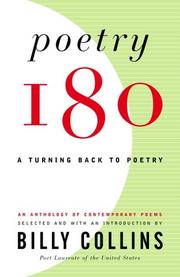
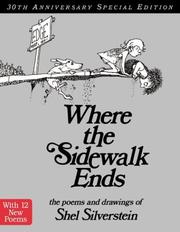
Our poetry path refuses to start with the hard stuff. Billy Collins's Poetry 180 was built for exactly this — a poem a day, chosen to be enjoyed rather than decoded, with no study apparatus attached. Shel Silverstein's Where the Sidewalk Ends earns its place for the same reason: it reminds you that poems are allowed to be funny, and that you already liked some of them once.
Rupi Kaur's the sun and her flowers is the most divisive book on this path, and it is here on purpose. Critics find it thin; several million readers found their way in through it. If it works for you, use it and move on; if it does not, you have learned something real about your own ear. Either outcome is useful this early, and neither is a verdict on you.
Learning the craft vocabulary
Now, gently, the tools. Richard Hugo's The Triggering Town is the best book anyone has written about how poems actually get made — in particular the difference between the subject that starts a poem and the subject it turns out to be about. Kim Addonizio and Dorianne Laux's The Poet's Companion is the working handbook beside it, with exercises if you want them. You read differently once you know what a poet is choosing.
Reading the masters
With pleasure and vocabulary in place, the greats open up. Selected poems and letters of Emily Dickinson sets the poems next to the correspondence, which is the fastest way to stop hearing her as a recluse and start hearing her as an experimentalist working in private. The Collected Poems of Langston Hughes is an American century in one volume — blues, jazz, protest, and a plainness that is far harder to write than it looks. Then Sylvia Plath's Ariel, which would have been a wall in week one and is a reward now. Read it in the order it is printed, and read it slowly; it is short and it is not gentle.
Form, tradition, and the reference shelf
The making of a poem, Mark Strand and Eavan Boland's anthology, is a guided tour of the forms — each one introduced, then demonstrated by poems that use it well. It is the natural bridge to T. S. Eliot's The waste land, the modernist Everest, approachable at last because you have spent a year building the base camp.
Two older works close the path rather than open it. Aristotle's Poetics is where Western thinking about how a made thing works begins, and it lands far better after the poems than before them. The Princeton encyclopedia of poetry and poetics is a doorstop to consult, not to read through — look up a term in the week you first meet it and it will stick.
Read it aloud, always
The single habit that unlocks poetry: read every poem out loud, at least once. Poetry is a sound art that happens to be written down, and the meaning often lives in the rhythm your silent eye skips. A poem that seemed opaque on the page frequently cracks open the moment you hear it in your own voice.
About 95 hours across a year of savoring — this is a path to read slowly on purpose. Follow the path or browse the poetry hub. Poetry and prose are siblings; it pairs beautifully with learning to write well.