Sicilian cooking is Italian, but only just — it is really its own Mediterranean cuisine, shaped by Greek, Arab, Norman, and Spanish rule. That is why you find couscous, saffron, pine nuts, raisins, and sardines mingling in ways the mainland never sees. Knowing that history makes the flavor combinations click instead of puzzle.
The path begins with the scholarly food history, moves into authentic island recipes, then broadens to the pasta traditions and wider Mediterranean table that frame it.
Learn the layered history
Start with Mary Taylor Simeti, the essential English-language voice on Sicilian food. Sicilian Food and Pomp and Sustenance: Twenty-Five Centuries of Sicilian Food weave together history and recipes, explaining how each conquering culture left something on the plate. This context is the foundation everything else builds on.
Cook authentic Sicilian dishes
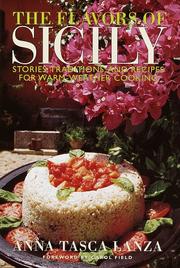
Now to the recipes. Sicily : The Cookbook, Melissa Muller's comprehensive modern collection, and The flavors of Sicily, Anna Tasca Lanza's book rooted in a real Sicilian estate, give you the caponata, pasta alla Norma, arancini, and cannoli that define the island. These are your working cookbooks.
Master pasta and everyday cooking
Sicilian home cooking lives on pasta. Pasta Grannies, Vicky Bennison's collection of Italian grandmothers' recipes, and The Complete Italian Cookbook teach the hand techniques and everyday dishes that make the cuisine feel lived-in rather than restaurant-bound.
Place it in the Mediterranean
Finally, widen out. Sicily by Andrew Edwards gives cultural and travel context, while Clifford A. Wright's scholarly works Cucina paradiso and A Mediterranean feast trace Sicilian food across the whole sea, connecting it to North Africa, Spain, and the Levant. They close the path by showing Sicily as a Mediterranean crossroads.
Follow the full path for the stage-by-stage reading plan.
Follow the full reading path →
Ready to learn something deeply?
Build a reading path — free