Zadie Smith Reading Order: Where to Start
This curriculum moves through Zadie Smith's work chronologically and by form, starting with her most accessible and celebrated novel, then deepening into her full fiction output, and finally engaging with her essay collections where her critical intelligence and personal voice are most directly on display. Each stage builds familiarity with her recurring themes — race, identity, class, London, and the novel as a form — so that later, more demanding works feel earned and richly contextualized.
First Encounter: The Novel That Started It All
BeginnerGet a feel for Zadie Smith's voice, her multiracial London canvas, her humor, and her sprawling, Dickensian approach to the novel.
▸ Study plan for this stage
Pace: 5–6 weeks, ~25–30 pages/day — White Teeth is 448 pages and rewards a relaxed, exploratory pace; aim to finish each of the novel's four named sections (Archie 1974/1945, Samad 1984/1857, Irie 1990/1907, Magid/Millat/Marcus 1992–1999) within roughly one week each, with a final week for re-reading high
- Polyphonic, Dickensian storytelling: Smith juggles a large ensemble cast across multiple decades and continents, using omniscient narration, free indirect discourse, and comic set-pieces in the tradition of 19th-century social novels.
- Multiracial London as setting and subject: Willesden, North London becomes a microcosm of postcolonial Britain, where Bangladeshi, Jamaican, and white English histories collide and coexist in everyday life.
- The long shadow of history and 'rootedness': The novel argues that the past — colonialism, war, migration — is never finished; characters are haunted by ancestors and events they did not personally experience (e.g., Archie's coin toss, Samad's obsession with Mangal Pande).
- Identity, hybridity, and the second generation: Irie, Millat, and Magid each represent a different response to growing up between cultures — assimilation, radicalization, and detachment — dramatizing the instability of fixed identity.
- Zadie Smith's comic voice and satirical register: Smith uses irony, farce, and sharp social observation to skewer multiculturalism as political policy, religious fundamentalism, genetic determinism, and middle-class liberal guilt simultaneously.
- Fate vs. free will (the coin-toss motif): Archie's survival-by-coin-toss in 1945 sets a thematic engine running throughout the novel — are characters authors of their own lives or products of historical accident?
- The Iqbal family as postcolonial case study: Samad's decision to send one twin to Bangladesh crystallizes the novel's central tension between tradition and assimilation, sacrifice and self-deception.
- Futurity and the FutureMouse experiment: The novel's climax around Marcus Chalfen's genetically engineered mouse asks whether humanity can ever truly escape or engineer its own past — a culminating image for all the novel's themes.
- How does Smith use the structure of the novel — divided into named sections tied to specific characters and dual time periods — to argue that the present is always entangled with the past?
- What does Samad's decision to send Magid (not Millat) to Bangladesh reveal about self-deception, parental control, and the immigrant's relationship to cultural heritage?
- How does Irie Jones's arc — her body image, her pursuit of the Chalfens, her relationship to her Jamaican grandmother — illustrate the particular pressures faced by second-generation, mixed-race women in Britain?
- In what ways does Smith satirize both sides of the multiculturalism debate — neither romanticizing immigrant cultures nor endorsing a bland liberal 'melting pot' vision? Cite at least two specific scenes.
- What role does coincidence and comic plotting (in the Dickensian sense) play in White Teeth, and how does it reinforce or undercut the novel's themes of fate and free will?
- By the end of the novel, what does the FutureMouse represent, and why is it significant that the mouse escapes? How does this image crystallize Smith's argument about history and determinism?
- Character map & timeline: As you read, draw a two-axis chart — characters on one axis, decades on the other — and note where each major character appears. Annotate with one adjective describing their relationship to their own cultural identity at that moment. Revisit and update it at the end of each section.
- Voice imitation journal: After finishing each of the four named sections, write one paragraph (150–200 words) in Smith's style about a mundane multicultural encounter in your own city or neighborhood. Focus on mimicking her free indirect discourse, her comic asides, and her habit of zooming from the personal to the historical.
- Satirical target inventory: Keep a running list of every institution, ideology, or social type Smith mocks (e.g., KEVIN the Islamic radical group, the Chalfen family's liberal intellectualism, Archie's passivity). After finishing the novel, group them into categories and write a short paragraph explaining what Smith's satirical range reveals about her worldview.
- Close-reading passage analysis: Choose one of the following passages and write a 300-word close reading focused on narrative voice and theme: (a) the opening scene of Archie's failed suicide attempt, (b) Samad's letter explaining why he is sending a son to Bangladesh, or (c) the FutureMouse press-conference climax. Ask: what is Smith doing with tone, sentence rhythm, and point of view?
- Postcolonial context research sprint: Pick one historical reference the novel makes — the Indian Mutiny/Mangal Pande, the Jamaican 'return' ideology, or the Bangladeshi Liberation War — and spend 30–45 minutes reading a reliable summary article. Then write three sentences explaining how knowing this history deepens a specific scene in White Teeth.
- Discussion or reflective essay prompt: Write 400–500 words responding to this question: 'White Teeth has been called both a celebration and a critique of multicultural Britain. Based on your reading, which is it — or is that a false choice?' Use at least three specific scenes as evidence.
Next up: Completing White Teeth gives the reader an intuitive feel for Smith's maximalist, socially panoramic mode, making it natural to next explore how she refines, questions, and sometimes abandons that approach in her subsequent fiction and essays.
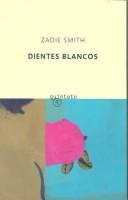
Smith's debut and still her most famous novel — a warm, funny, and encyclopedic portrait of immigrant families in North London. Starting here gives you the full range of her ambition and establishes the themes (history, identity, belonging) she returns to throughout her career.
The Fiction Deepens
BeginnerFollow Smith's novelistic evolution across three very different books, watching her experiment with form, scale, and style while staying rooted in her core preoccupations.
▸ Study plan for this stage
Pace: 10–12 weeks total (~3–4 weeks per book): The Autograph Man (~300 pp, ~20 pp/day), On Beauty (~450 pp, ~25 pp/day), NW (~300 pp, ~20 pp/day). Reserve the final 3–4 days of each book for reflection and journaling before moving on.
- Novelistic evolution and formal experimentation: how Smith deliberately shifts structure, voice, and style across all three books rather than repeating a formula
- Identity as performance and fragmentation: Alex-Li Tandem's Jewishness and celebrity obsession in The Autograph Man, the Belseys' racial and intellectual self-fashioning in On Beauty, and Leah and Natalie's fractured self-narration in NW
- The Forster inheritance: On Beauty as a conscious Howards End rewrite — how Smith uses homage to interrogate race, class, and liberal academia in 21st-century America
- Scale and scope: the sprawling, multi-character social novel (On Beauty) vs. the compressed, interior, stream-of-consciousness novella (NW) vs. the genre-playful middle ground (The Autograph Man)
- Pop culture, celebrity, and commodification: The Autograph Man's meditation on autographs, icons, and the emptiness of fan worship as a lens on modern meaning-making
- Northwest London as a recurring moral and geographic landscape: how the same postcode carries radically different weight in The Autograph Man and NW
- Prose style as meaning: the Dickensian exuberance of On Beauty vs. the fragmented, typographically disrupted sentences of NW — what each choice argues about its characters' inner lives
- Class mobility, aspiration, and betrayal: Natalie Blake's trajectory in NW as a darker, more pessimistic answer to questions On Beauty raises about who gets to 'make it'
- How does Smith use Alex-Li Tandem's obsession with celebrity autographs in The Autograph Man to explore the relationship between authenticity, identity, and grief — and how does this theme resurface, transformed, in On Beauty and NW?
- On Beauty is explicitly modeled on E. M. Forster's Howards End. What specific structural and thematic elements does Smith borrow, and what does she change by transplanting the story into a racially diverse, transatlantic, academic setting?
- NW is Smith's most formally radical novel in this stage, using fragmented syntax, stream of consciousness, and unconventional typography. How does this style reflect Leah's and Natalie's psychological states in ways that conventional prose could not?
- Across all three books, Smith's characters struggle with the gap between who they are and who they perform themselves to be. Choose one character from each novel and trace how this gap manifests differently depending on their race, class, and gender.
- How does Smith's treatment of Northwest London shift between The Autograph Man and NW — in terms of tone, social detail, and what the neighborhood is made to represent?
- By the end of NW, Smith seems to have moved toward a bleaker, more fragmented worldview than the one on display in On Beauty. What specific narrative and stylistic choices support this reading, and do you find it convincing?
- Comparative style audit: Select one page of dense interiority from each of the three novels. Write a short paragraph (150–200 words) describing the sentence-level choices Smith makes in each — length, punctuation, free indirect discourse, typography — and what emotional or thematic effect those choices produce.
- Forster shadow-mapping: Read the Wikipedia summary or a brief critical overview of Howards End, then create a two-column chart mapping characters and plot beats from On Beauty onto their Forster counterparts. Add a third column noting where Smith deliberately diverges and hypothesize why.
- Character identity journal: Pick one character (Alex-Li, Howard Belsey, or Natalie Blake) and keep a running log as you read, noting every moment where they perform an identity that conflicts with how they privately think or feel. At the end, write a one-page synthesis of what the accumulation reveals.
- NW rewrite exercise: Take a passage of two or three paragraphs from The Autograph Man or On Beauty and rewrite it in the fragmented, typographically disrupted style Smith uses in NW. Then write a brief reflection on what is gained and what is lost in the translation.
- Place-as-character map: Draw or digitally sketch a simple annotated map of Northwest London as it appears across The Autograph Man and NW. Mark key locations, note the social meanings attached to them by different characters, and write two or three sentences on how the same geography is charged differently in each book.
- Reading-to-writing bridge: After finishing all three books, write a 400–500 word personal essay responding to this prompt: 'Smith's characters are always trying to become someone. Which character's attempt felt most true to your own experience of identity, and why?' Use at least two specific textual moments as evidence.
Next up: Mastering Smith's fictional range — from pop-cultural playfulness to Forsterian homage to formal fragmentation — equips the reader to engage her essays and criticism with a richer sense of the aesthetic and ethical questions she has been working through all along.
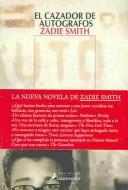
Her second novel, smaller and stranger than White Teeth, exploring celebrity culture and Jewish-Chinese identity in London. Reading it second shows how she deliberately avoided repeating herself after her debut.
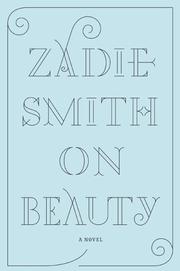
A campus novel in conscious dialogue with E.M. Forster's Howards End — richer and more controlled than her first two books. It rewards the reader who already knows her voice and is ready for a more formally disciplined Smith.
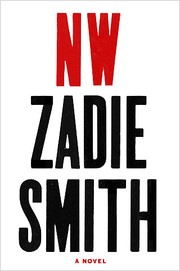
A radical stylistic departure: fragmented, stream-of-consciousness, and deeply interior. Having read her earlier realist novels makes the formal rupture here feel deliberate and exciting rather than disorienting.
The Latest Fiction & Short Stories
IntermediateComplete Smith's novel sequence and encounter her short fiction, seeing how her mature style handles compressed forms and historical sweep.
▸ Study plan for this stage
Pace: 6–7 weeks total: Weeks 1–4 for Swing Time (~25–30 pages/day, reading in thematic halves — the childhood/London sections first, then the Africa/NGO sections), followed by Weeks 5–7 for Grand Union Stories (~2–3 stories per sitting, 4–5 sittings per week, allowing time to re-read at least one story pe
- Namelessness and narrative identity: the unnamed narrator of Swing Time as a formal choice that interrogates selfhood, class, and race
- Doubled and mirrored selves: the narrator/Tracey pairing in Swing Time as a structural device exploring divergent paths from shared origins
- Dance as metaphor and historiography: how Swing Time uses dance — from Fred Astaire to West African performance — to trace the Black Atlantic and embodied cultural memory
- The NGO-industrial complex and postcolonial critique: Smith's satirical treatment of Western celebrity philanthropy and aid work in Swing Time's African sections
- Compressed form and tonal range in short fiction: how Grand Union Stories moves between fable, realism, speculative fiction, and essay-story hybrids within very short spaces
- Historical sweep and anachronism: Grand Union Stories' technique of collapsing historical periods — slavery, modernity, the near future — into single narrative frames
- The mature Smithian style: how both books synthesize the essayistic voice, social comedy, and moral seriousness developed across her earlier novels
- Fragmentation and non-linearity: the role of disrupted chronology in both books as a reflection of memory, trauma, and postcolonial time
- In Swing Time, what does the narrator's lack of a name signify about her relationship to identity, ambition, and her friendship with Tracey — and how does this choice differ from Smith's named protagonists in earlier novels?
- How does Smith use the history and iconography of dance in Swing Time to connect Black British experience to the broader African diaspora, and what does the Fred Astaire 'swing time' allusion specifically contribute to this argument?
- What critique of postcolonial power dynamics and Western do-gooderism does Smith construct through the Aimee storyline in Swing Time, and how does the Gambian village setting complicate or deepen that critique?
- Across Grand Union Stories, how does Smith exploit the short story form's compression to achieve effects — tonal, political, emotional — that her novels cannot? Identify at least two specific stories as evidence.
- How does Grand Union Stories engage with historical time differently from Swing Time — and what does Smith seem to be arguing about the relationship between past and present in each book?
- Taking both books together, how would you characterize Smith's 'mature style'? What preoccupations, formal habits, and ethical commitments appear in both, and how have they evolved from her earlier work?
- Parallel character mapping: Draw a two-column character map for Swing Time pairing the narrator and Tracey at each major life stage. For each pair of moments, write one sentence on what their divergence reveals about class, talent, and race in Britain.
- Dance-history annotation: Each time dance appears in Swing Time, note the specific dance form, its cultural origin, and its narrative function. At the end, write a one-page synthesis: what does Smith's 'dance archive' argue about cultural memory and the Black Atlantic?
- Story taxonomy for Grand Union: After finishing Grand Union Stories, sort every story into genre categories (fable, realist, speculative, hybrid essay, etc.). Then write a short paragraph on which category Smith handles most distinctively and why.
- Close-reading a compressed story: Choose the shortest story in Grand Union Stories and write a 400-word close reading focused entirely on how Smith achieves density — through imagery, syntax, allusion, or structural juxtaposition — in so few pages.
- Postcolonial lens essay: Write a 500-word response to this prompt: 'Is Swing Time a postcolonial novel, a novel about friendship, or a novel about art — or are these the same question?' Use at least three specific scenes as evidence.
- Comparative synthesis: Write a one-page 'reader's note' as if introducing both books to a new reader, arguing for a specific thematic thread — one idea, image, or formal technique — that connects Swing Time and Grand Union Stories into a coherent late-career statement.
Next up: By completing Swing Time and Grand Union Stories, the reader has now encountered Smith's full arc as a fiction writer and can move confidently into her non-fiction and critical essays — particularly her essay collections — where the same preoccupations with identity, race, art, and cultural criticism are pursued without the mediating frame of narrative, demanding a new set of reading skills.
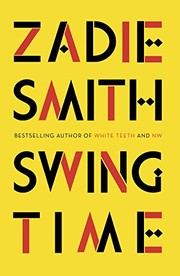
Her most recent novel to date — a non-linear story of two mixed-race girls, dance, and West Africa. It synthesizes everything from her earlier work and is best read after you have a full sense of her development.

Her only short story collection, blending realism, fable, and speculative fiction. Reading it after the novels lets you see how she distills her themes into compressed, experimental forms.
The Essayist: Smith's Critical & Personal Voice
IntermediateUnderstand Smith as a public intellectual — her thinking on literature, film, race, politics, and the writing life — and see how her essays illuminate and enrich all the fiction you have read.
▸ Study plan for this stage
Pace: 8–10 weeks total: ~3 weeks for *Changing My Mind* (~20–25 pages/day, reading each section thematically — Literary Criticism, Being Reminded, Seen/Heard, Feel Free, The Examined Life) and ~5 weeks for *Feel Free* (~20–25 pages/day across its five parts: In the World, In the Audience, In the Gallery,
- The essay as a form of thinking-in-public: how Smith uses the personal essay to model intellectual uncertainty, revision, and openness rather than fixed argument
- Close reading as an ethical act: Smith's conviction (especially in 'Changing My Mind') that how we read reveals who we are — her analyses of Kafka, Forster, Zora Neale Hurston, and David Foster Wallace as demonstrations of this
- The 'dual consciousness' of the Black British writer: how Smith navigates race, class, and cultural identity across both collections, particularly in essays like 'Speaking in Tongues' and 'Brother from Another Mother'
- Cultural criticism as autobiography: the way Smith's personal history (her father, her Cambridge education, her mixed-race identity) is inseparable from her aesthetic and political judgments in both books
- Smith's theory of fiction and the novel: her distinction between 'lyrical realism' and other novelistic modes, her praise of writers who resist easy consolation, and what she demands of both writers and readers
- The politics of attention — in film, visual art, and music: how *Feel Free* extends her critical method beyond literature to Joni Mitchell, Jay-Z, Lynette Yiadom-Boakye, and cinema, arguing that the quality of our attention is itself a moral and political stance
- Time, change, and the examined life: the theme of self-revision that runs through both collections — Smith's willingness to contradict her earlier positions and her argument that changing one's mind is a sign of intellectual health, not weakness
- The public intellectual's responsibilities: Smith's negotiation between the academy, the literary world, journalism, and political commentary, and the tensions that arise when a novelist speaks on race, Brexit, and social justice
- In 'Changing My Mind,' Smith describes two types of readers — 'the Moralist' and 'the Aesthete.' What does she mean by each, and where does she locate herself? How does this self-diagnosis reappear in *Feel Free*?
- Smith's essay 'Speaking in Tongues' (Changing My Mind) argues that code-switching is both a survival skill and a form of loss. How does this tension between linguistic flexibility and authentic selfhood connect to the identity themes in her novels you have already read?
- How does Smith's method of film criticism in *Feel Free* (e.g., her essays on Katharine Hepburn or *The Wizard of Oz*) differ from her method of literary criticism in *Changing My Mind*? What remains consistent across both modes?
- In *Feel Free*, Smith engages directly with Brexit and American politics. How does she reconcile the role of the novelist — committed to complexity and ambiguity — with the role of the political commentator who must take sides?
- Smith frequently returns to the idea that great art makes 'demands' on its audience. Drawing on specific essays from both books, what exactly does she think those demands are, and what does she believe is at stake when readers or viewers refuse them?
- How do the two collections, taken together, function as a kind of intellectual autobiography? What has Smith changed her mind about between *Changing My Mind* (2009) and *Feel Free* (2018), and what has remained constant?
- 'Changing My Mind' audit: After finishing the book, write a one-page personal essay modeled on Smith's method — choose a writer, film, or piece of music you once dismissed and have since reconsidered, and use the first person to trace exactly what changed and why.
- Close-reading comparison: Select one paragraph of literary analysis from *Changing My Mind* (e.g., her reading of Hurston's *Their Eyes Were Watching God*) and one from *Feel Free* (e.g., her essay on the Lynette Yiadom-Boakye paintings). Write a 300-word comparison of her sentence-level style, her use of 'I,' and how she moves between the personal and the critical.
- Argument mapping: Choose any three essays from *Feel Free*'s 'In the World' section. For each, identify (a) the central claim, (b) the evidence or examples Smith uses, and (c) one counter-argument she anticipates or ignores. Then assess whether her conclusion earns its confidence.
- Dialogue across the collections: Find one position Smith takes in *Changing My Mind* and one place in *Feel Free* where she appears to revise or complicate it. Write a short 'dialogue' between the two versions of Smith, using only quotations from the texts, then add a paragraph of your own commentary.
- Fiction-to-essay bridge: Pick one of Smith's novels you read in an earlier stage of this curriculum. Find at least two essays — one from each collection — that speak directly to themes, characters, or formal choices in that novel. Write a 500-word reading note showing how the essays reframe your understanding of the fiction.
- Public intellectual debate: Smith argues in *Feel Free* that novelists have a particular kind of authority when speaking about social issues — one rooted in their training to hold multiple perspectives simultaneously. Write a one-page response agreeing or disagreeing with this claim, using evidence from both essay collections to support your position.
Next up: Having internalized Smith's own critical vocabulary and intellectual values through these two essay collections, the reader is now equipped to return to her fiction — or move to comparative study — with a far richer framework for understanding her formal choices, her moral commitments, and the specific literary tradition she is both inheriting and arguing with.

Her first essay collection, covering writers from Kafka to Zora Neale Hurston to David Foster Wallace. Reading it here lets you retroactively reframe her novels through her own critical lens.
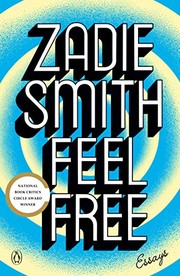
Her second and more wide-ranging essay collection, addressing Brexit, social media, Joni Mitchell, and the philosophy of joy. It is her most fully realized non-fiction work and a perfect capstone to the whole curriculum.
Discussion
Keep reading
Paths that share books, cover the same subject, or open a related topic.