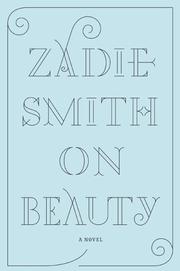
Start with On Beauty. It is her most controlled novel — two academic families in a New England college town, one liberal and one conservative, colliding over art, race, marriage and a stolen painting — and it is the one that holds together from first page to last. It is openly modelled on Howards End, which gives it a structure the others do not have, and it is very funny about how universities actually work.
The obvious alternative is White Teeth, the debut that made her famous at twenty-four, and it is the more exciting book and the less finished one. It is a sprawling multi-generational comedy about three north London families that runs on sheer voice for four hundred pages and then reaches for a plot involving a genetically engineered mouse that most readers find a mess. Read it second and the energy delights you; read it first and the ending can put you off the writer.
The novels, in order
Publication order is White Teeth, The Autograph Man, On Beauty, NW, Swing Time. There is no series and no continuity, so read them in whatever order you like — but the sequence that works best is On Beauty, then White Teeth, then NW, then Swing Time, with The Autograph Man left for last or left out.
NW is the divisive one and the most interesting formally: four Londoners from the same estate, told in four different modes — fragmented numbered sections, a stream of consciousness, a chronological run of very short chapters. It is the book where she stops writing well-made novels and starts experimenting, and readers split hard. If the technique irritates you in the first fifty pages, it will not stop.
Swing Time is the most conventional of the later novels and the most direct about class: two mixed-race girls in a north-west London dance class, one of whom has talent, and the narrator who does not, following a pop star to West Africa. It is quieter than the earlier books and its narrator is deliberately passive, which some readers find true and others find flat.
The one to skip
The Autograph Man is the honest recommendation to skip. It followed White Teeth under enormous expectation, its story of a memorabilia dealer chasing a reclusive actress never quite gathers, and it is widely regarded as her weakest novel. Read it only if you want the complete shelf. Her most recent novel, The Fraud, is not in our catalogue and is the substantial later work to seek out separately.
The essays, which may be the main event
A serious number of readers prefer the non-fiction, and the case is easy to make. Changing my mind is the earlier collection — on E.M. Forster, on Katharine Hepburn, on her father, on the two ways writers work, which she divides into macro planners and micro managers. That essay alone is the best thing in the book. Feel free is the later and broader collection: Brexit, Facebook, Joni Mitchell, libraries, the London that has been rebuilt around her. Both are unusually good at admitting when the writer has changed her position, which is rarer than it sounds.
Grand Union Stories collects the short fiction, and it is uneven by design — some pieces are conventional stories, some are formal experiments that do not land. It is the last thing to read rather than the first.
Where to stop
On Beauty, White Teeth and Feel free give you the full range: the well-made novel, the exuberant one, and the critic. Continue to NW if you want the experimental Smith and to Swing Time if you want the quieter one. Readers who come for the essays on how novels work should also look at Toni Morrison.
Follow the full ordered path here: Zadie Smith Reading Order: Where to Start.