Yasunari Kawabata Reading Order: Where to Start
Kawabata is Japan's first Nobel laureate in literature and its most elliptical major novelist: books that end mid-gesture, plots carried by a teacup or a mountain sound rather than by events. Start with the two short novels everyone begins with, move through the major mid-career fiction, then the colder and stranger books that show what he was really capable of, and finish with the short fiction and the last works.
Start Here
BeginnerLearn to read Kawabata's method — beauty, wasted effort and things left unsaid — in the two most famous short novels.
▸ Study plan for this stage
Pace: 3 weeks for only 326 pages, because both of these are books you read twice. Snow Country (179pp) over a week, then reread it immediately in two sittings — the second pass is where it becomes legible. Thousand Cranes (147pp) over the third week, slowly.
- Kawabata is elliptical by design: chapters connect by image and season rather than by cause, closer to linked verse than to a plot, and scenes routinely end a beat before the thing you were waiting for
- The most useful reading instruction for Snow Country is the word Shimamura keeps applying to Komako's devotion — wasted effort. The novel is about effort that produces nothing and is beautiful anyway; if you read for whether the affair goes anywhere, it will look like nothing happens
- Attend to objects and weather instead of to decisions. The mirror in the train window, the fire at the end, the tea bowls and the Shino water jar in Thousand Cranes carry what dialogue would carry elsewhere
- Snow Country was written and revised in pieces over roughly a decade before reaching its final form, which is why it reads as a sequence of arrivals rather than a continuous story
- In Thousand Cranes the inheritance is human: Kikuji takes on his dead father's women along with his tea utensils, and the four-hundred-year-old bowls have outlasted everyone who drank from them
- Kawabata objected to readers who took Thousand Cranes as a celebration of the tea ceremony — he intended the opposite, a portrait of what the practice has degraded into. Chikako's birthmark is the book's real emblem, not the cranes
- The English for both is Edward Seidensticker's, and his versions are the standard English Kawabata. His prose is famously graceful, so some of the smoothness you will admire is a joint production; this is worth knowing rather than worrying about
- What does Shimamura actually do for a living, and why does Kawabata make his expertise so ludicrously secondhand?
- The novel opens with a face reflected in a train window over a passing landscape. What has that image told you to do for the next 170 pages?
- Komako keeps a diary and records everything she reads. Why is that detail placed where it is, and what does Shimamura make of it?
- In Thousand Cranes, what does each tea vessel stand in for, and who used it before?
- Both books end abruptly. Write what you think happened, then ask what changes if the opposite happened — how much does the book actually depend on it?
- On the reread of Snow Country, mark every appearance of the word for wasted or futile effort. The distribution is the argument
- Keep a list of the sensory registers in each chapter — cold, insects, fire, the Milky Way — and check whether the emotional turn is happening there rather than in the dialogue
- In Thousand Cranes, draw who slept with whom before the novel begins. The whole plot is inherited and it is never laid out
- Read one page aloud and count the sentences that state a feeling directly. There will be almost none — that count is the habit you are training against
- Write one paragraph on what a Western novelist would have added to Snow Country, and whether the book would be better for it
Next up: Having learned to read for objects and withheld gestures on a small canvas, you can take the same attention into the longer novels where the technique has a whole family or a city to work on.

A dilettante from Tokyo travels repeatedly to a hot-spring town to see a provincial geisha whose devotion he cannot return. The standard entry point and the purest example of his style; short enough to reread immediately, which is worth doing.
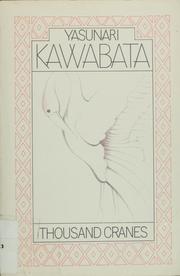
A young man inherits his dead father's mistresses along with the tea ceremony that binds them. Read second: the same withholding technique, now carried almost entirely by objects.
The Major Novels
IntermediateWork through the mature novels where the technique is applied to whole families and cities.
▸ Study plan for this stage
Pace: 6–7 weeks for roughly 640 pages. The Sound of the Mountain (about 275pp) over 3 weeks — it was serialised in short chapters and reads best a chapter or two a sitting. The Old Capital (162pp) in a week and a half. Beauty and Sadness (about 200pp) over 2 weeks.
- The Sound of the Mountain is his most conventionally novelistic book — a continuous household, a year of seasons, a recognisable domestic plot — and it is where the withholding technique pays off with the most emotional force
- Shingo hears a sound from the mountain and reads it as a summons to death; from there the novel is an old man watching his own family disintegrate while he falls quietly in love with his daughter-in-law
- Its recurring apparatus is dreams and Noh masks: the mask that looks like a young girl, the dreams Shingo half-remembers, the failing memory that keeps losing names. Aging is the form as well as the subject
- The Old Capital is a novel of Kyoto through one calendar year of festivals and cedar groves — Gion, Aoi, the Jidai Matsuri — with the twins' plot laid over the top like a thin narrative excuse for describing the city
- It was one of the works the Nobel committee pointed to in 1968, when Kawabata became the first Japanese writer to win the prize; his lecture was titled Japan, the Beautiful, and Myself
- Beauty and Sadness breaks the serenity deliberately: a novelist returns to the woman whose life he ruined by writing about it, and her young protege sets out to destroy his family. It is a revenge plot, and Kawabata takes it seriously
- Read in this order, the three show how much the calm of The Old Capital is a construction — Beauty and Sadness proves he could have written cruelty any time he wanted
- Shingo never acts on his feeling for Kikuko. What does the novel gain by keeping it entirely internal, and where does it come closest to surfacing?
- What does the sound from the mountain turn out to be, and does the novel ever settle it?
- Why does The Old Capital need twins at all? Strip out the sisters and what is left, and is that a criticism?
- The festivals in The Old Capital are described in near-documentary detail. Who is that description for, given that Kawabata was writing for Japanese readers in 1962?
- In Beauty and Sadness, Oki wrote a famous novel about his affair with a sixteen-year-old. How does Kawabata handle the fact that his own art is being indicted?
- Which of these three is the best novel, and which is the most characteristic? They are unlikely to be the same book
- Keep a one-line note per chapter of The Sound of the Mountain — it has many short chapters and the cumulative shape is easy to lose
- Track Shingo's forgetting: every name he cannot retrieve, every dream he loses on waking. Read the list at the end as its own narrative
- Map The Old Capital onto the calendar. If you have ever been to Kyoto, or want to, put the festivals in order and the novel changes shape
- In Beauty and Sadness, mark the point at which Keiko stops being a character and becomes an instrument — and decide whether the book knows
- Reread the last page of Snow Country after finishing these three and note what you now see in it that you did not in stage one
Next up: These are the books his reputation rests on; the next three are the ones that show what the reputation leaves out.
An aging man in Kamakura hears a sound from the mountain he takes as a death omen, while his son's marriage collapses around him. Many readers consider it his finest novel; it is also his most conventionally novelistic, so it rewards the patience the first two books teach.
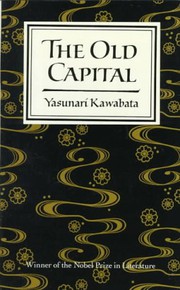
Twin sisters separated at birth, one raised in a Kyoto textile shop, meet as adults across a year of the city's festivals. The most serene of the novels and the one the Nobel citation named.

A novelist visits the woman he ruined twenty years earlier, whose young protege plans revenge. The cruellest of the major novels — read it after The Old Capital to feel how deliberately the serenity elsewhere is constructed.
The Stranger Books
IntermediateSee the colder Kawabata: obsession, gamesmanship and the erotics of the unconscious.
▸ Study plan for this stage
Pace: 4 weeks for about 470 pages, one book a week with a spare week. The Master of Go (144pp) is slow going even though it is short — it is a reported match, not a story. House of the Sleeping Beauties (160pp) is three novellas; take them one at a time. The Lake (168pp) reads fast and disorients on purpo
- The Master of Go grew out of newspaper journalism: Kawabata covered the old master's final championship match as a reporter, then rewrote it as fiction. It is the only book of his built from an assignment
- You do not need to play Go to read it. What is being described is a slow ceremonial order dying under a younger, more rational, more punctual opponent — the match is the twentieth century happening to a man
- House of the Sleeping Beauties is his most disturbing book: old men pay to lie beside young women drugged unconscious, forbidden to wake them. Yukio Mishima, whom Kawabata mentored, wrote the introduction that made its reputation in English
- The volume also contains 'One Arm', in which a young woman lends the narrator her arm for the night and he talks to it. It is the strangest thing he wrote and the closest he came to outright surrealism
- The Lake is narrated from inside a compulsion — a disgraced teacher following women through the streets, ashamed of his own feet — and its chronology is deliberately broken, cutting between present and past without warning
- Across all three the erotic material is bound to unconsciousness, distance and voyeurism: the desired person is asleep, detached, or being watched from behind. That is the same withholding technique turned on the body
- These are the books to bring up when someone calls Kawabata merely delicate
- In The Master of Go, who does Kawabata's narrator actually side with, and how does the reportorial pose let him avoid saying so outright?
- The match is decided by rules about sealed moves and adjournments rather than by play. Why does Kawabata spend so long on procedure?
- In the title novella of House of the Sleeping Beauties, what does old Eguchi remember, and how does the novel use unconscious women as a device for retrieving his own past?
- Is 'One Arm' a fantasy, a dream, or something the book refuses to classify — and does the ambiguity hold up on a second reading?
- The Lake breaks its own timeline constantly. What is the narrator concealing by that arrangement rather than by lying?
- Do these books contradict the delicacy of stage two, or reveal what it was built to keep out?
- Read the Mishima introduction to House of the Sleeping Beauties after the novella rather than before, so his framing does not do your reading for you
- In The Master of Go, note every mention of time, illness and delay. The match is lost to those, not to the board
- Rearrange The Lake into chronological order on paper, then ask what the real order was protecting
- Pick the single most uncomfortable passage in this stage and write two sentences on whether Kawabata is complicit in it or observing it. There is no settled answer, but you should have one
- Compare Eguchi's old men with the old man of Tanizaki's late fiction if you know it. The two writers arrive at the same subject from opposite directions
Next up: With both the serene and the ugly Kawabata in view, the short fiction shows the form he considered his truest — and the last works show it running out.

A six-month championship match reported as the death of an old order. Half journalism, half elegy, and unlike anything else he wrote — best read once his ordinary mode is second nature.
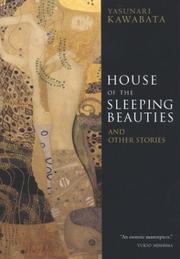
Old men pay to sleep beside drugged, unconscious girls. The title novella is his most disturbing work and the one Yukio Mishima wrote the introduction for; save it for a reader who already trusts him.
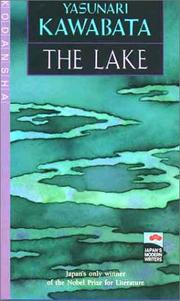
A disgraced teacher follows women through the streets, narrating his own compulsion. The most fractured of the novels in structure, and the clearest bridge between his lyricism and his voyeurism.
The Short Fiction and the Late Work
IntermediateFinish with the miniature form he considered his truest, plus the early and final pieces.
▸ Study plan for this stage
Pace: 5–6 weeks for around 770 pages, but read at intervals rather than straight through. Palm-of-the-Hand Stories over 3 weeks, four or five a sitting and no more — they are one or two pages each and they cancel each other out in bulk. The Dancing Girl of Izu (161pp) in a few evenings, First Snow on Fuji
- Kawabata wrote very short stories for fifty years and said the spirit of his work was in them; the palm-of-the-hand form is the concentrate, not a sideline
- Some of them are experiments that failed and are printed anyway, and the collection includes a late compression of Snow Country into a few pages — a chance to see him editing his own masterpiece down to its skeleton
- 'The Dancing Girl of Izu' made him famous at twenty-seven: a student walks the Izu peninsula with a troupe of itinerant performers and falls for a dancer who turns out to be a child. It is slight on purpose, and reads as much better once you know what it grew into
- Kawabata was orphaned very young and lost the grandparents who raised him before he was sixteen; the early work is full of funerals and the late work full of things that cannot be recovered, and the biography is not a secret he kept
- First Snow on Fuji collects late stories about reunions and lost time, written in the years around Mishima's suicide in 1970 and Kawabata's own death in 1972
- Dandelions is genuinely unfinished — a serial he did not complete, in which a mother and a fiance argue outside an asylum about a young woman who periodically cannot see the human body. Read it as a fragment, not as a novel
- The condition at the centre of Dandelions is the whole path stated as pathology: a person who cannot see the body of the one she loves, which is the withholding technique made literal
- Pick three palm-of-the-hand stories that work and two that do not, and say what the working ones have that the others lack
- How does the compressed Snow Country differ from the novel, and what does the reduction reveal about which parts he thought were load-bearing?
- 'The Dancing Girl of Izu' turns on the narrator's discovery of the dancer's age. What does the story do with that revelation, and is it as innocent as it presents itself?
- In the late stories, what is the recurring shape — who meets whom, after how long, and what is discovered?
- Dandelions stops mid-argument. Does it read as incomplete, or has Kawabata's habit of stopping early made incompleteness hard to detect?
- Having read the whole path, what is the single technique that appears in every one of these twelve books?
- Read five palm-of-the-hand stories in one sitting, then reread the first one. The interference between them is worth noticing
- Put the twelve books in publication order rather than reading order and mark where each stage of this path falls. The stranger books are not late work — that surprises most readers
- Write a one-page account of a small event using only objects and weather, no stated feeling. It is the fastest way to find out how hard the technique actually is
- Reread 'The Dancing Girl of Izu' immediately after House of the Sleeping Beauties and write two sentences on the continuity
- Decide which book you would hand to a reader who bounced off Snow Country, and be able to say why — The Sound of the Mountain and The Master of Go are both defensible answers
Next up: That is Kawabata whole, from the first famous story to the unfinished last one — and the obvious next moves are Tanizaki for the same aesthetic without the restraint, or Oe, who titled his Nobel lecture in direct opposition to Kawabata's.
The very short stories he wrote for fifty years and said contained the spirit of his work. Read a few at a time; they are the concentrated version of everything above.
The 1926 story that made him famous at twenty-seven, with other early work. Placed here rather than first because its slightness reads much better once you know what it grew into.
Late stories about reunions and things that cannot be recovered. The tonal close of the career, written in the years before his suicide.

The unfinished last novel — a mother and a fiance argue outside an asylum about a girl who cannot see the human body. Genuinely incomplete, so read it last, as a fragment rather than a book.
Discussion
Keep reading
Paths that share books, cover the same subject, or open a related topic.