Start with Snow Country. It is short, it is the book the Nobel citation leaned on hardest, and Edward Seidensticker's translation is the one that made Kawabata readable in English. A Tokyo dilettante takes the train to a hot-spring town and conducts an affair with a provincial geisha over several winters. That is the whole of the plot, and the novel is a masterpiece anyway.
The obvious alternative is The Master of Go, which people recommend because it has a competition in it and therefore looks like it has a structure. It does, and it is superb, but it is atypical — reportage-shaped, built around a single match — and it teaches you the wrong expectations for everything else. Begin with the harder-to-describe book while you are still willing to be patient.
What to attend to instead of plot
Kawabata can read as cold. Characters make decisions offstage, motives go unstated, and chapters end without landing. Nothing is being withheld from you; the emphasis simply sits elsewhere. Watch the physical detail — a mirror holding a face against snow, a tea bowl with a stain on the rim, an insect dying on a windowsill — because that is where the emotional information is stored. He also came out of a modernist experimental movement in the 1920s, so the sudden cuts and unmarked jumps are technique, not carelessness.
The core three
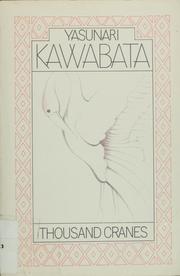
After Snow Country, read Thousand cranes and then The Sound of the Mountain. Thousand Cranes uses a tea ceremony to carry an entangled set of relationships between a young man and two women connected to his dead father, and it is the most compressed of the three. The Sound of the Mountain is the one many readers end up loving most: an ageing man in a household he can no longer help, hearing something in the hills at night. It is the warmest book Kawabata wrote and the least showy.
Widening out
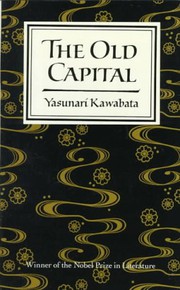
The Old Capital is Kyoto itself, the closest he came to writing a city as a character. Beauty And Sadness returns to an old affair and its consequences and is his most conventionally novelistic. The Master of Go belongs here — a real 1938 match, reconstructed from Kawabata's own newspaper coverage, and readable as an elegy for an entire way of doing things.
The unsettling and the fragmentary
House of the Sleeping Beauties is his most disturbing book: elderly men pay to spend nights beside drugged, unconscious young women. It is a genuinely strange piece of work about mortality and powerlessness, and it is also exactly what it sounds like, so decide accordingly. The Lake follows a stalker in close third person and is similarly airless by design.
Then the short forms. Palm-of-the-hand stories collects the miniatures he wrote across his whole career, some barely a page; The dancing girl of Izu and other stories holds his early breakthrough; First Snow on Fuji and Dandelions are late and unfinished-feeling, the latter genuinely unfinished.
Where to stop
The core three plus The Master of Go is a complete Kawabata education, and many readers stop there happily. Take Palm-of-the-hand stories next if you want more, since the miniatures show the method with nothing else in the way. He died in 1972 of gas inhalation; whether it was deliberate has never been settled, and his family disputed the suicide reading. If you want more in this vein, browse the paths for his contemporaries.
Follow the full ordered path here: Yasunari Kawabata Reading Order: Where to Start.
Ready to learn something deeply?
Build a reading path — free