Understand whiskey: tasting & appreciation
This four-stage curriculum takes a complete beginner from zero whiskey knowledge to confident, nuanced tasting and collecting. Each stage builds on the last: you first absorb the big picture and sensory language, then drill into the major regional styles, then sharpen your palate and critical vocabulary, and finally develop the connoisseur's eye for building a purposeful home shelf.
Foundations — The Big Picture
BeginnerUnderstand what whiskey is, how it is made across all major styles, and acquire the basic vocabulary needed to taste and talk about it confidently.
▸ Study plan for this stage
Pace: 6–8 weeks, ~20–25 pages/day (the Atlas is visually rich and map-heavy — slower, deliberate reading pays off; plan for 3–4 sessions per week of ~45–60 minutes each)
- The five major whiskey-producing regions and nations (Scotland, Ireland, USA, Canada, Japan, and emerging world producers) and how geography shapes style
- The grain-to-glass production process: malting, mashing, fermentation, distillation (pot still vs. column still), maturation, and bottling
- The role of the cask — wood species, previous fill (ex-bourbon, ex-sherry, etc.), and time — as the primary driver of flavor development
- Core flavor vocabulary introduced in Broom's tasting framework: the four flavor 'camps' (fragrant & floral, malty & dry, fruity & spicy, rich & round) used to map whiskies
- Scotch whisky categories: Single Malt, Single Grain, Blended Malt, Blended Grain, and Blended Scotch — and why the distinctions matter
- How American whiskey styles (Bourbon, Rye, Tennessee) differ in grain bill, distillation proof limits, and maturation rules vs. Scotch and Irish traditions
- The concept of terroir in whiskey: how water source, local barley/grain varieties, peat, and climate influence regional character
- How to read a whiskey label: age statements, ABV, distillery vs. bottler, and what 'non-chill filtered' or 'natural colour' signals about production philosophy
- In your own words, walk through the complete production journey of a Scotch single malt from raw barley to bottled whisky — what happens at each stage and why does each step matter?
- Dave Broom organizes whiskies into flavor camps rather than purely by geography. What are those camps, and why is a flavor-first framework more useful for a beginner than a region-first one?
- What makes Bourbon legally 'Bourbon'? List at least four of the US regulatory requirements and explain how they produce Bourbon's characteristic flavor profile.
- Pick any two of the major whiskey nations covered in the Atlas and compare them: how do their raw materials, distillation methods, and maturation environments lead to distinctly different styles?
- What is the difference between a pot still and a column (Coffey) still, and how does the choice of still shape the weight and character of the spirit?
- How does cask selection — wood type, size, and previous contents — influence the final flavor of a whiskey, and what evidence from the Atlas supports this?
- **Flavor Camp Mapping:** After reading each regional chapter, place 2–3 whiskies mentioned by Broom onto a hand-drawn 2×2 flavor grid (light↔heavy / delicate↔robust). Compare your map to Broom's own flavor camp assignments.
- **Production Diagram:** Draw a complete grain-to-glass flowchart from memory after finishing the production sections. Label every stage, note where key flavor decisions are made, and annotate with one real-world example distillery from the Atlas for each step.
- **Label Decoding Practice:** Collect 5–6 whiskey labels (from bottles at home, a shop, or photos online). Using vocabulary from the Atlas, decode every element: region, category, age, ABV, cask type, and any production claims. Note what each element predicts about flavor.
- **Comparative Tasting — The Four Flavor Camps:** Purchase or sample (via miniatures or a bar) one whisky from each of Broom's four flavor camps. Nose and taste each one, write tasting notes using only vocabulary from the Atlas, then check your impressions against Broom's descriptions.
- **Regional Sketch Maps:** Without looking, sketch the whisky-producing regions of Scotland (Highlands, Lowlands, Speyside, Islay, Campbeltown) and the USA (Kentucky, Tennessee) from memory, then annotate each with its defining style characteristics as described by Broom.
- **Vocabulary Flash Cards:** Build a deck of 30+ flash cards covering key terms from the Atlas (e.g., 'washback,' 'worm tub,' 'angel's share,' 'new make spirit,' 'vatting,' 'expression'). Quiz yourself weekly and add new terms as you encounter them.
Next up: Mastering the production fundamentals and flavor vocabulary in Broom's Atlas gives you the conceptual scaffolding — region, process, and taste language — needed to dive deeper into any single style or nation with genuine analytical confidence in the next stage.

After learning how to taste, this atlas maps every major whisky-producing region on earth — bourbon, Scotch, Irish, Japanese and beyond — so you see the whole landscape before diving into any single style.
The Two Pillars — Scotch & Bourbon
BeginnerDevelop a thorough understanding of the production, history, and flavor logic of the world's two dominant whisky traditions.
▸ Study plan for this stage
Pace: 10–12 weeks total. Book 1 ("Bourbon" by Huckelbridge): ~3 weeks, ~20–25 pages/day — it reads like narrative history, so a relaxed pace lets the storytelling sink in. Book 2 ("Peat Smoke and Spirit" by Jefford): ~3–4 weeks, ~15–20 pages/day — dense sensory and regional detail rewards slow, deliberate
- The American regulatory framework for Bourbon: new charred oak requirement, mash bill minimums (51% corn), distillation and entry-proof limits, and how these rules directly shape flavor
- The cultural and economic forces — Scots-Irish immigration, the frontier grain economy, Prohibition, and post-repeal consolidation — that forged Bourbon's identity as told through Huckelbridge's narrative arc
- Islay as a microcosm: Jefford's deep dive into how a single Scottish island's geology, climate, peat composition, and distillery culture produce the world's most distinctive regional whisky style
- The role of peat in Scotch production — what it is, how it is cut and burned, how phenol levels (ppm) are measured, and why the same peat produces different results at different distilleries
- Scotland's five (or six) recognized whisky regions as mapped by Maclean — Highlands, Lowlands, Speyside, Islay, Campbeltown, and Islands — and the broad flavor signatures associated with each
- The production process compared across both traditions: mashing, fermentation (washbacks), pot-still vs. column-still distillation, maturation vessel choices, and how each variable bends the final flavor profile
- The concept of terroir in whisky: how water source, barley variety, local yeast strains, and warehouse microclimate contribute to 'place' in both Scotch and Bourbon
- Flavor vocabulary and sensory logic: building a personal tasting lexicon grounded in the specific descriptors Jefford and Maclean use — fruit, smoke, oak, grain, floral, maritime — and understanding why those flavors arise chemically and procedurally
- According to Huckelbridge, what historical, geographic, and agricultural conditions made Kentucky the spiritual and commercial home of Bourbon, and how did Prohibition reshape the industry that emerged afterward?
- What does Jefford mean when he describes Islay's distilleries as having distinct 'personalities,' and how does he connect each distillery's physical environment and human tradition to the flavors in the glass?
- Using Maclean's regional framework, how would you characterize the broad flavor differences between a Speyside single malt and a Campbeltown single malt, and what production or geographic factors explain those differences?
- How do the legal definitions and production rules governing Bourbon (as detailed by Huckelbridge) differ from the Scotch Whisky Regulations framework described by Maclean, and what does each ruleset protect or promote?
- Across all three books, what is the role of the barrel/cask in shaping final flavor — and how does the American requirement for new charred oak contrast with Scotland's tradition of ex-Bourbon and ex-Sherry cask maturation?
- After reading Jefford and Maclean together, how would you explain the concept of 'house style' to a newcomer — what keeps a distillery's whisky recognizable across different ages and expressions?
- Parallel tasting — The Two Pillars Flight: Pour a straightforward entry-level Bourbon (e.g., Buffalo Trace or Evan Williams Bottled-in-Bond) alongside an Islay Scotch (e.g., Laphroaig 10 or Caol Ila 12) and a Speyside (e.g., Glenfiddich 12 or Glenlivet 12). Before tasting, write down what you expect based on your reading. Afterward, write tasting notes using the vocabulary from Jefford and Maclean
- Mash bill math & label decoding: Collect labels or spec sheets for 5–6 Bourbons with different mash bills (high-corn, high-rye, wheated). Using Huckelbridge's flavor logic, predict which will taste sweeter, spicier, or lighter before you taste or research reviews. Check your predictions against published tasting notes.
- Draw the production flowchart: From memory, sketch the full production process for both a Kentucky Straight Bourbon and a Scottish single malt — from grain to glass. Label every decision point (grain choice, still type, cask type, maturation length) and annotate how each choice shifts the flavor. Use all three books to fill gaps.
- Regional map exercise: Using Maclean's regional chapters as your guide, draw or annotate a blank map of Scotland, placing each major distillery Maclean discusses in its correct region and writing one defining flavor characteristic beside it. Then do the same for Kentucky's major Bourbon distilleries using Huckelbridge.
- Sensory vocabulary journal: After each reading session with Jefford's 'Peat Smoke and Spirit,' write down every flavor or aroma descriptor he uses for a specific distillery. By the end of the book, compile a master list organized by category (fruit, smoke, oak, floral, maritime, grain). Use this as your personal tasting lexicon going forward.
- Comparative essay (500–700 words): Write a short essay answering the question: 'If Bourbon and Scotch are both whisky, why do they taste so fundamentally different?' Draw specific evidence from all three books — Huckelbridge for cultural/regulatory history, Jefford for sensory and environmental detail, Maclean for production and regional context.
Next up: By internalizing the production logic, regulatory frameworks, and flavor vocabularies of Scotch and Bourbon through these three books, the reader has built a sturdy comparative baseline that makes exploring the world's other whisky traditions — Irish, Japanese, Canadian, and emerging craft distilleries — immediately legible as variations on, reactions to, or departures from these two dominant pill

A narrative history of bourbon that makes the grain-to-glass process memorable by anchoring it in American cultural history — ideal first read on the American side.
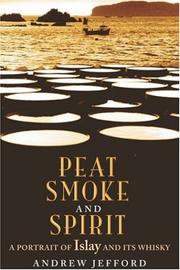
A deep, lyrical journey through Islay Scotch that explains terroir, peat, distillation character, and regional identity — the best single-region deep dive to read right after bourbon to feel the contrast.

MacLean is one of Scotland's foremost whisky writers; this book broadens your Scotch knowledge beyond Islay to all five regions, completing your command of the style.
Going Deeper — Tasting, Distilleries & World Whiskies
IntermediateSharpen palate analysis, learn to read distillery character, and expand your appreciation to Japanese, Irish, and emerging world whiskies.
▸ Study plan for this stage
Pace: 4–5 weeks, ~20–25 pages/day; Bryson's book is richly illustrated and detail-dense, so allow extra time to pause, re-read tasting notes, and cross-reference with actual drams — plan at least 2–3 dedicated tasting sessions spread across the reading period rather than rushing to finish.
- Systematic palate analysis — using Bryson's structured framework to identify aroma, taste, and finish components with precise vocabulary (fruity, peaty, sulfuric, floral, etc.)
- The role of the still type and cut points — how pot still vs. column still geometry and the distiller's choice of foreshots/feints shape the final spirit's character
- Distillery character as a fingerprint — how water source, yeast strain, fermentation time, barrel entry proof, and warehouse conditions each contribute a traceable layer of flavor
- Scotch regional identity — understanding how Speyside, Islay, Highland, Lowland, and Campbeltown expressions differ and why geography still matters even as distilleries experiment
- Japanese whisky philosophy — Bryson's coverage of the meticulous, blending-centric approach of Japanese producers and how it diverges from Scottish and American traditions
- Irish whiskey's triple-distillation tradition and pot still style — the smoothness rationale, the role of unmalted barley, and the resurgence of craft Irish distilleries
- Emerging world whiskies — recognizing that climate, local grain, and cultural context in regions like India, Taiwan, and Australia produce legitimately distinct (not merely imitative) spirits
- Reading a label and distillery data sheet critically — decoding age statements, cask finish disclosures, independent bottler releases, and what 'non-age-statement' (NAS) really signals about quality
- According to Bryson, what are the three phases of a structured tasting (nosing, palate, finish), and what specific sensory cues should you be hunting for in each phase?
- How does Bryson explain the way still shape — particularly the height of the neck and the angle of the lyne arm — influences the weight and oiliness of a new-make spirit?
- What distinguishes the Japanese blending philosophy from the Scotch model, and why did Japanese distilleries historically need to be self-sufficient in producing a wide range of house styles?
- How does the use of unmalted barley in traditional Irish pot still whiskey affect flavor, and what does Bryson identify as the hallmarks of that style on the palate?
- Bryson discusses how warehouse environment (dunnage vs. racked, coastal vs. inland) shapes maturation — what are the key differences and how do they show up in the glass?
- What criteria does Bryson suggest for evaluating a 'world whisky' on its own terms rather than measuring it against Scotch or bourbon benchmarks?
- Build a personal tasting grid: before each session, print or draw a blank aroma/flavor/finish wheel and fill it in blind — then compare your notes to Bryson's descriptors for that style to identify gaps in your vocabulary.
- Conduct a regional Scotch flight: select one expression each from Speyside, Islay, and Highland (entry-level bottles or miniatures work fine), taste them side-by-side using Bryson's structured framework, and write a 150-word tasting note for each.
- Do a Japanese vs. Irish comparison tasting: choose one widely available Japanese blend or single malt and one Irish pot still whiskey, and use Bryson's chapters on each country to predict flavor characteristics before you pour — then assess how accurate your predictions were.
- Visit (physically or virtually) the website of one distillery Bryson profiles and locate their technical data: still dimensions, fermentation time, cask policy, and warehouse type. Map each data point to a predicted flavor outcome using concepts from the book.
- Decode three real whisky labels: find bottles (or photos) with an age statement, a cask-finish statement, and a NAS label respectively. Using Bryson's guidance, write a one-paragraph 'what this label tells me — and what it hides' analysis for each.
- Keep a running 'flavor memory journal' throughout the stage: each time you encounter a reference aroma (vanilla, brine, green apple, smoke, leather) in everyday life, jot it down. At the end of the stage, review whether those real-world anchors improved the precision of your tasting notes.
Next up: Bryson's deep dive into distillery craft and world whisky diversity builds the analytical and geographical fluency needed to tackle advanced topics — such as independent bottlers, cask investment, whisky culture and history, or mastering a single region in depth — with a trained palate and a global frame of reference already in place.

A practical, hands-on guide to structured tasting technique — flavor wheels, nosing exercises, food pairing — that upgrades your sensory toolkit from casual drinker to informed taster.
The Connoisseur — Building Your Shelf & Critical Judgment
ExpertDevelop a personal collecting philosophy, learn to evaluate quality and value critically, and build a smart, representative home whiskey shelf.
▸ Study plan for this stage
Pace: 8–10 weeks total. Week 1–4: "Whisky: the Manual" by Dave Broom (~20–25 pages/day, including re-reading tasting framework chapters). Week 5–10: "Michael Jackson's Complete Guide to Single Malt Scotch" (~15–20 pages/day, used as a reference-style deep dive — read distillery entries in regional cluster
- Broom's 'flavour camp' framework — understanding how to slot any whisky into a stylistic family (e.g., fragrant & floral, rich & round, smoky & peaty) as a tool for critical comparison
- How to use water and dilution deliberately: Broom's systematic approach to adding water in stages and recording how the nose and palate evolve, turning tasting into a repeatable, documented practice
- The concept of 'entry point' and 'development' in a whisky — distinguishing first impressions from mid-palate complexity and finish length as separate evaluative dimensions
- Michael Jackson's distillery-as-terroir philosophy — how geography, water source, barley, still shape, and maturation warehouse conditions create a distillery's 'house style' that persists across expressions
- Regional identity vs. individual distillery character: using Jackson's region-by-region structure to understand when regional generalizations hold and when a distillery deliberately subverts them
- Critical value judgment: cross-referencing Broom's qualitative descriptors with Jackson's star ratings and tasting notes to triangulate your own independent assessment rather than deferring to authority
- Building a 'representative shelf' — selecting bottles that illustrate maximum stylistic diversity across Broom's flavour camps and Jackson's regions without redundancy
- The collector's mindset vs. the drinker's mindset: balancing rarity, age, and prestige (Jackson's historical context) against everyday drinkability and personal preference (Broom's democratic approach)
- After reading Broom, can you assign any given whisky to a flavour camp and articulate *why* — citing at least three specific aroma or palate markers — rather than simply naming the camp?
- How does Dave Broom's water-addition methodology change what you perceive in a whisky, and what does that tell you about the role of ABV in masking or revealing character?
- Using Jackson's distillery profiles, can you explain how two distilleries in the same Scotch region produce meaningfully different house styles, and what production variables account for the divergence?
- How would you evaluate whether a whisky is 'good value' at its price point, drawing on both Broom's qualitative framework and Jackson's comparative ratings across age statements and expressions?
- What is your personal collecting philosophy after completing both books — which flavour camps and regions must be represented on your shelf, and what is your rationale?
- Where do Broom and Jackson *disagree* or emphasize different things about the same distillery or style, and how do you resolve that tension to form your own critical judgment?
- Flavour Camp Mapping Exercise: Taste five whiskies side by side (ideally one per Broom flavour camp). Before looking at any notes, write your own tasting note and assign each to a camp. Then compare your assignment to Broom's framework and Jackson's profile for that distillery. Note every discrepancy and investigate why.
- Build Your Benchmark Shelf on Paper: Using Jackson's distillery entries as a catalogue and Broom's flavour camps as the organizing principle, design a 12-bottle 'ideal representative shelf' with a written justification for each bottle — covering region, flavour camp, age/expression, and estimated price. No two bottles should occupy the same flavour camp and region combination.
- Blind Tasting with a Partner: Have someone pour you three unmarked drams — one heavily peated, one sherried, one unpeated Highland or Lowland. Using only Broom's systematic methodology (colour, nose dry/with water, palate, finish), attempt to identify region and style. Record your reasoning in writing before the reveal.
- Jackson Deep-Dive Comparison: Pick one Scotch region (e.g., Speyside). Read every distillery entry Jackson provides for that region. Then write a 500-word critical essay arguing which single distillery best represents the region's 'ideal type' and which most interestingly subverts it, citing specific expressions Jackson discusses.
- Price-vs-Quality Audit: Select three distilleries that Jackson covers across multiple age statements (e.g., 10yr, 15yr, 18yr, 21yr). Taste at least two expressions from one distillery if possible, and use both authors' notes to build a written argument for where the 'value cliff' occurs — the point at which extra age stops delivering proportional quality gains.
- Personal Tasting Journal Calibration: Over the course of this stage, maintain a structured tasting journal using Broom's vocabulary (colour, nose, palate, finish, overall) for every whisky you try. At the end of week 10, re-read your earliest entries and revise them with your developed palate. Identify which descriptors you overused and which flavour dimensions you initially ignored.
Next up: Mastering critical judgment and shelf-building here gives the reader a stable personal framework and reference vocabulary that is essential for engaging with more specialized topics — such as world whisky beyond Scotland, independent bottlers, cask investment, or distillery history — without being overwhelmed or swayed by marketing.
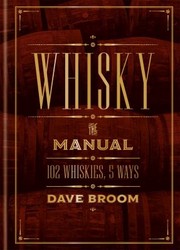
Broom's systematic flavor-mapping guide teaches you to match any whisky to your own palate preferences — the essential tool for buying bottles with intention rather than by label.

The canonical reference for serious collectors: exhaustive tasting notes and scores from the field's founding critic, invaluable for benchmarking your own palate against a master's.
Discussion
Keep reading
Paths that share books, cover the same subject, or open a related topic.