Best Books on Wilderness First Aid, in Order
Wilderness medicine differs from urban first aid in one decisive way: help is hours or days away, so the questions shift from stabilize-and-hand-off to assess, treat, and decide whether to evacuate. This path begins with pocket-sized guides you can carry, builds a proper patient-assessment system and the wilderness protocols that modify standard first aid, then works through trauma and environmental injury, and finishes with the reference texts and decision-making literature that separate a book reader from someone with judgment. No book replaces a hands-on WFA or WFR course — read these as preparation for one, not instead of one.
The pocket basics
BeginnerCarry and use a compact field reference, handle the common backcountry problems (blisters, sprains, burns, GI illness, allergic reactions), and build a first-aid kit that matches your trips
▸ Study plan for this stage
Pace: 2 weeks. Forgey's Basic Illustrated Wilderness First Aid is 108 pages and reads in one sitting — then carry it. Auerbach's Medicine for the Outdoors (499 pages) is a reference, so read the assessment and common-problems sections straight through over a week and practise looking things up in the rest
- The genuinely common backcountry problems Forgey prioritises — blisters, sprains and strains, minor burns, GI illness, and allergic reactions — which together account for most real incidents
- Blister prevention and treatment as the single highest-yield skill in the book, because it is the injury most likely to end a trip
- Building a kit that matches trip length, group size, and distance from help, rather than buying a pre-packed tin
- Using Auerbach's organisation to find a condition under stress: knowing how the book is structured is a skill you practise before you need it
- Recognising anaphylaxis versus a mild allergic reaction, and what carrying epinephrine does and does not entitle you to do
- Water treatment and hygiene as the prevention side of backcountry GI illness, which no amount of treatment skill replaces
- The scope boundary a pocket guide operates within — what it is reasonable to manage in the field and what means the trip ends
- That every one of these skills has a hands-on component a book cannot teach: reading about taping a blister or using an auto-injector is not the same as having done it under supervision
- What does Forgey recommend for a hot spot versus an already-open blister, and why does the timing of intervention matter so much?
- How does your first-aid kit change between a day hike and a five-day trip with a group of six, and what did you add for each?
- How quickly can you find the relevant section in Auerbach's book for an unfamiliar complaint, and how could you make that faster?
- What signs distinguish anaphylaxis from a mild allergic reaction, and what does that change about your evacuation urgency?
- Which problems in these books are ones you should manage and continue the trip, and which ones end it regardless of how well you manage them?
- Build a kit from Forgey's list sized to your actual trips, then use it on a real trip and remove or add items based on what you reached for
- Practise blister prevention and taping on yourself before a long day, and treat one hot spot at the moment you notice it rather than at the next break
- Time yourself finding five different conditions in Auerbach's book, cold, to build the lookup habit before you need it under stress
- Book a hands-on Wilderness First Aid course and read these two books as preparation for it — the practical skills, the scenarios, and the certification only come from the course
Next up: Pocket guides tell you what to do for a named problem; the next stage teaches the assessment system that tells you which problem you actually have.

Small, cheap, and genuinely packable, covering the injuries you will actually meet. Start here because it is the book you will carry, and reading it first tells you what the deeper books are elaborating on.
The best broad field guide by the field's leading physician, organized so you can find a condition fast under stress. Read second for coverage far beyond what a pocket card can hold.
Patient assessment and wilderness protocols
BeginnerRun a complete patient assessment system from scene size-up to SOAP note, and understand the wilderness protocols that legitimately modify urban first aid when definitive care is far away
▸ Study plan for this stage
Pace: 4 weeks. Forgey's Wilderness Medicine (244 pages) takes about a week and a half. Schimelpfenig and Safford's NOLS Wilderness Medicine (344 pages) is the backbone — spend two weeks on it and rehearse the assessment sequence aloud after every chapter. Rehearsal on a willing friend is study, not traini
- Why remote care follows different rules, which is Forgey's central argument: with definitive care hours or days away, the questions become assess, treat, and decide about evacuation
- The NOLS patient assessment system end to end — scene size-up, initial assessment, focused exam, and ongoing monitoring — as a sequence you run the same way every time
- Vital signs taken and trended in the field: level of responsiveness, heart rate, respiratory rate, skin signs, and temperature, with repeat sets that show direction
- SAMPLE history and the focused physical exam, and why the history often matters more than the exam in the backcountry
- The SOAP note as the field documentation standard, and what a rescue team actually needs from it on handover
- The specific wilderness protocols that modify urban first aid — the ones NOLS teaches and the reasoning behind each, since 'call an ambulance' is not an option
- Trending as the core skill: a single set of vitals means little, a series tells you whether the patient is improving or deteriorating
- The honest scope limit — several wilderness protocols require certification to apply legitimately, and NOLS presents them as course material, not reading material
- What are the steps of the NOLS patient assessment system in order, and what is each step trying to rule out?
- Why does Forgey argue that distance from definitive care changes treatment decisions rather than just delaying them?
- What goes in each section of a SOAP note, and what would a rescue team most need from yours?
- You take vitals three times over ninety minutes. What patterns would tell you the patient is deteriorating, and how would that change your evacuation decision?
- Which of the wilderness protocols in NOLS require formal certification to apply, and why is that boundary there?
- What can this stage give you as a reader, and what can only a hands-on course give you?
- Run the full NOLS assessment sequence on a willing friend, out loud and from memory, until you no longer need the book to prompt the order
- Take and record three sets of vitals on the same person twenty minutes apart, and practise reading the trend rather than the numbers
- Write three complete SOAP notes from invented but realistic scenarios, then reread them a day later and mark what a rescuer would find missing
- Print or copy a SOAP note template and add it to the kit you built in the previous stage
- Enrol in a Wilderness First Aid or Wilderness First Responder course and use this stage as its reading preparation — the assessment system is learned by doing it under an instructor
Next up: With an assessment system that reliably tells you what you are looking at, the trauma and environmental material has a framework to hang on.

The bridge from first aid to wilderness medicine, explaining why remote care follows different rules. Read it before any trauma material so you have a framework to hang injuries on.

The curriculum behind one of the best-regarded wilderness medicine courses in the world, and the clearest treatment of the patient assessment system anywhere. This is the backbone of the whole path.
Trauma, environment, and evacuation
IntermediateManage fractures, wounds, head and spine injuries, hypothermia, heat illness, and altitude in the field, and make a defensible evacuate-or-stay decision
▸ Study plan for this stage
Pace: 5 weeks. Tilton's Wilderness First Responder (296 pages) is the substantial one — two weeks with practice between chapters. Weiss's Wilderness 911 (237 pages) takes about a week and a half and is best read scenario by scenario. Giesbrecht and Wilkerson on cold injury (141 pages) is short and reads i
- Tilton's depth on trauma: wound management and irrigation, fracture recognition, improvised splinting, and long-term patient care over hours rather than minutes
- Head and spine injury assessment in the field, and the spine-clearance reasoning that is one of the defining wilderness protocol differences
- Long-term patient care — hydration, warmth, hygiene, pain, and morale over a multi-hour or overnight wait, which urban first aid never addresses
- Weiss's improvisation approach: making do with what is in the pack when the right equipment is not there, and the judgment about when improvisation is worse than doing nothing
- The evacuate-or-stay decision framework — urgency tiers, terrain and weather, group capability, and the honest cost of a rescue call
- The Giesbrecht and Wilkerson treatment of hypothermia by severity, including the rewarming cautions that make cold injury genuinely counterintuitive
- Frostbite recognition and the field rule about not thawing tissue you cannot keep thawed
- Heat illness and altitude illness as the other environmental emergencies, and the descent-and-cooling logic that governs both
- How does Tilton have you assess a possible spinal injury in the field, and what makes that decision different from the urban standard?
- What are the elements of long-term patient care, and what would you actually do for a patient you must hold overnight?
- Weiss gives you a patient, no equipment, and a decision. What is your framework for deciding whether to improvise, wait, or send for help?
- What are the severity stages of hypothermia and what changes in your handling of the patient at each, according to Giesbrecht and Wilkerson?
- Why is refreezing worse than a delayed thaw in frostbite, and what does that mean for a patient who must still walk out?
- What information would you send with a runner or a satellite message to make a rescue response effective?
- Improvise a splint for a lower-leg fracture using only what is in your actual pack, and time it
- Rehearse a full evacuation decision on paper for three invented scenarios of differing urgency, writing the reasoning rather than just the verdict
- Practise packaging and insulating a patient for an overnight hold using a sleeping bag, pad, and shelter you actually carry
- Write the exact message you would send from a satellite messenger for a serious injury, then cut it to the essentials a rescue team needs
- Rehearse the hypothermia handling sequence, including the handling cautions, with a partner playing the patient
- Take a Wilderness First Responder course if your trips justify it — this material is the WFR curriculum, and the skills in it are assessed hands-on for a reason
Next up: Protocols get you through named emergencies; the last stage is about the reference depth and the decision-making that determine whether you apply them well.

The standard WFR-level text, a real step up in depth on trauma, improvised splinting, and long-term patient care. Read it once the assessment system is second nature.
Focused specifically on improvisation and evacuation — what to do when you have a patient, no equipment, and a decision to make. Complements Tilton's systematic coverage with scenario judgment.
The definitive treatment of cold injury, the environmental emergency most likely to kill someone on a trip. Placed here because it goes deeper on one topic than any general text can.
Depth and judgment
BeginnerWork from the reference-grade literature for expedition and remote settings, and understand how experienced people actually make decisions under stress and why they fail
▸ Study plan for this stage
Pace: 6 weeks or ongoing. Wilkerson's Medicine for Mountaineering (416 pages) takes about two weeks. Auerbach's Wilderness Medicine is a 2,848-page two-volume clinical reference — do not read it through; spend a week learning its structure and use it for lookup thereafter. Gonzales's Deep Survival (318 pa
- Wilkerson's expedition framing: parties operating days beyond evacuation, where the calculus shifts again from the WFR-level material
- Extended-care problems the earlier books skip — infection over days, medication decisions, and illness rather than injury on a long expedition
- How to use Auerbach's clinical set as a reference: knowing its organisation and when to consult it, not attempting to absorb it
- Reading clinical literature honestly — recognising where a text describes hospital care outside any layperson's scope, and treating that as context rather than instruction
- Gonzales's core observation that experienced, competent people die in the backcountry through predictable failures of perception and decision-making, not incompetence
- The specific failure patterns Deep Survival identifies: plan continuation, mental models that persist against evidence, and the way stress narrows attention
- Why judgment under stress is the skill every protocol in the earlier stages silently depends on — a perfect assessment sequence run on the wrong assumption still fails
- The permanent honesty rail of this subject: reference depth is not scope, and the person who has read all of this and taken no course is still a layperson with a book
- What does Wilkerson add for an expedition setting that Tilton's WFR-level material does not cover?
- How is Auerbach's clinical set organised, and how would you use it before a remote trip rather than during one?
- How do you tell, reading a clinical text, where the material passes beyond anything you should act on in the field?
- What failure patterns does Gonzales identify, and can you recall a decision of your own in the backcountry that fits one of them?
- How would you build a pre-trip medical plan for a party going somewhere with a three-day evacuation, using these three books together?
- What is the honest limit of everything in this path without a hands-on certification, and what would you tell a partner who asked you to be the group's medic on the strength of it?
- Write a pre-trip medical plan for a specific remote trip — likely problems, kit, communication, evacuation routes and timings — grounded in Wilkerson
- Learn Auerbach's structure by looking up six conditions and recording where each lives, so the set is usable rather than decorative
- Write an after-action review of one real decision you made in the backcountry, using Gonzales's failure patterns as the analytical lens
- Debrief a near-miss with the partners who were there and see whether your accounts of what you each believed at the time agree
- Complete a hands-on certification — Wilderness First Aid at minimum, Wilderness First Responder if your trips are remote — and recertify on schedule; this reading prepares you for it and does not replace it
Next up: This is where the reading ends and training, practice, and honest debriefs take over — a book can prepare you for a course, but only the course and the field build judgment.
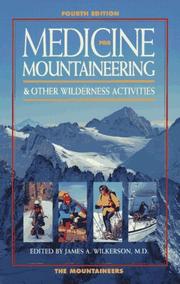
The long-standing expedition medicine reference, written for parties operating far beyond any evacuation. Appropriate once you have real training rather than only reading behind you.
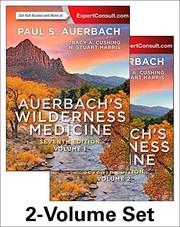
The comprehensive clinical textbook of the discipline and the source most other books cite. Use it as a reference to look things up rather than a book to read cover to cover.
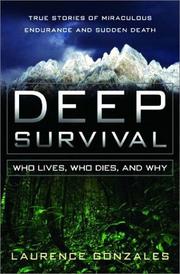
Not a medical book at all, but the best account of why competent people make fatal decisions in the backcountry. A deliberate final read, because judgment under stress is the skill all the protocols depend on.
Discussion
Keep reading
Paths that share books, cover the same subject, or open a related topic.