Say the important thing first, once, plainly: reading about wilderness medicine does not make you competent to practise it. Wilderness First Aid and Wilderness First Responder are hands-on certifications, taught over days with scenarios, supervised practice and an instructor watching your patient assessment. These books are what makes that course land — and what keeps the material alive in the years between recertifications. They are not a substitute for the course, and nothing here defines a scope of practice for you.
With that established, order matters more here than in most subjects. The field ranges from a hundred-page pocket booklet to a two-volume clinical reference weighing several kilograms, and people routinely start at the wrong end. Beginners buy the professional text and never open it; experienced trip leaders stall on introductory material they already know. The sequence below moves from field-portable to course-grade to specialist.
Start with something you can finish
Basic illustrated wilderness first aid by William Forgey is short, cheap, diagrammatic and genuinely fits in a lid pocket. Read it in an evening. It will not teach you assessment, but it gives you the vocabulary and the shape of the problem, which makes everything afterwards faster to absorb.
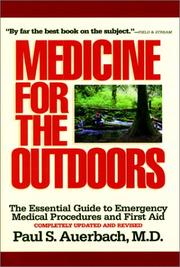
Then move to Medicine for the outdoors by Paul Auerbach — the general-audience reference organised for lookup, problem by problem, from blisters to lightning strike. This is the book most households with a hiker in them should own. Sit Wilderness medicine by William Forgey next to it as the slightly deeper, more decision-oriented treatment aimed at people responsible for a group rather than themselves.
The course-grade texts
NOLS Wilderness Medicine by Tod Schimelpfenig is the pivot point of this path. It teaches the patient assessment system properly — the ordered, repeatable process that separates trained response from improvisation — and it is the text behind one of the two dominant curricula in the field. Read it before your course rather than during it and the practical days become far more useful.
Wilderness first responder by Buck Tilton covers the same territory at WFR level from the other major teaching tradition. The overlap with the NOLS text is substantial. Pick one as your main study text rather than working through both, and let the assigned reading for whatever course you enrol in decide which. If your course does not assign one, either works.
Wilderness 911 by Eric Weiss is the improvisation book: splints from sleeping pads, litters from packs, what to do when the kit does not contain what the protocol assumes. Read it after you have the assessment framework, because improvisation without a framework is just guessing.
Specialist depth, and the far end of the shelf
Two books go deeper on specific environments. Hypothermia, frostbite, and other cold injuries by Gordon Giesbrecht and James Wilkerson is the authoritative treatment of cold injury — worth its place because cold is the hazard most likely to turn a manageable incident into a fatal one, and because the popular understanding of rewarming is riddled with folklore. Medicine for mountaineering & other wilderness activities by James Wilkerson extends the same care into altitude and expedition contexts.
Auerbach's Wilderness Medicine, 2-Volume Set sits at the end for a reason. It is a professional clinical reference of several thousand pages written for physicians, and it is magnificent, but it is not a book a weekend hiker needs to own. Borrow it, consult it, or buy it if wilderness medicine is becoming your career.
Finish with Deep Survival by Laurence Gonzales, which is not a medical book at all. It is about why people make the decisions that put them in front of a first-aid kit in the first place — the psychology of accidents, denial and misplaced confidence. Prevention is the highest-yield chapter in this whole subject, and no protocol teaches it.
Work the full path in order, then go and take the course. If backcountry travel is the context, backpacking covers the trip-planning side of the same risk picture.
Follow the full reading path →