Best Books on Watergate, in Reading Order
This curriculum moves from accessible narrative overviews to the primary journalistic accounts, then into the legal and constitutional machinery of the cover-up, and finally to the deepest scholarly and insider analyses. Each stage builds the cast of characters, timeline, and vocabulary needed to fully absorb the more demanding books that follow.
Foundations: The Story from Start to Finish
BeginnerGrasp the full arc of Watergate — who did what, when, and why it mattered — before diving into primary sources.
▸ Study plan for this stage
Pace: 4–5 weeks, ~40–50 pages/day (approximately 280–350 pages per book)
- The break-in at the Democratic National Committee headquarters (June 1972) and its immediate cover-up by Nixon's inner circle
- The key players: Nixon, Haldeman, Ehrlichman, Mitchell, Dean, and the role of the FBI, CIA, and Senate investigators
- The tape-recording system in the Oval Office and how it became the central evidence of obstruction of justice
- The timeline of escalating cover-up efforts: hush money, witness intimidation, and false statements to investigators
- How the investigation unfolded through the FBI, the Senate Watergate Committee, and the House Judiciary Committee
- The constitutional crisis: what impeachment meant and why Nixon's resignation became inevitable
- The distinction between the original crime (the break-in) and the far more damaging cover-up (obstruction of justice)
- What was the original crime at the heart of Watergate, and who ordered or authorized the break-in at the DNC?
- How did Nixon's tape-recording system become the most critical piece of evidence, and what did the tapes reveal about his knowledge and involvement?
- What were the main stages of the cover-up, and how did Nixon's inner circle attempt to obstruct the investigation?
- How did the investigation progress from the initial break-in through the Senate hearings and House Judiciary Committee proceedings?
- Why was obstruction of justice considered more serious than the original break-in itself?
- What role did John Dean play in the unraveling of the cover-up, and why was his testimony pivotal?
- Create a detailed timeline of Watergate from June 1972 through August 1974, marking key events (break-in, cover-up phases, investigations, impeachment proceedings, resignation) using both books as sources
- Build a character map identifying the major players (Nixon, Haldeman, Ehrlichman, Mitchell, Dean, etc.) and their roles, responsibilities, and how their involvement changed over time
- Write a 2–3 page summary of the tape-recording system's discovery and explain why the tapes were so damaging to Nixon's defense
- Trace the cover-up strategy as described in Dean's account versus Graff's narrative—identify where their emphases differ and why
- Create a visual diagram showing the chain of command and decision-making during the cover-up (who knew what, who told whom, and when)
- Write a short essay (3–4 pages) answering: 'Why was the cover-up worse than the crime?' using specific examples from both books
Next up: This stage establishes the complete narrative arc and key facts of Watergate, preparing you to critically examine primary sources—such as the actual tapes, testimony transcripts, and documents—with full context and understanding of their significance in the next stage.
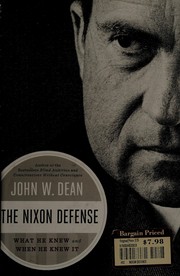
Dean, Nixon's own White House counsel, reconstructs the cover-up day by day using the White House tapes. Starting here gives beginners an authoritative, chronological spine for the entire scandal.

A modern, comprehensive narrative drawing on newly declassified material; it introduces every major player and event in clear prose, making it the ideal second read to fill gaps left by Dean's insider focus.
The Reporters: Journalism That Broke the Story
BeginnerUnderstand how investigative journalism exposed the cover-up and what that process looked and felt like from inside the Washington Post newsroom.
▸ Study plan for this stage
Pace: 8–10 weeks, ~40–50 pages/day (with reflection breaks)
- The methodology of investigative journalism: how reporters build a story through source development, document verification, and corroboration
- The role of institutional support: how editors, publishers, and legal teams enabled the Washington Post to pursue a dangerous story
- The human cost of investigation: the pressure, fear, and ethical dilemmas reporters face when challenging power
- The mechanics of a cover-up: how the Nixon administration's attempts to obstruct justice were exposed through incremental reporting
- The relationship between journalism and government accountability: how the press functions as a check on executive power
- The evolution of a scandal: how a break-in becomes a constitutional crisis through persistent, methodical reporting
- Source protection and trust-building: the delicate process of cultivating confidential sources and maintaining their safety
- The newsroom culture that enabled the investigation: collaboration, skepticism, and institutional courage
- What were the key investigative techniques Woodward and Bernstein used to verify information and build their story, and why was corroboration so critical?
- How did the Washington Post's institutional support—from editors, lawyers, and the publisher—enable the reporters to pursue the story despite legal and political pressure?
- Who was Deep Throat, what role did he play in the investigation, and what does his involvement reveal about source relationships in investigative journalism?
- What specific evidence and documents did the reporters uncover that directly linked the break-in to the White House, and how did they obtain them?
- How did Nixon's resignation come about, and what was the final sequence of events in 'The Final Days' that led to his decision to step down?
- What personal and professional risks did Woodward and Bernstein face during their investigation, and how did they manage the pressure?
- Create a timeline of key revelations in 'All the President's Men,' noting the date each major piece of evidence emerged and what it revealed—this maps the incremental nature of investigative journalism
- Identify and analyze 3–4 critical scenes where the reporters faced obstacles (legal threats, source reluctance, editorial pressure) and document how they overcame each one
- Write a 500-word analysis of Deep Throat's role: What information did he provide? Why was he crucial? What does his anonymity tell us about source protection?
- Track the chain of evidence in one major revelation (e.g., the slush fund, the cover-up payments) from initial tip to publication—show how verification happened at each step
- Read a passage from 'All the President's Men' describing the reporting process, then rewrite it as a modern-day news story to see how investigative methods have evolved or remained constant
- Compare the tone and pacing of 'All the President's Men' (the investigation) with 'The Final Days' (the endgame)—write a brief reflection on how the narrative shifts as the scandal reaches its climax
Next up: This stage demonstrates how journalism can expose institutional wrongdoing through rigorous methodology and courage, setting up the next stage to examine the broader political and legal consequences of Watergate and how the scandal reshaped American governance and public trust.
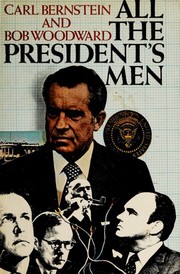
The canonical first-person account of how Woodward and Bernstein followed the money from the break-in to the Oval Office; essential reading and the most famous piece of Watergate journalism.

Picks up where All the President's Men ends, reconstructing Nixon's last weeks in office in vivid detail — a natural sequel that closes the journalistic narrative arc.
The Tapes, the Hearings, and the Legal Battle
IntermediateUnderstand the Senate hearings, the Saturday Night Massacre, the Supreme Court fight over the tapes, and the constitutional crisis at the heart of Watergate.
▸ Study plan for this stage
Pace: 4–5 weeks, ~40–50 pages/day. Start with "Blind Ambition" (approximately 500 pages) over 2–2.5 weeks, then "The Right and the Power" (approximately 300 pages) over 1.5–2 weeks, leaving time for review and reflection.
- The role of the White House tapes as evidence: what they contained, why they were crucial to the investigation, and how they implicated Nixon directly
- John Dean's testimony before the Senate Watergate Committee: his credibility, his account of the cover-up, and the confrontation with Nixon's denials
- Executive privilege and presidential power: the constitutional argument Nixon used to withhold the tapes and how it was challenged
- The Saturday Night Massacre: the firing of Special Prosecutor Archibald Cox, the resignations of Richardson and Ruckelshaus, and the constitutional crisis it triggered
- The Supreme Court's decision in United States v. Nixon: the limits of executive privilege and the principle that no one is above the law
- Leon Jaworski's role as Special Prosecutor: his strategy for obtaining the tapes, his prosecution of Nixon's aides, and his pursuit of the president himself
- The impeachment process: how the evidence from the tapes and hearings drove the House Judiciary Committee toward articles of impeachment
- The tension between presidential power and the rule of law: how Watergate exposed and tested the constitutional system's checks and balances
- What was the significance of the White House tapes, and how did their existence and content become central to the Watergate investigation?
- How did John Dean's Senate testimony challenge Nixon's version of events, and what made Dean's credibility both questioned and ultimately persuasive?
- What was the Saturday Night Massacre, why did it happen, and what constitutional crisis did it create?
- How did the Supreme Court's decision in United States v. Nixon limit executive privilege, and what did it establish about presidential power?
- What was Leon Jaworski's strategy for prosecuting the Watergate case, and how did he navigate the challenge of potentially prosecuting a sitting president?
- How did the evidence from the tapes and the Senate hearings contribute to the impeachment process and Nixon's eventual resignation?
- Create a timeline of key events from both books—the hearings, the Saturday Night Massacre, the Supreme Court decision, and major tape revelations—with brief notes on their constitutional significance.
- Write a 2–3 page analysis comparing John Dean's account in 'Blind Ambition' with Leon Jaworski's perspective in 'The Right and the Power' on a specific event (e.g., the Saturday Night Massacre or the fight over the tapes).
- Identify and annotate 3–4 key passages from each book that illustrate the constitutional crisis at the heart of Watergate; explain why each passage matters.
- Prepare a mock Senate hearing: select a pivotal moment from Dean's testimony and role-play the exchange between Dean and a senator, using details from 'Blind Ambition.'
- Outline the legal arguments both sides made regarding executive privilege and the tapes; then write a one-page summary of how the Supreme Court resolved the tension.
- Create a character profile for John Dean and Leon Jaworski based on how they present themselves in their respective books—their motivations, ethical frameworks, and views on presidential accountability.
Next up: This stage establishes the legal and constitutional machinery that brought down Nixon—the tapes, the hearings, and the courts—preparing you to examine the final stage: Nixon's impeachment, resignation, and the long-term constitutional and political legacy of Watergate.

Dean's memoir of his own role and his decision to cooperate with prosecutors gives an unmatched inside view of the cover-up's mechanics and the Senate testimony that cracked it open.
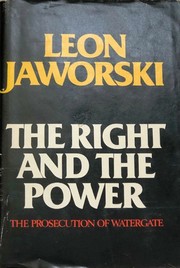
The Special Prosecutor's own account of the legal battle to obtain the tapes and bring the case to trial — essential for understanding the constitutional stakes of United States v. Nixon.
Nixon: The Man Behind the Scandal
IntermediatePlace Watergate inside Nixon's full political psychology and career, understanding why the cover-up happened and what it reveals about presidential power.
▸ Study plan for this stage
Pace: 6–7 weeks, ~40–50 pages/day (Ambrose first: ~3 weeks; RN memoirs second: ~3–4 weeks)
- Nixon's early political defeats (1960 loss to Kennedy, 1962 California governor race) and how they shaped his resentment toward the press and Eastern establishment
- The psychology of Nixon's 'comeback' narrative: his need to prove himself and restore his reputation after humiliation
- Nixon's worldview on executive power: his belief in a strong presidency, national security imperatives, and the 'imperial presidency' mentality
- The relationship between Nixon's personal insecurities and his political paranoia—how his enemies list and obsession with leaks grew from deeper psychological wounds
- Nixon's compartmentalization: how he could pursue détente and opening to China while simultaneously authorizing illegal domestic surveillance
- The cover-up as an extension of Nixon's character: his instinct to control information, deny wrongdoing, and protect his image at any cost
- How Watergate reveals the dangers of unchecked executive power when combined with a president who views himself as above the law
- Nixon's own account of his motivations and rationalizations in the memoirs—the gap between his self-justifications and historical reality
- How did Nixon's defeats in 1960 and 1962 shape his political psychology and his later obsession with enemies and leaks?
- What does Ambrose reveal about Nixon's concept of executive power, and how did this worldview make the cover-up seem justified to him?
- Trace the evolution of Nixon's paranoia: what specific events or relationships fed his belief that he was under siege by hostile forces?
- How does Nixon's own account in his memoirs differ from Ambrose's portrayal, and what does this gap reveal about Nixon's self-awareness?
- Why did Nixon believe the cover-up was necessary, and what does his reasoning tell us about his understanding of presidential accountability?
- How did Nixon's compartmentalization allow him to pursue major foreign policy achievements while simultaneously authorizing illegal domestic activities?
- Create a timeline of Nixon's major political defeats and victories (1946–1974), annotating how each event affected his psychology and decision-making according to Ambrose
- Write a 500-word psychological profile of Nixon based on Ambrose's biography, focusing on the roots of his insecurity and need for control
- Compare and contrast Ambrose's account of a specific Watergate-era decision (e.g., the Pentagon Papers, the plumbers unit, the cover-up) with Nixon's own explanation in RN—identify where they diverge and what Nixon omits or reframes
- Analyze Nixon's enemies list: identify the categories of people he feared, and write a brief essay on what these categories reveal about his worldview and sense of threat
- Create a chart mapping Nixon's stated justifications for executive actions (from RN) against Ambrose's historical evidence—where does Nixon's narrative hold up, and where does it break down?
- Write a reflective essay: 'If Nixon had possessed greater self-awareness about his own psychology, how might Watergate have unfolded differently?' Ground it in specific passages from both books
Next up: This stage establishes Nixon as a flawed, psychologically driven actor whose personal demons and beliefs about presidential power made the cover-up inevitable—preparing you to examine in the next stage how the constitutional and legal systems responded to and constrained that power.
The first volume of Ambrose's definitive biography establishes Nixon's character, paranoia, and political instincts — the essential backstory for understanding how Watergate was possible.

Nixon's own account is indispensable as a primary source; reading it after the critical biographies lets you weigh his self-justifications against what the evidence actually shows.
Deep Dives: Scholarship and Lasting Consequences
ExpertAnalyze Watergate's long shadow on American politics, the presidency, and public trust, using the most rigorous historical and analytical works.
▸ Study plan for this stage
Pace: 6–8 weeks, ~40–50 pages/day. Allocate 3–4 weeks to "The Wars of Watergate" (600+ pages), then 2–3 weeks to "Abuse of Power" (300+ pages), with 1 week for synthesis and comparative analysis.
- The constitutional and institutional dimensions of Watergate as a systemic crisis of executive power, not merely a scandal
- Kutler's argument about the 'wars' of Watergate: competing narratives, legal battles, and political struggles that extended far beyond Nixon's resignation
- The distinction between the crime itself and the cover-up, and how both revealed structural vulnerabilities in checks and balances
- The role of the judiciary, Congress, and the press as countervailing forces that exposed and constrained executive overreach
- How Watergate fundamentally altered the presidency: increased scrutiny, statutory constraints (War Powers Act, FOIA amendments), and diminished deference to executive authority
- The concept of 'abuse of power' as a constitutional violation distinct from criminal conduct, and its implications for presidential accountability
- The long-term erosion of public trust in institutions and the lasting polarization of American politics stemming from Watergate
- Kutler's historiographical approach: using primary documents, oral histories, and archival evidence to reconstruct competing interpretations of events
- What does Kutler mean by the 'wars of Watergate,' and how do these wars extend beyond Nixon's resignation in August 1974?
- How did the constitutional system's checks and balances—particularly the judiciary and Congress—function to constrain executive power during the Watergate crisis?
- What is the distinction between the Watergate crimes and the cover-up, and why does Kutler emphasize both in understanding the scandal's significance?
- How did Watergate reshape the American presidency institutionally and legally in the years following 1974?
- What does 'abuse of power' mean as a constitutional concept, and how does it differ from criminal charges in the context of Watergate?
- How did Watergate permanently alter public trust in government institutions, and what evidence does Kutler provide for this shift?
- Create a detailed timeline of the major 'wars' of Watergate (the scandal itself, the cover-up, the investigations, the trials, the pardons, and the historical reassessments) using evidence from both books. Identify which actors (judiciary, Congress, press, executive) drove each phase.
- Construct a comparative chart analyzing how Kutler treats the same events differently across 'The Wars of Watergate' and 'Abuse of Power'—note shifts in emphasis, new evidence, or evolved interpretations.
- Write a 2,000-word analytical essay on one specific 'war' within Watergate (e.g., the constitutional battle over executive privilege, the cover-up trials, or the pardon controversy) using primary documents cited by Kutler.
- Identify and analyze 3–4 key turning points where the constitutional system's checks and balances prevented further executive overreach. For each, explain what would have happened without that constraint.
- Debate exercise: Prepare arguments for and against the proposition that 'Watergate fundamentally weakened the presidency' using specific evidence from Kutler's works. Consider both intended and unintended consequences.
- Research and present on one post-Watergate institutional reform (War Powers Act, FOIA amendments, independent counsel statute, etc.). Trace its origins in Watergate concerns using Kutler's analysis as a foundation.
Next up: This stage equips you with a rigorous, document-grounded understanding of Watergate's constitutional and institutional dimensions, preparing you to examine how subsequent presidencies navigated the constraints and skepticism Watergate created, and how modern debates over executive power, accountability, and presidential immunity continue to echo Watergate's unresolved tensions.

The most thorough scholarly history of the scandal, synthesizing legal, political, and cultural dimensions; best read last when you have the full factual foundation to appreciate its arguments.
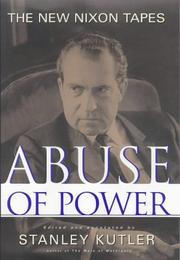
Kutler's edited transcripts of the White House tapes — the raw primary source — reward a reader who already knows the story and can now hear Nixon's own words in their full, damning context.
Discussion
Keep reading
Paths that share books, cover the same subject, or open a related topic.