Watergate is peculiar among political scandals because the evidence is so abundant. There are thousands of hours of tapes, a mountain of sworn testimony, grand jury material, and memoirs from nearly everyone involved — many of them written by people with an obvious interest in how they come out. That abundance is why reading order matters. Start with a memoir and you absorb one man's framing before you know the timeline.
The better sequence is documents first, narrative second, memoirs third, historians last. Get the chronology fixed in your head, then let the participants argue over it.
Establish the record
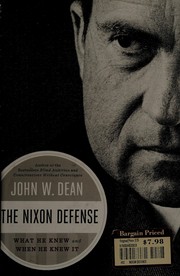
John Dean's The Nixon defense is the natural opening even though Dean is himself a participant, because the book is built from a systematic transcription of roughly a thousand Watergate-related recorded conversations. It is a day-by-day reconstruction of what was said in the Oval Office and when — closer to a documentary edition than a memoir. Read it as a chronology.
Garrett Graff's Watergate is the modern synthesis: a single-volume narrative history that folds in material unavailable to earlier writers and, importantly, situates the break-in inside a much broader pattern of covert operations. If you want one book, this is the one.
The reporting and the collapse
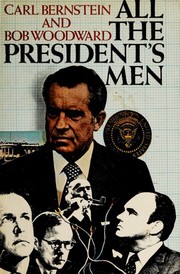
All the President's Men is the contemporaneous account by Carl Bernstein and Bob Woodward — not a history of Watergate but a history of finding out about Watergate, which is a different and narrower thing. Read it knowing what it cannot know yet. Its sequel, The final days, covers the last months of the Nixon presidency in intimate, reconstructed detail; it was controversial on publication precisely because of how it renders private scenes and states of mind.
The insiders and the prosecutor
Dean's earlier memoir Blind Ambition is the self-account of the White House counsel who broke ranks, and it is worth reading against The Nixon defense to see how his own understanding changed once he had the tapes in front of him. Leon Jaworski's The Right and the Power gives the special prosecutor's side: the subpoena fight, the tapes case, and the constitutional questions about indicting a sitting president.
Then take the other chair. Stephen Ambrose's Nixon is a full-scale biography that puts the scandal inside a long and consequential career rather than treating it as the whole man. And RN, the memoirs of Richard Nixon is Nixon's own account — self-serving in the places you would expect, but indispensable if you want to understand how he understood it.
Where historians disagree
Stanley Kutler's The wars of Watergate is the standard scholarly history, and it argues for a Nixon-centred reading in which the scandal flows from the character of the administration itself. His companion volume Abuse of power is a selected edition of tape transcripts. Be aware that the accuracy of some transcriptions in that volume has been challenged, and that Dean's later transcription project was undertaken partly in response. Historians also still disagree about the break-in's actual purpose, about how much of the cover-up Nixon directed versus ratified, and about whether Watergate represented an aberration or the visible part of ordinary Cold War executive practice. This path does not settle those arguments; it gives you enough of the record to follow them.
If you want the wider constitutional context, the political science hub covers the questions about executive power that Watergate made concrete. Follow the full path to read the tapes before the memoirs.
Follow the full ordered path here: Best Books on Watergate, in Reading Order.
Ready to learn something deeply?
Build a reading path — free