Wallace Stegner Reading Order: Where to Start
Stegner wrote for sixty years in two modes — novels about marriage, inheritance and disappointment, and nonfiction about water, land and the false promise of the American West — and the two halves explain each other. Start with the late novel most readers fall for, then the Pulitzer winner, then work back through the autobiographical books that supplied the raw material. The essays and the Powell biography come last, where they read as the argument the fiction has been making all along.
Start Here: The Two Great Late Novels
IntermediateMeet Stegner at full command — the long marriages, the retrospective narrators, the plain sentences that turn out to be doing a great deal.
▸ Study plan for this stage
Pace: 8–9 weeks. Crossing to Safety is about 345 pages and takes 3 weeks — it has almost no plot, so reading it in short daily stretches actually suits it. Angle of Repose is 570 pages with two interleaved timelines and needs 5 to 6 weeks; the nineteenth-century sections are denser than the 1970s frame.
- The retrospective narrator: both novels are told by an older man reconstructing something he was only partly present for
- A novel with no plot in the conventional sense — Crossing to Safety runs on four decades of friendship, money, illness and academic politics
- Stegner's plain sentence, which looks unremarkable and is doing structural work; watch how much information a paragraph of description carries
- Marriage as the recurring unit of analysis, examined over decades rather than at a crisis point
- Angle of Repose's double timeline: Lyman Ward in 1970, wheelchair-bound, reconstructing his grandmother's frontier marriage from her letters
- The angle of repose itself — the slope at which loose material finally stops sliding — as the novel's governing metaphor for a marriage
- The Mary Hallock Foote controversy: Stegner drew heavily on the real Foote's letters, and whether he had adequate permission and adequate acknowledgement remains genuinely disputed. Read the novel knowing this; it is not a settled question
- Lyman Ward as an unreliable and self-interested reconstructor, which is the novel's own defence and its own accusation
- Crossing to Safety has almost nothing that would count as plot. What is generating the tension instead?
- What does Lyman Ward want from his grandmother's story, and how does that shape what he tells you?
- Where does the angle-of-repose metaphor stop being about geology and start being about a marriage?
- Given the Foote controversy, does Lyman's own use of a real woman's letters read as Stegner anticipating the criticism, or as the same offence twice?
- Both novels are narrated by men looking back at women's lives. What do the narrators consistently fail to see?
- Which of the two would you press on a friend, and what would they have to tolerate?
- In Crossing to Safety, mark the moment you realise which of the four characters the book is actually about
- Keep the two Angle of Repose timelines on separate pages of notes; the novel cuts between them without ceremony
- Read a short account of the Mary Hallock Foote question after finishing the novel, then reread Lyman's framing passages
- Take one paragraph of Stegner description and rewrite it flatly; the comparison shows what the plainness is hiding
- Write one sentence naming what each novel thinks a long marriage is
Next up: You now know the mature voice and the retrospective method, so the earlier autobiographical novels read as the raw material rather than as apprentice work.
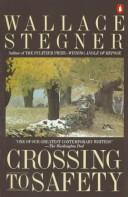
The best first Stegner: two academic couples across forty years of friendship, and almost nothing that would count as plot. His last novel, his warmest, and the one that converts people.
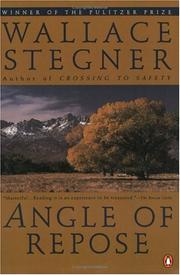
The Pulitzer winner and his major work: a wheelchair-bound historian reconstructs his grandmother's frontier marriage. Read second, because its double timeline is more demanding, and know going in that its heavy use of Mary Hallock Foote's letters remains a real and unsettled controversy.
The Autobiographical West
IntermediateGo back to the childhood on the Saskatchewan plains and the father who chased every boom, which is the source material for everything else.
▸ Study plan for this stage
Pace: 11–13 weeks. The Big Rock Candy Mountain is 560 pages and takes 4 to 5 weeks. Recapitulation is much shorter at about 290 pages and should follow immediately — 2 weeks. Wolf Willow (~305) mixes history, memoir and fiction and reads slower than its length suggests; give it 3 weeks.
- Bo Mason, the father who chases every boom, as barely disguised autobiography and the origin of Stegner's lifelong quarrel with the boomer mentality
- The boomer versus the sticker: the man who extracts and moves on against the one who stays and builds — Stegner's central moral distinction
- The Saskatchewan plains childhood, the homestead that fails, and the specific hardness of a country that will not support the life being attempted on it
- Recapitulation written thirty-four years later, with Bruce Mason returning to Salt Lake City to bury an aunt and meet the same family again
- The gap between the two novels is not just fictional time — the decades of authorial distance are audible, and that is why they should be read together
- Wolf Willow's braided form: history, memoir and short fiction about one Saskatchewan town in a single book, decades before that was a common move
- The frontier written as a documented place rather than a legend, which is where Stegner's nonfiction method begins
- The smell of wolf willow as involuntary memory — the sensory hinge the whole book turns on
- Is Bo Mason a monster, a victim of the country, or both? Where does the novel decide?
- What does Recapitulation know that The Big Rock Candy Mountain could not, and is that wisdom or just distance?
- Wolf Willow moves between history, memoir and fiction without warning. What can each mode do that the others cannot?
- Stegner's quarrel with the boomer is a moral position about land use. Where does it become a moral position about people?
- How does the childhood material here surface, transformed, in Angle of Repose?
- Does knowing how autobiographical these are make them stronger or weaker as novels?
- Read The Big Rock Candy Mountain and Recapitulation with no book in between; the pairing is the point
- Keep a list of the family's moves in the first novel and mark which ones were forced and which were chosen
- In Wolf Willow, note where a section changes mode and ask why that material needed that form
- Write down Stegner's boomer/sticker distinction in your own words; you will need it for the nonfiction stage
- Compare Bruce Mason's return in Recapitulation with Lyman Ward's reconstruction in Angle of Repose — two men handling the past very differently
Next up: With the family material exhausted, the Joe Allston books show Stegner using a narrator who is not carrying that inheritance and can therefore be funny about himself.
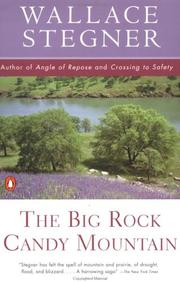
The breakthrough novel: a family dragged across the West by a father convinced the big score is one town away. Barely disguised autobiography, and the origin of Stegner's lifelong quarrel with the boomer mentality.
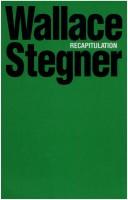
The sequel written thirty-four years later, with Bruce Mason returning to Salt Lake City to bury an aunt and confront the same family. Read directly after its predecessor to feel the gap those decades opened.
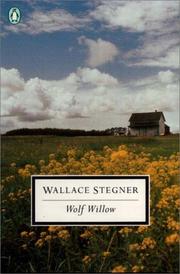
History, memoir and fiction braided into one book about a single Saskatchewan town. It is where he first writes the frontier as a documented place rather than a legend, and it makes the novels' geography real.
The Joe Allston Novels
IntermediateFollow one recurring narrator through two late books, and see Stegner working the retired, self-mocking voice he was most comfortable in.
▸ Study plan for this stage
Pace: 5–6 weeks. All the Little Live Things is about 345 pages and takes 3 weeks. The Spectator Bird is short at around 215 pages and can be read in a fortnight, but read it slowly — it is the most concentrated prose Stegner wrote.
- Joe Allston, a retired literary agent in the California hills, as Stegner's most comfortable voice: retired, self-mocking, defensive and funny
- All the Little Live Things introduces him, so it must come first — the second book assumes the marriage and the grief
- The counterculture neighbour and the dying friend as the two pressures the first novel puts on Allston's settled opinions
- Allston's crankiness as a technique: Stegner uses a narrator whose prejudices the reader can see past
- The Spectator Bird's device — Allston reading an old Danish journal aloud to his wife, so the past arrives as a shared performance
- It won the National Book Award, and its compression is the reason: the same themes as the family novels in a third of the pages
- Gardening, decay and encroachment in the first book as the plainest statement of Stegner's ecology
- The spectator as self-accusation: a man who has watched his life rather than lived it
- Where is Joe Allston wrong, and how does Stegner let you know without correcting him?
- The counterculture material in All the Little Live Things has dated in specific ways. Which parts still land, and which read as an older man's irritation?
- What does reading the Danish journal aloud do that simply narrating the past would not?
- Why is Allston a spectator? Name the choice he did not make.
- The Spectator Bird is short and won the National Book Award. What did the compression let Stegner do?
- How is Allston's grief handled differently from Lyman Ward's in Angle of Repose?
- Read the two in order and note every reference in the second book that assumes the first
- Mark three passages where Allston's judgement is clearly unreliable and work out what tips you off
- Read a page of The Spectator Bird aloud; the journal-reading device makes the whole novel a book meant to be heard
- Compare Allston's voice with the retrospective narrator of Crossing to Safety — close cousins, different amounts of self-forgiveness
Next up: With every fictional narrator behind you, the nonfiction reads as Stegner dropping the persona and making the argument the novels have been staging.
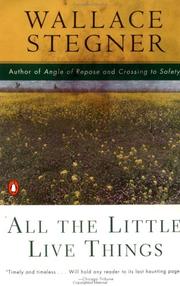
A retired literary agent in the California hills confronting a young counterculture neighbour and a dying friend. It introduces Joe Allston, so it comes before its companion.
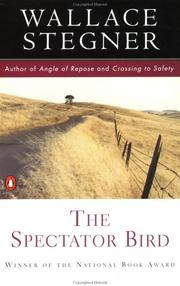
Allston again, reading an old Danish journal aloud to his wife; it won the National Book Award. Short, and the single most concentrated example of Stegner's late voice.
Stegner on the West
IntermediateRead the nonfiction case about aridity, settlement and public land that made him the most quoted writer in Western conservation.
▸ Study plan for this stage
Pace: 9–10 weeks. Beyond the Hundredth Meridian is 485 pages of biography and history and takes 4 weeks — it is the most demanding nonfiction here and worth reading beside a map. The Sound of Mountain Water (~285) is essays, a fortnight. Where the Bluebird Sings to the Lemonade Springs (~245) is another f
- John Wesley Powell, the one-armed Civil War veteran who ran the Colorado and then told Congress the West was arid and would not support the settlement pattern being planned for it
- The hundredth meridian as the line beyond which rainfall fails, and the whole argument of Western water policy in one geographic fact
- Powell's report was ignored, and Stegner treats that as the founding error of the modern West
- Beyond the Hundredth Meridian as the intellectual spine of Angle of Repose — the same period, the same engineering optimism, one as history and one as fiction
- The Wilderness Letter, collected in The Sound of Mountain Water, and the 'geography of hope' formulation that is still quoted at hearings
- Aridity as the West's defining condition rather than a problem to be engineered away
- Where the Bluebird Sings collects late essays including Stegner's frankest self-assessments as a novelist — he is harder on himself than his critics were
- The boomer and the sticker returning as public policy rather than family history, which is where the two halves of the career meet
- What did Powell actually recommend, and why was it politically impossible?
- How does the Powell biography change your reading of the engineering marriage in Angle of Repose?
- The Wilderness Letter is a page long. What makes it durable enough to still be read aloud in hearings?
- Stegner argues aridity is the West's defining fact. What follows from that for how the region should have been settled?
- In his late self-assessments, what does Stegner think he failed at? Do you agree, having read the fiction?
- Do the essays make the novels look like arguments in disguise, or does the fiction do something the essays cannot?
- Read Beyond the Hundredth Meridian with a map of the Colorado basin at hand; the geography is the argument
- Find the Wilderness Letter in The Sound of Mountain Water and read it aloud once — it was written to be heard
- Set the Powell material beside the Angle of Repose engineering chapters and note what fiction added and what it removed
- Write a paragraph on the boomer/sticker distinction as it appears in family life, in a novel, and in water policy
- After the late essays, write your own honest verdict on the Foote controversy from the first stage; you now have Stegner's own account of his methods to weigh
Next up: This closes the path: the novels about marriage and inheritance and the nonfiction about water and land turn out to be one argument, and the last essays are Stegner telling you what he thought it added up to.

His biography of John Wesley Powell and the warning about water that the West ignored. The essential Stegner nonfiction and the intellectual spine of Angle of Repose.

The earlier essay collection, containing the Wilderness Letter that still gets read aloud at hearings. Read after the Powell book so you can hear the argument condensed into a page.

Late essays on living and writing in the West, including his frankest self-assessments as a novelist. The right closing book: it looks back over everything else on this list and tells you what he thought it added up to.
Discussion
Keep reading
Paths that share books, cover the same subject, or open a related topic.