Vladimir Nabokov Reading Order: Where to Start
This curriculum moves from Nabokov's most accessible and celebrated English novel into his broader major works, then dives into his Russian-language fiction in translation, and finally arrives at his own critical and pedagogical writings — which reframe everything read before. Starting at an intermediate level, each stage deepens stylistic awareness, historical context, and interpretive sophistication, so that by the end the reader understands Nabokov as both a supreme artist and a demanding theorist of literature itself.
The Essential Entry Point
IntermediateExperience Nabokov's English prose at its most seductive and morally complex, establishing his signature unreliable narrator, layered irony, and obsessive style.
▸ Study plan for this stage
Pace: 6–8 weeks total: Weeks 1–4 for Lolita (~25–30 pages/day, including re-reading flagged passages), Weeks 5–8 for Pale Fire (~15–20 pages/day given its dense, non-linear structure — read the poem first, then the Commentary and Index in Kinbote's order, then loop back to cross-reference).
- Unreliable Narration: Both Humbert Humbert and Charles Kinbote are self-serving, self-deceived narrators whose accounts must be read against the grain — what they omit, distort, or over-explain is as important as what they say.
- Layered Irony: Nabokov constructs multiple ironic registers simultaneously — verbal irony in word choice, dramatic irony where the reader sees what the narrator cannot, and structural irony built into the very form of each book.
- The Seductive Style as Moral Trap: In Lolita, Humbert's gorgeous prose is a deliberate aesthetic weapon designed to make the reader complicit; recognizing the beauty while resisting the manipulation is the central readerly challenge.
- The Absent Center: Both novels orbit a figure who cannot speak for themselves — Dolores Haze in Lolita and the 'real' John Shade (and his true poem) in Pale Fire — forcing readers to reconstruct suppressed truths.
- Form as Meaning: Pale Fire's architecture (poem + commentary + index) is not a gimmick but the novel's argument — the form enacts Kinbote's colonization of Shade's art and mirrors the theme of obsessive interpretation.
- The Aesthetics of Obsession: Both narrators are monomaniacal artists of a kind; Nabokov explores how obsession warps perception, memory, and language, and how it can produce both beauty and destruction.
- Intertextuality and Allusion: Nabokov embeds literary, chess, lepidopterological, and autobiographical references as a second layer of meaning — learning to spot and follow these threads is key to reading him at depth.
- The Reader as Detective: Nabokov demands active, suspicious, re-reading readers; both novels reward — and require — going back to the beginning once you know the end.
- In Lolita, how does Humbert's rhetorical strategy — his appeals to aesthetics, classical literature, and self-pity — work to deflect moral accountability, and at what specific moments does Nabokov let Dolores's real suffering pierce through the prose?
- Pale Fire is narrated entirely by Kinbote, yet John Shade is arguably the novel's moral and artistic center. How does Nabokov allow Shade's voice and values to emerge despite — and through — Kinbote's distorting commentary?
- Both Humbert and Kinbote are obsessive interpreters who impose their own narratives onto other people. What does Nabokov suggest, across both books, about the relationship between artistic genius, solipsism, and ethical failure?
- How does the physical structure of Pale Fire (the 999-line poem followed by the commentary) shape your experience as a reader differently from a conventional novel, and what would be lost if the same story were told straightforwardly?
- Nabokov famously distrusted 'ideas' in fiction and championed 'aesthetic bliss.' How do Lolita and Pale Fire simultaneously embody and complicate that position — can a novel be morally serious while foregrounding style above all?
- Identify three moments in either book where a close reading of a single sentence or paragraph reveals a meaning directly contradicted by the narrator's stated intention. What technique does Nabokov use in each case?
- The Humbert Audit: Choose any two consecutive pages of Lolita's most lyrical passages and rewrite them in plain, unadorned prose from Dolores Haze's implied perspective. Compare the two versions and write a one-page reflection on what the style was hiding.
- Kinbote's Commentary vs. The Poem: Read Canto Two of Shade's poem straight through, then read every Commentary note attached to it. Create a two-column annotated chart: Column A records what the poem actually says; Column B records what Kinbote claims it means or associates with it. Analyze the gap.
- Unreliable Narrator Markup: Print or digitally annotate 10 pages of each novel. Highlight in one color every claim the narrator makes about themselves that seems self-serving; in a second color, mark every moment where the text inadvertently contradicts the narrator. Write a brief analysis of your findings.
- The Index as Novel: Read Pale Fire's Index as a standalone text, in order, as if it were a short story. Write a 300-word summary of the 'plot' that emerges purely from the Index entries, then reflect on how this changes your understanding of Kinbote's obsessions.
- Style Imitation: Write a 300–400 word first-person confession of a minor, everyday wrongdoing (being rude, breaking a promise) in the style of Humbert Humbert — using elaborate metaphor, classical allusion, and aesthetic justification to avoid direct moral responsibility. Then write a one-paragraph meta-reflection on how the exercise felt.
- Comparative Character Reconstruction: Using only textual evidence that slips past the narrators' control, write a one-page character sketch of Dolores Haze (from Lolita) and a separate one-page sketch of John Shade (from Pale Fire) as they might actually be — stripping away the narrator's projections. Cite specific passages as evidence.
Next up: Mastering the unreliable narrator and formal experimentation in these two landmark English novels equips the reader to explore Nabokov's Russian-language roots and his other prose experiments, where the same obsessions — memory, exile, artifice, and the ethics of beauty — appear in earlier and rawer forms.
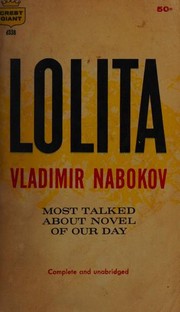
The ideal first Nabokov: his most famous and fully realized English novel, it immediately trains the reader to distrust a beautiful narrator and to read every sentence twice. Its pyrotechnic style sets the benchmark for everything that follows.
Read second, this formally radical novel — a poem plus a mad commentary — rewards the close-reading habits built by Lolita and shows Nabokov's structural inventiveness at its peak.
The Major English Works
IntermediateUnderstand the full range of Nabokov's American period: his autobiographical voice, his comic genius, and his late, maximalist ambition.
▸ Study plan for this stage
Pace: 10–12 weeks total. Week 1–3: "Speak, Memory" (~15–20 pages/day; savor slowly — this is prose poetry as much as memoir). Week 4–6: "Pnin" (~20–25 pages/day; a short novel, but re-read key chapters). Week 7–12: "Ada" (~25–30 pages/day; the density demands patience — budget extra time for Part One and
- Mnemonic artistry in 'Speak, Memory': Nabokov's treatment of memory not as passive recall but as an act of aesthetic creation, pattern-finding, and defiance of time
- The spiral structure of autobiography: how 'Speak, Memory' resists linear chronology in favor of thematic spirals (butterflies, trains, chess, exile) that loop back and deepen
- The émigré as comic figure and tragic consciousness: how 'Pnin' uses gentle comedy and dramatic irony to expose the pathos of displacement, cultural misunderstanding, and lost love
- Unreliable narration and authorial intrusion: the shadowy narrator of 'Pnin' who gradually reveals himself as Nabokov's stand-in, undermining Pnin's autonomy and raising questions of cruelty vs. compassion
- Texture and style as meaning: across all three books, how Nabokov's prose surface — puns, alliteration, embedded patterns — is not ornament but argument
- Ada's anti-novel architecture: the parallel world of Antiterra, the incest plot, and the footnote/commentary apparatus as a maximalist meditation on time, desire, and fiction itself
- Eros and memory intertwined: how 'Ada' extends the autobiographical project of 'Speak, Memory' into fiction, treating erotic experience as the supreme mnemonic event
- The late Nabokov and self-parody: how 'Ada' simultaneously celebrates and satirizes its own excesses, demanding the reader hold admiration and ironic distance at once
- In 'Speak, Memory,' Nabokov describes his method as finding the 'transparency of things' — what does he mean, and how do specific passages (e.g., the opening meditation on cradles, the Mademoiselle chapter) enact this idea?
- How does the unnamed narrator of 'Pnin' function as both storyteller and antagonist? What does the novel gain — and lose — by filtering Pnin's inner life through this unreliable, self-serving voice?
- Pnin's famous 'wave of anguish' scene (Chapter 2, the squirrel at the drinking fountain) is often cited as Nabokov's most emotionally direct writing. How does it coexist with the novel's comic register, and what does that tension reveal about Nabokov's ethics of fiction?
- Antiterra in 'Ada' is an inverted, eroticized version of Earth. What specific distortions does Nabokov introduce, and how do they serve the novel's themes of memory, desire, and the unreliability of any 'world'?
- All three books are preoccupied with loss — of childhood, of homeland, of the beloved. Compare how 'Speak, Memory,' 'Pnin,' and 'Ada' each stage or resist that loss differently.
- By the end of 'Ada,' Van Veen is writing the very book we have been reading. How does this metafictional loop change your understanding of the novel's treatment of time and the reliability of erotic memory?
- 'Speak, Memory' imitation exercise: Choose a single, concrete object from your own childhood (a toy, a smell, a recurring journey) and write 300–400 words in Nabokov's spiral style — begin with the object, spiral outward to a larger theme, and return to the object transformed. Focus on precise sensory language and resist sentimentality.
- Narrator mapping for 'Pnin': Draw a diagram of the novel's narrative layers — what Pnin experiences, what the narrator claims to know, and what the reader can infer the narrator is suppressing or distorting. Annotate three specific passages where the gap between these layers is most revealing.
- Close-reading log: For each of the three books, select one paragraph of roughly 10 sentences and perform a line-by-line annotation tracking sound patterns (alliteration, assonance), embedded wordplay, and any moment where style shifts register. Compare your three paragraphs: what is consistent across Nabokov's prose, and what is book-specific?
- Ada world-building chart: As you read 'Ada,' maintain a running document that maps Antiterra's divergences from Earth (geography, technology, history, language). At the end, write a one-page reflection: what does the sum of these distortions argue about the nature of memory and desire?
- Comparative loss essay (500–700 words): Write a short comparative essay arguing which of the three books most honestly confronts loss, using at least two specific textual moments from each book as evidence. Force yourself to take a clear position rather than simply cataloguing similarities.
- Re-read experiment: After finishing all three books, re-read Chapter 1 of 'Speak, Memory' and Chapter 1 of 'Pnin.' Write a half-page reflection on what you notice now that you could not have noticed on first reading — this trains the recursive, rereader's eye that Nabokov explicitly demands.
Next up: Mastering Nabokov's English-language voice — his autobiographical self-construction in "Speak, Memory," his compassionate irony in "Pnin," and his maximalist self-mythology in "Ada" — equips the reader to return to his Russian-language works and translations with a fully formed sense of the authorial sensibility that was already present, in embryo, before the exile that made him.
His autobiography is essential for understanding the biographical and emotional engine behind all his fiction — exile, loss, and the redemptive power of memory and art.
A shorter, warmer, and more comic English novel that deepens the theme of the displaced Russian exile; it is the perfect tonal counterweight to Lolita's menace.
His longest and most encyclopedic English novel, best approached after the earlier works have built the stamina and interpretive toolkit it demands.
The Russian Period
IntermediateDiscover the Russian-language novels written under the pen name V. Sirin, seeing how Nabokov's obsessions — chess, art, madness, exile — were forged before he ever wrote in English.
▸ Study plan for this stage
Pace: 6–8 weeks total: Weeks 1–4 for "The Defense" (~20–25 pages/day, including re-reading key chapters); Weeks 5–8 for Connolly's critical study of "Invitation to a Beheading" (~15–20 pages/day, pausing frequently to cross-reference the novel's passages Connolly analyzes).
- The V. Sirin pen name and the politics of Russian émigré literary identity — why Nabokov wrote in Russian for a diaspora audience and what that audience expected
- Chess as a totalizing metaphor: in The Defense, Luzhin's chess genius is both his transcendence and his psychological destruction, illustrating Nabokov's lifelong equation of artistic obsession with madness
- The 'otherworld' motif — Nabokov's recurring suggestion that a higher, patterned reality underlies the visible one, first fully developed in Luzhin's perception of life as a chess problem
- Exile and displacement as aesthetic condition: the émigré experience is not merely biographical backdrop but the structural engine of alienation in both novels
- Totalitarianism as absurdist theater: Connolly's analysis reveals how Invitation to a Beheading depicts a surreal, Kafkaesque police state that attacks the individual's inner creative life rather than just his body
- Gnostic and Romantic intertexts: Connolly traces how Nabokov draws on traditions of the imprisoned visionary artist (Rousseau, the Romantics, Gnostic dualism) to frame Cincinnatus C.'s resistance
- Pattern, artifice, and the self-conscious text: both novels foreground their own constructedness — Nabokov signals to the attentive reader that the 'real' story operates on a meta-fictional level
- The relationship between the author-as-god and his characters: Nabokov's puppeteer aesthetic, where characters who become aware of their fictional nature are either destroyed (Luzhin) or liberated (Cincinnatus)
- In The Defense, how does Nabokov use the structure of a chess game — opening, middle game, endgame — to mirror Luzhin's psychological deterioration, and where in the novel are these structural echoes most explicit?
- Connolly argues that Cincinnatus C.'s 'opacity' (his untransparent inner self) is the true crime for which he is condemned. How does this concept reframe the novel's political allegory beyond simple anti-Soviet satire?
- How does the pen name V. Sirin function as more than a pseudonym — what does Nabokov's choice of a mythological bird of paradise signal about his self-conception as an artist in exile?
- Both Luzhin and Cincinnatus are isolated figures surrounded by people who cannot perceive reality as they do. What narrative techniques does Nabokov use in each work to place the reader inside this perceptual gap?
- Connolly identifies several Romantic and Gnostic precursor texts embedded in Invitation to a Beheading. Choose one and explain how recognizing that intertext changes your reading of a specific scene or image in the novel.
- How do the endings of The Defense and Invitation to a Beheading differ in their treatment of escape from an unbearable world — and what does that difference suggest about the evolution of Nabokov's thinking between the two novels?
- Chess annotation exercise: Obtain a basic record of a famous chess game (e.g., a Grandmaster endgame) and map its three phases onto the three-part arc of Luzhin's life in The Defense. Write a one-page comparison noting where Nabokov's structural choices align with or deliberately subvert chess logic.
- Close-reading journal: Select five passages from The Defense where the boundary between chess and reality blurs for Luzhin. Annotate each for imagery, syntax, and point of view, then write a short paragraph arguing what Nabokov achieves by collapsing that boundary at that specific narrative moment.
- Connolly dialogue: After each chapter of Connolly's critical study, return to the passage of Invitation to a Beheading he discusses and write a 150-word response — do you see what Connolly sees? What does his lens illuminate or obscure? This builds active critical reading habits.
- Comparative character sketch: Write a 500-word essay comparing Luzhin and Cincinnatus as two versions of the Nabokovian 'artist-prisoner.' Focus on what each character's particular gift (chess genius vs. creative opacity) costs him and what it protects.
- Exile mapping exercise: Create a simple two-column chart. On one side, list the biographical facts of Nabokov's Russian émigré years (Berlin, Paris, the loss of his father, writing for Rul' and other émigré journals). On the other, list corresponding motifs, settings, or character details from The Defense. Reflect in a paragraph on where biography becomes transformed — not merely reflected — in th
- Intertextual trace: Using Connolly's footnotes and bibliography as a guide, read one short primary source he cites (a Romantic poem, a Gnostic myth summary, or a passage from Kafka). Write a one-page note on how that source 'lives' inside Invitation to a Beheading and what Nabokov adds, distorts, or inverts.
Next up: By mastering Nabokov's Russian-period obsessions — chess-like patterning, the imprisoned artist, the otherworld, and the self-conscious text — the reader has the essential thematic vocabulary to recognize how these same preoccupations are transposed, amplified, and complicated when Nabokov reinvents himself as an English-language novelist in his American period.
The story of a chess grandmaster's psychological collapse is the most accessible and emotionally gripping of the Russian novels, and a perfect gateway into the Sirin period.
A Kafkaesque political fable that shows a darker, more allegorical Nabokov, and illuminates the anti-totalitarian undercurrent running through all his work.
Nabokov as Critic and Teacher
ExpertAbsorb Nabokov's own aesthetic doctrine — his theory of what great literature is and how it must be read — which retrospectively illuminates every novel in the curriculum.
▸ Study plan for this stage
Pace: 6–7 weeks total; ~25–30 pages/day. Week 1–3: Lectures on Literature (roughly 380 pages) — read one author's lecture-set per sitting (e.g., Austen in one session, Kafka in another), pausing to re-read any close-reading passages twice. Week 4–6: Lectures on Russian Literature (~310 pages) — same autho
- The 'good reader vs. good writer' doctrine: Nabokov's insistence that great reading is an act of artistic re-creation, requiring imagination, memory, and a dictionary — never mere emotion or identification
- Aesthetic bliss as the supreme criterion: Nabokov's rejection of social, moral, or ideological yardsticks in favor of the 'tingle in the spine' produced by precise, original style
- The primacy of detail and texture: how Nabokov demonstrates, lecture by lecture, that the specific sensory image — not theme or plot — is the irreducible unit of literary greatness
- Structural enchantment over message: his analysis of how Flaubert's sentences, Joyce's chapter schemas, and Kafka's bureaucratic surrealism work as self-contained aesthetic machines
- The 'poshlost' concept (introduced in the Russian lectures): the Russian cultural notion of smug, self-satisfied vulgarity that great literature must resist — illustrated through Gogol, Chekhov, and Tolstoy
- Nabokov's method of close reading as performance: the lectures as a model of annotated, line-by-line engagement, including his hand-drawn maps and diagrams of fictional spaces
- The tension between the European and Russian traditions: how the two volumes together construct Nabokov's personal literary genealogy and reveal which writers he positions as his own artistic ancestors
- Translation and linguistic fidelity: Nabokov's fierce views (especially in the Russian lectures) on what is lost or betrayed when prose is rendered into another language
- According to Nabokov's introductory lecture in Lectures on Literature, what are the qualities that distinguish a 'good reader,' and why does he distrust readers who identify emotionally with characters?
- How does Nabokov's close reading of Madame Bovary (in Lectures on Literature) exemplify his doctrine that style and detail are inseparable from meaning — and what specific passages does he use as evidence?
- In Lectures on Russian Literature, how does Nabokov deploy the concept of poshlost to evaluate Gogol and to distinguish genuine artistic ambition from sentimental or ideological falseness?
- Across both volumes, which structural or technical features does Nabokov consistently praise — and which authorial habits does he consistently condemn — and what does that pattern reveal about his own novelistic practice?
- How do Nabokov's treatments of Tolstoy (particularly Anna Karenina) and Joyce (Ulysses) in the two volumes differ in tone and method, and what does the contrast suggest about his hierarchy of literary values?
- What is Nabokov's implicit theory of the relationship between the author's consciousness and the fictional world, as reconstructed from his spatial diagrams, timeline reconstructions, and insistence on authorial 'magic' throughout both lecture books?
- The 'Nabokov Annotation' exercise: choose any three-page passage from a novel you have already read and annotate it exactly as Nabokov does in the lectures — noting imagery patterns, sentence rhythm, timeline logic, and any detail that seems 'unnecessary' (which Nabokov treats as the most important kind). Compare your annotations to his own on a passage he covers.
- Map-making: following Nabokov's hand-drawn floor-plans and geographic sketches in the lectures, draw your own spatial diagram of a fictional location from one of the novels he discusses (e.g., the Bovary household, Gregor Samsa's room, or a Tolstoyan estate). Write a one-paragraph explanation of what the spatial exercise reveals about the narrative.
- Doctrine synthesis: after finishing both volumes, write a one-page 'Nabokov Manifesto' — a bulleted credo of his aesthetic principles in your own words, ranked from most to least central. Test each principle against at least one counter-example he himself raises.
- The poshlost audit: select a contemporary novel, film, or advertisement and apply Nabokov's poshlost framework from the Russian lectures to it. Write 300 words identifying specific moments of smug vulgarity and explaining why Nabokov's standard condemns them.
- Comparative lecture analysis: place Nabokov's lecture on Kafka (Lectures on Literature) side by side with his lecture on Chekhov (Lectures on Russian Literature) and write a structured comparison — same length, same format — of how he handles an author he admires with reservations versus one he loves without qualification.
- Retrospective re-reading log: return to any one chapter of a Nabokov novel you have read earlier in the curriculum and keep a running log of every moment where his critical doctrine (from the lectures) visibly shapes his own fictional choices — specific word choices, structural games, refusal of moral resolution. Aim for at least ten logged instances.
Next up: By internalizing Nabokov's explicit aesthetic doctrine through the lectures, the reader is now equipped to return to his fiction not as a passive audience but as a trained co-conspirator — able to recognize, in every stylistic choice, the deliberate application of the very principles he articulated in the classroom.
His Cornell lecture notes on Austen, Dickens, Flaubert, Kafka, and others reveal the precise, sensory, anti-ideological reading method he applied to his own fiction; reading this last makes you want to reread everything above.
The companion volume covering Gogol, Turgenev, Dostoevsky, Tolstoy, and Chekhov places Nabokov inside the Russian tradition he both inherited and rebelled against, completing the picture of his literary identity.
Discussion
Keep reading
Paths that share books, cover the same subject, or open a related topic.