Start with Pnin. It is short, it is funny, and it is the warmest book he wrote — a sequence of comic episodes about an exiled Russian professor who cannot manage American life, narrated by someone gradually revealed to be less trustworthy than he sounds. It teaches you the two things you need for everything else: that the prose is doing far more than the plot, and that the voice telling you the story has an agenda.
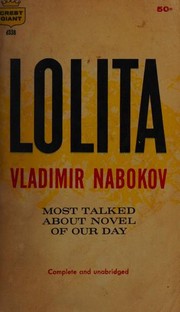
The obvious alternative is Lolita, which is the greater book and the wrong place to begin. Not because of the subject, which readers can handle, but because the novel is built entirely on the gap between Humbert Humbert's gorgeous sentences and what he is actually describing, and readers who have not yet learned to distrust a Nabokov narrator often miss the gap and come away thinking the book is on his side. Read Pnin first and you will arrive at Lolita with the right suspicion already installed.
The American novels, in order
Pnin, then Lolita, then Pale Fire. Lolita deserves its reputation and rewards slow reading; the achievement is that the prose seduces you and the novel then holds you responsible for having been seduced.
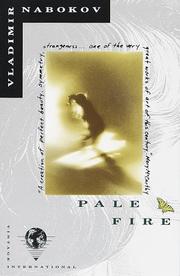
Pale Fire is the formal marvel: a 999-line poem by a dead poet, followed by a commentary from a neighbour who believes the poem is secretly about him. There is a genuine argument about how to read it. One camp says read the poem straight through, then the commentary straight through. The other says follow the commentary's cross-references as they come, hopping around the book as the annotator intends. The first pass is much easier; do that, then reread it the second way. Either approach beats giving up on the structure.
The Russian period
The defense, published as The Defense, is the best of the early novels available here — a chess prodigy whose mind starts reading his life as a game he is losing. It predates the English work by twenty years and is more conventionally moving than anything after it. Our catalogue also carries Nabokov's Invitation to a beheading, which is Julian Connolly's critical guide to the novel rather than the novel itself; the novel is easy to find separately, and the guide is genuinely useful on a book that resists first readings. Two other Russian-period novels, The Gift and Glory, are not in the catalogue.
The memoir
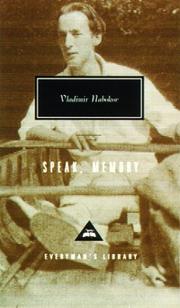
Speak, Memory is the one non-fiction book to read whatever else you skip. It is a memoir of a vanished Russian childhood assembled as a set of patterns rather than a chronology, and the chapter on butterflies is one of the finest things in his English. Read it after two or three novels.
The difficult one
Ada is a nine-hundred-page novel of an alternate world, dense with multilingual puns and a family romance that many readers find airless. Its admirers consider it his masterpiece; most readers find it the point where the games stop paying and the self-indulgence starts. It is the honest candidate for the book to skip, and skipping it costs you nothing structurally.
The lectures
Lectures on Literature and Lectures on Russian Literature are his Cornell teaching notes, and they are opinionated in a way academic criticism is not — a floor plan of Gregor Samsa's flat, a diagram of the trains in Anna Karenina, a flat refusal to discuss symbols or ideas. Read them for how a great novelist actually reads.
Where to stop
After Pale Fire and Speak, Memory you have his peak. Continue only if you want more; do not treat Ada as an obligation. Readers who like a narrator they cannot trust should look next at William Faulkner.
Follow the full ordered path here: Vladimir Nabokov Reading Order: Where to Start.
Ready to learn something deeply?
Build a reading path — free