Cricket: the best books to understand and love the game
This curriculum takes a complete newcomer from the bare basics of cricket's rules and rhythms all the way through to its rich tactical depths, storied history, and legendary personalities. Each stage builds on the last — first you learn the language of the game, then you see it played out through great stories and characters, and finally you appreciate the strategic and cultural forces that make cricket one of the world's most beloved sports.
Understanding the Game
BeginnerGrasp the fundamental rules, structure, and vocabulary of cricket so that matches, commentary, and further reading all make sense.
The definitive beginner's rulebook, produced by the sport's own governing body. Start here to get the laws, positions, and scoring straight before anything else.
A compact, accessible overview of what cricket is, where it came from, and why it matters culturally — perfect for building context around the rules you just learned.
The Soul of the Game — Stories & Characters
BeginnerFall in love with cricket through its most compelling personal stories, understanding how the game is experienced from the inside by players and fans alike.
▸ Study plan for this stage
Pace: 8–10 weeks, ~40–50 pages/day (3–4 hours reading time). Suggested pacing: "Fever Pitch" (2–3 weeks), "Beyond a Boundary" (3–4 weeks, slower due to density), "Driving Ambition" (2–3 weeks).
- Cricket as a lens for personal identity and belonging — how the game shapes who we are and how we connect to communities (Hornby's obsession with Arsenal paralleled to cricket fandom)
- The intersection of cricket, colonialism, and cultural power — understanding how the sport carries historical and political weight beyond the field (James's central argument in Beyond a Boundary)
- The emotional and psychological experience of playing at elite levels — the internal pressures, doubts, and motivations that drive professional athletes (Strauss's introspection on captaincy and performance)
- Cricket as narrative and storytelling — how individual matches, seasons, and careers become meaningful stories we tell ourselves and others
- The role of tradition, ritual, and aesthetics in cricket — why the game's form and history matter as much as its outcomes
- Fan culture and the deep personal investment in cricket — understanding fandom as a legitimate emotional and social experience, not mere entertainment
- Leadership and decision-making under pressure — how captains and players navigate uncertainty and responsibility in real time
- How does Nick Hornby use his relationship with Arsenal to explore what it means to be a cricket fan, and what does this reveal about the emotional stakes of sports fandom?
- What is C. L. R. James's central argument about cricket's relationship to colonialism and cultural identity, and how does he use cricket history to make broader claims about power and society?
- How does Andrew Strauss describe the psychological experience of captaincy, and what internal conflicts does he reveal about leadership at the highest level of cricket?
- Across all three books, what common themes emerge about why cricket matters to people — beyond the sport itself?
- How do these three authors use personal narrative and storytelling differently to convey their relationship with cricket?
- What does each book suggest about the connection between cricket and national or cultural identity?
- Keep a 'Cricket Fandom Journal' as you read Fever Pitch: note moments where Hornby's obsession resonates with you personally, and reflect on what sport or activity has shaped your own identity in similar ways.
- Create a timeline of the key historical and political moments James references in Beyond a Boundary (colonialism, Caribbean independence, race in cricket) — research one moment in depth and write a 500-word reflection on how it shaped cricket as we know it.
- After reading Driving Ambition, write a character sketch of Strauss as a captain: what were his core values, his biggest fears, and his defining decisions? Compare this to a captain or leader you admire.
- Select one match or moment from each book that moved you most, and write a short narrative (300–400 words) explaining why it mattered — to the author and to you.
- Interview a cricket fan or player in your life (or find a recorded interview online) and ask them: 'What does cricket mean to you beyond the sport?' Compare their answer to the themes in these three books.
- Create a visual map or infographic showing how Hornby's fandom, James's historical analysis, and Strauss's leadership philosophy interconnect — what do they reveal about cricket's place in culture?
Next up: This stage establishes cricket as a deeply human, culturally significant game rooted in personal passion and historical complexity; the next stage will build on this emotional foundation by teaching you the actual rules, tactics, and technical skills that make the game work on the field.

Though about football, this landmark book on sports obsession primes the reader to understand the emotional bond between fan and game — a universal feeling cricket literature constantly returns to.

Widely regarded as the greatest cricket book ever written, James weaves his own life story with the history and meaning of the game, making it essential reading for anyone who wants to truly understand cricket's soul.

A modern England captain's frank memoir that brings the reader inside the dressing room, illustrating tactics, pressure, and team dynamics in an accessible, first-person voice.
History & The Legends
IntermediateDevelop a broad historical understanding of cricket's evolution and meet the legendary players whose achievements define the sport's greatest eras.
▸ Study plan for this stage
Pace: 8–10 weeks, ~40–50 pages/day (alternating between both books; start with Altham for foundational history, then weave in Tendulkar essays for contemporary context)
- Cricket's evolution from village game to global sport: the transition from 18th-century England through colonial expansion to modern professionalism
- The role of key historical figures and institutions (MCC, Test cricket, the Ashes) in shaping cricket's rules, structure, and international reach
- Tendulkar as a bridge between eras: how his career exemplifies modern cricket's technical sophistication, mental discipline, and global interconnectedness
- The relationship between cricket's social context and its development: how class, colonialism, and nationalism influenced the sport's growth
- Legendary playing styles and innovations: understanding how great players adapted technique and strategy across different formats and conditions
- The transition from amateur to professional cricket and its impact on player development, training methods, and competitive standards
- How did cricket evolve from an 18th-century village pastime to a formalized international sport, and what were the key institutional milestones (e.g., MCC founding, Test cricket establishment)?
- What role did colonialism and British imperial expansion play in spreading cricket globally, and how did this shape the sport's structure and competitive landscape?
- Who were the legendary players from cricket's early eras (pre-20th century) that Altham highlights, and what innovations or achievements made them transformative figures?
- How does Tendulkar's career trajectory and playing style reflect the modernization of cricket, and what technical or mental qualities set him apart from players of earlier generations?
- What were the major shifts in cricket's rules, formats, and professionalization during the 20th century, and how did these changes affect how the game was played and consumed?
- How do the historical narratives in Altham and the biographical insights in Tendulkar in Wisden together illustrate the continuity and change in cricket's competitive culture?
- Create a timeline of cricket's major eras (pre-1850, 1850–1914, 1914–1970, 1970–2000, 2000–present) with 3–4 key events, rule changes, or legendary figures per era, drawing from Altham's narrative
- Read 2–3 essays from Tendulkar in Wisden and write a 500-word reflection on how Tendulkar's approach to batting, preparation, or mental resilience connects to or diverges from the playing styles of earlier legends discussed in Altham
- Compare two legendary players from different eras (e.g., W.G. Grace and Tendulkar, or a Victorian-era bowler and a modern fast bowler) by researching their statistics and playing philosophies; write a comparative analysis of how their techniques suited their respective eras
- Map out the spread of cricket globally using Altham's historical account: identify which countries adopted cricket when, which institutions (clubs, schools, governing bodies) were pivotal, and how colonial ties influenced this expansion
- Conduct a 'legend interview' exercise: choose one legendary player from Altham's history and one essay on Tendulkar, then write imagined dialogue between them discussing changes in training, equipment, mental approach, and the pressures of their respective eras
- Create an annotated glossary of cricket terminology and historical concepts encountered in both books (e.g., 'Test cricket,' 'the Ashes,' 'amateur vs. professional,' 'batting average,' 'bowling innovation') with definitions and historical context
Next up: This stage grounds you in cricket's historical arc and the qualities that define greatness, preparing you to analyze specific playing techniques, tactical innovations, and the strategic depth that modern cricket demands in the next stage.
The foundational historical text on cricket, tracing the game from its village origins to the modern era — essential for understanding how today's game was shaped.
Bradman's statistical dominance (a Test average of 99.94) is cricket's most famous fact; understanding his career and era is central to understanding the game's history and standards of excellence.

A curated collection of Wisden's coverage of Sachin Tendulkar, bridging the historical tradition of cricket's 'Bible' with the modern global era and India's rise as the game's superpower.
Tactics, Strategy & The Thinking Game
ExpertAnalyse cricket at a deeper level — understanding captaincy decisions, bowling plans, batting technique, and the chess-like strategic battles that unfold within a match.
▸ Study plan for this stage
Pace: 4–5 weeks, ~25–30 pages/day, with 2–3 days per week dedicated to reflection and tactical analysis exercises
- Captaincy as a psychological and intellectual discipline—reading opposition, managing personalities, and making decisions under uncertainty
- The relationship between captain and bowlers: setting fields, communicating intent, and adapting bowling plans in real time
- Batting strategy within the match context: recognizing when to attack, defend, or accumulate, and how captaincy influences batting approach
- The role of preparation and intelligence gathering in cricket strategy—scouting opponents, understanding pitch conditions, and planning match-ups
- Decision-making frameworks: weighing risk, managing pressure, and learning from both successful and failed tactical choices
- The human element in cricket: how captains manage egos, build team cohesion, and inspire performance under stress
- Pattern recognition and game-reading: identifying momentum shifts, recognizing when a plan is working or failing, and pivoting tactics mid-match
- What does Brearley identify as the core responsibilities of a cricket captain, and how do they differ from those of other team leaders?
- How should a captain approach setting a field and communicating bowling plans to create strategic advantage?
- What psychological and interpersonal skills does Brearley emphasize as essential for effective captaincy?
- How can a captain recognize when a tactical plan is failing and what decision-making process should guide a mid-match pivot?
- What role does preparation and intelligence about opposition play in Brearley's philosophy of captaincy?
- How does Brearley's approach to captaincy balance aggression with caution, and what factors should influence this balance?
- Tactical match analysis: Watch a full Test or ODI match (ideally featuring a strong captain) and document 5–7 key captaincy decisions—field placements, bowling changes, batting instructions—and evaluate whether they worked and why
- Field-setting exercise: Given a match scenario (pitch type, opposition batsmen, match situation), design a field placement and bowling plan with written justification for each decision
- Captaincy journal: After each match you watch, write a 300–400 word reflection on one captaincy decision, analyzing the captain's reasoning, alternatives, and outcome
- Opposition scouting: Select an opposing team's key players and create a one-page tactical profile for each (strengths, weaknesses, how you'd bowl/field against them)
- Pressure decision-making simulation: Describe 3–4 high-pressure match moments (e.g., needing quick wickets, protecting a lead) and write out the captain's decision-making process and rationale
- Comparative captaincy analysis: Compare how two different captains (from the book or from matches you watch) would handle the same match situation, noting differences in philosophy and approach
Next up: This stage equips you to see cricket as a strategic contest of wills and intellect; the next stage will deepen your ability to analyze specific technical skills and their tactical application, moving from the captain's bird's-eye view to the individual player's execution within that strategic framework.
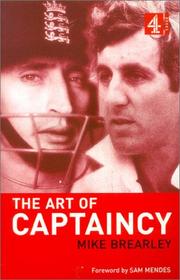
Written by England's most cerebral captain, this is the definitive text on cricket leadership and in-game strategy — it will permanently change how you watch a match.
Discussion
Keep reading
Paths that share books, cover the same subject, or open a related topic.