Ice hockey: the best books to understand the fastest game on ice
This curriculum takes a complete beginner from the basic rules and culture of ice hockey all the way through advanced strategy, elite skill development, and the rich history and legendary figures that define the sport. Each stage builds on the last — first establishing fluency in the game's language and structure, then deepening tactical and technical understanding, and finally exploring the stories, stars, and ideas that give hockey its soul.
Foundations: Understanding the Game
BeginnerGrasp the basic rules, positions, flow of play, and culture of ice hockey so you can watch and follow a game with full comprehension.
▸ Study plan for this stage
Pace: 4–5 weeks, ~25–30 pages/day. Start with "Hockey for Dummies" (approximately 2–3 weeks), then move to "The Game" by Ken Dryden (approximately 2 weeks). Allocate 2–3 days at the end for review and integration.
- The basic rules of ice hockey: offsides, icing, penalties, and how scoring works
- The six primary positions (goaltender, defensemen, forwards) and their distinct responsibilities on the ice
- The structure and flow of a game: periods, stoppages, line changes, and game strategy
- The role of the coach, referee, and supporting staff in managing play
- Ice hockey culture: the values of teamwork, physicality, resilience, and the sport's history and traditions
- How professional teams operate: roster management, the role of different player types, and team dynamics
- The mental and physical demands of the game and how players prepare and adapt during competition
- What are the key rules that govern play in ice hockey, and what happens when they are broken?
- How do the three main positions (goaltender, defensemen, forwards) differ in their roles and responsibilities?
- What is the structure of a hockey game, and how do coaches manage player rotation and strategy during play?
- How does ice hockey culture emphasize teamwork and what role does physicality play in the sport?
- What insights does Ken Dryden offer about the mental and emotional experience of playing professional hockey?
- How do the concepts in 'Hockey for Dummies' and 'The Game' complement each other in building a complete understanding of ice hockey?
- Watch a full NHL or professional ice hockey game while referencing the rule explanations from 'Hockey for Dummies'; pause to identify offsides, icing, and penalty calls as they occur
- Create a visual diagram or chart mapping the six positions and their primary responsibilities; annotate with specific examples from both books
- Read a game recap or sports article about a professional hockey match and identify the strategic decisions and player roles described in 'The Game'
- Interview or have a conversation with someone who plays or watches hockey regularly; ask them to explain a rule or strategy and compare their explanation to what you learned
- Write a 2–3 page reflection on how Dryden's personal narrative in 'The Game' deepens your understanding of the sport beyond the mechanics covered in 'Hockey for Dummies'
- Attend a live ice hockey game (professional, college, or amateur) and observe how the rules, positions, and team dynamics play out in real time
Next up: This foundation in rules, positions, and the human experience of hockey prepares you to explore deeper strategic analysis, player development, and the sport's history and evolution in the next stage.
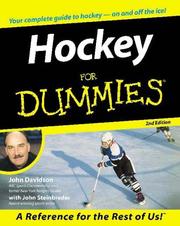
The ideal starting point — it covers rules, positions, equipment, penalties, and how to watch the game in plain, accessible language. Read this first to build your foundational vocabulary.
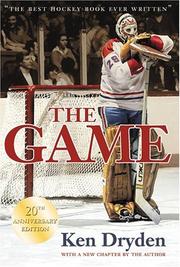
A beautifully written memoir by Hall of Fame goaltender Ken Dryden that immerses you in the feel, rhythm, and culture of professional hockey. After learning the rules, this book makes you fall in love with the sport.
History and Heroes: The Story of Hockey
BeginnerUnderstand the historical arc of ice hockey — from its origins to the modern NHL — and meet the iconic players and moments that shaped the game.
▸ Study plan for this stage
Pace: 4–5 weeks, ~40–50 pages/day. Start with "Total Hockey" (2–3 weeks, comprehensive reference material), then move to "Orr: My Story" (2 weeks, deeper narrative focus).
- The origins of ice hockey in 19th-century Canada and its evolution into a professional sport
- The structure and growth of the NHL from its founding through major expansion eras
- How rule changes, equipment innovations, and playing styles transformed the game over time
- Bobby Orr's revolutionary impact on defensive play and his role in the Boston Bruins' dynasty
- The relationship between individual heroism and team dynamics in shaping hockey history
- How personal resilience and innovation (as exemplified by Orr's comeback from injury) drive sports evolution
- The cultural significance of hockey in North America and its role in national identity
- What were the key origins of ice hockey, and how did it develop from a recreational game into a professional sport?
- How did the NHL's founding and early expansion shape the modern structure of professional hockey?
- What specific rule changes and innovations in equipment or playing style fundamentally altered how hockey was played?
- How did Bobby Orr revolutionize the defenseman position, and what made his playing style different from his predecessors?
- What obstacles did Orr overcome in his career, and how did his resilience influence the broader hockey community?
- How do the narratives in 'Total Hockey' and 'Orr: My Story' complement each other in understanding hockey's evolution?
- Create a timeline of major hockey eras (pre-NHL, Original Six, expansion, modern) using 'Total Hockey' as your source, noting 3–4 defining characteristics of each era
- Read a chapter from 'Total Hockey' on a specific decade, then write a 1-page summary connecting historical events to how the game was played
- Track Bobby Orr's career milestones from 'Orr: My Story' (draft, first season, peak years, injury, comeback) and annotate how each shaped his legacy
- Compare two different eras of hockey (e.g., Original Six vs. expansion) by listing rule differences, star players, and team structures—use both books as references
- Watch a highlight reel or full game from the 1960s–70s (Bruins era) after reading relevant sections, then write observations on how the game differs from modern hockey
- Interview a hockey fan or player (in person or online) about their favorite era or hero, then compare their perspective to what you learned in the books
Next up: This stage grounds you in hockey's historical foundation and iconic figures, preparing you to analyze specific playing styles, strategic innovations, and how modern teams build on the lessons of past champions in the next stage.
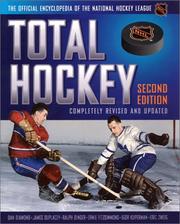
The definitive encyclopedia of hockey history, stats, and lore. Use it as a reference companion to anchor the names, teams, and eras you'll encounter throughout your reading.

Bobby Orr's autobiography tells the story of the player who revolutionized the defenseman position. Reading it after Gretzky's book deepens your sense of how individual genius reshapes the entire sport.
Skills and the Art of Playing
IntermediateDevelop a detailed understanding of the individual skills — skating, shooting, stickhandling, goaltending — that separate good players from great ones.
▸ Study plan for this stage
Pace: 6–8 weeks, ~25–30 pages/day, with 2–3 days per week dedicated to on-ice practice and skill drills
- Mental toughness and psychological resilience as foundational to skill execution under pressure
- The biomechanics of skating: stride mechanics, edge work, balance, and acceleration techniques
- Shooting fundamentals: release, follow-through, accuracy, and power generation from different positions
- Stickhandling as a tool for puck control, deception, and creating offensive opportunities
- Goaltending positioning, angles, and reactive techniques for different shot types and game situations
- The integration of individual skills into game-realistic scenarios and decision-making
- Progressive skill development: how to identify weaknesses and systematically improve them
- The role of conditioning and physical preparation in sustaining skill performance over a full season
- According to Miller's framework in 'Hockey Tough,' how does mental toughness directly impact a player's ability to execute technical skills consistently in high-pressure situations?
- What are the key biomechanical principles of efficient skating outlined in 'The Hockey Handbook,' and how do they differ between forward skating, backward skating, and lateral movement?
- Describe the progression of shooting techniques presented in 'The Hockey Handbook'—from basic wrist shots to snap shots and slap shots—and when each should be deployed in game situations.
- How does Percival's approach to stickhandling development in 'The Hockey Handbook' emphasize the connection between hand-eye coordination and offensive creativity?
- What are the fundamental positioning and angle-management principles for goaltenders discussed in 'The Hockey Handbook,' and how do they adapt to different shot types?
- How do the mental preparation strategies in 'Hockey Tough' apply to skill execution, and what specific techniques does Miller recommend for maintaining focus during repetitive practice?
- Complete a weekly mental toughness journal: after each practice or game, reflect on one moment where you executed a skill under pressure and one where you didn't—analyze the mental state difference using Miller's concepts from 'Hockey Tough'
- Film yourself performing basic skating drills (forward/backward crossovers, stops, starts) and compare your stride mechanics against the biomechanical principles in 'The Hockey Handbook'; identify 2–3 specific adjustments to make
- Perform daily stickhandling progression drills: stationary puck control (5 min), moving in straight lines (5 min), figure-8 patterns (5 min), and game-speed deception moves (5 min)—track consistency and speed improvements weekly
- Shooting accuracy challenge: take 20 shots from each of three positions (slot, wing, point) using different shot types (wrist, snap, slap) as outlined in 'The Hockey Handbook'; record accuracy percentage and identify which shot type and position need most work
- If you play goaltending: set up cones to practice angle positioning and lateral movement for 5–10 different shot scenarios (high slot, low slot, perimeter); video record and compare your positioning against Percival's angle principles
- Conduct a peer teaching session: explain one skating technique, one shooting technique, and one stickhandling principle from the books to a teammate or coach, then have them critique your explanation and demonstration
Next up: This stage equips you with the technical and mental foundations of individual skill mastery, preparing you to advance to the next stage where you'll learn how to integrate these isolated skills into team systems, game strategy, and competitive decision-making under real match conditions.

Covers the mental and psychological skills elite players develop — focus, confidence, and resilience. Reading this before pure technique books establishes the mindset framework that makes physical skills stick.
A legendary and groundbreaking coaching manual that broke down skating, shooting, and positional play with scientific rigor. This is the canonical text on hockey fundamentals that influenced generations of coaches.
Strategy and the Thinking Game
IntermediateAnalyze hockey at a tactical level — systems, line matching, special teams, and how coaches and players think about the game structurally.
▸ Study plan for this stage
Pace: 4–5 weeks, ~40–50 pages/day. Start with "Take Your Eye Off the Puck" (2 weeks), then move to "Hockey Plays and Strategies" (2–3 weeks). Allocate 2–3 days at the end for review and integration.
- Reading the game: how to identify offensive and defensive systems (2-1-2, 1-3-1, trap, etc.) in live play
- Line matching and deployment: how coaches strategically pair lines against opponents and manage matchups
- Special teams strategy: power play and penalty kill formations, personnel decisions, and tactical advantages
- Positional roles and responsibilities: how forwards, defensemen, and goalies execute their tactical assignments within a system
- Game flow and momentum: recognizing transitions, tempo changes, and how teams exploit structural weaknesses
- Coaching decision-making: understanding the logic behind system selection, adjustments, and in-game tactical calls
- Structural analysis: breaking down plays to see how individual actions connect to larger team objectives
- What are the key differences between a 2-1-2 and 1-3-1 defensive system, and when would a coach choose each?
- How do coaches use line matching to create favorable matchups, and what happens when a team loses the matchup battle?
- Describe the tactical objectives of a power play and penalty kill—what is each team trying to accomplish structurally?
- How do transitions (from offense to defense and vice versa) create tactical opportunities, and how do systems address them?
- What role does special teams play in overall team strategy, and how do personnel decisions reflect tactical priorities?
- Analyze a specific play or sequence: identify the system being used, the roles each player is executing, and what the intended outcome was.
- Watch 3–4 full games (or highlight compilations) and identify the defensive system each team is using in different situations. Sketch the formations on paper.
- Track one player's positional responsibilities across a full game: note when they succeed and fail in their role, and connect it to the team's system.
- Analyze a power play and penalty kill from the same game: diagram the formations, identify the key passing lanes and shooting areas, and explain the tactical matchup.
- Compare two games from the same team: identify if they used different systems and why (opponent matchup, injury, score situation). Note what changed tactically.
- Create a 'system scouting report' for one team: describe their preferred offensive and defensive systems, line deployment patterns, and special teams tendencies.
- Rewatch a crucial game moment (goal, turnover, or defensive stop) and explain the tactical breakdown or success that led to it using concepts from both books.
Next up: This stage equips you with the structural vocabulary and analytical framework to understand *why* teams make the decisions they do; the next stage will deepen this by exploring how elite players and teams execute these systems at the highest level and adapt them in real time.
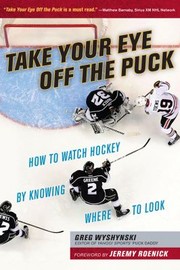
Teaches fans and players how to watch hockey strategically — reading systems, understanding line changes, and seeing the game beyond the puck. Essential for elevating from casual fan to tactical thinker.

A detailed, diagram-rich breakdown of offensive and defensive systems used at the highest levels of the game. Read after Wyshynski to translate strategic awareness into concrete, actionable schemes.
Advanced Mastery: Culture, Analytics, and the Modern Game
ExpertEngage with the cutting edge of hockey thinking — analytics, the evolving modern game, and the deeper cultural forces that make hockey unique.
▸ Study plan for this stage
Pace: 8–10 weeks, ~40–50 pages/day (with 2–3 days per week for reflection and exercises). "Stat Shot" (~400 pages) takes 2–3 weeks; "Journeyman" (~400 pages) takes 2–3 weeks; remaining time for synthesis and deep-dive exercises.
- Hockey analytics fundamentals: how advanced statistics (Corsi, Fenwick, expected goals, etc.) reveal what traditional metrics miss about player and team performance
- The evolution of hockey thinking: how analytics challenged conventional wisdom and reshaped player evaluation, strategy, and roster construction
- Individual excellence within team systems: Pronger's career as a case study in how elite players adapt, lead, and sustain performance across different eras and organizational contexts
- The cultural and human dimensions of hockey: how personal resilience, mentorship, and identity shape careers beyond what numbers can capture
- Modern game dynamics: how rule changes, pace, positioning, and tactical innovation have transformed what success looks like in contemporary hockey
- Bridging data and intuition: recognizing when analytics illuminate truth and when human judgment, experience, and context remain irreplaceable
- What are the key limitations of traditional hockey statistics (goals, assists, plus-minus), and how do advanced metrics like Corsi and expected goals address them?
- How did the analytics movement challenge conventional wisdom about player roles, draft strategy, and team-building in professional hockey?
- What does Sean Pronger's career reveal about how elite defensemen adapt to changing game conditions, rule sets, and organizational demands?
- How do Pronger's reflections on leadership, mentorship, and resilience illustrate dimensions of hockey excellence that statistics alone cannot measure?
- What are the practical applications of analytics in modern hockey scouting, player development, and in-game decision-making?
- How has the modern game (rule changes, pace, positioning) evolved, and what role has analytics played in that evolution?
- While reading 'Stat Shot,' create a glossary of advanced metrics (Corsi, Fenwick, xG, RAPM, etc.) with plain-language definitions and real examples from the book; use this to explain one metric to someone unfamiliar with hockey analytics.
- Track one NHL player's performance across a season using the analytics frameworks Vollman introduces; compare what traditional stats suggest versus what advanced metrics reveal, and write a one-page scouting report.
- Read a chapter of 'Stat Shot' and a corresponding section of 'Journeyman' (e.g., analytics on defensemen paired with Pronger's reflections on his own game); write a 500-word synthesis on how analytics might have evaluated Pronger's peak performance.
- Conduct a 'Pronger deep-dive': identify 2–3 pivotal moments in his career (e.g., trades, injuries, rule changes) and analyze how both analytics and his own narrative explain his adaptation and success.
- Debate exercise: take a controversial analytics claim from 'Stat Shot' (e.g., 'traditional plus-minus is misleading') and argue both for and against it using evidence from the book and real NHL examples.
- Design a hypothetical analytics-informed scouting report for a young defenseman, incorporating frameworks from Vollman and qualities Pronger emphasizes (leadership, hockey IQ, resilience) to show how data and human judgment complement each other.
Next up: This stage equips you with both the quantitative tools (analytics) and qualitative wisdom (Pronger's lived experience) to understand modern hockey at its deepest level, preparing you to either specialize further in a particular domain (e.g., coaching, management, advanced analytics) or synthesize these insights into a comprehensive personal philosophy of the game.

The leading accessible guide to hockey analytics — Corsi, Fenwick, zone starts, and more. This book brings a data-driven lens to everything learned in earlier stages and reflects how modern NHL front offices think.

A candid, witty insider account of life as a professional hockey player on the fringes of the NHL. It rounds out the curriculum by humanizing the sport and showing the full spectrum of the hockey life beyond the stars.
Discussion
Keep reading
Paths that share books, cover the same subject, or open a related topic.