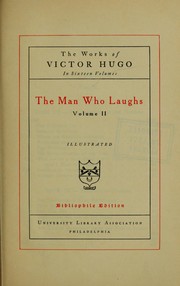
The man who laughs
Victor Hugo · 1869
As an Amazon Associate we earn from qualifying purchases. Some book links are affiliate links; you pay the same price and we may earn a small commission.
About this book
A stolen child cast adrift by cruel hands, his face grotesquely carved into a perpetual grin – this is the haunting premise of The Man Who Laughs. In one of Victor Hugo’s most somber and fantastical novels, the author leads us from windswept cliffs and midnight fairs to the gilded halls of English aristocracy, all through the eyes of a young man forced to laugh forever. Published in 1869, The Man Who Laughs is a fever-dream of a book: equal parts social satire, historical melodrama, and gothic tragedy, it pushes the reader to confront the deformities not just of one human face, but of an entire society’s heart. When Hugo released L’Homme qui rit (its French title) in April 1869, it perplexed and fascinated audiences in equal measure. By then, Hugo was an elder statesman of literature, long celebrated for Notre-Dame de Paris and Les Misérables. But here he offered something altogether different – a dark tale set in 17th–18th century England, far from the familiar Parisian boulevards. Many French critics were initially disconcerted. The novel’s grim subject matter (mutilation of children, the corruption of the nobility, the bleak fates of carnival performers) and its often macabre tone did not align with the uplifting humanism of Les Misérables. Some reviewers labeled it excessively morbid or eccentric. Yet even those critics acknowledged the hypnotic power of Hugo’s storytelling. In Britain, where the book was sometimes published under the alternative title By Order of the Kin
Appears in these reading paths

Victor Hugo Reading Order: Where to Start with the Novels
Reader reviews
Ratings and notes from readers — tagged with how deep into the subject they were.
Loading reviews…