Understanding Sikhism: The Best Books to Read, in Order
This curriculum takes a complete beginner from a warm, accessible introduction to Sikhism all the way through the scripture, history, theology, and living practice of the faith. Each stage builds the vocabulary and conceptual grounding needed for the next, moving from narrative and overview, through the Gurus and scripture, into serious history and theology, and finally into advanced scholarly and devotional depth.
First Steps: Accessible Overviews
BeginnerGain a clear, friendly orientation to who Sikhs are, what they believe, the Ten Gurus, and the basics of Sikh practice — building the vocabulary needed for everything that follows.
▸ Study plan for this stage
Pace: 4–5 weeks, ~25–30 pages/day. Start with Nesbitt's concise introduction (2–3 weeks, ~20 pages/day), then move to Singh's more detailed historical narrative (2–3 weeks, ~30 pages/day).
- The Ten Gurus as spiritual leaders and their individual contributions to Sikh identity
- The Sikh concept of God (Ik Onkar) and how it differs from monotheism in other faiths
- The role of the Guru Granth Sahib as the eternal Guru and living scripture
- The Five Ks and other markers of Sikh identity and practice
- The historical context of Sikhism's emergence in Punjab during the 15th–16th centuries
- The structure and purpose of the gurdwara (Sikh place of worship) and langar (community kitchen)
- The distinction between Khalsa Sikhs and other Sikhs, and what initiation means
- Sikh principles of social equality, justice, and service (seva)
- Who were the Ten Gurus, and what were the major contributions of Guru Nanak, Guru Arjan, and Guru Gobind Singh?
- What is Ik Onkar, and how does the Sikh understanding of God shape daily practice and belief?
- Why is the Guru Granth Sahib considered the eternal Guru, and what role does it play in Sikh worship?
- What are the Five Ks, and what does each one symbolize in Sikh faith and identity?
- How did Sikhism emerge in Punjab, and what historical circumstances influenced its development?
- What happens in a gurdwara, and what is the significance of langar in Sikh practice?
- What is the Khalsa, and how does initiation into the Khalsa differ from being a Sikh?
- How do Sikh principles of equality and justice (including the treatment of women and lower castes) distinguish Sikhism from the religious and social context in which it arose?
- Create a timeline of the Ten Gurus with 2–3 key accomplishments or teachings for each, using both books as sources.
- Write a one-page comparison of how Sikhism, Islam, Hinduism, and Christianity each understand God, using Nesbitt's framework.
- Visit a local gurdwara (or watch a virtual tour online) and document what you observe: the layout, the Guru Granth Sahib, the langar, and how people interact. Reflect on how these match the descriptions in the books.
- Design a visual guide (poster, infographic, or digital slide) explaining the Five Ks and their spiritual meanings.
- Interview a Sikh (in person or online) about their personal practice and identity, then write a 2–3 page reflection connecting their experience to concepts from Nesbitt and Singh.
- Create a glossary of 20–25 key Sikh terms (e.g., Ik Onkar, Khalsa, seva, Guru Granth Sahib, langar, gurdwara) with definitions and brief context from the books.
Next up: This stage equips you with foundational vocabulary, historical context, and an understanding of core Sikh beliefs and practices, preparing you to explore deeper theological concepts, scriptural study, and the lived experience of Sikhism in subsequent stages.
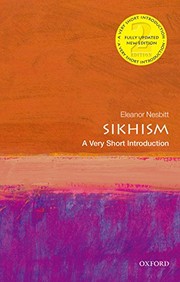
A compact, authoritative primer by a leading scholar of Sikh studies — the ideal first read to map the entire landscape of Sikhism without overwhelm.

A beautifully written narrative history of the Sikh people from Guru Nanak to the modern era, making the story of the Gurus vivid and emotionally engaging before deeper study begins.
The Ten Gurus and the Birth of the Khalsa
BeginnerUnderstand the life, teachings, and historical significance of each of the Ten Gurus, and grasp how the Khalsa was formed and what it means spiritually and socially.
▸ Study plan for this stage
Pace: 4–5 weeks, ~25–30 pages/day (approximately 150–180 pages total)
- Guru Nanak's life, spiritual journey, and early teachings on monotheism and social equality
- The concept of Nam (divine name) and Shabad (divine word) as central to Sikh spirituality
- Guru Nanak's critique of ritualism and caste hierarchy in medieval Punjab
- The historical and social context of 15th–16th century Punjab under Mughal rule
- The establishment of the first Sikh community (Sangat) and the role of Langar (community kitchen)
- Guru Nanak's travels (Udasis) and their significance in spreading his message
- The succession of Gurus and the concept of Guruship as a spiritual office rather than hereditary rule
- The foundational principles that would later shape the Khalsa ideal
- What were the major events in Guru Nanak's life, and how did his spiritual experiences shape his teachings?
- How did Guru Nanak's concept of Nam and Shabad differ from the religious practices of his time?
- What was Guru Nanak's critique of caste, ritualism, and social hierarchy, and how did it challenge contemporary society?
- What role did the Sangat and Langar play in the early Sikh community, and why were they revolutionary?
- What were the Udasis, and what was their purpose in Guru Nanak's mission?
- How did Guru Nanak understand the nature of God, and what does this reveal about early Sikh theology?
- Create a timeline of Guru Nanak's life (birth, spiritual awakening, travels, establishment of Kartarpur) with key events and their historical context
- Write a comparative analysis: How did Guru Nanak's teachings on equality and social justice contrast with the caste system and religious practices of his era?
- Memorize and reflect on 3–5 key verses from Guru Nanak's compositions (as cited in McLeod) that encapsulate his core message
- Map out Guru Nanak's four Udasis (journeys) geographically and thematically—what regions did he visit and what was the spiritual significance?
- Discuss in writing or conversation: Why was the concept of Langar (free community kitchen) so radical in 16th-century Punjab?
- Create a visual or written summary of the early Sikh Sangat's structure and values—how did it differ from other religious communities of the time?
Next up: This stage establishes Guru Nanak as the spiritual founder and provides the theological and social foundations (Nam, Shabad, equality, community) that the subsequent nine Gurus would develop, refine, and ultimately crystallize into the Khalsa order.
The foundational scholarly study of Guru Nanak's life and teachings; reading it now gives the theological core of Sikhism before exploring the later Gurus.
The Guru Granth Sahib: Scripture and Spirituality
IntermediateDevelop a genuine understanding of the Guru Granth Sahib — its structure, poetry, key hymns, and central spiritual concepts such as Naam, Shabad, and Waheguru.
▸ Study plan for this stage
Pace: 6–8 weeks, ~25–30 pages/day, with 2–3 dedicated reflection days per week
- The Bhagat Bani: composition, authorship, and the role of pre-Sikh devotional poets within the Guru Granth Sahib
- Naam (divine name) as the central spiritual concept connecting all hymns and the path to liberation
- Shabad (divine word) as the vehicle for spiritual transformation and direct encounter with Waheguru
- The feminine principle (Shakti) in Sikh theology and its representation in the Guru Granth Sahib's poetry
- Poetic structure and metaphor in the Guru Granth Sahib: how language conveys transcendent experience
- The integration of diverse devotional traditions (Bhagat Bani) into a unified Sikh spiritual vision
- Waheguru as transcendent reality beyond gender, form, and conceptual limitation, yet accessible through Naam and Shabad
- The relationship between the feminine divine and human spiritual practice in Sikh mysticism
- What is the Bhagat Bani, who are the Bhagats represented in the Guru Granth Sahib, and what theological significance does their inclusion hold in Sikh scripture?
- How do the concepts of Naam and Shabad function together as pathways to spiritual realization in the Guru Granth Sahib?
- What is the feminine principle in Sikh theology, and how is it expressed through the poetry and spiritual concepts in the Guru Granth Sahib?
- How does the Guru Granth Sahib integrate pre-Sikh devotional traditions while maintaining a distinctly Sikh spiritual vision?
- What role does poetic language and metaphor play in conveying the transcendent nature of Waheguru in the Guru Granth Sahib?
- How does understanding the feminine principle deepen one's comprehension of Sikh concepts of the divine and spiritual practice?
- Read and annotate 3–4 hymns from the Bhagat Bani section of the Guru Granth Sahib (e.g., from Kabir, Ravidas, or Namdev); identify recurring themes of Naam, devotion, and liberation, and note how they differ from or align with Sikh Gurus' teachings
- Create a comparative chart mapping the spiritual concepts (Naam, Shabad, Waheguru) across hymns from different Bhagats; analyze how these concepts remain consistent despite diverse poetic voices
- Write a 2–3 page reflection on the feminine principle in a selected hymn or passage from the Guru Granth Sahib; explore how Shakti or feminine metaphors illuminate the transcendent divine
- Trace the concept of Naam through 5–6 different hymns (mixing Bhagat Bani and Guru compositions); document how Naam is described, invoked, and experienced as a path to Waheguru
- Conduct a close reading of one complete hymn, analyzing its poetic structure (meter, rhyme, metaphor) and explain how the form serves the spiritual message
- Interview or discuss with a Sikh community member or scholar about how they understand the feminine principle in their own spiritual practice; synthesize their insights with textual learning
Next up: This stage grounds you in the scriptural heart of Sikhism—the Guru Granth Sahib's poetry, theology, and spiritual concepts—preparing you to explore how these teachings translate into lived Sikh practice, ethics, and community life in subsequent stages.
The living Guru of the Sikhs must be encountered directly; reading selected hymns (shabads) in translation at this stage grounds all theological study in the actual scripture.
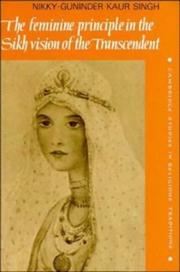
Deepens engagement with the Guru Granth Sahib's theology by exploring its unique vision of the Divine, preparing the reader for more advanced doctrinal study.
Sikh History, Identity, and the Modern World
IntermediateUnderstand the full arc of Sikh history from the post-Guru period through empire, colonialism, partition, and diaspora, and grasp how Sikh identity has been debated and defined.
▸ Study plan for this stage
Pace: 4–5 weeks, ~40–50 pages/day (Oberoi is dense and theoretical; allow time for re-reading sections)
- Religious boundary-making as a historical process: how Sikhism defined itself against Hinduism and Islam through institutional and textual practices rather than being a fixed, pre-existing category
- The role of the Adi Granth (Guru Granth Sahib) and Sikh scripture in constructing and standardizing Sikh identity across diverse regional and social contexts
- The tension between heterodoxy and orthodoxy in early and medieval Sikhism: how diverse local practices were gradually consolidated into a unified religious identity
- Colonialism's impact on Sikh self-understanding: how British administrative categories and census-making forced Sikhs to define themselves as a distinct 'community' rather than a fluid spiritual movement
- The role of the Singh Sabha movement in formalizing Sikh boundaries, codifying belief and practice, and responding to Christian missionary and Hindu reform challenges
- Gender, caste, and social hierarchy within Sikh identity construction: how boundary-making excluded or marginalized certain groups
- The relationship between Sikh political power (the Khalsa, the Sikh Empire) and religious identity claims
- How does Oberoi argue that Sikh religious identity was 'constructed' rather than simply 'discovered'? What historical processes and actors were involved?
- What role did the Adi Granth play in standardizing Sikh identity, and how did this differ from earlier, more fluid understandings of Sikhism?
- How did British colonialism and census-making force Sikhs to think of themselves as a bounded religious community, and what were the consequences of this categorization?
- What was the Singh Sabha movement, and how did it reshape Sikh identity through boundary-making and orthodoxy?
- How did Sikhism's relationship to Hinduism and Islam change over time, and what does this reveal about the constructed nature of religious boundaries?
- What tensions existed between diverse local Sikh practices and the standardized, unified identity that emerged by the late 19th century?
- Create a timeline of key moments in Sikh boundary-making (Guru Nanak to Singh Sabha), noting which actors, texts, and events were most significant in defining 'who is a Sikh'
- Analyze a passage from the Adi Granth and a Singh Sabha text side-by-side: how do they each construct Sikh identity, and what differences emerge?
- Write a short essay (500–750 words) on how British census categories forced Sikhs to choose between being 'Hindu,' 'Muslim,' or 'Sikh'—and why this mattered
- Create a visual map or diagram showing the relationships between Sikhism, Hinduism, Islam, and Christianity in Oberoi's account—how did each boundary-making moment shift these relationships?
- Interview or research a contemporary Sikh's understanding of Sikh identity (e.g., through online forums, podcasts, or personal networks): how do modern Sikhs navigate the boundaries Oberoi describes?
- Identify 2–3 moments in Oberoi's text where you disagree with his interpretation or where you see alternative explanations—write a brief critical response
Next up: This stage establishes how Sikh identity was historically constructed through boundary-making, providing the conceptual foundation for understanding how Sikhs navigated partition, diaspora, and contemporary identity politics in the next stage.

A landmark scholarly work on how modern Sikh identity and orthodoxy were constructed historically — essential for understanding why Sikhism looks the way it does today.
Advanced Theology, Practice, and Lived Sikhism
ExpertEngage with Sikh doctrine, ethics, and practice at a sophisticated level — understanding how theology translates into daily life, worship, community, and global diaspora experience.
▸ Study plan for this stage
Pace: 8–10 weeks, ~25–30 pages/day, with 2–3 dedicated reflection days per week
- The theological foundations of Sikhism: Ik Onkar, divine immanence, and the nature of God in Sikh thought
- The role of the Guru—both human Gurus and the Guru Granth Sahib—as the ultimate authority and guide in Sikh life
- The concept of Hukam (divine will) and how it shapes Sikh ethics, acceptance, and spiritual practice
- The Khalsa identity: initiation, the Rahit (code of conduct), and the transformation of the individual into a warrior-saint
- Kirtan, prayer, and meditation as lived spiritual practices that connect theology to daily devotion
- The institution of Langar and community service (Seva) as expressions of egalitarianism and social ethics rooted in doctrine
- The Sikh diaspora experience: how theology and practice adapt and persist across geographical and cultural boundaries
- The relationship between individual spiritual experience and collective community identity in Sikh practice
- How does the Sikh concept of Ik Onkar (One Reality) differ from monotheism in other traditions, and what are its implications for Sikh ethics and practice?
- What is the role of the Guru in Sikh theology, and how has this understanding evolved from the human Gurus to the Guru Granth Sahib?
- How does the concept of Hukam function in Sikh theology, and how does it influence a Sikh's approach to suffering, acceptance, and moral responsibility?
- What are the core elements of the Khalsa code of conduct (Rahit), and how do they reflect deeper theological principles?
- How do practices like Kirtan, Ardas, and meditation translate Sikh theology into lived spiritual experience?
- What is the theological and ethical significance of Langar and Seva in Sikh community life, and how do they challenge social hierarchies?
- How have Sikh theology and practice been maintained, adapted, or transformed in diaspora contexts, and what tensions arise?
- How does Sikh theology balance individual spiritual autonomy with collective community identity and authority?
- Close-reading exercise: Select 3–4 passages from the Guru Granth Sahib (as discussed in Mann's text) that illustrate core theological concepts (e.g., Ik Onkar, Hukam, divine grace). Write a 2–3 page analysis of how each passage reflects the doctrine and its practical implications.
- Comparative theology essay: Write a 4–5 page essay comparing the Sikh understanding of God, divine will, and human responsibility with one other major religious tradition covered in your earlier studies. Use Mann's framework to ground your analysis.
- Rahit reflection journal: Over 2–3 weeks, keep a journal documenting how specific elements of the Khalsa code of conduct (e.g., uncut hair, daily prayer, dietary practices) connect to underlying theological principles. Reflect on how these practices shape identity and community.
- Community practice observation: Attend or research a Gurdwara service (or watch a recorded service) and document how the theology Mann discusses—Hukam, the authority of the Guru Granth Sahib, collective worship—manifests in the liturgy, Langar, and community interaction. Write a 3–4 page reflection.
- Diaspora case study: Research and write a 4–5 page case study on how Sikh theology and practice have been maintained or adapted in one specific diaspora community (e.g., North America, UK, East Africa). Use Mann's framework to analyze continuities and changes.
- Theological concept map: Create a detailed visual or written concept map showing how the eight key concepts listed above interconnect—e.g., how Ik Onkar informs the role of the Guru, which shapes Hukam, which influences Khalsa ethics, which manifest in Seva and Langar. Annotate with textual references from Mann.
- Lived ethics interview or narrative: Conduct an interview with a practicing Sikh (or write a reflective narrative based on secondary sources) exploring how they understand and live out core theological concepts in their daily life. Write a 3–4 page narrative analysis.
- Comparative practice analysis: Compare how Kirtan, Ardas, and meditation function in Sikh spiritual life versus similar practices in another tradition you've studied. Write a 3–page analysis grounded in Mann's descriptions and theological framework.
Next up: This stage equips you with a sophisticated, integrated understanding of Sikh theology, ethics, and lived practice—preparing you to engage with specialized topics such as Sikh history and social movements, contemporary Sikh thought and reform debates, or comparative Sikh studies in your next stage of study.

A rigorous yet readable synthesis of Sikh theology, scripture, history, and practice by a leading scholar — the ideal capstone that ties together everything learned in prior stages.
Discussion
Keep reading
Paths that share books, cover the same subject, or open a related topic.