Understanding John Dewey: books to read, in order
John Dewey wrote for seventy years across education, logic, ethics, aesthetics and politics, and the reason he is easy to misread is that the education books are the famous ones while the philosophy underneath them is what makes them coherent. This path starts with the short school writings, moves to Democracy and Education, then goes down into the pragmatist philosophy of experience and inquiry, then out again to the argument with Walter Lippmann about whether a modern public can govern itself, and finishes with the aesthetics and a scholarly life. Almost all of it is primary text, in Dewey's own notoriously unhelpful prose; the two secondary books are labelled and placed where they do most good.
The school writings
BeginnerStart where Dewey started and where he is clearest — with three short books on what a school is for — and get the core commitments: that education is not preparation for life but a form of living, and that learning by doing is a claim about how thinking works, not a teaching gimmick.
▸ Study plan for this stage
Pace: Two to three weeks for 288 pages, the shortest and clearest stage on the path. The school and society is 132 pages of lectures given to parents at the Chicago Laboratory School and is the easiest Dewey there is — a few evenings. The child and the curriculum is a 40-page essay and takes an hour; the
- Education as a form of living rather than preparation for a life that starts later
- Learning by doing as a claim about how thinking works, not a teaching technique
- The school as a miniature community, with occupations as the organising principle of the curriculum
- The dissolution of the child-centred versus subject-centred dispute by refusing both halves of it
- The continuum of experience: some experiences are miseducative, and Dewey says which and why
- Freedom as intelligent purpose rather than absence of structure — the correction Experience and education exists to make
- What does Dewey mean by saying education is not preparation for life? What is he denying?
- How does The child and the curriculum dispose of the argument it is addressing, rather than resolving it in favour of one side?
- What makes an experience miseducative on Dewey's criteria, and can you name one from your own schooling?
- Which specific progressive practices is Experience and education disowning, and were they fair readings of the earlier books?
- How is 'occupations' meant to work as a curriculum principle? Give a concrete lesson designed on it.
- Design one week of lessons on the occupations principle from The school and society for a subject you know. Then list what the design cannot cover.
- Read the two 1899-era books back to back and write, in one page, the single position they share. Everything else on this path is that position generalised.
- For each of the three books, write the strongest objection a traditionalist would make and Dewey's reply from the text.
- Mark every passage in Experience and education where Dewey concedes something to his critics. That list is a better guide to his actual view than any summary.
Next up: The commitments are stated; the next stage is the book in which they are made to carry an entire theory of democracy.
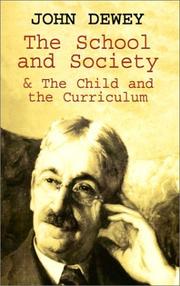
Three 1899 lectures given to parents at the Chicago Laboratory School, arguing that the school must become a miniature community rather than a place children are sent to receive information. Short, concrete and the easiest Dewey to read.
A brief essay dissolving the argument between child-centred and subject-centred education by refusing both halves of it. Read straight after the lectures; the two are usually bound together and are the compact statement of the position.
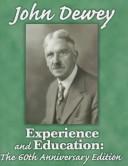
Written forty years later, and Dewey's own correction of the progressive educators who claimed him — freedom without structure is not what he argued for. Placed third because it is best read as the author's response to what his early work became.
Democracy and Education, and how thinking works
IntermediateTake on the major work, in which democracy is defined as a mode of associated living rather than a set of institutions, and pair it with the account of reflective thought that the whole educational programme depends on.
▸ Study plan for this stage
Pace: Five weeks for 570 pages. Democracy and Education is 346 pages and is the central text of the path — Dewey said it came closest to a full statement of his philosophy — but it is long, repetitive by modern standards, and organised so that each chapter restates the argument from a new angle rather tha
- Democracy as a mode of associated living and conjoint communicated experience, not a set of institutions
- The two criteria for a good society: shared interests within a group, and free interaction between groups
- Education as the process by which a society renews itself, which makes schooling a political question by definition
- Reflective thought as a five-phase movement from a felt difficulty to a tested resolution
- The rejection of the dualisms — mind and body, knowing and doing, culture and vocation, interest and discipline
- Growth as the only end of education, and the standard objection that growth in any direction cannot be the criterion
- Why Dewey thinks a hierarchical society will produce a hierarchical curriculum regardless of intentions
- State the two criteria for judging a society and apply them to an actual institution you know.
- Growth is said to be the aim of education. What stops a person from growing in a bad direction, on Dewey's account? Is his answer adequate?
- Set out the five phases of reflective thought and identify each in a problem you have actually solved.
- Which dualism does Dewey attack most successfully, and which attack is least convincing?
- How does the definition of democracy in this book differ from a procedural one, and what follows politically?
- Keep a glossary as you read Democracy and Education: experience, growth, interest, discipline, occupation, communication. Dewey uses every one of them in a sense you would not guess.
- Take a problem from your own work and write it up as the five phases from How we think. Then note which phase you actually skipped.
- Chapter by chapter, write a one-line summary of Democracy and Education. When two consecutive lines say the same thing, you have found the repetition — and the pattern of it is informative about how Dewey argues.
- Test the two criteria against a group that scores well on the first and badly on the second. What does Dewey say about such a group?
Next up: Everything so far rests on a theory of experience and inquiry that Dewey has not yet stated for its own sake — which is what the next stage is.

The book Dewey said came closest to a full statement of his philosophy: education as the process by which a society renews itself, and democracy as the only social form that can educate. Long and repetitive by modern standards, and the central text of the path.
The analysis of reflective thinking as a five-phase movement from a felt difficulty to a tested resolution, written for teachers. Read alongside Democracy and Education, because it is the psychology that the pedagogy is built on and it is much shorter.
The philosophy underneath
IntermediateGo down to the pragmatist metaphysics and ethics: that philosophy's traditional problems are artefacts of a false split between knowing and doing, that habit rather than reason is the unit of conduct, and that experience is transactional rather than something a mind has. This is genuinely difficult prose and should not be attempted before the earlier stages.
▸ Study plan for this stage
Pace: Eight weeks for 1,003 pages, and this stage should not be attempted before the earlier ones. Reconstruction in philosophy is 224 pages of lectures given in Japan, polemical and historical, and much the most readable thing here — two weeks, and the right entry point. Human Nature and Conduct An Intro
- The claim that philosophy's traditional problems are artefacts of a false split between knowing and doing
- The quest for certainty and the spectator theory of knowledge as the errors to be undone
- Habit as the unit of conduct, with impulse as its disruptor and intelligence as its reorganiser
- Ends-in-view: ends as working hypotheses within action rather than fixed targets outside it
- The means-ends continuum and the refusal to treat any end as final
- Experience as transactional — something organisms undergo and do, not something a mind contains
- Consummatory experience, the concept that reappears as the whole basis of the aesthetics in stage five
- Why Dewey thinks philosophy is a form of cultural criticism rather than a foundational discipline
- What is the spectator theory of knowledge, and what does Dewey propose in its place?
- If habits are the unit of conduct, what room is left for moral responsibility?
- Explain the means-ends continuum. What does it rule out about how we usually justify actions?
- Why does Dewey say experience is not something a mind has? What is the alternative he is proposing?
- Would substituting 'culture' for 'experience' throughout actually have fixed Experience and nature, as Dewey claimed?
- How does the account of inquiry here relate to the five phases in How we think — is it the same theory at greater depth, or a different one?
- Take a moral decision you have actually made and analyse it with habit, impulse and end-in-view rather than with rules or consequences. Note what the analysis captures that the others do not.
- Read the first and last chapters of Experience and nature, write a page on what you think the middle argues, then read the middle and check.
- From Reconstruction in philosophy, list the traditional problems Dewey claims to dissolve, and mark those you think survive dissolution.
- Write the definition of experience in Dewey's sense in your own words, then rewrite it substituting culture. Decide which reads better and why.
Next up: With inquiry and habit in place, the political argument of the next stage is not an application of the philosophy but a direct test of it.

Lectures given in Japan setting out what pragmatism proposes to do to the inherited philosophical agenda. The best entry to this stage: polemical, historical and far more readable than the treatises that follow.

The ethics, built on habit and impulse rather than on rules or consequences, and the book where Dewey is most obviously a psychologist. Read second; its full published title adds An Introduction to Social Psychology, which is how the catalogue displays it.

The metaphysics, and the hardest book here — Dewey later said he should have used the word culture rather than experience throughout. Attempt it only after the previous two, and read the first and last chapters if you read nothing else.
The public, and the argument with Lippmann
IntermediateFollow the most consequential political exchange in American thought: Lippmann's case that the modern public is a phantom and government must be left to expert administrators, and Dewey's reply that a public is something that has to be constituted through communication rather than assumed. This stage deliberately includes Dewey's opponent.
▸ Study plan for this stage
Pace: Four weeks for 512 pages, and it is the most rewarding stage to read in strict order. The phantom public is 195 pages and is not by Dewey: it is Walter Lippmann's case that the omnicompetent citizen is a fiction and that government must fall to expert administrators. Read it first, in a week, and le
- Lippmann's argument that the public is a phantom: citizens cannot know enough about enough to govern
- Dewey's counter-definition of a public as those indirectly affected by a transaction who therefore need to organise
- The Great Society against the Great Community — a technologically connected population is not yet a public
- Communication as the condition of a public's existence, which is why the answer is cultural before it is institutional
- The claim that experts should supply knowledge but not set ends, and the pressure that concession puts on Dewey
- Historical liberalism of laissez-faire against a renascent liberalism committed to organised social intelligence
- The scale of Dewey's concession to Lippmann on the actual competence of citizens
- State Lippmann's argument in its strongest form. Which of its premises does Dewey actually deny?
- How does Dewey's definition of a public differ from an electorate, a population, or an interest group?
- If experts supply knowledge but do not set ends, who decides which questions the experts are asked?
- What exactly is missing, on Dewey's account, that keeps the Great Society from becoming the Great Community?
- Does Liberalism and social action follow from The public and its problems, or does it require premises the earlier book did not supply?
- Write both sides of the exchange as a two-page dialogue, using only claims you can source to one of the two books.
- Take a current policy area and apply Dewey's test: who is indirectly affected, are they organised, and what would organising them require?
- Mark every concession Dewey makes to Lippmann and total them. Then decide whether what remains is a reply or a partial capitulation.
- Set Liberalism and social action beside the account of intelligence in Human Nature and Conduct and write how the political programme depends on the psychology.
Next up: The last stage returns to experience itself, in the book where Dewey finally found a subject that made his central concept vivid.

Not by Dewey, and included on purpose: Lippmann's argument that the omnicompetent citizen is a fiction and that democratic theory should stop pretending otherwise. Read it first so Dewey's reply has something to answer.

The answer: the public is not missing but unformed, scattered by a technological society that has outrun its means of communication. Dewey concedes far more to Lippmann than his admirers usually admit, which is what makes reading them in this order worth the trouble.

The 1935 lectures separating a historical liberalism of laissez-faire from a renascent liberalism committed to organised social intelligence. The political programme that the previous book's diagnosis implies, and the clearest statement of where Dewey stood in the Depression.
Art, and a scholarly life
IntermediateFinish with the aesthetics — which is where the concept of experience is stated most vividly — and with a modern biography that connects the philosophy to the public career and assesses the progressive-education legacy honestly.
▸ Study plan for this stage
Pace: Five weeks for 925 pages. Art as Experience is 355 pages, is widely thought the best-written book Dewey produced, and is where the metaphysics of stage three finally becomes concrete — three weeks at a comfortable pace, and the chapters on having an experience and on the act of expression are the on
- Art as the consummation of ordinary experience rather than a separate class of object
- Having an experience: the unit that is rounded off and complete, as against the flow of undifferentiated living
- The museum conception of art and how Dewey thinks it produced the problem aesthetics tries to solve
- Expression as an act, distinguished from discharge of emotion on one side and statement on the other
- Rhythm and the resolution of tension as the formal properties Dewey takes to be common to art and to living
- Westbrook's assessment of the progressive-education legacy, and of how much of it Dewey would have recognised
- The distance between Dewey's radical democracy and the liberalism he is usually filed under
- How does Art as Experience explain the difference between an experience and mere experience?
- If art is continuous with ordinary experience, what is left of the distinction between art and non-art?
- Why does Dewey blame the museum, and is the historical claim behind that argument sound?
- On Westbrook's account, what did progressive education take from Dewey and what did it invent?
- Having read the path, is Dewey's philosophy a unified system or a set of related commitments? Argue it from at least three books.
- Which of Dewey's positions has aged best, and which now looks most a product of its moment?
- Take a recent experience of yours that felt complete and analyse it with Dewey's criteria. Then take one that did not, and say what was missing.
- Read the chapter on the act of expression and then write about an object you have made, in Dewey's terms.
- Use Westbrook to build a controversy-by-controversy timeline of Dewey's public career, and mark which books were written into which fight.
- Write a 600-word answer to the question the path opened with: whether Dewey's education writing can be understood without the philosophy underneath it, citing books from at least four stages.
- Go back to your stage-two glossary and rewrite every definition using what stages three and five taught you.
Next up: This is the end of the path: seventy years of writing, and you should now be able to tell which Dewey a person is invoking when they invoke him.
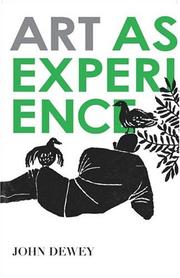
The 1934 lectures arguing that art is not a special class of object but the consummation of ordinary experience, and that museums have obscured this. Widely thought Dewey's best-written book and the place where his metaphysics finally becomes vivid.
Secondary, and the standard intellectual biography: what Dewey argued, when, in which controversy, and what his radical-democratic commitments actually amounted to. The right closing book, and far more useful once the primary texts are behind you.
Discussion
Keep reading
Paths that share books, cover the same subject, or open a related topic.