Best Books on Pragmatism, in Reading Order
Pragmatism is America's one original contribution to philosophy, and it is best approached historically, because it was invented by people trying to think their way out of the certainties that produced the Civil War. This path opens with the intellectual history, then reads Peirce and James in their own words, spends a full stage on Dewey — the most consequential and least read of the three — follows the tradition's revival under Rorty and Putnam, and closes with two assessments of what the whole enterprise amounts to.
Where it came from
IntermediateUnderstand pragmatism as a response to the Civil War, Darwin and the collapse of philosophical certainty, and know how Holmes, Peirce, James and Dewey are connected.
▸ Study plan for this stage
Pace: Three weeks. The Metaphysical Club is narrative history and reads far more easily than anything that follows it, but it is long and the biographical threads interleave — Menand tells Holmes, Peirce, James and Dewey in rotation rather than in sequence. Read it a section at a time and keep a note of w
- The Civil War as the founding trauma: Menand's thesis is that Holmes came back from the war convinced that certainty is what gets people killed, and that pragmatism is the philosophy built on that conviction
- Darwin's actual philosophical effect — not the theology fight but the idea that species have histories, therefore so might truth, morals and categories
- The Metaphysical Club itself as a real conversational circle in 1870s Cambridge, and why an informal group rather than a university produced the ideas
- Chance and probability as the period's obsession, from Peirce's statistical work to the insurance-and-error mathematics that shaped how these men thought about knowledge
- The four principals and their relations: Holmes in law, Peirce in logic and science, James in psychology, Dewey arriving a generation later from a different direction entirely
- Pluralism as the political stake — the argument that a society of irreconcilable beliefs needs a theory of inquiry rather than a theory of truth
- Why the tradition was a reaction against certainty, which is the frame that makes the later Rorty look like a legitimate heir rather than an intruder
- What is Menand's actual thesis about the relationship between the Civil War and pragmatism, and how much of it is causal rather than atmospheric?
- How does Darwin change what a concept is, on Menand's account?
- How are Peirce and James connected biographically, and how does that relationship shape the intellectual disagreement you are about to read?
- Where does Dewey come from, and why is he the odd one out in this group?
- Menand is a literary journalist writing intellectual history. What does that method give you here, and what does it leave out?
- Draw a timeline from 1861 to 1930 and place Holmes, Peirce, James and Dewey on it with their major works. Keep it beside you for the rest of the path; the sequence of publication is doing real argumentative work.
- Write 200 words summarising what Menand says Holmes took from the war, then set it aside and check it against his account after finishing the book.
- For each of the four principals, write one sentence naming the discipline they came from. The variety is the point: pragmatism was assembled by a lawyer, a logician, a psychologist and an educationalist.
- List the questions the book raises but does not answer philosophically. Those are the questions the next four stages are for.
Next up: With the people, the war and the Darwinian background in place, you can read Peirce and James as men arguing inside a specific moment rather than as two entries in a textbook.

A Pulitzer-winning intellectual history that makes the origins of pragmatism a narrative about people and a war rather than a sequence of doctrines. Read it first: it supplies the context every primary text below assumes.
The classical texts
IntermediateRead the founding statements directly and be able to distinguish Peirce's pragmatic maxim about meaning from James's much looser theory of truth.
▸ Study plan for this stage
Pace: Four to five weeks for about 620 pages, and slower than that sounds. Chance, Love, and Logic (318 pages) is a posthumous gathering of essays and is genuinely hard — Peirce writes as a working logician — so budget three weeks and read the two key essays twice. Pragmatism (308 pages) is eight lectures
- Peirce's pragmatic maxim from How to Make Our Ideas Clear: the meaning of a concept is the sum of its conceivable practical effects, which is a rule about meaning and not about truth
- The four methods of fixing belief from The Fixation of Belief — tenacity, authority, the a priori method, and science — and why Peirce ranks the scientific method not as the most comfortable but as the only self-correcting one
- Doubt as the actual starting point of inquiry: real doubt, provoked by a broken habit, rather than the Cartesian pretence of doubting everything
- Truth as the opinion fated to be agreed on by all who investigate — a limit concept for a community over time, not a property of a belief held today
- James's cash value of an idea and his definition of truth as what works in the way of belief, which loosens Peirce's maxim from meaning into truth
- The squirrel example in Lecture II as James's demonstration that a dispute with no practical difference is a verbal dispute
- James's tough-minded versus tender-minded temperaments in Lecture I, and pragmatism offered as the mediating position between them
- Why Peirce renamed his own doctrine pragmaticism, a word he called ugly enough to be safe from kidnappers — the clearest possible statement that he thought James had taken it somewhere he would not go
- State the pragmatic maxim in your own words. Is it a theory of meaning, a theory of truth, or a method?
- What are Peirce's four methods of fixing belief, and what is his objection to each of the first three?
- How does James's definition of truth differ from Peirce's, and is the difference a corruption or an extension?
- What does the squirrel example actually establish, and what does it fail to establish?
- Peirce disliked what James did with his idea. On the evidence of these two books, who has the better of it?
- Read The Fixation of Belief and How to Make Our Ideas Clear twice each before touching James. Everything downstream is a response to these two essays and they are short enough to reread.
- Take a philosophical dispute you care about and apply the pragmatic maxim: write out what practical difference each side's truth would make. If you find none, you have reproduced James's squirrel.
- Write a 300-word passage in which Peirce objects to James's Lecture VI on truth. Use only what you have read; the exercise forces you to locate the exact point of divergence.
- Mark every place in Pragmatism where James uses a religious example. Lecture VIII is the payoff, and tracking the thread shows what James wanted the theory for.
Next up: Peirce gave the method and James gave it a public, but neither built a system out of it — which is exactly what Dewey spent fifty years doing, and what the next stage is for.
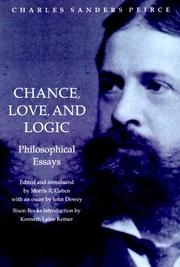
Peirce never wrote a book, so this posthumous gathering of his major essays — including How to Make Our Ideas Clear — is the practical way to read him. Take him first, since James was popularising him.
The lectures that made the word famous and defined truth as what works in the way of belief. Peirce disliked what James did with his idea enough to rename his own view pragmaticism, and reading them in this order shows you why.
Dewey's reconstruction
BeginnerWork through the most systematic pragmatist philosophy — of experience, of education and of democracy — and see how far the method reaches beyond epistemology.
▸ Study plan for this stage
Pace: Eight to ten weeks for roughly 1,010 pages, and this is the hardest stage in the path. Democracy and Education (346 pages, 26 chapters) is the accessible one; a chapter or two per sitting over three weeks. Experience and Nature (443 pages) is the wall — Dewey's prose here is notoriously heavy and th
- Experience as transaction, not as inner spectacle: for Dewey experience is an organism doing something to an environment and having something done back, which is the move that dissolves the mind-world problem
- The spectator theory of knowledge as Dewey's named enemy — the assumption that knowing is looking at reality from outside it rather than intervening in it
- Education as the reconstruction of experience, and Dewey's claim in Democracy and Education that education is not preparation for life but life itself
- Democracy as a mode of associated living rather than a set of institutions, which is why the political and educational arguments are the same argument
- Continuity between nature and experience in Experience and Nature: no ontological gap to be bridged, so no bridging problem to solve
- The denotative method — start from gross experience, refine, then return to gross experience to check — as Dewey's alternative to beginning from a theory of the mind
- The eclipse of the public: Dewey's diagnosis in The Public and Its Problems that modern industrial society produces consequences too diffuse for the affected people to recognise themselves as a public
- The Lippmann exchange — Walter Lippmann had argued the ordinary citizen cannot competently govern a complex society, and Dewey's reply is that the problem is one of communication and inquiry, not of citizens' capacity
- What does Dewey mean by experience, and why does he insist it is not something that happens inside a head?
- In Democracy and Education, what is wrong with the idea that education prepares a child for adult life?
- Why does Dewey argue that democracy and education are the same problem? Where does the argument depend on a specific view of communication?
- What is the denotative method, and how is it supposed to keep philosophy honest?
- What is the eclipse of the public, and does Dewey's answer to Lippmann actually meet Lippmann's objection?
- Read the first chapter of Experience and Nature twice, then write one page on what Dewey thinks philosophy has been doing wrong. If you cannot, read it a third time; nothing else in the book will land without it.
- Pick five chapters of Democracy and Education and write a one-sentence thesis for each. Dewey repeats himself productively and the exercise reveals the spine of the book.
- Find the passage in The Public and Its Problems where Dewey states his disagreement with Lippmann most directly and copy it out. Then write the strongest reply Lippmann could make.
- Take one concrete educational practice — standardised testing, streaming by ability, lectures — and write 300 words judging it by Dewey's criteria. His theory is unusual among philosophies in being directly applicable, and applying it is how you find out whether you believe it.
Next up: Dewey is the tradition at its most systematic and its most confident, which is what makes the next stage's central question sharp: whether Rorty is finishing this project or abandoning it.

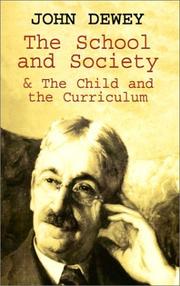
The most accessible route into Dewey and the book he considered the fullest statement of his philosophy. Education is where his theory of experience becomes concrete.

The metaphysical core: nature and experience as continuous, against the spectator theory of knowledge. Difficult, and the reason to have read Democracy and Education first.

Dewey's answer to Walter Lippmann on whether ordinary citizens can govern a complex society. It remains the sharpest pragmatist argument about democracy and belongs at the end of this stage.
The neopragmatist revival
BeginnerFollow pragmatism's return to the centre of analytic philosophy and judge whether Rorty's version is a continuation of the tradition or a departure from it.
▸ Study plan for this stage
Pace: Six to seven weeks for about 730 pages. Philosophy and the Mirror of Nature (401 pages) is a technical book aimed at professional analytic philosophers and assumes Sellars, Quine and Wittgenstein; expect three to four weeks and expect to look things up. Contingency, Irony, and Solidarity (201 pages)
- The mirror metaphor: Rorty's claim that Western philosophy since Descartes has assumed the mind mirrors reality, and that epistemology is the discipline built on that picture
- Sellars on the myth of the given and Quine on the analytic-synthetic distinction as the two demolitions Rorty stitches together into a single case
- Knowledge as social justification rather than accurate representation — conversation replacing correspondence as the model of what makes a belief good
- Edifying versus systematic philosophy, and Rorty's proposal that philosophy give up adjudicating and take up keeping the conversation going
- The three contingencies of Contingency, Irony, and Solidarity: of language, of selfhood, and of liberal community, each denying a foundation someone wanted
- The liberal ironist — someone who holds her own final vocabulary while knowing it is contingent, and whose only firm commitment is that cruelty is the worst thing we do
- Rorty's public/private split, which walls off self-creation from politics, and is the move most often attacked as incoherent
- Putnam's counter: that you can be a pragmatist and still keep realism and objectivity, and that the fact/value dichotomy Rorty relies on does not hold up
- What exactly is the mirror of nature, and which philosophers does Rorty say built it?
- How do Sellars and Quine each contribute to Rorty's case, and could either argument have carried it alone?
- What is a final vocabulary, and what does it mean to be ironic about your own?
- Rorty separates private self-creation from public solidarity. What breaks if you deny the separation?
- What does Putnam think Rorty has got wrong, and does his defence of objectivity require abandoning anything Dewey held?
- Write 200 words stating Rorty's argument that epistemology rests on an optional metaphor, then write 200 words in which Peirce objects. You have read enough Peirce to do this and it is the sharpest test of continuity in the tradition.
- Take the cruelty-is-the-worst-thing claim from Contingency, Irony, and Solidarity and ask what grounds it, given that Rorty has denied himself grounds. Write out how he answers, then whether you accept it.
- Read Putnam's chapters against Rorty and produce a two-column list: what Putnam concedes to pragmatism, what he refuses. The refusals are the whole book.
- Return to Dewey's spectator theory of knowledge and Rorty's mirror of nature and write one page arguing they are the same objection, then one page arguing they are not. Both cases are makeable and holding both is the point.
Next up: Having watched the tradition split between Rorty's ironism and Putnam's realism, the last stage steps outside the family quarrel to ask what pragmatism as a whole has been for and what it has actually accomplished.
The book that revived pragmatism by arguing that the whole project of representing reality accurately was a mistake. It uses Wittgenstein, Sellars and Quine to reach conclusions Dewey would have recognised.
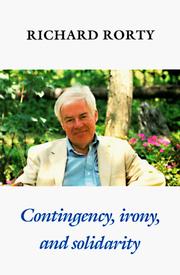
Rorty's constructive sequel, on liberal politics without foundations and the ironist who takes her own vocabulary as contingent. Read it second; the first book clears ground, this one builds.

Putnam's short, sharp defence of a pragmatism that keeps realism and objectivity, written explicitly against Rorty's relativism. The best available check on the previous two books.
The tradition assessed
BeginnerStep back and evaluate pragmatism's political record and its standing in contemporary philosophy.
▸ Study plan for this stage
Pace: Five weeks for roughly 560 pages. The American Evasion of Philosophy (279 pages) is a chapter-per-thinker genealogy and is best read one figure per sitting, which will take about three weeks. The Pragmatic Turn (280 pages) is a synthesising book by a scholar who knew most of the living participants
- Evasion as West's key term: pragmatism sidesteps epistemology-centred philosophy rather than refuting it, and West treats that as the tradition's defining gesture
- The genealogy West constructs from Emerson forward, which brings in Du Bois, Niebuhr and Trilling — figures no standard pragmatism syllabus includes
- Prophetic pragmatism, West's own constructive position: the tradition plus a moral urgency about race, class and suffering that he thinks Dewey had and Rorty lost
- West's central charge against Rorty — that the ironist stance is available mainly to people whose vocabularies are not under attack
- Bernstein's claim that pragmatist themes have quietly won: fallibilism, anti-foundationalism, the social character of inquiry, and the priority of practice are now common ground rather than a school position
- The pragmatist turn traced through Habermas, Brandom and Putnam, showing the ideas reappearing under other names on both sides of the analytic-continental divide
- Bernstein's rehabilitation of Peirce as the deepest of the founders, against a century of treating him as James's rougher draft
- The unresolved question the path closes on: whether a tradition that has been absorbed everywhere still exists as a position anyone can hold
- What does West mean by evasion, and is he praising or criticising the tradition when he uses the word?
- Why does West bring Du Bois and Niebuhr into a pragmatist genealogy, and what does their inclusion change about the story you got from Menand?
- What is prophetic pragmatism, and what does it demand that Rorty's version does not?
- Which pragmatist themes does Bernstein say have won, and can you name a contemporary philosophical debate that confirms him?
- Having read the whole path, is pragmatism a method, a metaphysics, a temperament, or a politics? Defend one answer.
- Put West's genealogy beside Menand's from the first stage and list the names each includes that the other does not. The difference is an argument about what the tradition is for.
- Write 500 words on West's objection to Rorty. You have read both primary books, so this is a real judgement rather than a summary.
- Take Bernstein's list of victorious pragmatist themes and check it against the classical texts: for each theme, cite the passage in Peirce, James or Dewey where it first appears.
- Write your own two-page assessment of the tradition, naming the single book in this path you found most convincing and the one you found weakest, with reasons. Do it before reading any secondary commentary — the whole path has been preparation for having a position of your own.
Next up: This is the end of the path — origins, founders, Dewey, the revival and the reckoning — and the natural next step is not another survey but a return to whichever primary text you argued with hardest, read a second time with the whole tradition behind it.
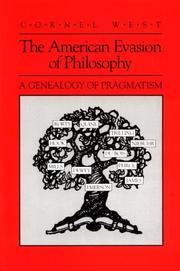
West reads the tradition from Emerson to Rorty as a distinctively American evasion of epistemology, and asks what it offers to a prophetic politics of race and class. The strongest political reading of the canon.

A lifelong scholar of the tradition arguing that pragmatist themes have quietly won across analytic and continental philosophy alike. The right final book: it tells you where the ideas ended up.
Discussion
Keep reading
Paths that share books, cover the same subject, or open a related topic.