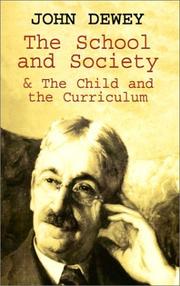
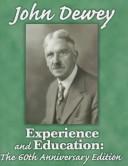
Start with The school and society, 132 pages of lectures given to parents at the Chicago Laboratory School, arguing that a school must be a miniature community rather than a place children are sent to receive information. Follow it immediately with The child and the curriculum, a 40-page essay that dissolves the child-centred versus subject-centred argument by refusing both halves; the two are usually bound together. Then Experience and education, 116 pages written four decades later, in which Dewey corrects the progressive educators who claimed him — freedom without structure was never the argument.
That is the sequence because it is where he is clearest, and because the core commitments are visible in it: education is not preparation for life but a form of living, and learning by doing is a claim about how thinking works rather than a teaching gimmick.
The major work, and the psychology under it
Democracy and Education, 346 pages, is the book Dewey said came closest to a full statement of his philosophy. Democracy in it is a mode of associated living rather than a set of institutions, and education is how a society renews itself. It is long and repetitive by modern standards. Read How we think alongside it — 224 pages analysing reflective thought as a five-phase movement from a felt difficulty to a tested resolution, written for teachers, and much the shorter of the two. It is the psychology the pedagogy rests on.
The philosophy underneath, and the book people abandon
Reconstruction in philosophy, 224 pages of lectures given in Japan, is the right entry to the hard stretch: polemical, historical and far more readable than what follows. Human Nature and Conduct An Introduction to Social Psychology — our record runs the subtitle straight on without punctuation, and its author field carries duplicate Dewey entries — is 336 pages of ethics built on habit and impulse rather than rules or consequences.
Experience and nature, 443 pages, is the metaphysics and the book readers give up on. Dewey himself later said he should have used the word culture rather than experience throughout, which tells you how much of the difficulty is terminological. If you read nothing else of it, read the first and last chapters, and do not attempt it before the two books above.
Here is where page count misleads. The child and the curriculum is 40 pages, and its opening pages are denser than anything in the 346-page Democracy and Education. Liberalism and social action is 93 pages and lands cleanly in an evening. The first forty pages of the 443-page Experience and nature will cost you more than either. Dewey's prose is notoriously unhelpful, and the difficulty tracks which register he is writing in — lectures to teachers, or philosophy to philosophers — not how many pages he took.
The public, and the argument with Lippmann
The phantom public, 195 pages, is not by Dewey and is here deliberately: Walter Lippmann's case that the omnicompetent citizen is a fiction and government should be left to expert administrators. Read it first, so that The public and its problems, 224 pages, has something to answer. Dewey's reply is that a public is not missing but unformed, scattered by a technological society that has outrun its means of communication — and he concedes far more to Lippmann than his admirers usually admit, which is the reason to read them in this order. Liberalism and social action then gives the political programme that diagnosis implies.
Finish with Art as Experience, 355 pages arguing that art is not a special class of object but the consummation of ordinary experience, widely thought his best-written book and the place his metaphysics becomes vivid. Then Robert Westbrook's John Dewey and American Democracy, 570 pages, the standard intellectual biography, which is the secondary book that makes the primary texts hold together — and which is far more useful once they are behind you.
The full Dewey reading order breaks this into stages with a study plan for each.