Taoism: a reading path into the Tao and the art of the Way
This curriculum guides the reader from accessible introductions to Taoism's core ideas, through the primary classical texts, and finally into deeper philosophical and practical dimensions of the Way. Each stage builds essential vocabulary and intuition so that later, more demanding texts feel natural rather than opaque. By the end, the reader will have both a scholarly grounding and a lived sense of what it means to walk the Tao.
First Steps: Orienting the Mind
BeginnerGain a clear, welcoming overview of Taoism's history, key concepts (Tao, wu wei, te, yin-yang), and cultural context before touching the primary texts.
▸ Study plan for this stage
Pace: 4–5 weeks, ~25–30 pages/day. Start with "The Tao of Pooh" (200 pages, ~2 weeks), then move to "Taoism" by Eva Wong (300+ pages, ~2–3 weeks).
- The Tao as the fundamental, ineffable reality underlying all existence—beyond language and conceptual thought
- Wu wei (non-action or effortless action): acting in harmony with the natural flow rather than forcing outcomes
- Te (virtue or power): the natural expression of the Tao in individual character and conduct
- Yin-yang duality: complementary opposites that define balance, change, and wholeness in nature and life
- Pooh's character as a living embodiment of Taoist principles—simplicity, acceptance, and intuitive wisdom
- Historical development of Taoism: philosophical roots, religious institutionalization, and cultural integration in China
- The contrast between Taoist spontaneity and Confucian rigid rules, and between Taoist acceptance and Western striving
- Practical application: how Taoist principles translate to everyday living, decision-making, and peace of mind
- What is the Tao, and why does Hoff argue it cannot be fully defined or explained in words?
- How does Pooh exemplify wu wei, and what makes his approach to problems different from Piglet's or Eeyore's?
- Explain the concept of te and how it differs from external achievement or moral rules.
- What is yin-yang, and how does this principle of complementary opposites apply to real-world situations?
- How did Taoism develop historically from philosophy into a religious tradition, and what role did figures like Laozi play?
- What are the main differences between Taoist and Confucian approaches to life and society, as presented in both books?
- How can wu wei and acceptance of the Tao help resolve common modern problems like anxiety, perfectionism, or over-planning?
- Character mapping: Choose three characters from 'The Tao of Pooh' (Pooh, Piglet, Eeyore, Tigger) and identify which Taoist principles each embodies or lacks. Write a one-page analysis.
- Wu wei journal: For one week, keep a daily log of moments when you acted effortlessly or intuitively versus moments when you forced an outcome. Reflect on the difference.
- Yin-yang in your life: Identify three areas of your life (work, relationships, health) and map the yin-yang dynamics at play. Where is balance lacking?
- Concept illustration: Create a visual (diagram, mind map, or sketch) connecting the Tao, wu wei, te, and yin-yang as an integrated system.
- Taoist reading dialogue: After finishing both books, write an imaginary conversation between Pooh and a historical Taoist sage (e.g., Zhuangzi) discussing a modern problem.
- Simplicity challenge: Spend three days intentionally reducing complexity in one area (daily routine, decision-making, possessions) and journal how it affects your clarity and peace.
Next up: This stage establishes an intuitive, accessible foundation in Taoist philosophy and its core principles, preparing you to engage directly with the classical texts (Daodejing and Zhuangzi) with both conceptual clarity and practical grounding in how these ideas manifest in real life.
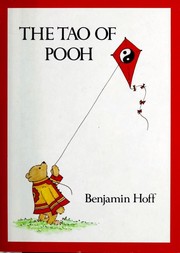
Uses the beloved Winnie-the-Pooh characters to illustrate core Taoist principles in plain, joyful language — the perfect first encounter that makes abstract ideas feel immediately intuitive.

A concise, authoritative survey of Taoist history, schools, and practices that gives the reader a reliable map of the entire tradition before diving into primary sources.
The Heart of the Canon: Tao Te Ching
BeginnerRead and genuinely absorb the foundational Taoist scripture, aided by two complementary translations that illuminate different facets of the same text.
▸ Study plan for this stage
Pace: 4–5 weeks, ~15–20 pages/day (alternating between the two translations, reading 3–4 verses per session)
- The Tao as the ineffable source and ground of all existence—what cannot be named or fully grasped intellectually
- Wu wei (non-action or effortless action): alignment with the natural flow of the Tao rather than forcing outcomes
- The paradox of emptiness and fullness: how void and receptivity contain infinite potential
- Yin and yang as complementary opposites that define reality—softness overcomes hardness, weakness contains strength
- The sage as one who embodies Taoist principles through simplicity, humility, and detachment from ego and desire
- The critique of conventional values: how society's pursuit of knowledge, status, and control distances us from the Tao
- Living in harmony with nature's rhythms and the principle of returning to one's original nature
- What does Laozi mean when he says 'the Tao that can be named is not the eternal Tao,' and why is this paradox central to Taoist philosophy?
- How does wu wei differ from passivity or laziness, and what does it mean to act without forcing?
- Explain the relationship between yin and yang in the Tao Te Ching: how do opposing forces create harmony and balance?
- What is the Taoist critique of conventional wisdom and ambition, and how does the sage embody an alternative way of being?
- How do the two translations (original and Mitchell's) illuminate different dimensions of the same verses, and what does this reveal about the Tao's nature?
- What role does simplicity, emptiness, and return play in Taoist practice and spiritual development?
- Read one verse from the original Tao Te Ching, then immediately read Stephen Mitchell's translation of the same verse; journal on how each version resonates differently and what nuances emerge
- Select 5–7 key verses (e.g., chapters 1, 15, 25, 48, 78) and memorize them; recite daily to internalize the rhythm and wisdom
- Practice wu wei meditation: spend 15 minutes daily observing a natural process (water flowing, wind moving, plants growing) without judgment or intervention; journal on what effortless action teaches you
- Create a visual map or diagram showing the yin-yang dynamics in three areas of your life (work, relationships, personal growth); identify where you are forcing and where you could align with natural flow
- Write a personal reflection comparing one Taoist principle (e.g., non-attachment, simplicity, receptivity) to a recent decision or challenge in your life; explore how the sage's way might apply
- Engage in a 'reverse translation' exercise: take a verse that strikes you and rewrite it in your own words three times, each iteration moving deeper into your own understanding and voice
Next up: This foundational immersion in the Tao Te Ching's core principles—the ineffable nature of the Tao, wu wei, and the sage's path—establishes the philosophical bedrock needed to explore how these teachings manifest in practical Taoist practice, ethics, and the lived wisdom of later commentaries and schools.
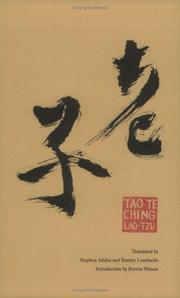
Le Guin's rendering is poetic, readable, and accompanied by thoughtful commentary — ideal as a first translation because it prioritizes feeling and meaning over scholarly literalism.
Mitchell's spare, contemporary version offers a second lens on the same 81 chapters, reinforcing key ideas and showing how much interpretive richness lives inside this short text.
The Second Classic: Zhuangzi
IntermediateEngage deeply with the Zhuangzi's parables, humor, and radical philosophy of spontaneity, naturalness, and the relativity of perspectives.
▸ Study plan for this stage
Pace: 6–8 weeks, ~25–30 pages/day, with 2–3 days per week for reflection and exercises
- The concept of *wu wei* (non-action/effortless action) and how it contrasts with forced effort and social convention
- The relativity of perspectives and the impossibility of absolute judgment—how the Zhuangzi deconstructs fixed viewpoints through parables like the butterfly dream
- The role of humor, absurdity, and paradox as philosophical tools to transcend rational thinking and linguistic limitations
- The critique of Confucian ethics, rigid morality, and social conditioning as obstacles to natural spontaneity (*ziran*)
- The metaphor of *zhenren* (the true person/sage) as someone who has transcended ego, fear, and conventional knowledge
- The interconnectedness of all things and the dissolution of dualistic thinking (self/other, life/death, usefulness/uselessness)
- The limitations of language and conceptual knowledge in expressing Taoist truth
- The cultivation of emptiness, stillness, and receptivity as pathways to alignment with the Tao
- What is *wu wei* and how does the Zhuangzi distinguish it from laziness or passivity?
- How does the Zhuangzi use parables and absurdist humor to convey philosophical truths that cannot be stated directly?
- What is the significance of the butterfly dream parable, and what does it reveal about the nature of identity and reality?
- How does Zhuangzi critique Confucian morality and conventional social values, and what alternative does he propose?
- What does it mean to be a *zhenren* (true person), and how does one cultivate this state according to the text?
- How does the Zhuangzi address the relationship between language, thought, and the ineffable nature of the Tao?
- Close-read and annotate 3–4 major parables (e.g., the butterfly dream, Cook Ding, the useless tree, the crooked tree) and write a 500-word analysis of how each uses absurdity or paradox to make a philosophical point
- Keep a *wu wei* journal for 2 weeks: daily record moments when you acted effortlessly versus moments when you forced outcomes; reflect on what conditions enabled spontaneous action
- Write a dialogue in the style of Zhuangzi between yourself and a Confucian sage, using humor and paradox to challenge conventional views on success, morality, or social status
- Create a visual map or diagram showing how the Zhuangzi deconstructs binary oppositions (useful/useless, life/death, self/other); annotate with textual references
- Practice *zhenren* meditation: 10–15 minutes daily of sitting in stillness without goal or judgment; afterward, journal on how this differs from goal-oriented practice
- Identify and collect 5–6 instances where Zhuangzi uses linguistic play, wordplay, or contradiction to undermine rational argument; write a short essay on how language itself becomes a philosophical tool
Next up: This deep engagement with Zhuangzi's radical deconstruction of perspective, language, and conventional morality prepares you to explore how Taoist philosophy integrates with practical life—including its influence on Chinese aesthetics, martial arts, medicine, and the synthesis of Taoism with Buddhism and Confucianism in later traditions.

Watson's translation is the gold standard in English — fluid, faithful, and complete — making the Zhuangzi's wild stories and philosophical depth fully accessible to a prepared reader.
Philosophy of the Way: Scholarly Depth
IntermediateUnderstand the philosophical underpinnings of wu wei, harmony with nature, and the Taoist worldview through rigorous yet accessible scholarly analysis.
▸ Study plan for this stage
Pace: 4–5 weeks, ~25–30 pages/day. Week 1–2: "Trying Not to Try" (complete); Week 3–5: "The Way of Chuang Tzu" with overlapping review and synthesis.
- Wu wei (non-action/effortless action) as the paradoxical core of Taoist practice, bridging intention and spontaneity
- The role of cognitive science and embodied cognition in understanding wu wei beyond Western dualism
- Zhuangzi's perspectivism and the relativity of all viewpoints as a path to freedom and adaptation
- Harmony with nature (ziran) as alignment with the Tao's spontaneous unfolding, not passive resignation
- The Taoist critique of rigid social conventions (li) and intellectual knowledge (zhi) as obstacles to natural living
- The concept of pu (the uncarved block) as representing original simplicity and potential before social conditioning
- Paradox and linguistic playfulness in Taoist texts as deliberate tools for transcending rational-conceptual thinking
- The practical integration of Taoist philosophy into daily life through cultivated spontaneity and adaptive responsiveness
- How does Slingerland use cognitive science to resolve the apparent paradox of 'trying not to try,' and what does this reveal about human consciousness and action?
- What is Zhuangzi's critique of conventional knowledge and social structures, and how does his perspectivism offer an alternative way of understanding reality?
- How do the concepts of wu wei and ziran relate to each other, and what does it mean to live in 'harmony with nature' according to Taoist philosophy?
- Why do Taoist texts employ paradox, humor, and linguistic playfulness, and how do these rhetorical strategies serve the philosophical goals of Taoism?
- How can wu wei be understood as a practical discipline rather than mere passivity, and what role does embodied practice play in achieving it?
- What is the significance of the 'uncarved block' (pu) in Taoist thought, and how does it challenge modern assumptions about self-improvement and social conditioning?
- Close-read 3–4 key passages from Zhuangzi (e.g., the Cook Ding story, the Useless Tree parable) and annotate them with Slingerland's cognitive framework, identifying where embodied cognition and implicit processing are at work.
- Write a 2–3 page comparative analysis of how Slingerland and Merton each approach the concept of wu wei, noting where they converge and diverge in their interpretations.
- Practice a 'wu wei journal' for 1–2 weeks: daily record moments when you acted without deliberate conscious effort (sports, conversation, creative work) and reflect on what conditions enabled that state; connect observations to Taoist concepts.
- Create a visual concept map showing the relationships between wu wei, ziran, pu, li (social convention), and zhi (intellectual knowledge), using evidence from both texts to illustrate how these ideas interconnect.
- Select one Zhuangzi anecdote and rewrite it as a modern scenario (workplace, relationship, personal challenge) to test whether Taoist principles remain applicable; discuss what translations or adaptations were necessary.
- Engage in a structured debate or dialogue with a peer: one person argues for the Taoist critique of conventional knowledge, the other defends the value of rational analysis; use specific examples from the texts to ground the discussion.
Next up: This stage equips you with a sophisticated philosophical foundation in wu wei and the Taoist worldview, preparing you to explore how these principles manifest in specific practices (meditation, martial arts, aesthetics) and historical applications in the next stage.

Slingerland uses cognitive science and philosophy to explain wu wei — effortless action — making the concept intellectually precise and showing why it matters beyond ancient China.
Merton's contemplative reimagining of Zhuangzi bridges Eastern and Western mysticism, offering a meditative, practice-oriented perspective that complements the scholarly readings.
Living the Tao: Practice, Tradition & Synthesis
ExpertIntegrate philosophical understanding with lived Taoist practice — including religious Taoism, inner cultivation, and the ongoing relevance of the Way in daily life.
▸ Study plan for this stage
Pace: 8–10 weeks, ~40–50 pages/day (mix of close reading and reflective practice)
- The Tao as lived experience: moving beyond intellectual understanding to embodied awareness and spontaneous action (wu wei)
- Watts's demystification of Taoism for Western audiences: the paradox of trying to describe the indescribable, and the role of language and metaphor
- Religious Taoism as a coherent tradition: cosmology, ritual, priesthood, and the integration of folk religion with philosophical Taoism
- The Taoist body as a microcosm: internal alchemy (neidan), energy circulation, and the body as a sacred landscape to be cultivated
- Practical inner cultivation techniques: breathing, meditation, sexual practices, and dietary approaches in classical Taoist texts
- The synthesis of philosophy and practice: how Watts's accessible framework illuminates the embodied methods found in Schipper's scholarship
- Continuity and adaptation: how Taoist practice persists, transforms, and remains relevant across centuries and cultures
- The paradox of teaching the Way: why direct instruction has limits, and how practice itself becomes the primary teacher
- How does Watts distinguish between intellectual knowledge of the Tao and direct, lived experience of it? What role does wu wei play in this distinction?
- What are the main differences between philosophical Taoism and religious Taoism, and how does Schipper argue they are unified rather than separate traditions?
- Describe the Taoist understanding of the body as presented in Schipper's work: what is the body's cosmological significance, and what is internal alchemy?
- What are the primary inner cultivation practices discussed in these texts (breathing, meditation, energy work), and what is their purpose in Taoist training?
- How do Watts's metaphors and teaching methods help make Taoist concepts accessible, and where might his approach have limitations compared to Schipper's detailed historical analysis?
- Why does Taoism emphasize paradox, non-action, and the limits of language? How do these principles shape both philosophy and practice?
- Daily sitting practice (15–20 min): Begin with simple breath awareness; progress to microcosmic orbit meditation (circulating energy along the spine and front midline) as described in Schipper's discussion of neidan
- Wu wei journaling: After reading Watts's chapters on spontaneous action, spend 3–4 days documenting moments when you acted without deliberation; reflect on how forcing vs. allowing shaped outcomes
- Comparative mapping exercise: Create a visual chart showing how Watts's key concepts (the watercourse way, the eternal now, non-duality) manifest in Schipper's descriptions of Taoist ritual and cosmology
- Slow-reading practice: Select one dense passage from each book (e.g., Watts on language limits, Schipper on the Three Treasures); read it aloud 3 times, pause between readings to sit with the meaning
- Body awareness walk: Practice moving through daily activities (eating, walking, working) with attention to the body as a living system; notice where you habitually force vs. allow, and experiment with releasing unnecessary tension
- Dialogue with a practice partner: Meet weekly with another reader to discuss one key concept and one personal observation; use Socratic questioning rather than debate to deepen understanding
Next up: This stage grounds Taoist philosophy in embodied practice and historical tradition, preparing you to explore either specialized lineages (specific schools of religious Taoism), advanced meditation systems, or the application of Taoist principles to contemporary life and ethics.
Watts synthesizes the entire Taoist worldview — philosophy, nature, language, and practice — into a beautifully written capstone that rewards readers who now have the full context to appreciate it.

A landmark scholarly work by a Taoist priest and sinologist that reveals the living, ritual, and embodied dimensions of religious Taoism, completing the journey from text to tradition.
Discussion
Keep reading
Paths that share books, cover the same subject, or open a related topic.