Understanding Judaism: essential books on Jewish faith and tradition
This curriculum builds a deep, respectful understanding of Judaism in four progressive stages — starting with an accessible overview of Jewish life and belief, moving through the foundational texts (Torah and Talmud), then into Jewish history and law, and finally arriving at the rich diversity of Jewish thought and practice. Each stage equips the reader with the vocabulary, context, and intuition needed to engage meaningfully with the next.
First Steps: What Is Judaism?
BeginnerGain a warm, accessible orientation to Jewish life, belief, holidays, and practice — building the foundational vocabulary and cultural fluency needed for deeper study.
▸ Study plan for this stage
Pace: 8–10 weeks, ~25–30 pages/day (approximately 2–3 weeks per book, with time for reflection and practice)
- The centrality of Torah, Talmud, and Jewish law (halakha) as the foundation of Jewish practice and identity
- The structure and meaning of Jewish daily life: prayer, blessings, Shabbat, and kashrut as expressions of spiritual discipline
- The Jewish calendar and the theological significance of the major holidays (Passover, Shavuot, Sukkot, Rosh Hashanah, Yom Kippur, Hanukkah, Purim)
- The relationship between Jewish belief and Jewish practice: how observance shapes faith rather than faith alone driving practice
- The role of community, family, and tradition in transmitting Jewish identity across generations
- The balance between Jewish universalism (ethical monotheism, tikkun olam) and Jewish particularism (chosenness, covenant, mitzvot)
- How Jewish holidays commemorate historical events while encoding spiritual lessons and seasonal rhythms
- The practical vocabulary of Jewish life: mitzvot, blessings, liturgy, and ritual objects
- What is the relationship between Jewish law (halakha) and Jewish identity? Why do observant Jews see practice as central rather than peripheral to faith?
- Describe the structure of a traditional Jewish day and week. What role do prayer, blessings, and Shabbat play in shaping consciousness and community?
- What are the major Jewish holidays, and what historical events or spiritual themes does each commemorate? How do they structure the Jewish year?
- What is kashrut, and what purposes does it serve beyond hygiene? How does it function as a spiritual discipline?
- How do Donin, Wouk, and Strassfeld each explain the purpose of Jewish ritual and observance? What common themes emerge across their approaches?
- What is the significance of the Jewish concept of 'chosenness' and covenant? How does this shape Jewish ethics and responsibility?
- Keep a daily practice journal: each day, record one blessing or prayer you encounter (from the books or elsewhere), write out its English meaning, and reflect on what it teaches about Jewish consciousness
- Create a visual Jewish calendar: map out all major holidays mentioned across the three books, noting their dates, historical origins, and key practices; display it where you'll see it regularly
- Attend or observe a Shabbat service (in person or online) while reading Donin's chapters on prayer and Shabbat; take notes on how the liturgy and structure match what you've learned
- Interview a Jewish friend, family member, or community member about one holiday or practice they observe; ask them why it matters to them and how it connects to their identity
- Prepare and eat a meal following basic kashrut principles (or research the laws and plan a meal); reflect on how this practice might cultivate mindfulness or spiritual awareness
- Write a comparative reflection (2–3 pages) on how Donin (legalistic), Wouk (personal/literary), and Strassfeld (experiential/calendar-based) each present Judaism; what does each approach illuminate?
Next up: This stage equips you with the foundational vocabulary, calendar awareness, and lived understanding of Jewish practice needed to engage with deeper theological, historical, and textual study in the next stage.

A clear, comprehensive, and respectful guide to Jewish law and practice written for the general reader — the ideal first book for understanding how Judaism is actually lived day to day.

A beloved, beautifully written personal account of Jewish faith and observance by a Pulitzer Prize-winning novelist; it covers holidays, Shabbat, Torah, and belief in an engaging, non-academic voice that makes Judaism feel alive.
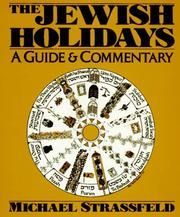
A rich and authoritative guide to the full cycle of Jewish holidays — their history, rituals, and meanings — giving the reader a structured map of the Jewish year before diving into primary texts.
The Foundational Texts: Torah and Talmud
BeginnerEncounter the Torah and Talmud directly and understand how Jews read, interpret, and argue over sacred texts — the heart of Jewish intellectual and spiritual life.
▸ Study plan for this stage
Pace: 6–8 weeks, ~25–30 pages/day. Start with Plaut's commentary (approximately 4 weeks), then move to Steinsaltz's Essential Talmud (approximately 2–3 weeks), with 1 week for review and integration exercises.
- Torah as the foundational text: its structure, the Five Books, and its role as the written law that anchors Jewish practice and belief
- Midrash and interpretive tradition: how Plaut's modern commentary exemplifies centuries of Jewish textual interpretation and the principle that Torah contains multiple layers of meaning
- The Talmud as the oral law codified: understanding the Mishnah and Gemara as the two components that form the basis of rabbinic Judaism
- Argumentation and disagreement as sacred: how the Talmud preserves minority and majority opinions, and why debate itself is a core Jewish intellectual value
- Close reading and textual analysis: the methods Jews use to extract meaning from sacred texts, including attention to word choice, repetition, and logical consistency
- The relationship between Torah and Talmud: how the Talmud interprets, applies, and sometimes reinterprets Torah for changing circumstances
- Modern versus classical commentary: recognizing how Plaut's 20th-century lens differs from traditional rabbinic commentary while maintaining fidelity to the interpretive tradition
- What are the Five Books of the Torah, and what is the significance of Torah being understood as both a legal document and a narrative?
- How does Plaut's modern commentary approach Torah interpretation, and what does this reveal about the Jewish principle that sacred texts can be read in multiple ways?
- What is the difference between the Mishnah and the Gemara, and why did the rabbis feel compelled to create the Talmud as a supplement to the written Torah?
- Describe the structure of a typical Talmudic passage: how are arguments presented, and why does the Talmud preserve dissenting opinions rather than erasing them?
- How do the interpretive methods used in Plaut's commentary reflect broader Jewish hermeneutical principles, and what does this tell you about how Jews approach sacred texts?
- What is the relationship between halakha (Jewish law) and aggadah (narrative and ethics) in the Talmud, and how do both appear in Torah commentary?
- Select one Torah portion from Plaut's commentary. Read the biblical text first without commentary, note your own questions and observations, then read Plaut's commentary. Write a one-page reflection on how his interpretation deepened, challenged, or clarified your initial reading.
- Choose a single verse from the Torah (e.g., Genesis 1:1 or Exodus 20:1). Research how it appears in Plaut's commentary and identify at least three different interpretive angles he presents. Discuss why a single verse might warrant multiple readings.
- Read a complete Talmudic passage from Steinsaltz's Essential Talmud (or an excerpt he provides). Map out the structure: identify the initial question, the different opinions presented, and the logical moves the rabbis make. Create a visual diagram or outline showing how the argument unfolds.
- Engage in a mock Talmudic debate: take a halakhic question (e.g., 'What constitutes work on the Sabbath?') and argue both sides using reasoning similar to what you see in the Talmud. Write out both positions and try to find a resolution or acknowledge why the disagreement persists.
- Compare how Plaut and Steinsaltz approach the same Torah passage or concept (if overlap exists). Write a short essay on how a modern Torah commentary and a guide to the Talmud represent different but complementary ways of engaging with Jewish texts.
- Create a glossary of key Talmudic terms and concepts introduced by Steinsaltz (e.g., Mishnah, Gemara, halakha, aggadah, amora, tanna). For each term, write a definition in your own words and provide an example from the text.
Next up: By mastering Torah and Talmud—the primary sources and the interpretive tradition that surrounds them—you are now equipped to understand how Jewish law, ethics, and spirituality are derived from these texts, preparing you to explore how Judaism applies these foundational teachings to specific areas of life and practice in the next stage.
The standard Reform movement Torah commentary, pairing the full Hebrew text with English translation and accessible modern commentary — the best single-volume entry point for reading the Torah with guidance.
Written by the greatest Talmud scholar of the modern era, this book explains what the Talmud is, how it works, and why it matters — essential reading before attempting the Talmud itself.
History and Law: The Jewish Story
IntermediateUnderstand the sweep of Jewish history from biblical times to the modern era, and grasp how Jewish law (Halacha) developed and continues to shape Jewish identity.
▸ Study plan for this stage
Pace: 8–10 weeks, ~40–50 pages/day (with reflection days built in)
- The arc of Jewish history from biblical covenant through diaspora, medieval communities, and modern nation-building, and how historical events shaped Jewish identity
- The role of Torah and textual interpretation (midrash, Talmud) as the foundation for Jewish law and continuity across generations
- Halacha (Jewish law) as a living system that balances ancient precedent with contemporary application, not merely ancient rules
- The Sabbath as a cornerstone of Jewish practice that embodies theological meaning, ethical values, and communal identity beyond mere ritual observance
- How Jewish ethics emerge from law and tradition, requiring both intellectual understanding and practical moral decision-making in daily life
- The relationship between Jewish law, Jewish history, and Jewish identity—how legal and ethical frameworks sustained the people through exile, persecution, and cultural change
- The distinction between different Jewish legal traditions and interpretive schools (Ashkenazi, Sephardi, Orthodox, Conservative, Reform) and their historical development
- The tension between preserving tradition and adapting to modernity, as reflected in how Jewish law and ethics have evolved
- How did the Jewish understanding of covenant, law, and identity develop from biblical times through the rabbinic period, and what role did the destruction of the Temple play in this transformation?
- What is Halacha, and how did it develop from Torah through the Talmud and later codes? How does it function as a living legal system today?
- According to Heschel, what is the theological and ethical significance of the Sabbath in Jewish life, and how does it relate to Jewish identity and values?
- How does Telushkin argue that Jewish law and ethics are inseparable, and what examples does he provide of how Halacha addresses moral dilemmas in contemporary life?
- What are the major periods and turning points in Jewish history (biblical, Second Temple, rabbinic, medieval, early modern, modern), and how did each reshape Jewish practice and belief?
- How have different Jewish communities (Ashkenazi, Sephardi, Mizrahi) developed distinct legal and ethical traditions while maintaining connection to a shared textual heritage?
- Create a timeline of major events in Jewish history (from Malamat) and annotate how each event influenced the development of Jewish law or ethical practice
- Read and analyze a passage from the Talmud or a Jewish legal code (referenced in Malamat or Telushkin) to understand how rabbis interpret Torah and apply it to new situations
- Observe or research one complete Sabbath cycle (Friday evening through Saturday night) using Heschel's framework, noting the theological and communal dimensions beyond the prohibitions
- Select three ethical dilemmas from Telushkin's code and write out how Jewish law addresses each one; reflect on whether the legal answer aligns with your own ethical intuition
- Interview a rabbi, Jewish educator, or observant Jew about how they navigate the tension between traditional Jewish law and modern life; document their perspective and compare it to Telushkin's approach
- Write a comparative essay on how a single Jewish practice (e.g., kashrut, prayer, charity) is grounded in history (Malamat), theology (Heschel), and ethics (Telushkin)
Next up: This stage equips you with a comprehensive understanding of Jewish history, law, and ethics as an integrated whole, preparing you to engage deeply with specific Jewish texts, movements, and contemporary issues in the next stage—whether that focuses on textual study (Bible, Talmud), modern Jewish thought, or applied Jewish ethics in specific domains.
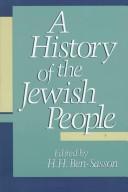
The authoritative single-volume scholarly history of the Jewish people, covering ancient Israel through the modern period — provides the essential historical backbone for understanding how Judaism evolved.
A profound and poetic meditation on Shabbat by one of the 20th century's greatest Jewish theologians; it reveals how Jewish law is not mere rule-following but a spiritual architecture for sanctifying time.
A modern, deeply researched exploration of Jewish ethical law drawn from classical sources, showing how Halacha governs not just ritual but every dimension of moral life.
Depth and Diversity: Theology, Philosophy, and Modern Jewish Thought
ExpertEngage with the great streams of Jewish theology and philosophy — from medieval rationalism to Hasidism to modern existentialism — and appreciate the full intellectual and spiritual range of Judaism.
▸ Study plan for this stage
Pace: 8–10 weeks, ~40–50 pages/day with 1–2 reflection days per week. Allocate 3 weeks to Heschel, 3–4 weeks to Scholem, and 2–3 weeks to Soloveitchik.
- Heschel's theology of divine pathos: God's emotional investment in creation and humanity, and the prophetic consciousness as a response to divine concern
- The concept of radical amazement and awe as the foundation of religious experience and the starting point for theological inquiry
- Scholem's historical and phenomenological approach to Jewish mysticism: the Kabbalah as a living tradition with distinct phases (medieval, Lurianic, Hasidic)
- The Kabbalistic doctrine of tzimtzum (divine contraction) and its implications for understanding creation, evil, and human agency
- Hasidic thought as a democratization of mystical experience: the role of the tzaddik (righteous leader) and the elevation of everyday acts to spiritual significance
- Soloveitchik's existential phenomenology: the tension between Adam I (rational, creative, commanding) and Adam II (relational, covenantal, submissive)
- The paradox of faith: the lonely man of faith's simultaneous isolation and communion, solitude and community
- The integration of modern philosophical frameworks (phenomenology, existentialism) with classical Jewish sources and lived religious experience
- How does Heschel's concept of divine pathos differ from classical philosophical theology, and why does he argue it is essential to understanding the prophetic tradition?
- What is radical amazement, and how does Heschel use it as a foundation for both religious and philosophical inquiry?
- Trace the major historical phases of Jewish mysticism that Scholem identifies, and explain how each phase reflects different theological concerns and social contexts.
- What is tzimtzum, and how does this Kabbalistic doctrine address the theological problem of how an infinite God can create a finite world?
- How does Hasidic thought, as described by Scholem, transform the accessibility of mystical experience, and what role does the tzaddik play in this transformation?
- Explain Soloveitchik's distinction between Adam I and Adam II, and why he argues that the man of faith must embody both dimensions simultaneously.
- What does Soloveitchik mean by the 'loneliness' of the man of faith, and how does this loneliness coexist with his participation in community and covenant?
- How do Heschel, Scholem, and Soloveitchik each respond to the challenge of maintaining authentic Jewish faith and practice in the modern world?
- Close reading: Select one chapter from Heschel (e.g., on the prophets or divine pathos) and write a 2–3 page exegesis identifying his core argument, key metaphors, and how he uses classical Jewish sources to support his theology.
- Comparative analysis: Read Scholem's account of Lurianic Kabbalah and Hasidic thought side by side; create a chart comparing their cosmologies, views of human purpose, and relationship to suffering and redemption.
- Phenomenological exercise: After reading Soloveitchik's description of Adam I and Adam II, reflect on your own experience of faith or ethical life—write a personal essay identifying moments when you embody each dimension and the tensions between them.
- Theological dialogue: Choose one theological problem (e.g., divine transcendence vs. immanence, the problem of evil, the nature of human freedom) and trace how Heschel, Scholem (through Kabbalistic sources), and Soloveitchik each address it; synthesize their approaches in a 3–4 page essay.
- Textual annotation: Select a difficult passage from each book (e.g., Heschel on the 'vertical dimension' of existence, Scholem on tzimtzum, Soloveitchik on the covenant of fate vs. the covenant of destiny) and annotate it with marginal notes explaining the argument and its implications.
- Seminar-style discussion: Prepare 3–4 discussion questions for each book and lead or participate in a study group; record your insights about how the three thinkers illuminate different aspects of Jewish intellectual and spiritual life.
Next up: This stage equips you with the conceptual vocabulary and philosophical depth to engage with contemporary Jewish thought, interfaith theology, and the practical application of these ideas to modern ethical and spiritual challenges.
Heschel's masterwork presents a philosophy of Judaism rooted in wonder, revelation, and divine pathos — one of the most important works of 20th-century Jewish theology and a must-read for any serious student.
The definitive scholarly introduction to Kabbalah and Jewish mysticism by the field's founding scholar; it opens the door to a vast dimension of Jewish spirituality that complements the legal and philosophical traditions.
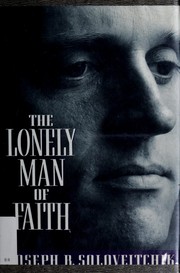
A landmark essay by the towering figure of Modern Orthodox thought, exploring the tension between modernity and faith through a close reading of Genesis — a fitting capstone that shows Judaism's ongoing vitality as a living tradition.
Discussion
Keep reading
Paths that share books, cover the same subject, or open a related topic.