Own your time: focus & deep work systems
This curriculum moves from building a reliable personal productivity foundation, through mastering focused work and attention, to finally integrating advanced systems for sustainable, meaningful output. Each stage assumes the vocabulary and habits introduced in the previous one, so reading in order is essential — early books make the later, denser ones immediately actionable.
Foundations: Taking Control of Your Time
BeginnerUnderstand why time and attention slip away, build a simple trusted system for capturing commitments, and establish the daily habits that make everything else possible.
▸ Study plan for this stage
Pace: 8–10 weeks total, reading ~20–25 pages/day on weekdays with weekends reserved for review and exercises. Week 1–3: "The 7 Habits of Highly Effective People" (~30 pages/day, 3 weeks); Week 4–6: "Getting Things Done" (~25 pages/day, 3 weeks); Week 7–9: "Atomic Habits" (~20 pages/day, 2–3 weeks); Week 1
- Proactivity vs. Reactivity (Covey Habit 1): You choose your response to circumstances; time lost to reactive behavior is the first leak to plug.
- The Time Management Matrix (Covey Habit 3): Distinguishing Quadrant II (important, not urgent) activities from the urgent-but-trivial tasks that hijack most people's days.
- Begin with the End in Mind (Covey Habit 2): Clarifying personal mission and long-term roles before scheduling anything, so your calendar reflects your values.
- The GTD Capture-Clarify-Organize-Reflect-Engage Workflow (Allen): A complete, external 'trusted system' that removes the mental burden of remembering commitments.
- The Two-Minute Rule (Allen): If an action takes less than two minutes, do it immediately rather than storing it — eliminating micro-clutter from your system.
- The Weekly Review (Allen): A non-negotiable ritual for processing inboxes, updating next-action lists, and re-syncing your system with reality.
- The Habit Loop — Cue, Craving, Response, Reward (Clear): Understanding the neurological cycle that locks in (or breaks) any behavior.
- Identity-Based Habits (Clear): Sustainable habits are built by deciding who you want to be first, then casting 'votes' for that identity through small daily actions.
- After reading Covey, can you draw the Time Management Matrix from memory, place five of your current recurring tasks into the correct quadrants, and explain why most people spend too little time in Quadrant II?
- What are the five stages of the GTD workflow described by Allen, and what specific question do you ask at the 'Clarify' stage to determine a next action?
- Why does Allen argue that your mind is 'for having ideas, not holding them,' and how does this principle justify building an external capture system?
- What is the Two-Minute Rule, and in what real situations from your own week could you have applied it to prevent backlog buildup?
- According to Clear, what is the difference between outcome-based and identity-based habit formation, and why does the latter produce more durable change?
- How do the three books connect? Specifically, how does Covey's Quadrant II thinking set the priorities that GTD organizes, and how do Clear's habit loops make the GTD Weekly Review automatic?
- **Roles & Mission Statement (Covey):** List every major role in your life (e.g., professional, parent, learner). Write one sentence per role describing what 'effective' looks like in 3 years. Combine them into a one-paragraph personal mission statement and post it somewhere visible.
- **Quadrant Audit (Covey):** Track every task and interruption for one full workday in 15-minute blocks. At day's end, label each block Q1–Q4. Calculate the percentage of time in each quadrant. Set a concrete goal to shift at least 10% of time from Q1/Q3 into Q2 next week.
- **Full GTD Capture Sweep (Allen):** Set aside 2–3 hours on a weekend. Write every open loop in your life — every commitment, project, nagging thought — onto separate index cards or digital items. Aim for 50–100 items. This is your first true 'mind sweep.'
- **Build Your GTD Trusted System (Allen):** Choose your tools (paper, Notion, Todoist, etc.) and create the core lists Allen prescribes: Inbox, Next Actions (by context), Projects, Waiting For, Someday/Maybe, and a Calendar. Process your capture sweep completely through the Clarify and Organize steps.
- **Conduct Your First Weekly Review (Allen + Clear):** Schedule a 60-minute block at the end of the week. Follow Allen's checklist: clear inboxes, review all lists, update projects, and identify next actions for the coming week. Then use Clear's habit-stacking technique to anchor this review to an existing Friday ritual (e.g., 'After I make my Friday afternoon coffee, I open my GTD system').
- **Habit Scorecard & Identity Statement (Clear):** Write down every behavior in your morning routine. Mark each '+' (supports your goals), '–' (undermines them), or '=' (neutral). Choose one keystone habit to add or strengthen, write a one-sentence identity statement ('I am someone who…'), and use Clear's implementation intention formula: 'I will [behavior] at [time] in [location]' to schedule it f
Next up: By the end of this stage you have a clear sense of your values, a functioning external system for all commitments, and the habit infrastructure to maintain it daily — creating the stable, low-friction foundation that the next stage will build on as you learn to protect long blocks of uninterrupted time for your most cognitively demanding work.
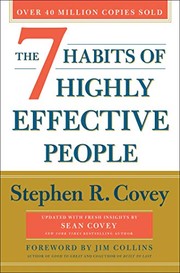
Establishes the mindset shift from urgency-driven to importance-driven living — the philosophical bedrock every time-management system rests on. Read first so later tactical books have a 'why' behind them.

Introduces the canonical GTD system: capture, clarify, organize, reflect, engage. Reading it second lets you immediately apply Covey's priorities inside a concrete, trusted workflow.
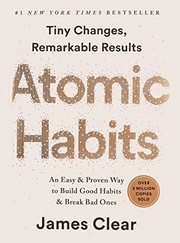
Explains how small, consistent behaviors compound into lasting systems — essential for actually sustaining the GTD and focus habits introduced in the first two books.
Focus: The Art of Deep Work
IntermediateLearn to protect long blocks of uninterrupted concentration, understand the neuroscience and economics of focus, and design a work environment that makes deep work the default.
▸ Study plan for this stage
Pace: 6–8 weeks total: Weeks 1–4 on "Deep Work" (~25–30 pages/day, ~5 days/week), Weeks 5–8 on "Hyperfocus" (~20–25 pages/day, ~5 days/week). Reserve one day per week for review, journaling, and exercises. Read both books with a highlighter and a dedicated notebook — annotate every rule, ritual, or neurol
- Deep Work vs. Shallow Work (Newport's core distinction): cognitively demanding, distraction-free work that creates real value vs. logistical, low-intensity tasks that are easy to replicate
- The Deep Work Hypothesis: the ability to focus without distraction is becoming increasingly rare and increasingly valuable — mastering it is a competitive superpower
- The Four Depth Philosophies (Newport): Monastic, Bimodal, Rhythmic, and Journalistic scheduling — choosing the right philosophy for your life and profession
- The Four Rules of Deep Work (Newport): Work Deeply, Embrace Boredom, Quit Social Media, Drain the Shallows — and the specific tactics within each rule (shutdown rituals, Roosevelt dashes, craftsman approach to tool selection)
- Attention residue (Sophie Leroy's research as cited by Newport): switching tasks leaves cognitive 'residue' that degrades performance on the next task, making task-switching far costlier than it feels
- Hyperfocus vs. Scatterfocus (Bailey): Hyperfocus is intentional, single-pointed attention on one task; Scatterfocus is deliberate mind-wandering used for creativity and planning — both are necessary and trainable
- The attentional space model (Bailey): working memory / attentional capacity is finite; understanding how tasks fill or drain that space is the foundation of managing focus
- Designing a focus-first environment: architectural choices (hub-and-spoke office design from Newport), digital minimalism, pre-commitment devices, and Bailey's 'distraction-free mode' rituals that make deep work the path of least resistance
- According to Newport, why does deep work produce disproportionate economic and creative value compared to shallow work, and what neurological mechanism (myelination) underlies skill acquisition during focused practice?
- What are the four depth philosophies Newport outlines, and how would you decide which one fits your current professional and personal constraints?
- Newport argues that boredom is a prerequisite for depth — what is the specific practice he recommends to build a 'boredom tolerance,' and how does it relate to attention residue?
- How does Bailey distinguish Hyperfocus from mere concentration, and what are the four stages of intentionally entering a Hyperfocus state as he describes them?
- Bailey introduces Scatterfocus as a deliberate practice — what are its three modes (capture, problem-crunching, habitual), and why does Newport's framework need this complement to be complete?
- What concrete environmental and scheduling changes do both authors agree are necessary to make deep work the default rather than the exception?
- **Deep Work Block Experiment (Newport, Rule 1):** Schedule three 90-minute deep work blocks this week with a single, pre-defined task. No phone, no browser tabs unrelated to the task. Log start time, end time, output produced, and how many times you felt the urge to switch. Review the log at week's end to identify your peak focus window.
- **Depth Philosophy Audit (Newport, Rule 1):** Write a one-page personal manifesto declaring which depth philosophy (Monastic, Bimodal, Rhythmic, or Journalistic) you are adopting and why. List the three biggest obstacles to that philosophy in your current life and one concrete action to remove each obstacle.
- **Shutdown Ritual Design (Newport, Rule 1):** Create and practice a written end-of-workday shutdown ritual for two consecutive weeks. It must include: a task-capture sweep, a next-day plan, and a verbal closing phrase (Newport's 'Shutdown complete'). Track whether evenings feel more mentally restful.
- **Attentional Space Inventory (Bailey, Chapters 3–4):** For one full workday, log every task you work on in 15-minute intervals. After each block, rate the task's attentional demand (1–5) and your perceived focus quality (1–5). At day's end, map which tasks overfilled your attentional space and redesign tomorrow's schedule to front-load demanding work.
- **Hyperfocus Session Protocol (Bailey, Part 2):** Using Bailey's four-step entry process, design a personal Hyperfocus ritual: (1) choose one task, (2) set a time boundary, (3) eliminate external and internal distractions, (4) bring attention back when it wanders. Run this protocol daily for two weeks and journal what derails you most — use that data to refine your environment.
- **Scatterfocus Practice (Bailey, Part 3):** Three times this week, take a 20-minute walk with no phone and no podcast — pure habitual Scatterfocus mode. Carry a small notebook and capture every idea, worry, or plan that surfaces. Review the captures at week's end: did any insights emerge that directed deep work sessions? Reflect on how intentional mind-wandering complements the focused blocks from
Next up: Mastering the mechanics of deep focus and attentional management sets the cognitive foundation for the next stage, where the reader will learn to strategically prioritize *which* deep work to pursue — moving from "how to focus" to "what deserves your focus" through frameworks like essentialism, goal-setting, and long-term productivity systems.
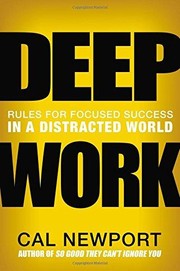
The definitive argument for and guide to cultivating intense, distraction-free focus. Builds directly on the GTD foundation — you now have a system to protect; this book teaches you what to fill it with.
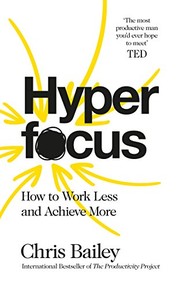
Complements Deep Work by exploring both hyperfocus (deliberate deep attention) and scatterfocus (mind-wandering for creativity), giving a fuller picture of how attention actually works day-to-day.
Reclaiming Attention: Cutting the Noise
IntermediateIdentify and eliminate the digital and social forces that fragment attention, and redesign your relationship with technology so distraction is the exception, not the rule.
▸ Study plan for this stage
Pace: 5–6 weeks total: ~3 weeks for "Digital Minimalism" (~20–25 pages/day) and ~2–3 weeks for "Indistractable" (~20–25 pages/day). Read on weekdays; reserve weekends for reflection, journaling, and exercises. Aim for one focused 30–45 minute reading session per day rather than fragmented sittings — model
- Digital Minimalism (Newport): the philosophy that less intentional technology use yields dramatically more value than optimized high-volume use
- The Digital Declutter: Newport's 30-day protocol for stepping away from optional technologies and reintroducing only those that pass a strict value test
- Solitude and its deficit: the cognitive and emotional cost of never being alone with your own thoughts, and why reclaiming solitude is foundational to attention
- High-quality leisure: Newport's argument that demanding, analog, real-world activities must replace the void left by removed technologies — not just willpower
- The Indistractable Model (Eyal): the four-part framework — manage internal triggers, make time for traction, hack back external triggers, and prevent distraction with pacts
- Internal vs. external triggers: Eyal's core insight that most distraction is driven by internal discomfort (boredom, anxiety, loneliness) rather than external pings, and that managing the root emotion is the real fix
- Timeboxing your values: Eyal's method of scheduling every hour of the day in advance so that any deviation from the plan — not the plan itself — is defined as distraction
- Identity-based commitment: Eyal's use of price pacts, effort pacts, and identity pacts to make distraction structurally harder and staying on task structurally easier
- After completing Newport's 30-day digital declutter, what criteria should you apply before reintroducing any optional technology, and why is 'some benefit' explicitly not enough?
- Newport argues that solitude deprivation is a modern crisis. What does he mean by 'solitude,' and how does constant connectivity undermine it even without social media?
- According to Eyal, why is blaming smartphones and apps for distraction ultimately an incomplete diagnosis, and what does his research say is the more fundamental cause?
- How does Eyal's concept of 'traction vs. distraction' reframe the problem — and why does his model require you to define your intended actions before you can label anything a distraction?
- What is the role of high-quality leisure in Newport's Digital Minimalism philosophy, and why does he insist it must be planned proactively rather than discovered spontaneously?
- Compare Newport's and Eyal's approaches to external triggers (notifications, app design, social pressure). Where do they agree, and where does each author add a distinct layer of strategy?
- Conduct a personal technology audit before starting 'Digital Minimalism': list every app, platform, and device habit you use, then annotate each with (a) the core value it serves and (b) whether a better alternative exists. Use this list as your baseline for Newport's declutter.
- Run a modified 30-day digital declutter as Newport prescribes: remove all optional social media, streaming, and news apps from your phone. Keep a daily log (3–5 sentences) of what you notice — urges, mood shifts, recovered time, and what you did instead.
- Design your 'high-quality leisure menu' (Newport's term): identify at least two analog, skill-building activities (e.g., woodworking, cooking, instrument practice, long-form reading) and schedule them explicitly for the weekends of this stage.
- After reading Part 1 of 'Indistractable,' keep a distraction journal for one full week: every time you pick up your phone or switch tasks unplanned, write down what you were doing just before and what emotion or sensation preceded the urge. At week's end, identify your top 3 internal triggers.
- Apply Eyal's timeboxing method to one full workday: schedule every hour in a calendar (including meals, breaks, and leisure), then track your adherence. Debrief in writing: where did you deviate, what triggered it, and what pact (effort, price, or identity) could prevent it next time?
- Write a one-page 'Attention Policy' for yourself — a personal document that states which technologies you use, when, why, and under what rules, synthesizing Newport's value-based reintroduction criteria with Eyal's internal-trigger management strategies. Revisit and revise it at the end of the stage.
Next up: By stripping away digital noise and understanding the internal and external roots of distraction, the reader has cleared the ground — the next stage builds directly on this foundation by introducing the structured deep work practices and productivity systems needed to fill that reclaimed attention with meaningful, high-output cognitive work.
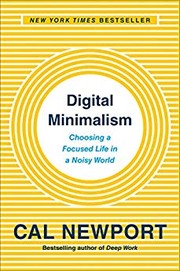
A practical philosophy for intentional technology use — the natural companion to Deep Work that addresses the supply side of distraction rather than just willpower.
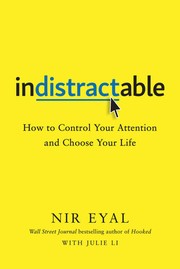
Goes deeper into the internal triggers (boredom, anxiety, uncertainty) that drive distraction, providing psychological tools that complement Newport's environmental approach.
Advanced Systems: Meaningful Output Without Burnout
ExpertIntegrate everything into a long-term, sustainable operating system — planning at the weekly and life level, managing energy alongside time, and ensuring deep work produces meaningful results without exhaustion.
▸ Study plan for this stage
Pace: 5–6 weeks total: Weeks 1–3 cover "Four Thousand Weeks" (~25–30 pages/day, including 2–3 reflection days per week); Weeks 4–6 cover "The One Thing" (~20–25 pages/day, with integration journaling sessions at the end of each week).
- Radical finitude & the 4,000-week lifespan — accepting that time is irreducibly limited forces deliberate prioritization rather than optimization fantasies
- The 'efficiency trap' from Four Thousand Weeks — doing more faster only generates more demands, so the goal is choosing well, not doing more
- Embracing uncomfortable tradeoffs — saying yes to one thing is always saying no to others; Burkeman's 'settling' is a feature, not a failure
- The Focusing Question from The One Thing — 'What is the ONE Thing I can do such that by doing it, everything else becomes easier or unnecessary?' as a daily and life-level compass
- The domino effect & goal-setting to the now — working backward from a long-term vision to the single action available today
- Energy management as the foundation of deep work — The One Thing's emphasis on protecting your peak productive hours (the 'time block') for your ONE Thing before all else
- The 'lies' that steal focus (The One Thing) — multitasking, willpower as always-on, a balanced life, big is bad — dismantling these enables sustainable output
- Integrating mortality awareness with purposeful output — Four Thousand Weeks' philosophical acceptance and The One Thing's ruthless focus together form a complete operating system: know what matters, then protect the time to do it
- After reading Four Thousand Weeks, can you articulate in your own words why 'getting on top of everything' is a structural impossibility — and how accepting this changes how you plan your week?
- What is Burkeman's argument against using productivity purely as a means to future leisure, and how does it reframe the value of the present moment in your work?
- What does Gary Keller mean by the 'domino effect,' and how do you apply it to identify the ONE Thing at the level of your year, your month, and your day?
- How does The One Thing's concept of time-blocking for your ONE Thing complement — or tension with — Burkeman's warning against over-scheduling and the 'efficiency trap'?
- What are the six lies Keller identifies as productivity myths, and which one is most relevant to your current work habits? What would you do differently?
- How would you design a weekly review ritual that honors both the finite, meaning-first perspective of Four Thousand Weeks and the ruthless single-priority focus of The One Thing?
- Lifespan Visualization (Four Thousand Weeks): Draw or map out your ~4,000 weeks on paper — mark weeks already lived. Sit with it for 10 minutes without acting. Then write one paragraph on what this visual shifts about your current priorities.
- The 'Settling' Audit (Four Thousand Weeks): List 5 projects or commitments you are currently pursuing 'just in case' or to keep options open. Apply Burkeman's principle of deliberate limitation — cross out at least two and write a one-sentence explanation of what you are choosing instead.
- ONE Thing Cascade (The One Thing): Write your Someday goal in one sentence. Then apply the Focusing Question at each level — 5 years → 1 year → 1 month → 1 week → today — until you arrive at a single concrete action you can take tomorrow morning.
- Sacred Time Block Experiment (The One Thing): For two full weeks, schedule a non-negotiable 2–4 hour morning time block exclusively for your ONE Thing. Log daily: what you protected it from, whether you held it, and your output quality. Review the log at the end of week two.
- Integrated Weekly Review Design: Draft a personal weekly review template that includes (a) a mortality check-in inspired by Burkeman — 'Did I spend time on what actually matters?' — and (b) a ONE Thing reset from Keller — 'What is my ONE Thing for next week?' Run this review every Sunday for the remainder of the stage.
- Conflict Resolution Journal: Identify one real tension between the two books' philosophies (e.g., Burkeman's resistance to hyper-optimization vs. Keller's intense focus system). Write a 300-word personal synthesis explaining how you will hold both ideas simultaneously in your own operating system.
Next up: By internalizing finitude from Burkeman and singular focus from Keller, the reader has built the philosophical and structural backbone of a sustainable system — making them ready to explore how to execute and communicate that focused work at the highest level of craft and impact.

A philosophical reckoning with the radical finitude of time that reframes productivity from 'doing more' to 'choosing wisely' — essential for avoiding the burnout trap of pure optimization.

Teaches ruthless prioritization — identifying the single most leveraged action at every level of life and work — making it the ideal capstone for translating a deep-work practice into meaningful long-term results.
Discussion
Keep reading
Paths that share books, cover the same subject, or open a related topic.