Two very different kinds of book sit under this heading, and bookshops shelve them together. One kind is devotional: instruction written inside the tradition, for students who have a teacher, and often assuming vows and preliminary practices the reader has already undertaken. The other is scholarly: history, anthropology and textual criticism written from outside, sometimes by people sympathetic to the tradition and sometimes not. Both are on this path deliberately, and confusing them is the standard way to get lost.
The second complication is that a great deal of what Western readers believe about Tibet came through a twentieth-century filter that romanticised it heavily. So the order below puts a short scholarly introduction first, then a book about that filter, before any of the practice literature.
Orientation
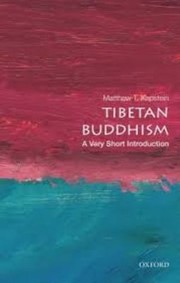
Tibetan Buddhism: A Very Short Introduction is the efficient starting point, Matthew Kapstein in a hundred and fifty pages covering doctrine, institutions and history. A Concise Introduction To Tibetan Buddhism is longer and better as a reference, and John Powers writes with more sympathy for the tradition's own account of itself.
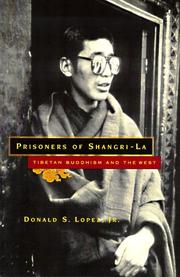
Read Prisoners of Shangri-La third and do not skip it. Donald Lopez examines how Tibetan Buddhism was received, reshaped and mythologised in the West, including by scholars, and the argument will change how you read everything after it. Some practitioners find the book unnecessarily corrosive; that reaction is itself part of what it describes.
The practice classics, with the necessary notes
The Tibetan book of living and dying is the book that brought Tibetan Buddhist teaching on death and dying to a very large Western readership, and it remains widely used in hospice and pastoral settings. Its author, Sogyal Rinpoche, was the subject of extensive abuse allegations from students; he withdrew from leading his organisation in 2017, and an independent investigation commissioned by that organisation in 2018 substantiated abuse. Those facts are stated here because a reader has a right to know them before buying the book, not as a judgement on whether to.
Cutting through spiritual materialism is Chögyam Trungpa's account of how spiritual practice becomes another form of ego-building, and it is the sharpest thing on this list. Trungpa's conduct toward students and his personal life were controversial within his own lifetime and remain so.
The life of Milarepa is the great Tibetan biography — sorcery, revenge, penance and eventual realisation — and it is hagiography rather than history, written to instruct. Read it as literature and as devotional text at once. The Jewel Ornament of Liberation is Gampopa's twelfth-century systematic presentation of the path, and The Words of My Perfect Teacher is Patrul Rinpoche's manual for the Nyingma preliminary practices. Both were written for students working under a teacher, and both are more useful as windows into how the tradition instructs than as instruction to follow unsupervised.
History and scholarship
Tibet is Sam Van Schaik's political and religious history, and it supplies the context every practice book leaves out — empires, monastic estates, sectarian conflict, the Chinese incorporation. Civilized Shamans is Geoffrey Samuel's anthropological study of Tibetan religion as a system with shamanic and clerical poles; it is dense and it is the most intellectually serious book on the path. Approaching the great perfection is Van Schaik again, on Dzogchen and the textual arguments inside it.
The Tibetan Book of the Dead closes the path in Robert Thurman's translation. The Western title is itself an invention, the Tibetan text is a set of bardo instructions rather than a book of the dead, and Thurman's rendering is only one of several in English — other translators have criticised his choices, and comparing two versions is more instructive than trusting one.
If the contemplative traditions rather than the Tibetan institution are what interest you, the Zen hub is the natural companion.
Follow the path in order and you will be able to tell, on sight, which kind of book you are reading.
Follow the full ordered path here: Best Books on Tibetan Buddhism, in Reading Order.