Thomas Bernhard Reading Order: Where to Start
Thomas Bernhard wrote paragraph-less monologues of sustained, hilarious rage, and the single biggest mistake readers make is starting with the early novels, which are the least forgiving. Begin instead with the two short late books that are funny and human enough to make the method obvious, then work through the mature monologue novels, then the two big difficult ones, and only then go back to the early fiction and the autobiography. Read in this order the repetition stops feeling like an obstacle and starts working as music.
The Two Books to Start With
IntermediateLearn the Bernhard sentence — recursive, exaggerated, comic — in the two books where warmth is closest to the surface.
▸ Study plan for this stage
Pace: Two weeks, and read them in long sittings rather than nightly instalments. This is the opposite of the usual advice and it is the single most useful thing on this page: Bernhard's prose is metrical, and twenty pages a night defeats it while sixty pages twice a week does not. Wittgenstein's Nephew is
- How to read the unbroken block, which is the whole technique and the reason most people give up: do not look for a resting place, because there is none. Read to a change of target — the moment the rant turns from the hospital to the state to the family — and stop there. Those turns arrive every twen
- Repetition is variation, not emphasis. A phrase comes back with one word altered, and the alteration is the content. Read for what changed, not for what repeated, and the pages stop feeling like being shouted at and start behaving like music
- The attribution chain is load-bearing. Sentences run so Reger said, as Atzbacher reports, and the invective almost always belongs to someone the narrator is quoting, sometimes at two removes. Track who is speaking; the comedy lives in the gap between the ranter and the man dutifully transcribing him
- Bernhard is funny, and readers who miss this find him unbearable. The absolutes — everything, always, without exception, the most appalling in all of Europe — are jokes about the kind of man who talks in absolutes, not the author's opinions
- The narrators are not Bernhard's mouthpieces. They are obsessives whose judgement the books quietly undermine, which is why the misanthropy is bearable and occasionally moving
- Wittgenstein's Nephew is the exception that teaches the rule: Paul Wittgenstein, nephew of the philosopher, is a friend Bernhard actually loved, and here the machinery of invective is visibly running on grief. The two men are in the same hospital complex, in different pavilions, one for the lungs an
- The Loser gives the obsession an object anybody understands: two young pianists hear Glenn Gould play, understand instantly that they will never be that, and spend the rest of their lives dealing with it. Wertheimer's response is the title
- Bernhard's German suspends its verbs to the end of enormous clauses, which is part of how the tension is built. English cannot do this and every translator has to compromise somewhere — so if a sentence feels front-loaded, that is the seam, not a fault in your reading
- In Wittgenstein's Nephew, what is the narrator actually confessing about the friendship, and how late in the book does he permit himself to say it?
- Take one recurring phrase in The Loser and track its variations. What is changing each time it returns?
- Who is speaking in a given sentence of The Loser, and how many layers of reported speech are between you and them? Pick a page and count.
- Where are the jokes? Find three passages in either book that are funny, and say whether the comedy is in the exaggeration, the syntax or the repetition.
- The narrator of The Loser is also a failed pianist. What does the novel do to prevent you from simply trusting his account of Wertheimer?
- Both books are about a friend's death. What is the difference between how a memoir and a novel handle it in Bernhard's hands — given that his prose barely changes between the two?
- Read the first ten pages of Wittgenstein's Nephew aloud. This is not optional advice for Bernhard; the rhythm is inaudible on the page and obvious in the mouth, and one reading aloud usually converts a reader for good.
- Set a timer for forty-five minutes rather than a page target, and read until it goes off. Learn what a Bernhard session feels like before you start planning stages around page counts.
- Copy out one sentence of eighty words or more by hand and mark where each subordinate clause opens and closes. It is the only way to see that the sentences are engineered rather than poured out.
- When the repetition starts to irritate you, note the page and keep going for ten more. Almost everyone hits this wall in the first fifty pages of their first Bernhard, and it almost always breaks.
- After finishing both, write down one thing the narrator of The Loser says that you think the book disagrees with. Being able to do this is the test of whether you are reading Bernhard or being read at by him.
Next up: You can now hold a Bernhard sentence and hear the joke inside it, which is the only equipment the mature monologue novels require — they are longer, not harder.
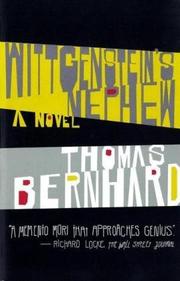
The best first Bernhard: a memoir of his friendship with Paul Wittgenstein, written from a neighbouring hospital pavilion. Short, tender under the invective, and the only book where the misanthropy is visibly love.
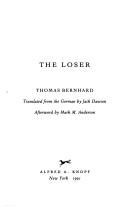
Two pianists give up after hearing Glenn Gould play Bach. The most perfectly shaped of the monologue novels and the ideal second book, because the obsession has an object you already understand.
The Monologue Novels
IntermediateSee the mature method run three times on three targets — writing, family, and Austria itself — and hear how the comedy works.
▸ Study plan for this stage
Pace: Four to five weeks. Concrete is 156 pages, Woodcutters 192, Old Masters 256, and all three run at about the same speed once the rhythm is established — three long sittings each. Keep the same long-session habit and take two or three days between books, because the voice is so consistent that reading
- The mature formula is one obsessive, one grievance and one location, held for two hundred pages: a room, a chair, a museum bench. Nothing happens, and the tension comes entirely from how long a mind can be held at that pitch
- Concrete is the purest case of the paralysis: Rudolf has been about to write the first sentence of his Mendelssohn study for ten years, and every condition he arranges for writing it becomes a new reason not to. It is a comedy about procrastination and one of the most accurate books ever written abo
- Concrete's final pages break the frame with an unrelated stranger's catastrophe, and the shift in register is deliberate — Bernhard's narrators are usually interrupted by reality exactly once
- Woodcutters is a single evening: the narrator sits in a wing chair at an artistic dinner in Vienna, watching people he has known for decades and demolishing every one of them, while a Burgtheater actor is late and a friend has been buried that day
- Woodcutters got Bernhard sued and the book was confiscated in Austria. The real-world offence is part of the design — Bernhard wrote to be actionable, and the scandal is not incidental to the career
- Old Masters is the same evening trick with a museum instead of a dinner: Reger has sat before the same Tintoretto in the Kunsthistorisches Museum every other day for decades, and his running demolition of Austrian art, Heidegger, Stifter and civil servants is Bernhard's most companionable book
- The turn in Old Masters is why the ranting exists at all — the reason Reger comes to that bench is not aesthetic, and when the book admits it the whole comic apparatus reveals its purpose
- Austria itself is the standing target — the state, the Catholic church, the arts bureaucracy, the newspapers, the national self-image. Bernhard's readers at home understood these as attacks on named institutions, which is worth knowing when the abuse seems abstract
- What is Rudolf's stated obstacle to writing, and how many substitutes for that obstacle does the book supply before it ends?
- In Woodcutters, what has actually happened that day, and how does the funeral organise a novel that appears to be about a dinner party?
- Woodcutters names its enemies unmistakably. Does the book work if you know nothing about 1980s Viennese cultural life, and what exactly is lost?
- In Old Masters, what does Reger say about the White-Bearded Man, and what does the novel eventually reveal he is really doing on that bench?
- Compare the three narrators. Which of them does the book treat most gently, and how can you tell, given that the prose is nearly identical?
- Where is the comedy in each book — is it the same joke three times, or three different ones? Defend the answer with a passage.
- Keep a one-line log per book: who rants, who listens, where they are sitting, and what has died. Four fields is enough to see the formula, and seeing the formula makes the variations visible.
- Read the last three pages of Concrete immediately after the last three pages of Old Masters. Both books swerve at the end, in opposite directions, and the pairing is the clearest demonstration of what Bernhard uses an ending for.
- Pick a page of Woodcutters and mark every occurrence of the phrase that page repeats most. Then read the marked page aloud. The repetition is a rhythm section and this makes it audible.
- Write half a page of pastiche: one narrator, one grievance, no paragraph breaks, one phrase returning with a small alteration. Failing at it will teach you more about the control involved than any commentary.
- Note every time a narrator praises something sincerely. It happens rarely and it is always the emotional centre of the book.
Next up: Three variations on the same machine have made the method automatic for you, which is exactly the fluency the two long novels assume and never pause to teach.
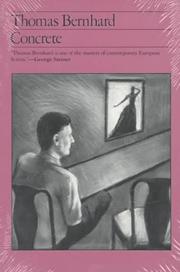
A musicologist cannot write the first sentence of his Mendelssohn study. The purest small-scale study of paralysis, and the clearest demonstration that Bernhard's narrators are meant to be funny.

One man sits in a wing chair at an artistic dinner in Vienna and eviscerates everyone present. It got him sued; it is also his most sustained joke, and it depends on the rhythm you have learned from Concrete.

An old critic has sat before the same Tintoretto in the Kunsthistorisches Museum every other day for decades. Subtitled a comedy, and the funniest of the three — the late, mellowed version of the same machine.
The Two Difficult Masterworks
BeginnerTake on the long, structurally hardest novels once the voice is second nature.
▸ Study plan for this stage
Pace: Six to eight weeks, and this is the stage that needs protecting. Correction is 288 pages in two long sections and is the hardest book Bernhard wrote — plan four to six weeks, in sittings of at least an hour, and expect to reread pages. Extinction is 335 pages and is longer but easier, because it has
- Correction is built in two blocks: the narrator sorting a dead friend's papers in a garret, and then the papers themselves. The second section is a text within a text and its own author is dead — the most formally demanding thing in Bernhard
- Roithamer builds a habitable cone in the middle of a forest as a perfect dwelling for his sister. The building is finished, the sister dies, and the correcting begins — the title names the process by which a man revises his own manuscript, his own life, and finally cancels both
- The word correction accumulates meanings through the book until it becomes a euphemism. Watching that single word darken is the reading experience
- Correction is not autobiography but it is fed by a real one: the parallels with the Wittgenstein family, and with a philosopher who built a house for his sister in Vienna, are deliberate and worth knowing before you start
- Extinction is the summation: Franz-Josef Murau, teaching in Rome, receives a telegram saying his parents and brother have died in a car crash, and must return to the family estate at Wolfsegg to bury them and dispose of an inheritance he despises
- Extinction's subject is Austrian complicity — what the family did during the war, what the house contains, and who is still welcome at it. The rage that looked like temperament in the earlier books is here given a specific historical object
- The novel is addressed to a pupil, Gambetti, which is why it explains itself more than any other Bernhard. That teacherly frame is what makes the longest book the most accessible one
- The final act of Extinction is the most decisive thing any Bernhard narrator does, and it is the reason this is the right place to arrive rather than to begin — it only means what it means if you have watched five earlier narrators fail to act at all
- In Correction, what does the cone actually accomplish, and at what point does the reader understand that building it was the problem rather than the solution?
- Trace the word correction through the second section. Where does it stop meaning revision?
- What does the two-part structure of Correction do that a single narration could not?
- In Extinction, what is in the house at Wolfsegg, and why does Murau catalogue it so precisely before deciding what to do?
- Murau despises his family and cannot stop describing them. Is the novel's judgement of him the same as his judgement of them?
- Extinction ends with a decision that closes off the entire career. What is it a response to, and would it work as your first Bernhard?
- Before starting Correction, read a short account of the Vienna house that a philosopher built for his sister. Twenty minutes of context makes the first section's architectural obsession legible instead of arbitrary.
- For Correction only, keep a page-numbered note of where each new topic of the sifting begins. It is the one book here where a hand-made table of contents genuinely helps, because the text has none.
- If Correction defeats you, put it down and read Extinction, then come back. This is a legitimate order and far better than abandoning the stage — Correction rewards a reader who has already seen the family estate written once.
- In Extinction, mark every photograph Murau describes. The novel is structured around a handful of images and following them is the cleanest route through 335 pages of monologue.
- After both, reread the opening two pages of Wittgenstein's Nephew. Nothing in Bernhard's sentence has changed across the whole career, and confirming that for yourself is the most convincing evidence that the difficulty was never the prose.
Next up: With the mature work behind you, the 1960s novels stop being forbidding early experiments and become readable as the laboratory in which everything you have just read was assembled.
A man sorts through the papers of a dead friend who built a perfect cone-shaped house for his sister and then killed himself. Formally the most demanding book he wrote, and the one that most rewards fluency in the style.

His last and longest novel: an exile must return to the family estate to bury his parents and decide what to do with an inheritance he despises. The summation of every theme, and the right place to arrive rather than begin.
Back to the Early Novels
BeginnerMeet the harsher, bleaker Bernhard of the 1960s, where the method is being invented and not yet leavened by comedy.
▸ Study plan for this stage
Pace: Five to seven weeks. Frost is 355 pages and is the bleakest thing here — it has no jokes to speak of and no forward motion, so pace it at 30 pages a sitting and do not feel obliged to hurry. Gargoyles is 208 pages and splits cleanly in two: the doctor's rounds, then a monologue of roughly a hundred
- Frost is the debut and the method in its raw state: a medical student is sent to an Alpine village to observe a painter who is disintegrating, and reports back in entries that gradually stop being clinical. There is almost no plot and the disintegration is the structure
- Weng, the village in Frost, is Bernhard's original Austria — poverty, weather, slaughterhouses, incest, suicide — and the rural horror of the later books is already fully formed here
- Gargoyles is a hinge: the first half is a doctor's round through a valley of grotesques, and then Prince Saurau begins talking at his castle and does not stop for a hundred pages. That takeover is the moment Bernhard finds the form he will use for the next twenty years
- The Lime Works is the most extreme narrative experiment: Konrad has bought an abandoned lime works to write the definitive study of hearing, has not written a word, and shoots his wife. Everything reaches you as hearsay, reported by insurance men and neighbours, so no sentence in it is first-hand
- That hearsay technique is the ancestor of every later so-and-so said construction, and reading The Lime Works makes the attribution chains of Old Masters and The Loser look like a refinement rather than a mannerism
- The early books are colder because the comedy has not arrived yet. The exaggeration is present but it is not yet funny, and that is a genuine difference in reading experience rather than a matter of your attunement
- The obsessive unwritten manuscript — Konrad's study of hearing — is the same object as Rudolf's Mendelssohn book in Concrete, written fifteen years earlier and without the mercy of the joke
- Read in this position, the whole later career is visible in embryo: the isolated house, the caretaker, the unfinished scholarly work, the sister, the gunshot
- What is the student in Frost actually sent to do, and at what point does the reporting stop being an assignment?
- Frost was written by a man in his early thirties. What is in it that the later books removed, and what did they gain by removing it?
- Locate the exact page in Gargoyles where the prince takes over. What has the first half been doing to prepare for it?
- In The Lime Works, who is telling you this, and how many of the claims about Konrad are ever corroborated?
- Compare Konrad's study of hearing with Rudolf's Mendelssohn study in Concrete. Same obsession, two decades apart — what is different in the treatment?
- Having now read early and late, when did Bernhard become funny, and can you point at the book where it happens?
- Read the first twenty pages of Frost immediately after the last twenty of Extinction. Twenty-three years separate them and the continuity of the sentence is startling.
- In Gargoyles, mark the prince's monologue's changes of subject in the margin. This is the earliest, least controlled version of the structure you have been reading all along, and mapping it shows what the later books tightened.
- In The Lime Works, list the sources — who told whom what. The resulting diagram is the novel's real form.
- Write one paragraph on why starting with these books breaks so many readers, using specifics from Frost. It is a good test of whether the reading order this path recommends actually earned its keep.
- Choose the early novel you would now recommend to someone who has read no Bernhard at all, and argue against this path's advice if you think the evidence supports it.
Next up: You have the whole fiction now, early and late, and the autobiography can be read as what it is — the source material for obsessions you have already met three or four times each.
His debut: a medical student is sent to observe a painter disintegrating in an Alpine village. Relentless and nearly plotless — worth reading late, when you can see the whole later career in embryo.

A doctor's rounds through a valley of grotesques culminate in a hundred-page monologue by a mad prince. The book where the monologue form first takes over completely.

A man buys an abandoned lime works to write a definitive study of hearing, and shoots his wife instead. The most claustrophobic of the early novels and the direct ancestor of Concrete.
The Autobiography and the Last Word
BeginnerRead the life the fiction keeps circling, in Bernhard's own account, and see him settle scores with the literary world.
▸ Study plan for this stage
Pace: Three to four weeks. Gathering Evidence collects the five short autobiographical volumes in one book, and they are best taken one per sitting, in the order printed, over a week or two — each is short, and the sequence deliberately runs the life backwards toward childhood rather than forwards. My Pri
- The five volumes cover the Salzburg boarding school, the grocery cellar, the sanatorium and the tuberculosis wards, and end in early childhood — the reverse chronology is the argument, and it makes the last volume land as an origin rather than an introduction
- The boarding-school volume contains the fact that explains Bernhard's whole relationship to Austria: the same institution, the same dormitory, the same discipline, running continuously from the Nazi period into the Catholic postwar one with the portrait on the wall swapped out
- The cellar volume is the one moment of genuine happiness in the entire body of work — Bernhard walks in the opposite direction from his school, apprentices himself in a grocery in a poor district, and describes it as the only correct decision he ever made
- The tuberculosis volumes supply the physical fact underneath every book you have read: Bernhard nearly died young, expected to die throughout his life, and wrote at the pace of a man who assumed he had no time. The illness is not a metaphor
- His grandfather, a writer, is the presiding figure and the only unambiguously loved person in the autobiography. Read the grandfather sections against the fathers and uncles of the novels
- The prose does not soften for autobiography. The same unbroken blocks, the same absolutes, the same reported speech — which retrospectively suggests that the novels' voice was never a fictional device to begin with
- My Prizes is Bernhard settling accounts with literary Austria: nine prizes accepted, one ceremony ruined by a speech that drove a government minister out of the room, prize money spent on a car and a house, and a running argument about why he took any of them
- The Grillparzer Prize episode appears in both My Prizes and Wittgenstein's Nephew, told twice by the same man about the same afternoon. Comparing the two versions is the best available look at how Bernhard converted an event into material
- What is the continuity the boarding-school volume identifies between the Nazi and Catholic administrations, and why does Bernhard consider it the more damning fact?
- Why does the autobiography run backwards? What would be lost if the five volumes were printed in life order?
- What does the grocery cellar give him, and how does the writing change in that volume?
- How does the illness alter your reading of the narrators in Concrete, The Loser and Wittgenstein's Nephew?
- In My Prizes, what reason does he give for accepting money from institutions he despises, and do you believe him?
- Read the Grillparzer Prize in both books. What is different in the two accounts, and what does the difference tell you about the boundary between his fiction and his memoir?
- Read the cellar volume and then reread the funeral passages of Woodcutters. The autobiography turns out to hold the emotional key to the most abusive of the novels.
- Set the two Grillparzer accounts side by side, sentence for sentence, and mark what is added, removed and sharpened.
- List every obsession in the novels that turns out to have a documented source in the autobiography — the sanatorium, the isolated house, the caretaker, the failed scholar, the grandfather. It is a longer list than you expect.
- Read one page of Gathering Evidence aloud alongside one page of Frost. The two are twenty years apart and one is fact — deciding whether you can hear any difference is the final test of the reading you have built.
- Write a paragraph recommending one Bernhard to a friend. Given how much of him you have now read, the interesting part is which one you do not recommend and why.
Next up: That is the whole shelf — the rage, the joke, the illness and the source — and you can now reread any of it hearing the repetition as music rather than as an obstacle, which is the only thing that ever stood between most readers and this writer.

The five-part autobiography — boarding school under the Nazis, the cellar grocery, the tuberculosis ward. Read after the novels: it supplies the biographical ground for nearly every obsession you have already met.
A short account of every literary prize he accepted and the ceremony he ruined. A perfect closing note — the public performance of the persona the novels invented.
Discussion
Keep reading
Paths that share books, cover the same subject, or open a related topic.