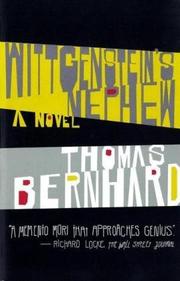
Start with Wittgenstein's Nephew. It is about a hundred pages, it has a real friendship at its centre — Paul Wittgenstein, nephew of the philosopher, met while both men were patients in different wings of the same Vienna hospital — and that warmth makes the rage legible. Everywhere else Bernhard's narrators denounce; here one of them also grieves.
The obvious alternatives are Frost, his first novel, and The Loser, his most famous. Frost is a wall: dense, cold, and 340 pages of a painter talking in a mountain village. The Loser is the better book of the two and comes next in this order. But both are easier to admire once you have already learned how the prose works, and Wittgenstein's Nephew teaches that in an evening.
How to read him, before you start
This is the part most reading orders skip, and it is the reason readers quit. Bernhard's books have no chapters. Many have no paragraph breaks at all — one unbroken block from page one to the end. Phrases repeat, sometimes a dozen times in as many pages. Attribution is nested and constantly restated: so Reger said, so Atzbacher said, so that you are always hearing a man quoting a man quoting a man.
Four things that help. Read in long sittings rather than ten minutes at bedtime, because the momentum is the whole effect. Do not stop to re-read a sentence you think you missed; it will come back, probably twice. Read a page out loud if you stall, since the prose is built as speech and the rhythm resolves what the eye cannot. And treat the repetition as comedy, because it is — the narrators are absurd, the denunciations are enormous, and Bernhard is frequently very funny about how much he is complaining. The bounce happens in the first twenty pages, and it happens to almost everyone. Push past those.
The art monologues
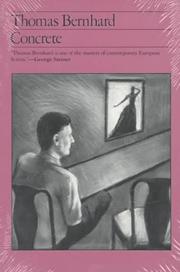
This quartet is the best of him, and it can be read in any order. The Loser takes Glenn Gould as its detonator: two piano students hear genius, and neither survives it. Woodcutters is a man in a wing chair at an artistic dinner, silently eviscerating everyone present for two hundred pages. Old Masters sets a music critic on the same bench in the Kunsthistorisches Museum every other day for thirty-six years. Concrete is a man who cannot begin his book about Mendelssohn Bartholdy.
Read The Loser first of the four. It has the strongest engine under the voice.
The early novels
Frost, Gargoyles, The lime works and Correction are harder, stranger and less funny. Gargoyles is a doctor's rounds through a valley of the afflicted, ending in a monologue by a prince that swallows the second half of the book. Correction is the most difficult thing he wrote — a man building a perfect conical house for his sister in the middle of a forest — and it is worth attempting after four or five others, not before.
The summation
Extinction is his last novel and his longest, a man in Rome learning that his parents and brother have died and that he has inherited the Austrian estate he loathes. Read it late. It gathers every theme in the shelf above.
The autobiography and the coda
Gathering evidence collects his short memoirs in one volume: a wartime boarding school that had been a Nazi institution and was then run by Catholic priests with the same discipline, a grocery apprenticeship, and a sanatorium where he was left for dead. It is the best argument that the rage in the fiction is reportage. My prizes, his short account of collecting literary awards he despised, is the funniest thing he wrote and a perfect coda.
Where to stop
If Wittgenstein's Nephew does not work for you, stop. He does not get easier or more various — the later books do the same thing better, not differently. If it does work, four books make a full reading: Wittgenstein's Nephew, The Loser, Old Masters and Extinction. Readers who take to this voice usually take to Samuel Beckett as well.
Follow the full ordered path here: Thomas Bernhard Reading Order: Where to Start.