A Dance to the Music of Time Reading Order
This curriculum is built for a reader who is already literarily sophisticated and wants to master Anthony Powell's twelve-novel sequence with full command of its vast cast, recurring motifs, and critical context. The three stages move from orientation tools that make the sequence navigable, through the novels themselves read in Powell's intended order, to the scholarly and comparative works that deepen retrospective understanding of what you have just read.
Before You Begin: Navigation Tools
ExpertEquip yourself with the reference apparatus — cast guides, Powell's own memoir, and a critical map — so that the twelve novels can be read without losing characters across decades and volumes.
▸ Study plan for this stage
Pace: 2–3 weeks total: spend the first week reading selectively through "To Keep the Ball Rolling" (Powell's four-volume memoir condensed) — focus on the autobiographical chapters that map onto the fictional world, ~20–25 pages/day; spend the second week working through "Invitation to the Dance" as a refe
- Powell's autobiographical scaffolding: understanding how real people, places, and social milieux from 'To Keep the Ball Rolling' were transmuted into the fictional world of the sequence, and why this matters for reading the novels critically
- The roman-à-clef dimension: recognising that characters in the sequence have real-life counterparts Powell discusses in his memoir, and learning to hold the fictional and biographical layers simultaneously without conflating them
- Narrative time vs. clock time: grasping Powell's method of letting decades pass between volumes and the challenge this poses for tracking characters — a core problem that Spurling's 'Invitation to the Dance' is specifically designed to solve
- Spurling's cast apparatus: how to use the character index and cross-references in 'Invitation to the Dance' as a live navigation tool rather than a passive glossary, including its system of volume and chapter citations
- Social geography of the sequence: the overlapping worlds — Eton/Oxford, the London art scene, the army, the literary establishment, the aristocracy — that Powell maps in his memoir and Spurling codifies, which together form the social logic governing who knows whom
- Powell's prose style and ironic distance: the memoir reveals the sensibility behind the narrative voice of Nick Jenkins, helping readers calibrate the tone of understatement, digression, and retrospective irony they will encounter in the novels
- Chronological anchoring: using the timeline material across both books to pin each of the twelve novels to a historical period (1920s through 1970s) so that real-world events (the Blitz, post-war austerity, the 1960s) can be read as structural forces in the fiction
- The function of preparatory reading: understanding why investing in reference apparatus before novel one is a strategic choice for a twelve-volume sequence, and how to keep both books physically accessible as companions throughout the full reading
- After reading Powell's memoir, can you name at least five real figures from his life and identify their probable fictional counterparts or the social worlds they represent in the sequence?
- What does Spurling's 'Invitation to the Dance' offer that Powell's own memoir does not — and vice versa — and how do the two books complement each other as navigation tools?
- How does Powell describe his own experience of time, memory, and social change in 'To Keep the Ball Rolling', and how does this autobiographical sensibility anticipate the retrospective narrative mode of the sequence?
- Using 'Invitation to the Dance', can you trace a single major recurring character type (e.g. the ambitious outsider, the fading aristocrat) across the span of the twelve novels as Spurling maps them, before you have read the novels themselves?
- What are the principal social worlds or 'circuits' that Powell moved through — as documented in his memoir — and why is understanding these circuits essential to following the plot logic of the sequence?
- Having studied both books, what is your personal system for tracking characters as you read — what format will you use, what information will you record, and how will you use Spurling's index alongside it?
- Build a master character-tracking template before reading novel one: using Spurling's 'Invitation to the Dance' as your source, create a spreadsheet or index-card system with columns for character name, first appearance (volume/chapter), social world, key relationships, and a 'real-life echo' column to be filled from Powell's memoir — leave it deliberately incomplete so it grows as you read
- Annotate your copy of 'To Keep the Ball Rolling': as you read each chapter of the memoir, write in the margin (or a notebook) the phrase 'cf. sequence?' whenever Powell describes a person, place, or incident that feels like fictional raw material — then check Spurling's index to see if your instinct is confirmed
- Draw a social-world map: on a single large sheet of paper, sketch the overlapping circles of the worlds Powell inhabited (Oxford, the London art world, the army, the literary world, the aristocracy) using his memoir as evidence, then annotate each circle with the names Spurling identifies as belonging to that world — this becomes your navigational map for the whole sequence
- Write a one-page 'reader's contract' with yourself: based on both books, articulate in your own words what kind of novel sequence you are about to read — its temporal scope, its narrative voice, its social range, and its central preoccupations — to be revisited and revised after every three novels
- Conduct a Spurling index drill: pick any ten characters at random from 'Invitation to the Dance' and, without looking at the entries, write down everything you can predict about them from Powell's memoir alone — then check Spurling's entries and note the gaps, which will sharpen your attention when those characters appear in the novels
- Timeline calibration exercise: using the chronological material in both books, create a two-track timeline — one track for Powell's own life events as told in the memoir, one track for the historical periods covered by each of the twelve novels as mapped by Spurling — and identify the three or four historical moments where the autobiographical and fictional timelines most closely converge
Next up: By completing this stage, the reader has internalised the social architecture, biographical subtext, and character-tracking infrastructure of the sequence, which means they can open the first novel with a prepared eye rather than a bewildered one — ready to encounter Nick Jenkins's world as a known landscape rather than an unmapped territory.
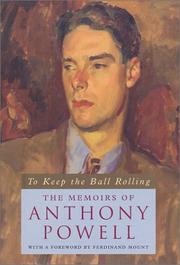
Powell's four-volume memoirs (published in one abridged edition) give you his real-world cast of inspirations — Eton, Oxford, the army, the literary world — so you can recognise the biographical raw material behind Nick Jenkins's world before you enter it.
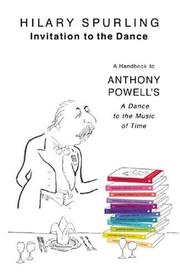
Spurling's indispensable character-by-character handbook lists every named figure in the sequence with page references and cross-volume appearances; read it first so you can use it as a running index throughout all twelve novels.
The Sequence Itself: First Movement (Novels 1–4)
ExpertRead the Spring quartet in order, establishing Nick Jenkins's voice, the school and Oxford years, and the social world of the 1920s–30s; track Widmerpool's first appearances and the novel's signature retrospective irony.
▸ Study plan for this stage
Pace: 8–10 weeks total; roughly 2–2.5 weeks per novel (~20–25 pages/day). Read each novel in a single sustained push before moving to the next, then spend 2–3 days reviewing notes and consolidating before starting the next book. Reserve the final week for cross-novel reflection and exercise work.
- Nick Jenkins as retrospective narrator: how his older, wiser voice frames and ironizes the younger self's perceptions throughout all four novels
- Widmerpool as social climber and structural device: tracking his every appearance across A Question of Upbringing, A Buyer's Market, The Acceptance World, and At Lady Molly's to map his trajectory from school embarrassment to alarming ambition
- The 'music of time' metaphor (introduced via the Poussin painting in A Question of Upbringing): time as cyclical, social life as choreography, recurrence as the sequence's governing aesthetic principle
- Class, money, and the English social web: how the four novels chart the overlapping worlds of school, Oxford, London bohemia, and the country-house set, and how characters move (or fail to move) between them
- Retrospective irony as Powell's signature mode: the gap between what Nick understands in the moment and what the narrating voice already knows, especially visible in scenes involving Stringham, Templer, and Widmerpool
- The Acceptance World's thematic pivot: the title concept of accepting bills of exchange as a metaphor for accepting the terms life offers — a key moment of tonal and philosophical deepening in the quartet
- Social ritual and its comedy: debutante balls and parties in A Buyer's Market, the Walpole-Wilsons, Mrs. Andriadis's party, and how Powell uses social occasions as set pieces for revelation and irony
- At Lady Molly's as hinge volume: the introduction of the Tolland family and Isobel, the widening of Nick's social world, and the first signs of the political and marital pressures that will define the Second Movement
- By the end of A Question of Upbringing, what does Nick's school friendship with Stringham, Templer, and Widmerpool reveal about the English class system, and how does Powell use the Poussin framing device to signal the retrospective irony that will govern all four novels?
- How does A Buyer's Market use the London party circuit — particularly Mrs. Andriadis's gathering and the debutante world — to show the gap between social aspiration and social reality, and what does Nick's romantic failure with Barbara Goring tell us about his self-awareness at this stage?
- What does the title The Acceptance World mean philosophically and narratively? How does Widmerpool's financial dealings and his relationship with Milly Andriadis embody the novel's central metaphor, and how does this novel deepen the reader's sense of Nick's passivity versus engagement?
- Trace Widmerpool's appearances across all four novels: in what specific scenes does he appear, what does each appearance add to our understanding of his character, and how does Powell use him as a comic yet increasingly unsettling figure?
- How does At Lady Molly's function as a transitional volume? What new social world does it open up through the Tolland family, and how does Nick's growing attachment to Isobel signal a shift in his interior life compared to his earlier romantic episodes?
- What is Powell's technique of 'social choreography' — the way characters drift in and out of each other's orbits across the four novels — and can you identify at least three specific instances where a character reappears in a new context that reframes an earlier scene?
- Character-tracking log: Create a running spreadsheet or notebook with one row per named character. For each of the four novels, record every scene in which Widmerpool, Stringham, and Templer appear, noting Nick's tone toward them. By At Lady Molly's, write a one-paragraph 'arc summary' for each of the three.
- Retrospective irony annotation: As you read, mark (with a sticky note or margin flag) every passage where Nick's narrating voice signals knowledge the younger Nick did not yet have. After finishing all four novels, select your five best examples and write a sentence explaining what the older Nick knows that the younger Nick missed.
- Title meditation: After finishing The Acceptance World, write a 300-word response to the question: 'What has Nick accepted, and what has he refused to accept, by the end of this novel?' Use specific scenes from the text.
- Social map: Draw a diagram of the overlapping social circles across the four novels (school set, Oxford set, London bohemian/party world, country-house set, the Tolland network). Place at least 15 characters on the map and draw lines showing which characters bridge which worlds.
- Party set-piece close reading: Choose one extended party or social gathering scene from A Buyer's Market (e.g., Mrs. Andriadis's party) and one from At Lady Molly's. Write a 400-word comparative analysis of how Powell uses the social occasion to reveal character and advance theme in each.
- Widmerpool voice exercise: Write a 200-word diary entry from Widmerpool's point of view covering any single scene in which he appears across the four novels. Then write a paragraph reflecting on how this exercise changes (or confirms) your reading of Powell's ironic distance from Widmerpool.
Next up: Completing the Spring quartet establishes the full cast, the retrospective narrative voice, and the social grammar of Powell's world, making the reader ready to follow those same characters — now aging, marrying, and facing the shadow of war — into the Summer and Autumn movements of the Second and Third Movements.
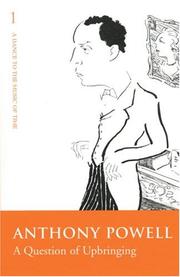
The opening novel introduces Nick, Widmerpool, Stringham, and Templer at school — the foundational relationships against which all later encounters are measured; read first to fix the original cast in memory.

The London party world of the late 1920s expands the cast enormously; reading it immediately after the first novel lets you watch Powell's technique of chance re-encounter take hold for the first time.

Nick's romantic and professional life deepens; Widmerpool's social climbing accelerates — this is the novel where Powell's long-game plotting becomes unmistakable.
The fourth novel closes the Spring movement and introduces the Tolland family network that will dominate the next quartet; it rewards the reader who has the earlier three novels fresh in mind.
The Sequence Itself: Second & Third Movements (Novels 5–12)
ExpertComplete the Summer, Autumn, and Winter quartets in strict order, following the sequence through the war, post-war disillusionment, and old age, while watching the full cast converge and disperse.
▸ Study plan for this stage
Pace: 10–12 weeks, roughly 25–35 pages per day (each novel runs ~200 pages); read one novel per 10–14 days, pausing a few days between each for reflection and note-taking before moving to the next.
- The 'Dance' metaphor deepens: war and its aftermath as the ultimate choreographer, reshuffling the entire cast with brutal impersonality — track how characters who seemed fixed in peacetime are violently repositioned across Casanova's Chinese Restaurant through Books Do Furnish a Room.
- Time as erosion and revelation: the Summer/Autumn transition (The Kindly Ones into The Valley of Bones) marks the pivot from civilian to military life, showing how the same personalities express themselves in radically different institutional contexts.
- Nick Jenkins as embedded witness: his officer's-eye view in the War Trilogy (The Valley of Bones, The Soldier's Art, The Military Philosophers) is deliberately limited and ironic — Powell uses Nick's narrow military vantage point to imply the vast, unseen machinery of history.
- The Widmerpool trajectory: from comic butt to dangerous operator — chart his accumulation of institutional power through wartime bureaucracy in The Soldier's Art and The Military Philosophers, and what this says about Powell's view of ambition and mediocrity.
- Death, loss, and the elegiac register: the deaths of major figures (Stringham, Templer, others) are handled with studied understatement — analyze how Powell's prose style performs grief without sentimentality.
- Post-war disillusionment and cultural reconstruction in Books Do Furnish a Room: the literary/bohemian world of Fitzrovia as a diminished, hungover echo of the pre-war world Nick knew in earlier novels.
- Structural musicology of the sequence: the quartet-within-sequence architecture means each novel is a 'movement' — notice how Powell uses recurring motifs (the Poussin painting, the 'dance' image, seasonal imagery) to create formal unity across six very different books.
- Class, institutions, and power: the Army in the War Trilogy functions as a microcosm of British class society — compare the regimental world of The Valley of Bones with the staff/HQ world of The Military Philosophers to see how Powell maps social hierarchy onto military rank.
- How does Casanova's Chinese Restaurant use the Bohemian music world and the marriages of Moreland and Maclintick to foreshadow the collapse and dispersal that the war will accelerate — and how does this novel serve as a hinge between peacetime and wartime volumes?
- In The Kindly Ones, the Furies of the title are invoked both mythologically and domestically: what specific events and characters embody this sense of retributive fate arriving, and how does Powell use the childhood flashback structure to frame the coming war as inevitable?
- Trace Widmerpool's rise through The Soldier's Art and The Military Philosophers: what specific bureaucratic maneuvers define his wartime career, and how does Powell use Nick's increasingly uncomfortable proximity to Widmerpool to critique the meritocracy of wartime institutions?
- The deaths of Stringham and Templer occur largely off-page or at a remove. How does Powell's choice to handle these deaths indirectly shape the reader's emotional experience, and what does this technique say about the novel's larger argument about war and individual fate?
- Books Do Furnish a Room introduces the post-war literary world centered on the magazine Fission and figures like X. Trapnel. How does this new milieu compare structurally and tonally to the pre-war bohemian world of Casanova's Chinese Restaurant, and what has been lost or coarsened?
- How does Nick Jenkins's narrative voice evolve across these six novels — is he the same observer in Books Do Furnish a Room as he was in Casanova's Chinese Restaurant, and what textual evidence supports your answer?
- Maintain a 'Cast Ledger': for each of the six novels, keep a running two-column table — one column for characters who enter or re-enter Nick's orbit, one for those who exit (by death, disappearance, or estrangement). By Books Do Furnish a Room, map the net change in the social world Powell has engineered.
- Write a 300-word 'movement summary' for each novel immediately after finishing it, in the style of a musical program note — describe its dominant 'key' (tone), its central 'theme' (plot/idea), and how it resolves or leaves open its final 'chord'. Compare all six at the end.
- Select one scene featuring Widmerpool from each of The Soldier's Art and The Military Philosophers and write a close reading (250–400 words each) focusing exclusively on Powell's prose style: sentence rhythm, irony, free indirect discourse, and what is conspicuously not said.
- Draft a comparative essay (600–800 words) arguing whether the War Trilogy (The Valley of Bones, The Soldier's Art, The Military Philosophers) functions as a unified sub-sequence or whether the three novels pull in meaningfully different thematic directions. Use specific scenes as evidence.
- Create a timeline of real historical events (1934–1947, roughly) and annotate it with the fictional events of all six novels, noting where Powell anchors the narrative to history and where he deliberately keeps it vague — then reflect on what that vagueness achieves.
- Re-read the opening and closing pages of both Casanova's Chinese Restaurant and Books Do Furnish a Room back-to-back and write a one-page reflection on what has changed in Nick's prose voice, his social world, and his emotional register — treating the two novels as bookends to this stage.
Next up: Completing Books Do Furnish a Room leaves Nick Jenkins in early middle age, the war's wreckage absorbed but not resolved, setting the stage for the final Winter quartet — where Powell will draw every surviving thread toward old age, retrospection, and the sequence's ultimate reckoning with time itself.

Opens the Summer quartet with Bohemian London and the approach of war; its non-linear structure is the most formally daring in the sequence and repays the orientation built in Stage 1.
Bridges peacetime and the outbreak of war; the mythological undertow (the Furies) surfaces explicitly here, making it the thematic hinge of the whole sequence.
Begins the Autumn (war) quartet; Nick's army service introduces a new social stratum and a new register of comedy — essential for understanding how Powell treats institutional life.

The war deepens and casualties mount among the original cast; reading it directly after Valley of Bones preserves the cumulative emotional weight Powell depends on.
Closes the war trilogy and returns Nick to London; Widmerpool reaches the height of his wartime power — the payoff for readers who have tracked him since novel one.
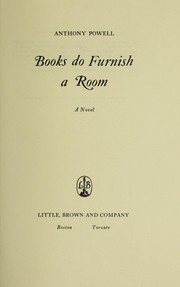
Opens the Winter quartet in post-war literary London; the tone shifts to elegiac comedy and the sequence's meditation on time and memory becomes explicit.
The Sequence Concluded & Retrospective Scholarship
ExpertFinish the final three novels, then read the two best critical studies to consolidate your understanding of Powell's technique, sources, and place in twentieth-century fiction.
▸ Study plan for this stage
Pace: 10–13 weeks total: Weeks 1–2 for "Temporary Kings" (~25 pages/day), Weeks 3–4 for "Hearing Secret Harmonies" (~25 pages/day), Weeks 5–8 for Michael Barber's "Anthony Powell" biography/critical study (~20 pages/day, with note-taking pauses), and Weeks 9–11 for "Afternoon Men" (~15 pages/day, read slo
- Closure and retrospection in 'Temporary Kings': how Powell uses Venice and the Tiepolo ceiling as a meditation on time, illusion, and mortality, tying together the sequence's long-running threads
- The occult and entropy in 'Hearing Secret Harmonies': Scorpio Murtlock's cult as Powell's final statement on power, will, and the irrational forces that shape human lives, and how Nick Jenkins's narrative voice achieves its valedictory tone
- The dance metaphor fulfilled: how the concluding novels demonstrate that Powell's central image — human lives as figures in a repeating, indifferent dance — is structural as well as thematic, governing plot recurrence, character returns, and tonal resolution
- Michael Barber's critical and biographical method: how his 'Anthony Powell' situates the novelist's life (Eton, the Army, the film industry, the aristocratic milieu) as direct source material for the sequence, and what this reveals about Powell's technique of roman à clef
- 'Afternoon Men' as origin point and retrospective key: reading Powell's debut novel after the sequence reveals his lifelong preoccupations — ennui, social ritual, the comedy of manners, flat affect as ironic distance — in embryonic form
- Powell's prose style across career arc: comparing the clipped, Hemingway-influenced sentences of 'Afternoon Men' with the long, subordinate-clause-laden, Proustian periods of the mature sequence novels
- Intertextuality and literary tradition: Barber's study and the novels together illuminate Powell's debts to and divergences from Proust, Evelyn Waugh, and the English comic novel tradition
- The role of the narrator-witness: Nick Jenkins as a deliberately self-effacing consciousness and what Barber's biography reveals about the autobiographical pressures behind that narrative choice
- How does Powell use the Tiepolo ceiling in 'Temporary Kings' as both a plot device and a thematic symbol, and what does it say about the sequence's treatment of art, time, and human vanity?
- In 'Hearing Secret Harmonies', how does the Murtlock subplot function as a culmination of the sequence's long-running interest in power and the will — and how does it connect to earlier figures like Widmerpool?
- What specific biographical facts documented in Barber's 'Anthony Powell' most directly illuminate the social world and character types of the sequence, and where does Barber argue Powell departs from autobiography into pure invention?
- How does reading 'Afternoon Men' after the sequence reframe your understanding of Powell's mature style — what is gained and what is lost in the move from that novel's minimalism to the sequence's expansiveness?
- What is Powell's ultimate answer, across 'Temporary Kings' and 'Hearing Secret Harmonies', to the question of whether the 'dance' is comic, tragic, or something that transcends both categories?
- Using evidence from all four books in this stage, how would you characterize Powell's place in twentieth-century British fiction — is he better understood as a comic novelist, a modernist, a social historian, or something else entirely?
- Passage comparison exercise: Select one long, syntactically complex paragraph from 'Temporary Kings' or 'Hearing Secret Harmonies' and one short, flat-affect passage from 'Afternoon Men'. Write a 500-word close reading that traces exactly what changed in Powell's prose between the two, identifying specific syntactic, tonal, and ironic differences.
- Character-return mapping: Create a visual diagram or spreadsheet tracking every character who reappears in 'Temporary Kings' and 'Hearing Secret Harmonies' from earlier volumes. For each, note how much time has passed, how they have changed, and what their reappearance contributes thematically — then annotate the diagram with relevant passages from Barber's critical study.
- Biographical source-hunting: Using Barber's 'Anthony Powell' as your guide, identify at least five characters or episodes in the two concluding novels that Barber links to real people or events in Powell's life. Write a one-paragraph reflection on each, distinguishing what Powell changed and why the change matters artistically.
- The dance metaphor essay: Write a 750–1,000-word argumentative essay answering the question: 'By the end of Hearing Secret Harmonies, has the dance metaphor been resolved, or deliberately left open?' Draw evidence from both concluding novels and use at least one passage from Barber to support your interpretation.
- Retrospective re-reading journal: As you read 'Afternoon Men', keep a running journal (one entry per reading session) noting every moment that feels like a seed of the mature sequence — a character type, a social situation, a narrative technique, or a thematic concern. At the end, write a one-page synthesis: what does 'Afternoon Men' tell us that the sequence itself cannot?
- Synthetic critical position paper: After completing all four books, write a 1–2 page position statement placing Powell in twentieth-century fiction. Use 'Afternoon Men' as your starting point, the two concluding novels as your evidence of his mature achievement, and Barber's critical framework as a foil — either endorsing, qualifying, or challenging Barber's overall assessment.
Next up: Completing the sequence's final movements and grounding them in Barber's critical and biographical framework gives the reader the panoramic, evaluative perspective needed to engage with broader comparative and scholarly work — whether that means tackling Powell's other non-sequence fiction, primary Proustian sources, or advanced academic criticism that situates the sequence within modernist and po

The penultimate quartet's third novel; Venice and a Tiepolo ceiling crystallise the sequence's visual and temporal themes — read it as the beginning of the end.
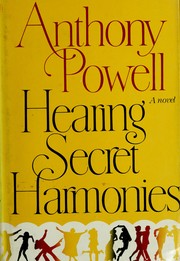
The twelfth and final novel; Widmerpool's fate and Nick's old age close every thread opened in 1951 — only meaningful in full after the preceding eleven.

The authorised biography, read after completing the sequence, maps the real people and events onto the fiction with a precision that transforms your retrospective understanding of every volume.

Powell's first novel (1931), outside the sequence, shows his Wyndham Lewis–influenced early style; reading it last reveals exactly how much — and how deliberately — his voice evolved into the Music of Time's long, sinuous sentences.
Discussion
Keep reading
Paths that share books, cover the same subject, or open a related topic.