The No. 1 Ladies' Detective Agency Reading Order: Where to Start
Alexander McCall Smith's Botswana series now runs past twenty volumes, and the cases in them are almost beside the point — a missing husband, a suspicious insurance claim, a father to be found. The actual plot is Mma Ramotswe's life: a marriage, an apprenticeship, an adopted family, a mechanic's business next door, and the slow promotion of Mma Makutsi from typist to partner. Those things happen once and in a fixed order, so unlike most cosy mystery series this one genuinely does not work sampled at random. Read the first four in sequence — they were written as a unit and the fourth resolves what the first set up — then continue through the run and stop wherever the pleasure levels off, which for most readers is somewhere in the teens. This path also flags the children's spin-off, which is a different reading age rather than a prequel.
The first four, in order
BeginnerRead the founding quartet, which sets up every relationship the rest of the series runs on
▸ Study plan for this stage
Pace: Three to four weeks for 926 pages — The No. 1 Ladies' Detective Agency at 240, Tears of the Giraffe at 233, Morality for Beautiful Girls at 246, The Kalahari Typing School for Men at 207. These are short books with short chapters and a great deal of tea, and 60 to 70 pages an evening is a comfortabl
- The cases are almost beside the point. A missing husband, a suspicious insurance claim, a father to be traced — these are the occasion rather than the plot, and a reader who comes for mysteries will be disappointed by all twenty volumes equally.
- The actual plot is Mma Ramotswe's life: a marriage, an adopted family, the garage next door, and the slow promotion of Mma Makutsi from typist to partner. Those things happen in order and only in these early books.
- The No. 1 Ladies' Detective Agency has Precious Ramotswe selling her late father's cattle to open Botswana's only female-run detective agency. Obed Ramotswe and her first marriage occupy as much of the book as any case.
- Tears of the Giraffe is structurally the most consequential volume in the whole run: Mma Makutsi is hired, the orphaned children join the household, and the engagement to Mr J.L.B. Matekoni becomes real.
- Morality for Beautiful Girls moves the agency in with Tlokweng Road Speedy Motors, makes Mma Makutsi assistant manager, and handles Mr J.L.B. Matekoni's depression with more seriousness than the series' reputation suggests.
- That office arrangement lasts a decade of books. Almost every later volume assumes the geography established here without re-explaining it.
- The Kalahari Typing School for Men closes the opening movement with a rival agency and Mma Makutsi's attempt to build something of her own.
- Botswana itself is a subject rather than a backdrop. McCall Smith taught law there, and the books' insistence on Botswana's stability, courtesy and self-respect is a deliberate argument, not a decoration.
- What does the first novel spend its time on, and how much of it is detection?
- Obed Ramotswe is dead before the series begins and is one of its central characters. How does McCall Smith keep him present?
- What changes when Mma Makutsi arrives? Name three things that become possible that were not before.
- How is Mr J.L.B. Matekoni's depression handled in the third book? Is the series' gentleness adequate to it?
- The Kalahari Typing School gives Mma Makutsi her own ambition. Why does the series need her to want something separately?
- After four books, what is this series actually about? Answer without using the word mystery.
- Keep a list of the recurring cast as it assembles across the four books, with the volume each joins in. The rest of the series assumes it.
- In the first novel, mark the pages given to a case and the pages given to Mma Ramotswe's past. Counting them is the fastest way to understand what kind of series this is.
- Note every time Clovis Andersen's detection manual is quoted. It is a running device from page one and it pays off much later.
- After book four, write one sentence on whether you will continue. This is the designed decision point and making it deliberately saves either twenty books or four.
Next up: With the household, the office and the engagement all in place, the next four books are where the series settles into the shape it keeps.
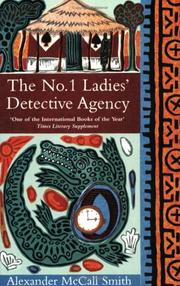
The starting point. Precious Ramotswe sells her late father's cattle to open Botswana's only female-run detective agency, and the book is as much about her father and her first marriage as about any case. Nothing in the series makes sense without it.

Second, and the book where the permanent cast arrives — Mma Makutsi is hired, the orphaned children join the household, and the engagement to Mr J.L.B. Matekoni becomes real. Structurally the most consequential volume in the whole run.

Third: the agency moves in with Tlokweng Road Speedy Motors, Mma Makutsi is made assistant manager, and Mr J.L.B. Matekoni's depression is handled with more seriousness than the series' reputation suggests. Read it in place — the office arrangement it establishes lasts for a decade of books.
Fourth, and the close of the opening movement: a rival agency, and Mma Makutsi's attempt to build something of her own. If you are testing whether the series is for you, decide here rather than after book one.
Books five to eight
BeginnerRead the run where the series settles and the domestic arrangements resolve
▸ Study plan for this stage
Pace: Three to four weeks for 962 pages — The Full Cupboard of Life at 224, In the Company of Cheerful Ladies at 248, Blue Shoes and Happiness at 256, The Good Husband of Zebra Drive at 234 — at the same easy 60 pages an evening, so about a week each. Read them in sequence: the engagement thread that reso
- The Full Cupboard of Life has a wealthy woman wanting her suitors investigated while Mma Ramotswe's own long engagement stalls, and it contains the parachute-jump subplot, which is the series' best sustained joke.
- In the Company of Cheerful Ladies makes the tiny white van's decline a genuine emotional event, and returns a man from Mma Ramotswe's past. It is the darkest of the early run.
- The van is a character. Readers who find that ridiculous before reading the series generally stop finding it ridiculous somewhere around here.
- Blue Shoes and Happiness is where Mma Makutsi becomes the co-protagonist rather than the assistant — her shoes, her fiancé, her ambitions carry as much of the book as Mma Ramotswe's.
- Her 97 per cent at the Botswana Secretarial College is the series' most reliable running joke and also its most serious subject: a woman with no advantages and a perfect result, in a world that keeps not noticing.
- The Good Husband of Zebra Drive has Mma Makutsi resign and decides the two apprentices' futures, closing the second movement the way the fourth book closed the first.
- The pattern to notice: McCall Smith works in blocks of four, each ending with a change that resets the household. Knowing that makes the series much easier to navigate.
- The morality is explicit and old-fashioned by design. The books argue for courtesy, obligation and the traditional build as virtues, and they do not hedge it.
- Why does the engagement take so long to resolve? What would the series lose by settling it in book three?
- What does the van's decline do that a human illness could not?
- In Blue Shoes and Happiness, what does Mma Makutsi want, and how does the book treat her wanting it?
- The 97 per cent is a joke that is repeated in nearly every volume. What is it actually about?
- What is decided about the apprentices in the eighth book, and why does the series need that resolved?
- These four books contain very little detection. What has replaced it?
- Track the engagement across books two to five and note what stalls it each time. The pattern is comic and it is also a fairly precise portrait of a particular kind of man.
- Count how many pages of a typical volume are given to tea, and to conversations that resolve nothing. That proportion is the series' actual method.
- In Blue Shoes and Happiness, note every mention of Mma Makutsi's shoes. It reads as whimsy and functions as class commentary.
- Write one sentence on what changes between the fourth and eighth books. If your answer is nothing, reread the household arrangements at each end.
Next up: With the household settled, the middle run is where the cases matter least and the accumulated years matter most.
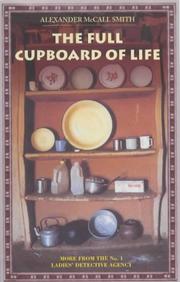
A wealthy woman wants her suitors investigated while Mma Ramotswe's own long engagement stalls, and the parachute-jump subplot is the series' best running joke. Read it fifth; the engagement thread only pays off if you have watched it stall for three books.
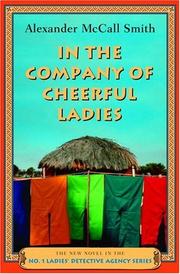
Book six, in which the tiny white van's decline becomes a genuine emotional event and a man from Mma Ramotswe's past reappears. The catalogue record for this one is an audio edition, so check the format before ordering.
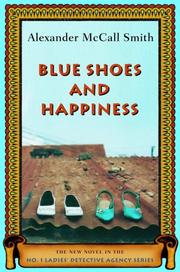
Book seven, and the one that most clearly makes Mma Makutsi the co-protagonist rather than the assistant — her shoes, her fiancé, her ambitions. Read it seventh, in sequence.

Book eight, in which Mma Makutsi resigns and the two apprentices' futures are decided. It closes the second movement of the series in the same way the fourth book closed the first.
The middle run
BeginnerContinue through the volumes where the series is fully settled and the cases matter least
▸ Study plan for this stage
Pace: Two to three weeks for 743 pages — The Miracle at Speedy Motors at 249, Tea Time for the Traditionally Built at 250, The Saturday Big Tent Wedding Party at 244 — again at 60 to 70 pages an evening, five or six days each. These three are a sample rather than a run: books eleven and the rest exist and
- The Miracle at Speedy Motors is the most openly sentimental book in the series — a search for a client's family, and a medical hope held out to one of the children — and it shows most clearly what the series is for.
- Tea Time for the Traditionally Built has a football team that keeps losing and the death of the tiny white van, which readers took harder than any human event in twenty volumes.
- That reaction is worth taking seriously rather than laughing at. The van has been present since book one, and a series built on accumulation earns its effects by duration rather than by intensity.
- The Saturday Big Tent Wedding Party is book twelve and pays off a courtship the series has been running since book seven.
- This is the clearest demonstration of the series' principle: a plot line that would be trivial in a standalone novel becomes substantial after five years of small mentions.
- The cases in this stretch are at their thinnest. If you are reading for detection, this is where the series will lose you, and that is a fair reason to stop.
- The virtue of the middle run is companionship rather than event. Readers who love the series love it for exactly the quality that makes it hard to review.
- Note that this stage skips from book ten to book twelve. The intervening volume is not required, which is itself informative about how the series works.
- What is The Miracle at Speedy Motors hoping for, and how does the book handle the outcome?
- Why did the van's death land harder than human events in the same series? What has the series done to make that possible?
- The Saturday Big Tent Wedding Party pays off five books of courtship. Would the payoff work for a reader starting there?
- What actually happens in a typical middle volume? Summarise one in three sentences and see what is left.
- Is the sentimentality a flaw or the point? Argue it with reference to a specific scene.
- Summarise each of the three in two sentences, then try to tell them apart a week later. The difficulty is the honest fact about this stretch of the series.
- Track one background relationship — Charlie, Fanwell, Phuti Radiphuti — across the three books. The background is where the series' actual development happens.
- Read the van's final chapter and then the first description of it in book one. Fifteen years of small mentions is the whole technique in one comparison.
- Decide here whether to continue to book eighteen or stop. Both are defensible and the series will not punish you for either.
Next up: Late in the run, two volumes do something the settled middle does not, and they are the ones worth jumping ahead for.
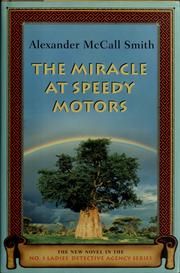
A search for a client's family and a medical hope held out to one of the children — the most openly sentimental book in the series and the one that shows what it is actually for. Read it ninth.
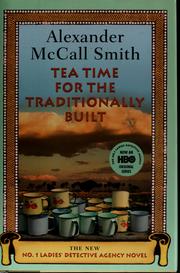
A football team that keeps losing, and the death of the tiny white van, which readers took harder than any human event in twenty books. Best read tenth and directly after the previous volume.

Book twelve, and the payoff to a courtship the series has been running since book seven. The clearest illustration of the principle that this series' rewards are cumulative rather than per-volume.
Where the series stands now
BeginnerSample the later volumes and see how the series reads once every relationship is established
▸ Study plan for this stage
Pace: About two weeks for 544 pages — The Limpopo Academy of Private Detection at 288 and The House of Unexpected Sisters at 256. Both read at the series' usual pace, so a week each. These are deliberately sampled out of sequence rather than read in a run: they are books thirteen and eighteen, chosen beca
- The Limpopo Academy of Private Detection brings Clovis Andersen — the author of the detection manual Mma Ramotswe has been quoting since page one — to Botswana in person.
- It is the best single joke in the later run, and it works only on a reader who has watched the manual quoted for a dozen books. A late payoff of a first-page device is the series in miniature.
- The House of Unexpected Sisters, book eighteen, goes back into Mma Ramotswe's father and her own history. It is a genuine late development rather than another case.
- That makes it the natural stopping point for a reader not intending to finish. The series opened on Obed Ramotswe and this returns to him with everything else established.
- The series now runs past twenty volumes, and it does not conclude. There is no final book to work toward, which changes how you should plan a reading of it.
- Late volumes assume everything and explain nothing. They are unreadable as entry points and unusually rewarding as arrivals.
- The consistent quality across twenty books is itself the achievement. Very few long series avoid both decline and reinvention, and this one does.
- What does Clovis Andersen turn out to be like, and why is that the right answer for the joke?
- How does a device planted on page one of book one pay off thirteen books later? What had to be true for it to work?
- What does The House of Unexpected Sisters reveal about Obed Ramotswe, and does it change the first novel?
- The series does not end. How should a reader plan for that?
- Comparing a late volume with book one, what has changed in the writing and what has not?
- Before the Limpopo book, reread the first quotation from Clovis Andersen in book one. Thirteen books is a long setup and it is worth going back for.
- After The House of Unexpected Sisters, reread the opening chapter of the first novel. It is the closest thing the series has to a conclusion.
- Compare the prose of book eighteen with book one — sentence length, dialogue, the amount explained. The consistency is remarkable and easy to verify.
- Write a two-sentence recommendation for someone who has read nothing: where to start, and where to decide. That is the practical product of this whole path.
Next up: One last thing to know before recommending the series to anyone: there is a parallel line for much younger readers, and it is not a prequel.

Clovis Andersen, the author of the fictional detection manual Mma Ramotswe has quoted since page one, turns up in Botswana in person. The best single joke in the later run and the most satisfying late volume.

Book eighteen, and the one that goes back into Mma Ramotswe's father and her own history — a genuine late development rather than another case. A good place to stop if you are not going to read all of them.
The children's spin-off
BeginnerKnow what the parallel younger series is, and who it is actually for
▸ Study plan for this stage
Pace: Under an hour. Precious and the Monkeys is 79 pages, easily the shortest book on this path, in large type with illustrations, and a young reader will finish it in a sitting or two. There is no scheduling to do; the reason it has a stage of its own is that its position needs explaining rather than it
- Precious and the Monkeys is the first Precious Ramotswe mystery for young readers: a schoolgirl in Botswana solving the theft of food from her classmates' lunches.
- It is a separate line for around eight-year-olds, not a prequel to the adult series. Nothing in it is required and nothing in the adult books depends on it.
- The tone is the adult series' tone at a much smaller scale — courtesy, patience, and a solution that depends on noticing rather than on cleverness.
- It answers a specific practical question: what to give a child who has seen an adult reading the Botswana books and wants their own.
- The mystery is genuinely a mystery, which is arguably more than can be said for several volumes of the adult series.
- At 79 pages it is also the cleanest demonstration of McCall Smith's method, because there is no room for anything except the method.
- What does Precious actually do to solve the theft, and what does that suggest the series values in a detective?
- How does the tone compare with the adult books? What has been removed and what has been kept?
- Is it a prequel? What in it is and is not consistent with the adult series' account of her childhood?
- Who is this book for, and what would you hand to a reader who is a few years older?
- At 79 pages, what does the compression reveal about how the adult books are built?
- Read it in one sitting immediately after any adult volume. The contrast in scale is instructive and takes under an hour.
- Compare the solution here with the solution to any case in the first adult novel. The method of detection is identical.
- Check the catalogue title against the cover before ordering — the subtitle runs straight on and the two forms are easy to confuse.
- Write one sentence on why a child's version of this series works when a child's version of most detective series would not.
Next up: That closes the path — the founding quartet in order, the settled run sampled honestly, the two late volumes worth the jump, and the younger line placed.

The first Precious Ramotswe mystery for young readers — a schoolgirl in Botswana solving the theft of food from her classmates' lunches. A separate line for eight-year-olds rather than a prequel; the catalogue title runs the subtitle straight on, as Precious Ramotswe's very first case.


