Hamish Macbeth Reading Order: Where to Start with M.C. Beaton
The Hamish Macbeth mysteries are read in publication order and nothing else works, because the cases are self-contained but the two long-running romances — Priscilla Halburton-Smythe, and later Elspeth Grant — are not. Read out of sequence and you will meet an engagement before the courtship and a break-up before the engagement. This path takes the first fourteen books in order, which covers the whole Priscilla arc from first meeting to its conclusion, plus Hamish's permanent refusal of promotion, which is the series' actual running joke. Note that M.C. Beaton is a pen name; the catalogue files these under Marion Chesney, her own name, which is correct rather than an error.
Lochdubh, and the constable who will not be promoted
BeginnerMeet Hamish, the village and Priscilla, and learn the series' formula: a summer visitor is murdered and the local police get it wrong
▸ Study plan for this stage
Pace: 2-3 weeks at an easy pace. Death of a Gossip is 201pp, Death of a Cad 187pp and Death of an Outsider 200pp — short paperbacks that go down in two or three sittings each. There is no reason to ration them and no reason to hurry. Note that the catalogue files these under Marion Chesney, the author's o
- The series formula: an incomer or visitor is murdered, Hamish solves it, and his superiors take the credit
- Hamish's refusal of promotion as the running joke and the actual thesis of the series
- Lochdubh as a fictional Sutherland village, and the cast attached to it
- The class comedy between Hamish and the Halburton-Smythes, which is the engine of the Priscilla romance
- Cozy conventions: violence offstage, the detective embedded in the community, the sleuth's dog
- Blair as the recurring incompetent superior, and what the series uses him for
- What is Hamish's actual method — how does he get information his superiors cannot?
- Why does Hamish refuse promotion, and how does book one make the refusal sympathetic rather than merely eccentric?
- What does Death of an Outsider change by removing Hamish from Lochdubh, and what does that prove about the series?
- How does Beaton set up Priscilla in book two so the romance can run for twenty books without resolving?
- How much of the mystery in Death of a Gossip is fairly clued, and how much depends on Hamish knowing the village?
- Write down the murderer's identity and your reasoning at the halfway point of Death of a Gossip, then check. Beaton plays reasonably fair in the early books and the exercise calibrates you for the rest.
- Keep a one-line note per book of who Hamish lets take the credit and why. By book fourteen this list is the clearest picture of what the series is actually about.
- After Death of an Outsider, list what the Caithness setting lacks that Lochdubh has. The answer is the series' whole appeal, and it is easiest to see in its absence.
- Track Priscilla's first three appearances and note exactly what Hamish is embarrassed about each time. The class dynamic is set up in a handful of scenes.
Next up: The formula is now established; the next four books are where Beaton gets noticeably better at building a plot inside it.
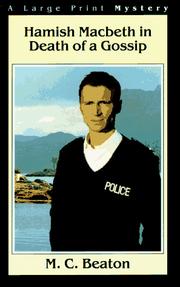
Book one, 1985. A fishing-school guest is strangled and Hamish solves it while letting his superiors take the credit — the pattern the whole series runs on. Start here; there is no alternative entry point that works.
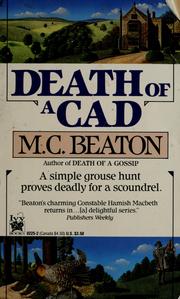
Book two, and where Priscilla's family and the class comedy come properly into focus. The romance that runs for the next twenty books begins in earnest here, which is the reason for reading in order.
Book three, and the one that moves Hamish out of Lochdubh to a temporary posting in Caithness. Useful early because it shows what the series is without its village, and confirms the village is the point.
The series finds its shape
BeginnerSettle into the recurring cast — Blair, Daviot, Angela Brodie, Towser the dog — and watch Beaton get much better at the plots
▸ Study plan for this stage
Pace: 3-4 weeks. Death of a Perfect Wife 192pp, Death of a Hussy 164pp, Death of a Snob 171pp and Death of a Prankster 168pp — the shortest run on the path, and four books in a month is a comfortable pace. These are the books to read consecutively without a break, since the recurring cast settles here.
- The recurring cast as a working suspect pool: Angela Brodie, Archie Maclean, the Currie sisters, Blair and Daviot
- Towser the dog, and the use of an animal to give a solitary detective someone to talk to
- The improving incomer as a Beaton archetype and a reliable murder victim
- Beaton's comic cruelty toward her victims — the murdered are usually people the reader is invited to dislike
- The Golden Age house-party structure, which Death of a Snob adopts almost wholesale
- Plot construction improving book by book: Death of a Prankster is the best-built of the early run
- Highland setting as more than backdrop — weather, distance and isolation doing plot work
- Why does Beaton so often make the victim someone the village dislikes, and what does that do to the whodunit?
- Death of a Snob is a country-house mystery in a series of village mysteries. What does the contrast reveal about Beaton's usual method?
- How is Death of a Prankster constructed differently from Death of a Gossip — what has Beaton learned in seven books?
- Which recurring character carries the most plot weight across these four, and what would the books lose without them?
- How does the Highland setting create or foreclose plot possibilities that a suburban setting would not?
- In Death of a Perfect Wife, list every villager with a motive before the halfway point. Beaton's design here is that it is genuinely everyone, and seeing that on paper is the pleasure.
- Compare the opening chapters of book one and book seven side by side. The improvement in how quickly Beaton establishes suspects is measurable in pages.
- Read Death of a Snob noting every Golden Age convention it uses — the isolated house, the storm, the assembled guests. It is a pastiche and reads better when you spot it.
- Keep a running cast list of Lochdubh residents with what you know about each. By the end of this stage the list is long enough to be the reason the later books work.
Next up: With the village fully populated, Beaton can start putting real pressure on the one relationship the series has been protecting.
Book four and the first genuinely well-constructed mystery of the run. An incomer determined to improve the village is murdered, and the suspect list is the whole of Lochdubh.

Book five, and one of the sharper plots — four men, one wealthy woman, and a car that explodes. Beaton's comic cruelty toward her victims is fully developed by this point.

Book six, a Christmas island-house-party mystery that is the closest the series comes to a straight Golden Age pastiche. Worth reading in place for the contrast with the village books around it.
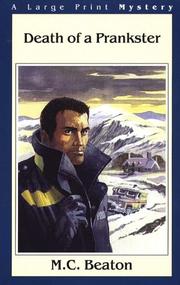
Book seven, an inheritance plot around a practical joker who fakes his own death once too often. The best-plotted of the early run and a good demonstration of why the series lasted thirty-odd books.
The Priscilla years
BeginnerFollow the central romance through its engagement and its consequences, which only makes sense read consecutively
▸ Study plan for this stage
Pace: 3-4 weeks. Death of a Glutton 176pp, Death of a Travelling Man 176pp, Death of a Charming Man 257pp and Death of a Nag 216pp. Read these four strictly consecutively and with no other books in between — Death of a Nag in particular is a direct emotional sequel to Death of a Charming Man, and the sequ
- The Priscilla arc reaching its point of maximum pressure, and why reading these out of order spoils both the mysteries and the romance
- Tommel Castle Hotel as the series' second location, and the change in the Halburton-Smythe fortunes that creates it
- Death of a Travelling Man as the darkest of the early books — a charismatic drifter turning a village against itself
- What a small community can be talked into, which Beaton takes unusually seriously here
- The romance rival as a plot device, and how Death of a Charming Man uses one to move the arc
- Recovery and aftermath as subject matter: Death of a Nag is set while Hamish is convalescing, and the seaside boarding house is doing emotional not merely geographic work
- Why does the hotel change the series, and what does it give Beaton that Priscilla's family home did not?
- What is Death of a Travelling Man doing that the surrounding books are not, and why does it read as a departure in tone?
- How does Death of a Charming Man put the romance under pressure without resolving it, and why is that structurally necessary for a long series?
- Read as a pair, what does Death of a Nag tell you about the events of the previous book that the previous book withheld?
- At this point in the run, what does Priscilla actually want, and does the text agree with Hamish's reading of her?
- Note the exact chapter in Death of a Charming Man where the romance shifts, then read Death of a Nag's opening chapter directly against it. The two scenes are designed as a hinge.
- Chart the series formula across these four — victim type, suspect pool, who takes the credit — and mark where Death of a Travelling Man breaks it. Beaton departs from her own template deliberately and only occasionally.
- Track Priscilla's dialogue in Death of a Glutton and then in Death of a Nag. The change in how she speaks to Hamish is the arc, told almost entirely in dialogue.
- Try reading a chapter of Death of a Nag pretending you have not read Death of a Charming Man, and note how much is unavailable. This is the practical demonstration of why order matters.
Next up: With the central romance changed for good, the series has to prove it can carry a book without it — which is exactly what the next three do.

Book eight, a marriage-bureau party at the Tommel Castle Hotel. It also marks the point where the hotel becomes the series' second home and Priscilla's family fortunes change permanently.
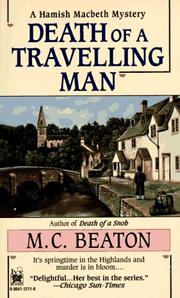
Book nine, and the darkest of the early books — a charismatic drifter parks in Lochdubh and turns the village against itself. Beaton is unusually serious here about what a small community can be talked into.
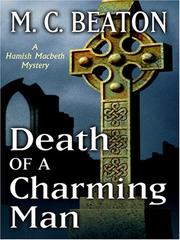
Book ten, and a hinge in the romance: a handsome newcomer to the village puts Hamish's relationship with Priscilla under real pressure. Reading this before books eight and nine spoils both the mystery and the arc.

Book eleven, set at a seaside boarding house while Hamish is recovering from the previous book's events. It reads as a direct emotional sequel, which is exactly why the publication order matters here.
Hamish on his own terms
IntermediateSee the series after its central romance changes, and reach the point where the later books become freely readable
▸ Study plan for this stage
Pace: 3 weeks. Death of a Macho Man 267pp, Death of a Dentist 214pp and Death of a Scriptwriter 219pp. These are the comfortable cruising-altitude books and they read very fast. From here the series can be read loosely, so treat this stage as a natural stopping point rather than a wall — there are another
- The series functioning without the romance carrying it, which is the test these three pass
- Comic set pieces as structure: the challenged fistfight in Death of a Macho Man is a whole plot built on one absurd premise
- The universally hated victim taken to its logical extreme in Death of a Dentist
- Self-awareness: Death of a Scriptwriter arrives after the BBC adaptation and is visibly written by someone enjoying the joke
- Elspeth Grant and the later romantic arc that begins after this stage, which is why this is a pause rather than an ending
- What thirty-odd books of a formula requires — variation within a fixed shape, not escape from it
- Death of a Macho Man kills its victim before the promised confrontation. What does that structural choice do to the reader's expectations?
- If everyone hated the dentist, how does Beaton keep the mystery from collapsing into arbitrariness?
- What is Death of a Scriptwriter saying about television adaptations of crime novels, and how knowing is it?
- Having read fourteen, what would you say the series is really about — and is the answer the mysteries at all?
- What has changed about Hamish between book one and book fourteen, and what has deliberately not?
- List the running gags that have survived from book one to book fourteen and the ones Beaton quietly dropped. The survivors are the load-bearing ones.
- In Death of a Dentist, work out how Beaton narrows a suspect pool that is nominally the whole village. The technique is repeatable and she uses it often.
- Read Death of a Scriptwriter alongside a description of the BBC Hamish Macbeth series and note which liberties Beaton is teasing.
- Write one paragraph on where you would go next — the later books, or the Agatha Raisin series Beaton wrote in parallel — and what you would be looking for. This is the point at which the reading order stops choosing for you.
Next up: This is the end of the ordered path: the Priscilla arc has run its course and the remaining books can now be picked up in almost any order.
Book twelve, in which a bodybuilding incomer challenges Hamish to a fight and is dead before it happens. Comic, brisk, and the point at which Beaton stops needing the romance to carry a book.
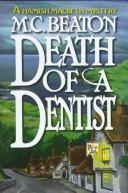
Book thirteen, and one of the funniest in the run — the whole village hates the dentist, so nobody is surprised. A good example of the series at cruising altitude.
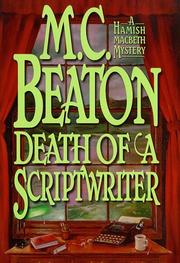
Book fourteen, and a self-aware one: a television crew arrives to adapt a local crime novelist, which Beaton clearly enjoyed writing after the BBC's Hamish Macbeth series. A natural place to pause — from here the books can be read more loosely.


