The Southern Reach Reading Order and Guide
The Southern Reach series by Jeff VanderMeer is a landmark of contemporary weird fiction — dense with atmosphere, unreliable narration, and ecological dread. This curriculum begins with accessible genre primers that build the right reading instincts (slow-burn mystery, unreliable narrators, the uncanny), then moves through the trilogy in strict publication order, and finally closes with the fourth book and a reflective companion read that deepens your appreciation of what VanderMeer achieved.
Tuning Your Senses
BeginnerBuild comfort with unreliable narrators, creeping dread, and nature-as-threat — the core instincts needed to appreciate Area X without frustration.
▸ Study plan for this stage
Pace: 5–6 weeks total: ~3 weeks on The Haunting of Hill House (~25–30 pages/day, including re-reading key passages) and ~2–3 weeks on Roadside Picnic (~20–25 pages/day with journaling pauses). Budget extra time after each book for reflection exercises before moving on.
- Unreliable narration: Eleanor Vance's perspective in Hill House is filtered through her fragile psychology — readers must learn to read between the lines of what she reports vs. what is actually happening.
- Architecture as psychological weapon: Hill House is built 'wrong' at every angle, and Jackson uses this to blur the line between the house's malevolence and Eleanor's unraveling mind — a direct precursor to how Area X warps perception.
- The Zone as indifferent alien presence: In Roadside Picnic, the Zone is not evil or benevolent — it is simply incomprehensible. Humanity projects meaning onto it, but the Zone does not care. This is the foundational mindset for reading Area X.
- Contamination and transformation: Roadside Picnic introduces the idea that contact with an alien environment changes people in ways they may not fully understand or even notice — physically, psychologically, and morally (see Redrick Schuhart's arc).
- Creeping dread over explicit horror: Both books build terror through atmosphere, implication, and wrongness rather than monsters or jump scares. Learning to sit with unresolved unease is a core reading skill for this curriculum.
- Nature and environment as active, threatening force: Both books treat their central 'places' (Hill House, the Zone) as characters with agency — environments that push back against human presence.
- The unreliable institution: In Roadside Picnic, official science and government are shown to be inadequate and self-serving in the face of the unknowable — a theme that echoes loudly in the Southern Reach trilogy.
- Meaning-hunger and its dangers: Characters in both books desperately want the strange phenomena around them to mean something. This desire for meaning is shown to be as dangerous as the phenomena themselves.
- In The Haunting of Hill House, which specific events can be attributed to the house's supernatural influence, and which can be plausibly explained by Eleanor's deteriorating mental state — and does the novel want you to be able to tell the difference?
- How does Shirley Jackson use the physical geometry and description of Hill House to create psychological unease, and what does this suggest about how environment can be used as a narrative tool?
- In Roadside Picnic, why does Redrick Schuhart keep returning to the Zone despite the clear physical and personal cost? What does his compulsion reveal about the human relationship with the incomprehensible?
- The Zone in Roadside Picnic was created as a byproduct of alien visitors who had no interest in humanity — a 'roadside picnic' leaving trash behind. How does this framing of alien indifference change the emotional register of the novel compared to a story about deliberate alien contact?
- Both Hill House and the Zone seem to 'select' or affect certain individuals more than others. What criteria, if any, do the books suggest govern this selection — and what is left unexplained?
- How do both books use the withholding of information and explanation as a deliberate craft choice, and how did you personally respond to that withholding as a reader?
- Eleanor's Reliability Log: While reading Hill House, keep a two-column log. Left column: what Eleanor explicitly reports. Right column: your interpretation of what is 'actually' happening. At the end, review the gaps — this trains the close-reading muscle you'll need constantly in the Southern Reach.
- Wrong Room Sketch: After finishing Hill House, write a one-paragraph description of a room in your own home as if it were architecturally 'wrong' in the way Jackson describes Hill House — angles slightly off, proportions subtly incorrect. This forces you to internalize Jackson's technique of using space to create dread.
- Zone Artifact Inventory: While reading Roadside Picnic, keep a running list of every Zone artifact or phenomenon mentioned. For each, note: (a) what it does, (b) what the characters think it means, and (c) what remains unexplained. This builds the habit of tracking the 'known unknown' that is essential for Area X.
- Indifference Rewrite: Take any two-paragraph scene from Roadside Picnic where a character tries to assign meaning or purpose to the Zone. Rewrite it from the Zone's 'perspective' — which is to say, write it with the Zone having no perspective at all. Practice articulating pure, purposeless environmental force.
- Dread Comparison Essay (informal): After finishing both books, write a one-page informal comparison: How does each book make you feel dread? List three specific techniques from each. Which techniques overlap? This primes you to recognize those same tools when they appear in the Southern Reach.
- Contamination Tracker: For Roadside Picnic specifically, track how Redrick changes — physically, emotionally, morally — across the novel's timeline. Note the moments where he seems unaware of his own change. This exercise directly prepares you for tracking transformation in characters who cannot see themselves clearly.
Next up: Mastering the unreliable perspective of Hill House and the alien-indifference framework of Roadside Picnic gives you the two essential lenses — psychological instability and cosmic inscrutability — that the Southern Reach trilogy fuses together from its very first page.

A masterclass in psychological unease and an unreliable first-person narrator — skills you will need on every page of Annihilation. Reading it first calibrates your tolerance for ambiguity.

The direct thematic ancestor of Area X: a mysterious zone left by an unknowable force, explored by humans who cannot comprehend it. Establishes the 'zone fiction' vocabulary VanderMeer builds on.
Enter Area X — The Trilogy
BeginnerRead the original Southern Reach trilogy in publication order, experiencing the deliberate shift in perspective and scale across the three volumes.
▸ Study plan for this stage
Pace: 10–12 weeks total, divided by book: Annihilation (~2 weeks, ~15–20 pages/day across its ~195 pages), Authority (~4 weeks, ~20 pages/day across its ~340 pages), Acceptance (~4 weeks, ~20 pages/day across its ~340 pages), plus 1–2 weeks at the end for reflection, re-reading key passages, and completin
- Unreliable narration and withheld identity: In Annihilation, the biologist narrator refuses to name herself or her colleagues, forcing the reader to question what information can be trusted and why.
- Area X as an ecological sublime: The setting functions not merely as backdrop but as an active, transforming force — nature reclaiming, mutating, and absorbing human presence across all three books.
- Perspective as architecture: Each volume is deliberately told from a different vantage point (field operative → bureaucratic overseer → multiple converging timelines), and understanding why VanderMeer made each choice is central to the trilogy.
- Institutional paranoia and the Southern Reach itself: Authority shifts the lens to Control and the decaying agency, showing how bureaucracies respond to the unknowable with secrecy, hierarchy, and self-destruction.
- The lighthouse and the Crawler as symbolic anchors: These recurring physical locations accumulate meaning across all three books, connecting the biologist's descent in Annihilation to the origin revelations in Acceptance.
- Hypnotic suggestion and compromised memory: Characters in all three volumes have been conditioned, altered, or deceived — readers must track what each character knows versus what has been done to them.
- Convergence and acceptance as thematic resolution: Acceptance does not resolve mystery conventionally; instead it asks whether understanding Area X is even the right goal, and what it means to stop resisting transformation.
- The journal as document and artifact: Annihilation is framed as a found journal, and all three books play with the reliability of written records, reports, and official accounts as ways of knowing.
- In Annihilation, why does the biologist deliberately withhold names — including her own — and how does this choice shape your trust in everything she reports about Area X?
- How does the shift from the biologist's first-person field journal in Annihilation to Control's close-third-person bureaucratic perspective in Authority change what Area X feels like as a threat?
- What does the Southern Reach as an institution reveal about how human systems respond to phenomena they cannot classify or control, as depicted in Authority?
- By the end of Acceptance, what do we learn about the origins of Area X and the lighthouse keeper Saul Evans, and how does this reframe events from the first two books?
- How do the three books use the lighthouse — physically and symbolically — as a connective thread across all three volumes?
- What does 'acceptance' mean as the trilogy's concluding theme — is it defeat, peace, transformation, or something else entirely?
- Narrator trust log (Annihilation): As you read, keep a running two-column list — things the biologist states as fact vs. things she admits she is uncertain about. At the end, assess: how much of Area X's strangeness is in the place, and how much is in her perception?
- Perspective comparison (Authority): Choose one event or location that appears in both Annihilation and Authority (e.g., the base camp, the tower entrance). Write a short paragraph describing it from the biologist's perspective, then from Control's. Reflect on what each narrator notices, fears, and omits.
- Institution mapping (Authority): Draw an org chart or diagram of the Southern Reach as depicted in Authority — its chain of command, its secrets, its factions. Annotate where information is blocked, distorted, or destroyed. Use this to discuss how the institution mirrors Area X's own opacity.
- Timeline reconstruction (Acceptance): Acceptance weaves together multiple timelines. After finishing it, create a chronological master timeline of key events across all three books — from Saul Evans's pre-Area X life through the biologist's final transformation. Note where the books' accounts contradict or complement each other.
- Symbolic close-read — the Crawler's words: The words the biologist sees written on the tower walls in Annihilation are central to all three books. Find every reference to those words across the trilogy and write a one-page analysis of how their meaning evolves from Volume 1 to Volume 3.
- Personal 'acceptance' reflection: After finishing Acceptance, write a one-page personal response: What question about Area X do you most wish had been answered? Then argue, using evidence from the trilogy, whether VanderMeer's refusal to answer it is a flaw or the point.
Next up: Completing the trilogy gives the reader a felt, experiential understanding of VanderMeer's core techniques — unreliable perspective, ecological dread, and deliberate ambiguity — which provides the essential foundation for engaging with critical, contextual, or comparative readings that examine how and why the Southern Reach works as a work of weird fiction.

Book one: a biologist's claustrophobic first-person journal of the twelfth expedition into Area X. Start here — the prose style and mysteries introduced are the foundation for everything that follows.
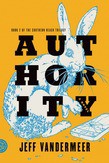
Book two: the perspective flips to the bureaucratic world outside Area X, following the new director of the Southern Reach agency. Deepens the mythology and recontextualizes Annihilation's events.

Book three: multiple timelines and perspectives converge for a haunting, deliberately open-ended conclusion. Best read immediately after Authority while the threads are fresh.
The Fourth Expedition
IntermediateRead the long-awaited fourth Southern Reach novel, returning to Area X with the context of the full trilogy behind you.
▸ Study plan for this stage
Pace: 4–5 weeks, ~25–30 pages/day — allowing deliberate, reflective reading to absorb VanderMeer's layered prose and callbacks to the trilogy
- Narrative convergence: how Absolution weaves together threads left unresolved across Annihilation, Authority, and Acceptance, rewarding readers who carry the full trilogy's context
- The nature of Area X's evolution: examining how the phenomenon has changed — or revealed itself more fully — across the timeline covered by Absolution
- Character legacy and return: tracing how figures from the trilogy (the Director, the Biologist, Control, and others) cast long shadows over the fourth expedition's participants
- The unreliable environment: VanderMeer's continued use of landscape as a psychological and ontological force, where Area X itself functions as a character with agency and intent
- Memory, transformation, and identity: the recurring Southern Reach theme of how exposure to Area X dissolves the boundaries of self, explored with new depth now that readers understand the full scope of prior expeditions
- The ethics of institutional knowledge: how Southern Reach's bureaucratic secrecy and selective truth-telling shaped every expedition, including the fourth, and the moral cost of that legacy
- Cyclical vs. progressive narrative structure: whether Absolution offers resolution, continuation, or deliberate ambiguity — and what VanderMeer's structural choices argue about the nature of mystery itself
- Ecological allegory at full scale: reading Area X as a culminating statement on environmental estrangement, human hubris, and the limits of scientific rationalism
- How does Absolution recontextualize events from the original trilogy — which earlier mysteries does it illuminate, and which does it intentionally leave open?
- In what ways has Area X itself changed or expanded by the time of the fourth expedition, and what does this suggest about its ultimate nature or purpose?
- How do the fourth expedition's members relate to — and differ from — the characters readers followed in Annihilation, Authority, and Acceptance?
- What does Absolution argue, if anything, about the possibility of understanding or coexisting with Area X, as opposed to the Southern Reach's historical stance of containment and study?
- How does VanderMeer use prose style, point of view, and structural choices in Absolution to signal thematic closure, continuation, or something more unsettling than either?
- What is the cumulative ecological and philosophical statement of the Southern Reach series as a whole, and how does Absolution either complete or complicate it?
- Trilogy callback log: Keep a running document as you read Absolution, noting every explicit or implicit callback to the first three books — character names, locations, objects, phrases. After finishing, categorize them: Which callbacks provide answers? Which deepen the mystery? Which feel like deliberate echoes without resolution?
- Area X timeline reconstruction: Using details from Absolution alongside your memory of the trilogy, build a chronological timeline of Area X's known history — from its first appearance through the fourth expedition. Note where the timeline has gaps and what Absolution does or does not fill in.
- Character transformation matrix: Create a simple grid with major characters across the top and the themes of memory, identity, and transformation down the side. Fill in how each character in Absolution embodies or resists these themes, then compare one column to a trilogy character (e.g., the Biologist or the Director) to find parallels.
- Close-reading passage journal: Select three passages from Absolution where the prose style itself feels strange, recursive, or hypnotic — characteristic of VanderMeer's 'weird fiction' mode. Write a short paragraph on each analyzing how the language enacts the themes of the novel rather than merely describing them.
- Resolution audit: Write a one-page personal verdict on Absolution as a conclusion: Which of your lingering questions from the trilogy did it answer to your satisfaction? Which did it leave open? Do you read those open questions as a flaw, a feature, or an argument? Support your position with specific scenes or passages.
- Series-wide thematic essay: Draft a 500–700 word essay on the ecological allegory of the Southern Reach series as a whole, using Absolution as your primary text and drawing on the trilogy for supporting evidence. Argue for a specific reading of what Area X represents — and what VanderMeer wants readers to feel about it.
Next up: Completing Absolution with an active, analytical eye — especially the resolution audit and thematic essay exercises — positions the reader to engage critically with VanderMeer's broader body of work and the wider weird fiction tradition that the Southern Reach series both inhabits and redefines.

Published in 2024, this fourth book revisits Area X and the Southern Reach with new and returning characters. Reading it after the trilogy lets you catch every callback, shifted meaning, and thematic evolution VanderMeer intended.
Deepening the Weird
IntermediateSituate the Southern Reach within the broader tradition of weird fiction and ecological horror, enriching a re-read or reflection on the series.
▸ Study plan for this stage
Pace: 6–8 weeks total: Weeks 1–3 for "Strange" by Nathan Ballingrud (~20–25 pages/day, reading one story per sitting and pausing to reflect before moving on); Weeks 4–7 for "The New Weird" anthology edited by Ann VanderMeer (~25–30 pages/day, alternating between the fiction and the critical/forum sections
- Weird fiction as a genre defined by the intrusion of the utterly unknowable into the mundane — a core lens for re-reading the Southern Reach trilogy
- Ecological horror and 'landscape as antagonist': how nonhuman environments become active, threatening, and transformative forces in both Ballingrud's stories and the New Weird anthology
- The 'slippage' of identity and body horror: characters in 'Strange' undergo psychological and physical dissolution that mirrors what happens to the biologist and other characters inside Area X
- The New Weird as a self-conscious literary movement: how the genre positions itself against both traditional fantasy and mainstream literary fiction, and why that tension matters for understanding VanderMeer's choices
- Intertextuality and genre conversation: 'The New Weird' anthology's forum and critical sections show writers actively debating what the genre is, modeling how readers can situate any text within a tradition
- The role of the unreliable or limited narrator in weird fiction — how withholding information and destabilizing the narrator's perception creates dread rather than resolution
- Thresholds and liminal spaces: doors, borders, and zones of transition as recurring motifs that link Ballingrud's fiction to the New Weird aesthetic and to Area X itself
- Affect over explanation: weird fiction prioritizes emotional and sensory unease over rational plot resolution, a principle that unifies both books and the Southern Reach series
- After reading 'Strange,' how does Ballingrud use the mundane American landscape — diners, motels, domestic spaces — to amplify rather than contrast with the supernatural intrusion, and where do you see VanderMeer doing the same thing in Area X?
- The New Weird anthology includes both primary fiction and a critical forum section: what definition of 'the New Weird' emerges from that debate, and does Ballingrud's work fit inside or outside those boundaries?
- How do the body-horror elements in 'Strange' (transformation, dissolution, the grotesque) function differently from conventional monster-story horror, and what does that difference reveal about weird fiction's philosophical stakes?
- Both 'Strange' and the fiction in 'The New Weird' anthology resist tidy resolution. What narrative techniques do the authors use to sustain ambiguity, and how does that ambiguity serve the ecological or existential themes?
- The New Weird anthology frames the genre partly as a reaction against earlier fantasy and horror traditions. Based on the critical sections, what specific conventions is the New Weird pushing back against, and can you identify moments in 'Strange' that enact that same resistance?
- How does reading these two books change or deepen your understanding of a specific scene or image from the Southern Reach trilogy — for example, the tower/tunnel, the lighthouse, or the crawler's writing?
- Story-by-story annotation log for 'Strange': after each story, write 3–5 sentences identifying (a) the moment of weird intrusion, (b) how the landscape or environment participates, and (c) one direct parallel to the Southern Reach trilogy.
- Genre-mapping exercise using 'The New Weird' anthology: create a two-column chart — one column for the defining features of the New Weird as described in the critical/forum sections, one column for evidence of each feature (or its absence) in the fiction pieces included. Then add a third column for the Southern Reach.
- Close-reading comparison: choose one passage from a story in 'Strange' and one from a story in 'The New Weird' anthology that both describe a nonhuman or transformed space. Write a 400–600 word comparative analysis focusing on sentence-level choices (syntax, sensory detail, point of view) that produce unease.
- Rewrite exercise: take a single paragraph from any story in 'Strange' and rewrite it so that the weird element is fully explained and rationalized. Then write a short reflection (150–200 words) on what is lost — aesthetically, emotionally, thematically — when the inexplicable is resolved.
- Curated re-read: return to one chapter of your choice from the Southern Reach trilogy and annotate it specifically for New Weird and ecological horror techniques identified in these two books. Mark moments of identity slippage, landscape agency, withheld explanation, and liminal thresholds.
- Discussion or journal prompt synthesis: after finishing both books, write a one-page 'position statement' arguing whether the Southern Reach trilogy is best understood as New Weird, ecological horror, both, or neither — using specific evidence from 'Strange' and 'The New Weird' to support your claim.
Next up: By establishing a firm critical vocabulary — weird intrusion, ecological agency, identity dissolution, genre self-awareness — this stage equips the reader to move into deeper structural and philosophical analysis of the Southern Reach trilogy itself, examining how VanderMeer builds on and departs from the very tradition these two books define.

A recent, critically acclaimed work of weird fiction that shares Southern Reach's sense of an environment that is fundamentally hostile and alien — good for readers who want more after finishing Absolution.
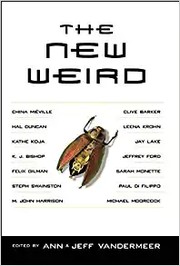
An anthology edited by Jeff VanderMeer's co-editor and wife that maps the literary movement Area X belongs to, featuring key stories and essays that reveal exactly what VanderMeer was in conversation with when he wrote the trilogy.
Discussion
Keep reading
Paths that share books, cover the same subject, or open a related topic.