Shardlake Reading Order and Guide
Shardlake is the rare long series with no ordering controversy at all: seven novels, published in order, tracking the Tudor state from the dissolution of the monasteries in 1537 to Kett's Rebellion in 1549, with Matthew Shardlake aging in real time across them. Read them in publication order without exception — the political situation, the recurring characters and Shardlake's own standing all change permanently from book to book. This path breaks them into three natural phases and then adds Sansom's two standalone novels for readers who finish and want more.
Start Here: The Cromwell Years
BeginnerMeet Shardlake and Thomas Cromwell, and get the political machinery of Henry VIII's Reformation that the whole series runs on.
▸ Study plan for this stage
Pace: 4–5 weeks for 395 and 528 pages. These are the two shortest books in the series and the pace is brisk once the Tudor legal vocabulary settles — allow a slower first fifty pages of Dissolution while you get used to serjeants, commissioners, the Court of Augmentations and who reports to whom. Read the
- Matthew Shardlake is a hunchbacked lawyer in a society that reads physical deformity as a mark of sin, and the constant low-level contempt he absorbs is written into the series rather than mentioned once and dropped
- Dissolution opens in 1537 at a Sussex monastery being surrendered to the Crown, which puts the dissolution of the monasteries — the largest transfer of property in English history — at the centre of a murder plot
- Shardlake begins as a committed reformer who believes in what Cromwell is doing; almost everything he loses across the series, he still has in book one
- Thomas Cromwell is a real historical figure here and Sansom's portrait of him is markedly less sympathetic than the one popularised elsewhere in fiction — this is a deliberate position, not an oversight
- Dark Fire is set in the heat of London in 1540 and turns on Greek Fire, an alchemical weapon, against the backdrop of Cromwell's fall from power
- Jack Barak arrives as Cromwell's man and stays as Shardlake's assistant; the friction between a scholarly lawyer and a street-smart fixer carries much of the series' dialogue
- Sansom trained as a solicitor and the legal procedure is precise — the plots are frequently solved by property law, wardship and chancery rather than by deduction
- What is the Court of Augmentations actually doing at Scarnsea, and who profits from the surrender of a monastery?
- How does Shardlake's reformist faith stand at the end of Dissolution compared with the start, and what specifically shakes it?
- How does Sansom present Cromwell, and what evidence in the two books supports that reading of him?
- What does Barak give Shardlake, both practically and as a narrative device?
- How does the physical experience of Tudor London — heat, smell, water, distance on foot — shape what the plot of Dark Fire can and cannot do?
- Where does Shardlake's disability change the outcome of a scene rather than merely colour it?
- Keep a one-line chronology as you read: the year of each book and who holds power. The series tracks the Tudor state from 1537 to 1549 and the political situation changes permanently between novels.
- When a legal term appears, look it up once rather than reading past it. Wardship, praemunire, serjeant-at-law and the Court of Requests all recur, and knowing them makes later plots far easier to follow.
- Read Sansom's historical notes at the end of each book after finishing the novel, never before. They are substantial and they routinely contain spoilers for the plot you have just read.
- Note every character who reappears — Guy, Barak, Tamasin as she arrives. Sansom ages his recurring cast in real time and the accumulation is the series' quiet strength.
- Compare Sansom's Cromwell with any other fictional Cromwell you know. The disagreement is instructive and it is one of the few places the series takes an openly contested position.
Next up: With Cromwell gone and Shardlake's reformist convictions damaged, the middle books can put him in front of far more dangerous patrons — and the series' method of hanging a murder plot on a real historical event is now familiar enough to carry heavier material.
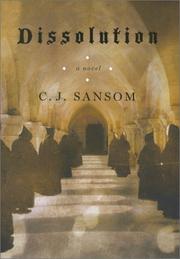
The only correct starting point: a murdered commissioner at a Sussex monastery in 1537, investigated by a hunchbacked lawyer who still believes in the reform he is serving. Everything Shardlake loses over the next six books, he still has here.
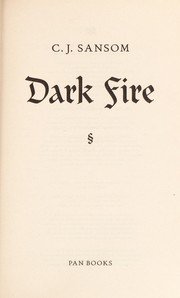
London in the heat of 1540, Greek Fire, and the fall of Cromwell. It introduces Jack Barak, who becomes the series' second lead, so it cannot be skipped.
The Middle Books
BeginnerFollow Shardlake through the most dangerous stretch of Henry's reign and watch his disillusionment harden.
▸ Study plan for this stage
Pace: 10–13 weeks for 563, 655 and 542 pages. This is the longest stretch of the series and the pace slows: Revelation in particular is dark enough that many readers want a break after it, and taking one between books is fine. Roughly 40 pages a day. Read them in this order — Heartstone resolves threads p
- Sovereign follows the Great Progress to York in 1541 and puts Shardlake in front of Henry VIII in person; the plot turns on a genuine constitutional secret about the succession
- Revelation is the darkest of the seven — a serial killer working through the Book of Revelation, set against Catherine Parr's courtship, with the Bedlam asylum and Tudor treatment of madness as a major thread
- Revelation is also the book that most changes Shardlake personally, and its effects carry through everything after it
- Heartstone reaches the 1545 French invasion and the sinking of the Mary Rose, staged as one of the best set pieces in historical fiction
- The wardship plot of Heartstone is Sansom at his most technically legal — a child's inheritance administered by a guardian who profits from it — and it shows how the period's law enabled ordinary cruelty
- Shardlake's disillusionment hardens across these three: he moves from believing the Reformation was betrayed to doubting whether it was ever what he thought
- Henry VIII himself is present in Sovereign and again at Portsmouth, and Sansom writes him as physically repellent and genuinely dangerous rather than as a monarch of anecdote
- What is the secret Shardlake carries out of York, and why is it more dangerous to know than to act on?
- How does Sansom handle Tudor understandings of madness in Revelation, and does the novel avoid making the killer a modern psychological type?
- What has changed in Shardlake by the end of Revelation, and how does it show in Heartstone?
- How does the wardship system in Heartstone work, and who is legally entitled to what?
- What does Sansom achieve by putting the Mary Rose at the climax rather than in the background?
- Across these three books, what is Sansom's actual argument about Henry VIII's reign?
- Before Sovereign, read a short account of the Pilgrimage of Grace and its aftermath. The Progress to York only makes sense as a response to a rebellion, and Sansom assumes you know it happened.
- Keep a note of the threads left open at the end of each book. Heartstone pays off material from Dark Fire and Sovereign, and readers who did not note it usually miss the connection.
- Read the Mary Rose chapters in one sitting. The sequence is built as a single continuous action and breaking it across days flattens the effect.
- After Revelation, write two sentences on what the Bedlam scenes are doing beyond atmosphere. Sansom is making an argument about how the period understood the mind, and it is easy to read as set dressing.
- Look at a plan of the Mary Rose or a photograph of the recovered hull after finishing Heartstone. The novel's staging is closely based on the real ship and the correspondence is worth seeing.
Next up: Shardlake now has enough powerful enemies and enough lost faith that the last two books can raise the stakes to the succession itself and then to open rebellion, which is where the series ends.
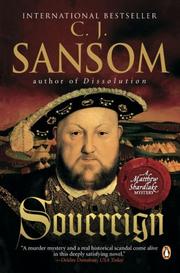
The Great Progress to York in 1541, and the first book to put Shardlake in front of the King himself. Sansom's research shows most impressively here, and the plot turns on a genuine constitutional secret.
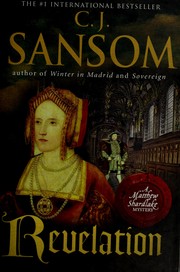
A serial-killer plot built out of the Book of Revelation and the Bedlam asylum, set against Catherine Parr's courtship. The darkest of the series and the one that most changes Shardlake personally.
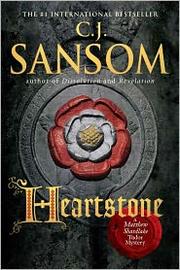
The 1545 French invasion and the sinking of the Mary Rose, which Sansom stages as one of the best set pieces in historical fiction. It also resolves threads planted three books earlier.
The Last Two
IntermediateFinish the series across the end of Henry's reign and the crisis of the following one.
▸ Study plan for this stage
Pace: 10–12 weeks for 650 and 880 pages. Tombland is by a distance the longest book in the series and is a genuine commitment — around 40 pages a day gives you six weeks for it alone. Read Lamentation first; Tombland opens in the reign that Lamentation's ending makes possible. Note also that Tombland is t
- Lamentation is set in the final months of Henry VIII, with Catherine Parr's stolen manuscript at its centre and the succession openly in play — the tightest legal-thriller plotting of the seven
- The religious politics here are lethal in a way earlier books only threatened: Anne Askew's burning is real and Sansom does not soften it
- Tombland moves to Norfolk in 1549, under Edward VI, and takes in Kett's Rebellion — the largest popular uprising of the century and one usually left out of Tudor fiction entirely
- Tombland is the most political book Sansom wrote about the period: enclosure, rents, sheep-farming and the economic dispossession of the commons are its actual subject
- Shardlake is in his late forties by Tombland and the physical toll of the series is written into him; the cast that survives from the early books is small
- Sansom appends a substantial historical essay on Kett's Rebellion to Tombland — read the novel first, then the essay, which is close to a piece of popular history in its own right
- The series has a real ending: Tombland closes Shardlake's story rather than pausing it
- What makes Catherine Parr's manuscript dangerous, and what would its discovery have cost her?
- How does the imminence of Henry's death change what every faction in Lamentation is trying to achieve?
- What caused Kett's Rebellion, in Sansom's account, and how does he distribute sympathy between the rebels, the gentry and the government?
- How does Shardlake's position as a lawyer become untenable during the rebellion, and what does that reveal about the whole series' politics?
- Does Tombland work as an ending for Shardlake as a character, separately from whether it works as a novel?
- Across seven books and twelve years, what has actually happened to Shardlake's beliefs?
- Read Sansom's Kett's Rebellion essay after the novel. Doing it in that order is the difference between a historical appendix and a spoiler.
- Track the enclosure argument as it appears in the novel's dialogue — who says what about sheep, common land and rents. It is the economic case the rebellion was actually made of.
- Go back to your chronology and complete it: 1537, 1540, 1541, 1543, 1545, 1546, 1549. Seen together it is a compressed political history of the late Tudor state.
- List the recurring characters still alive at the end of Tombland and what has happened to each. The attrition is the series' quiet argument about the period.
- Write a paragraph on whether Shardlake's disability is treated the same way in Tombland as in Dissolution. Twelve fictional years and seven novels apart, the difference is deliberate.
Next up: With Shardlake's story finished, the two standalone novels show the same historical method — exhaustive research, a decent man out of his depth — applied to the twentieth century, which is where Sansom's own politics are most visible.
Catherine Parr's stolen manuscript in the final months of Henry VIII, with the succession in play. The tightest legal-thriller plotting of the seven.

The longest and most ambitious book, moving to Norfolk and Kett's Rebellion of 1549 under Edward VI. Sansom appends a historical essay on the rebellion; read the novel first. It is the last Shardlake novel and works as a genuine ending.
Sansom Beyond Shardlake
IntermediateRead the two standalone novels, and see the same historical method applied to the twentieth century.
▸ Study plan for this stage
Pace: 8–10 weeks for 540 and 592 pages. Both are self-contained and can be read in either order, though Winter in Madrid first gives you the chronological sequence of Sansom's own concerns. Neither requires any Shardlake knowledge. Around 35 pages a day.
- Winter in Madrid is set in Spain in 1940, just after the Civil War, with a reluctant British agent sent into Franco's Madrid — the same combination of exhaustive research and an ordinary decent man out of his depth that makes Shardlake work
- The Spanish material is grounded in the aftermath of the Civil War: hunger, informers, the Falange, and the position of British interests in a country Hitler was courting
- Dominion is an alternate history in which Britain made peace with Germany in 1940, set in a collaborationist London of 1952
- Dominion is Sansom's most openly political book, and its afterword argues directly with the reader about nationalism — it is not a neutral epilogue and should be read as an argument
- Both novels use the same structure as the Shardlake books: a private investigation that turns out to be inseparable from a state's legitimacy
- Read together, the standalones make it clear that Sansom's real subject across all his fiction is how ordinary institutions behave when a state stops being lawful
- What does Winter in Madrid show about post-Civil-War Spain that a straightforward history would struggle to convey?
- How does Sansom's protagonist here differ from Shardlake, and what stays the same?
- What does Dominion get right about how collaboration would actually be administered, as opposed to how it is usually dramatised?
- What is the argument of Dominion's afterword, and do you find it persuasive on its own terms?
- Having read nine Sansom novels, what would you say he believed historical fiction was for?
- Read Dominion's afterword separately from the novel and treat it as an essay. Sansom wrote it as one and it deserves to be argued with rather than absorbed.
- Compare the opening chapter of Winter in Madrid with the opening of Dissolution. Four hundred years apart, the setup is nearly identical, and seeing that is the fastest way to understand Sansom's method.
- Note which real historical figures appear in each standalone and check afterwards what is invented. Sansom is scrupulous about this and the checking is part of the pleasure.
- Write one paragraph placing the Shardlake novels inside Sansom's whole body of work rather than treating them as its entirety. It is a more accurate view than the series' fame produces.
Next up: This is the end of the path: seven Shardlake novels, two standalones, and a body of work that closed with its author, so the natural next move is either popular Tudor history — Kett's Rebellion and the dissolution are both well served — or another long-running historical detective series read the same way, in order and in period.
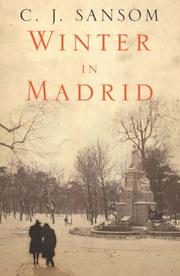
Spain in 1940, just after the Civil War, with a reluctant British agent in Franco's Madrid. The same combination of exhaustive research and a decent man out of his depth that makes Shardlake work.
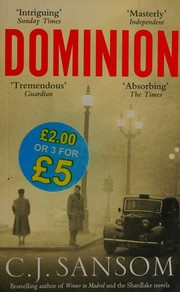
An alternate 1952 in which Britain surrendered in 1940. Sansom's most political book, with an afterword arguing directly with the reader. A good closing stage because it shows what he thought historical fiction was for.
Discussion
Keep reading
Paths that share books, cover the same subject, or open a related topic.