The Saxon Stories Reading Order: Where to Start
Bernard Cornwell's Saxon Stories — sold in some markets as The Last Kingdom series, after the television adaptation — are thirteen novels narrated by one man across roughly sixty years of his life. That single fact settles the reading order: Uhtred of Bebbanburg ages continuously from teenager to old man, so publication order and chronological order are the same thing, and there is no side-entry point. What a guide can add is shape. The series has a strong opening pair, a long middle that most readers race through, and a final stretch that only works because you have spent twelve books wanting the same thing Uhtred wants.
Start Here: Alfred's Wars
BeginnerMeet Uhtred, understand the two loyalties tearing at him, and get the historical situation — the Danes have taken three of England's four kingdoms and Wessex is next.
▸ Study plan for this stage
Pace: 5-6 weeks for the three, at roughly 350-400 pages each and around 40 pages a day. Cornwell writes short chapters and long battles; the reading speeds up markedly once you stop consulting the map.
- The premise in one line: Uhtred is born a Northumbrian ealdorman's son, captured and raised by Danes as a child, and spends thirteen books belonging fully to neither side. Every plot in the series is a version of that one tension.
- Say it plainly before you start: these are violent books. Shield-wall combat is described in close, repeated physical detail, and Uhtred narrates killing with enjoyment rather than regret. The period's attitudes to women, slavery and captured enemies are reported in first person without modern comme
- The Christian and pagan conflict is the spine of the series, not its decoration. Uhtred is a pagan narrator in an England becoming Christian, he is contemptuous of priests as a matter of routine, and Cornwell writes churchmen unsympathetically as a general rule. Readers who expect balance here will
- Alfred is the series' most important character after Uhtred and functions as both patron and antagonist: pious, sickly, calculating, and consistently right about strategy in ways Uhtred resents.
- The oath is the plot mechanism. Almost every turn in the series comes from an oath sworn, broken, or exploited, and Cornwell treats oaths as legally and emotionally binding in a way modern contracts are not.
- Bebbanburg, the fortress Uhtred's uncle took from him, is the fixed obsession that gives thirteen episodic books a single spine. Note how early it is established and how long it stays out of reach.
- The historical situation is real: by 878 the Danes hold three of England's four kingdoms and Wessex is the last one standing. Cornwell is following the Anglo-Saxon Chronicle closely, and Uhtred is the invention inserted into it.
- What does Uhtred want, and why does the answer not change across three books?
- What does Alfred get from Uhtred that he cannot get from a Christian warrior, and what does that cost him politically?
- Where is Cornwell following the historical record and where is he inventing? The author's note at the end of each book tells you; guess first, then check.
- The Pale Horseman puts Uhtred at his least sympathetic. Why does Cornwell risk that this early in a long series?
- How does the first-person narration change what you are shown about the Danes compared with a neutral narrator?
- The Lords of the North takes Uhtred north for the first time. What does the change of territory do to the loyalty question?
- Read the historical note at the end of every book. Cornwell states what he changed and why, and it converts the novels from adventure into readable history.
- Keep a map of the four kingdoms open for the first book only. After that the geography sticks and consulting it slows you down.
- Track every oath sworn and to whom. By book three the list predicts the plot better than the characters' stated intentions do.
- Note the Old English place names as they appear, Lundene, Eoferwic, Bebbanburg. Cornwell provides a place-name list at the front; using it once is worth more than looking up each name as it comes.
Next up: With the loyalty tension, the oath system and the historical situation established, the middle books can move at speed through the campaigns that turn Alfred's defensive kingdom into something that could become England.
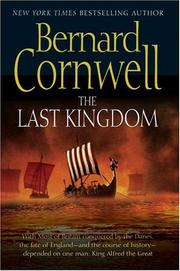
The only place to begin. A Northumbrian boy is captured by Danes, raised by them, and grows up loving them while nominally belonging to the English. The whole thirteen-book engine — a pagan Dane-raised Saxon serving Christian kings he cannot respect — is set here.
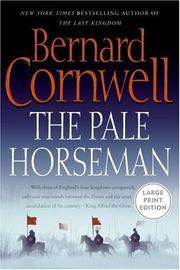
Second, covering Alfred's flight into the Somerset marshes and the campaign that ends at Ethandun. The best single battle Cornwell has written, and the book that makes the case that Alfred's survival was genuinely improbable.

Third, and the one that turns north to Bebbanburg — the fortress Uhtred was born to and is trying to take back. That obsession is the spine of the remaining ten books, so this is where the series acquires its long-term shape.
The Middle Years: Wessex, Mercia, and London
IntermediateFollow the campaigns that turn Alfred's defensive kingdom into something that could plausibly become England.
▸ Study plan for this stage
Pace: 5 weeks. Sword Song, The Burning Land and Death of Kings are similar in length to the first three, and most readers find this the fastest stretch of the series once the formula is familiar.
- Sword Song is the London book, and taking Lundene is the first campaign where Uhtred is executing a strategy rather than surviving one.
- The formula is now visible: Uhtred is insulted or constrained by Christian authority, is sent to do something impossible, does it by pagan cunning and violence, and is inadequately rewarded. Cornwell varies the setting rather than the shape, and knowing that lets you read the middle books quickly wi
- Aethelflaed becomes central in this stage, and she is the series' most important female character. Cornwell is drawing on a real figure, the Lady of the Mercians, whose historical achievements he does not need to exaggerate.
- Mercia is the strategic pivot. Wessex alone cannot become England; the whole political project of the middle books is binding Mercia to it.
- Death of Kings is the hinge of the entire series. Alfred's death removes the antagonist who has shaped Uhtred for six books, and the question of what Uhtred is without him drives everything after.
- The succession problem, whether Edward can hold what Alfred built, is set up here and is not resolved for several books.
- Uhtred is now middle-aged, and the physical cost of the shield wall starts being tracked. This is a series that ages its narrator honestly and continuously.
- What does the capture of Lundene achieve strategically, and why does Cornwell give it a whole novel?
- How does Aethelflaed's role differ from every other woman in the series so far, and what does she want that Uhtred cannot supply?
- Once you can see the formula, does it undermine the books or make them more enjoyable? Answer honestly.
- What is Uhtred's function after Alfred's death, and who fills the role Alfred played for him?
- Death of Kings is titled for a transition rather than a battle. What is the series arguing about how kingdoms actually change hands?
- Before Death of Kings, write two sentences on what you think Alfred thought of Uhtred. The book will test it directly.
- Track Aethelflaed's political position book by book and check it against the historical note. This is the clearest case in the series of the record being more dramatic than the invention.
- When a battle scene starts to feel routine, read one all the way through slowly and note what Cornwell varies within the formula: weather, ground, numbers, and who breaks first. It is a craft lesson in writing the same scene fifty times.
- Keep a one-line note per book on how old Uhtred is. The series' emotional effect depends on the accumulation and it is easy to lose.
Next up: Alfred's death ends the argument that defined the first six books, leaving an older, harder Uhtred adrift in the Christian England he helped build, which is exactly the subject of the next four.
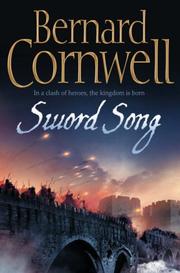
The capture of Lundene, and the arrival of Æthelflæd, who becomes the most important person in the series after Uhtred himself. Read it in place — the relationship set up here runs for six more books.

Uhtred finally breaks with Alfred, which the previous four books have been building toward. The pivot from serving Wessex to serving his own oath-bound loyalties.
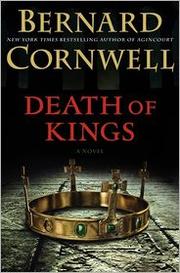
Alfred dies, and the series has to prove it can survive the loss of its second-best character. It can, but this is the hinge — the succession crisis here defines the whole back half.
The Long Campaign North
IntermediateRead the middle-late run where Uhtred is older, harder and increasingly out of step with the Christian England he helped build.
▸ Study plan for this stage
Pace: 6-7 weeks for four books. This is the longest stage and the one where readers most often need a break; taking a fortnight off between The Empty Throne and Warriors of the Storm costs nothing.
- The Pagan Lord opens with Uhtred older, poorer and out of favour, and it is the book where the Christian and pagan conflict turns personal rather than political, including within his own family.
- Uhtred's children become significant characters, and one of them entering the church is the sharpest form the series' central conflict takes.
- The Empty Throne is a Mercian succession novel, and it is the book where Cornwell most obviously moves the pieces for the endgame.
- Warriors of the Storm and The Flame Bearer push north toward Northumbria, which brings Bebbanburg back within reach for the first time in a decade of reading.
- The Flame Bearer is the payoff for the obsession established in book one. Cornwell has delayed it deliberately across eleven books, and the delay is why it lands.
- The violence does not soften as the narrator ages; if anything the late books are more explicit about what a shield wall does to a body, and about the treatment of the defeated.
- Uhtred's paganism becomes increasingly isolated as England Christianises around him, and the series treats that loneliness as the real cost of his character rather than a joke about priests.
- What changes when the Christian and pagan conflict runs through Uhtred's own family rather than between him and the court?
- Why does Cornwell wait until the eleventh book to bring Bebbanburg within reach, and what would have been lost by doing it sooner?
- How has Uhtred's relationship with power changed now that the kings he serves were children when he started?
- Is Uhtred a reliable narrator about Christianity? Find a scene where the text shows you more than he admits.
- Four books is a lot for one northward campaign. Which of the four could be removed without damage, and what would go with it?
- When you reach The Flame Bearer, reread the Bebbanburg passages from The Last Kingdom first. Twenty minutes of rereading substantially increases the payoff of a decade-long setup.
- Track Uhtred's household, who is with him, who has died, who has left, across these four books. The attrition is the series' quietest and most effective device.
- If the stage starts to drag, stop for a fortnight rather than pushing through. Cornwell's formula rewards appetite and punishes grinding.
- Note where Cornwell's author's notes admit to compressing or inventing. The northern campaigns are the least documented part of the period and the notes get more candid.
Next up: With Bebbanburg resolved and Uhtred old, the final three books can be about the thing the whole series has been building toward, the making of England, rather than about one man's inheritance.
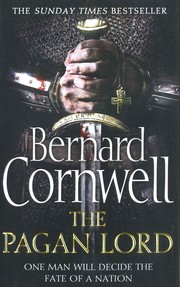
A decade on, Uhtred is a landless old man who makes a disastrous attempt on Bebbanburg. The bleakest book of the thirteen and, for many readers, the best.

Mercia's succession, and a novel that opens with Uhtred badly wounded and not narrating. Structurally the odd one out, which is exactly why it should be read in sequence rather than sampled.

Norsemen from Ireland, a river campaign, and Uhtred's children coming into their own. The series at its most straightforwardly enjoyable — this is the stretch that reads fastest.

The Bebbanburg book. Twelve years of wanting one fortress comes due, and it only pays because you read the previous nine. Do not read this one out of order under any circumstances.
The Ending
IntermediateFinish the series through the making of England and Uhtred's last campaign.
▸ Study plan for this stage
Pace: 4-5 weeks. War of the Wolf, Sword of Kings and War Lord run to a similar length as the rest; read the last two close together, because Sword of Kings sets up the final campaign directly.
- The path stops at War Lord, and so does the series. It is the thirteenth and final Saxon Story, it closes Uhtred's life and the political project both, and Cornwell has not continued it. There is nothing after this to decide about.
- War of the Wolf is the weakest-regarded of the late books and the one most often described as a holding pattern. It is not skippable, because it establishes the northern alliances the last two need, but read it knowing that.
- Sword of Kings is a succession crisis in England proper, and it moves the series' scale from regional campaigns to the question of who rules everything.
- War Lord builds to Brunanburh, the battle historians generally treat as the point at which England exists as a single kingdom. The whole series has been arranged to arrive there.
- Uhtred is old throughout this stage, and Cornwell keeps him fighting without pretending age costs nothing. The physical decline is tracked in detail and is part of the ending's effect.
- The Christian and pagan argument gets its final statement here, and Cornwell does not resolve it in either side's favour. Uhtred's England is Christian and he helped make it so.
- The ending closes Uhtred's story rather than the historical record. Cornwell's other series are not continuations, and no later book picks this narrator up.
- What has Uhtred actually built by the end, and is it what he wanted?
- Why does the series end at Brunanburh rather than at Bebbanburg, given that Bebbanburg was the stated goal from page one?
- How does Cornwell handle an old narrator in a genre built on physical competence, and does it work?
- The pagan narrator has spent thirteen books making Christian England possible. Is the series ironic about that, or resigned?
- Having read all thirteen, which three would you give a new reader who will not read them all?
- Read War Lord's author's note before starting the novel if you do not mind knowing the outcome of Brunanburh. It is history rather than plot, and the note improves the reading.
- Write the three-book recommendation from the last question down. It is the most useful thing you can produce from a thirteen-book commitment.
- Reread the opening page of The Last Kingdom after finishing War Lord. The narrator is the same voice at both ends and the distance travelled is the series' real achievement.
- Note which historical figures you now recognise unprompted, Alfred, Edward, Aethelflaed, Athelstan. That recall is the practical residue of the series and it maps onto real early English history.
Next up: This is the end of the path and of the series: thirteen books, one continuous life, and the making of England seen from the losing side of its religion.

Uhtred in his sixties, dealing with a Norse zealot and with Æthelstan's rise. The series is now openly about growing old in a trade that kills people young.

An oath drags Uhtred south into a succession war he wants no part of. Penultimate, and it manoeuvres every remaining piece into position for the last book.

The thirteenth and final novel, ending at Brunanburh — the battle that arguably made England a country. A real conclusion, and the right place to stop, because there is nothing after it.
Discussion
Keep reading
Paths that share books, cover the same subject, or open a related topic.