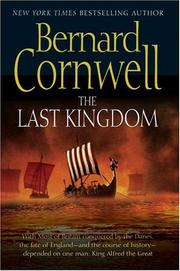
Start with The Last Kingdom. There is no alternative worth considering: the thirteen Saxon Stories are one continuous first-person life, told in order, and the obsession set up in the opening chapters is not paid off until book eleven. Beginning anywhere else is beginning in the middle of a sentence.
The one thing worth knowing before you commit is what you are committing to. Uhtred is born a Northumbrian ealdorman's son, captured and raised by Danes as a child, and spends thirteen books belonging fully to neither side. Every plot is a version of that tension, so if the first book's central conflict does not interest you, the twelve that follow will not change it.
A note on editions: the series is often sold under the title of its first book, and the television adaptation has left shops shelving the later volumes as The Last Kingdom series. It is the same sequence either way, and the publication order below is the reading order.
What the books are like, said plainly
These are violent novels. Shield-wall combat is described in close, repeated physical detail, and Uhtred narrates killing with enjoyment rather than regret. The period's attitudes to women, to slavery and to captured enemies are reported in first person without modern comment.
The Christian and pagan conflict is the spine rather than the decoration. Uhtred is a pagan narrator in an England becoming Christian, he is contemptuous of priests as a matter of routine, and Cornwell writes churchmen unsympathetically as a general rule. Readers who expect balance here will be arguing with the book for thirteen volumes.
Alfred's wars
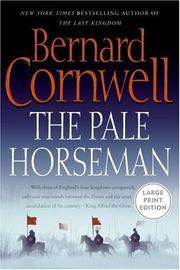
The Last Kingdom, The Pale Horseman, The Lords of the North. The historical situation is real: by 878 the Danes hold three of England's four kingdoms and Wessex is the last standing. Cornwell follows the Anglo-Saxon Chronicle closely, and Uhtred is the invention inserted into it. Alfred is the series' second great character and functions as both patron and antagonist — pious, sickly, calculating, and consistently right about strategy in ways Uhtred resents. Note how early Bebbanburg, the fortress Uhtred's uncle took from him, is established, and how long it stays out of reach.
Wessex, Mercia and London
Sword Song, The Burning Land, Death of Kings. Most readers find this the fastest stretch. The formula is now visible — Uhtred is insulted or constrained by Christian authority, sent to do something impossible, does it by pagan cunning and violence, and is inadequately rewarded — and Cornwell varies the setting rather than the shape. Aethelflaed becomes central here; Cornwell is drawing on the real Lady of the Mercians and does not need to exaggerate her. Death of Kings is the hinge of the whole series: Alfred's death removes the antagonist who has shaped Uhtred for six books.
The long campaign north
The Pagan Lord, The empty throne, Warriors of the storm, The Flame Bearer (The Last Kingdom Series). This is the longest stretch and the one where readers most often need a break; taking a fortnight off in the middle costs nothing. Uhtred is older, poorer and out of favour, his children are now significant characters, and one of them entering the church is the sharpest form the series' central conflict takes. The Flame Bearer (The Last Kingdom Series) pays off the obsession established in book one, delayed deliberately across eleven volumes, which is exactly why it lands.
The ending
War of the wolf is the weakest-regarded of the late books and is often described as a holding pattern. It is not skippable — it establishes the northern alliances the last two need — but read it knowing that. Sword of Kings raises the scale from regional campaigns to who rules everything. War Lord (the Last Kingdom Series, Book 13) builds to Brunanburh, the battle historians generally treat as the point at which England exists as a single kingdom, and the whole series has been arranged to arrive there.
Cornwell keeps his narrator fighting into old age without pretending age costs nothing, and he does not resolve the religious argument in either side's favour. Book thirteen is the end; nothing continues it, and there is no decision to make about stopping. More historical fiction is on Discover.
Follow the full ordered path here: The Saxon Stories Reading Order: Where to Start.