Start with The Doll's House. This is the standard advice among long-time readers and it is correct: the first collected volume, Preludes and Nocturnes, is early Gaiman writing to a DC horror-comics brief he had not yet escaped, with variable art and a plot that is mostly a fetch-quest for three stolen objects. It is not bad. It is unrepresentative, and it is where most abandoned copies stop.
The Doll's House is where the series becomes itself: a self-contained arc with a real protagonist in Rose Walker, the first great standalone issue, and the introduction of the Corinthian and the serial-killers' convention. Read it first, then go back and read Preludes and Nocturnes before volume three. Everything you needed from volume one — Dream's captivity, the restored tools, Death's single appearance — is summarised inside a few pages of what follows, and the return visit is far more rewarding once you care.
The main sequence
After The Doll's House and the volume-one catch-up, read in order:
- Dream Country — four unconnected short stories, including the one that won a World Fantasy Award and prompted a rule change. The shortest volume and the best sampler of what the series can do.
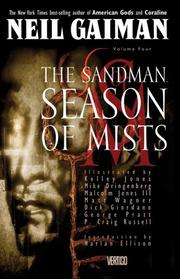
- Season of Mists — Dream goes to Hell. The most conventionally thrilling arc and the one that sets up the endgame.
- A Game of You — the divisive one. It leaves Dream almost entirely and follows Barbie, a minor character from volume two. Some readers call it the weakest, others the most humane. It is also structurally necessary later.
- Brief Lives — Dream and Delirium on a road trip. Widely considered the peak of the series, and the volume the ending is built on.
Volumes seven through ten — Worlds' End, The Kindly Ones and The Wake — are not in our catalogue and their absence is conspicuous rather than a judgement; you need all of them, and Brief Lives deliberately sets up the collapse they deliver. Read them in sequence after Brief Lives.
The prequel and the spin-offs
The Sandman - Overture was published two decades after the series ended and is set immediately before issue one. Read it last, not first. Its plot is a prequel; its pleasure is entirely retrospective, and it will spoil relationships you have not met yet.
The two Death collections — one following her human day, one about AIDS and mortality — are best read after Season of Mists, once you have seen how Gaiman uses her sparingly. The Dream Hunters is a standalone Japanese folktale, illustrated rather than drawn as a comic, and can be read at any point. For criticism after the fact, The Sandman papers collects the academic readings.
Honest warnings
The art changes constantly and some of it is weak; the series was drawn by a rotating cast and the early volumes suffer most. The tone lurches between horror, myth and domestic comedy, sometimes inside one issue. And there is real cruelty in it — the diner issue in volume one and the convention sequence in volume two are genuinely nasty pieces of work.
Where to stop
Nowhere. If you get to Brief Lives you will finish, and the final three volumes are the reason the series is remembered.
For more sequential reading paths, browse the full library.
Follow the full ordered path here: The Sandman Reading Order: Where to Start.
Ready to learn something deeply?
Build a reading path — free