Rabbit Reading Order: John Updike's Quartet
This curriculum guides an intermediate reader through John Updike's complete "Rabbit" saga in strict narrative order, then deepens understanding through Updike's own craft reflections and essential critical context. Because the learner already has a solid reading foundation, the path begins directly with the novels themselves before moving into authorial commentary and scholarly analysis.
The Saga, Part I — Youth and Restlessness
IntermediateExperience Harry 'Rabbit' Angstrom in his 20s and 30s, establishing the core themes of entrapment, desire, and the American Dream that drive the entire sequence.
▸ Study plan for this stage
Pace: 6–8 weeks total: Weeks 1–3 for "Rabbit, Run" (~25–30 pages/day across ~307 pages), a 2–3 day reflection pause between books, then Weeks 4–6 for "Rabbit Redux" (~25–30 pages/day across ~406 pages), with Week 7–8 reserved for review, journaling, and comparative work.
- Entrapment vs. Escape: Rabbit's compulsive running — literal and metaphorical — as a response to the suffocating domesticity of 1950s Eisenhower-era America in 'Rabbit, Run'
- The American Dream Betrayed: Harry's past as a high-school basketball star versus his diminished adult reality as a MagiPeel kitchen gadget salesman, establishing the gap between promise and fulfillment that haunts the whole saga
- Desire and Moral Irresponsibility: Rabbit's relationships with Janice and Ruth in 'Rabbit, Run' as a study in selfish desire, guilt, and the human cost of following instinct over duty
- Updike's Prose Style — The Present Tense as Immediacy: Both novels are written in an urgent, close-third-person present tense that traps the reader inside Rabbit's consciousness; recognizing this technique is essential to understanding how Updike generates sympathy for a deeply flawed protagonist
- America as Character: The shift in setting from the claustrophobic row-houses of Mt. Judge, Pennsylvania in 'Rabbit, Run' (1959) to the television-saturated, Vietnam-era Brewer of 'Rabbit Redux' (1969) shows Updike using Rabbit's life as a barometer for national mood
- Passivity and Complicity: In 'Rabbit Redux', Harry moves from runner to stayer — he remains home while Janice has the affair — and his passive hosting of Jill and Skeeter forces him to confront race, the counterculture, and the Moon landing as destabilizing forces
- Tragedy and Culpability: The deaths of Rebecca June in 'Rabbit, Run' and Jill in 'Rabbit Redux' bookend this stage as catastrophic consequences of Rabbit's moral abdication, raising the question of how much guilt he bears
- Masculinity in Crisis: Both novels interrogate mid-century American manhood — the ex-athlete, the cuckolded husband, the passive bystander — establishing a portrait of masculinity that feels both specific to its era and universally recognizable
- In 'Rabbit, Run', what does Rabbit's aborted solo drive south in the opening chapters reveal about his character, and how does Updike use that failed escape to set up every subsequent flight in the novel?
- How does the death of baby Rebecca June function thematically in 'Rabbit, Run' — is it a punishment, a tragedy, or something more ambiguous — and what does Updike refuse to resolve about Rabbit's culpability?
- Compare Rabbit's relationship to work in both novels: what does selling MagiPeel gadgets in 'Rabbit, Run' versus operating a Linotype machine in 'Rabbit Redux' tell us about his changing place in the American economy and his own sense of self-worth?
- In 'Rabbit Redux', Rabbit is largely stationary while the world comes to him in the form of Jill and Skeeter. How does this reversal of the 'running' motif reframe the themes of escape and entrapment established in the first novel?
- How does Updike use the Apollo 11 Moon landing as a structural and thematic backdrop in 'Rabbit Redux', and what does Rabbit's reaction to it reveal about his relationship to American optimism and decline?
- By the end of 'Rabbit Redux', Janice and Harry tentatively reunite. Given everything that has happened across both novels, what does this reconciliation suggest about the nature of marriage, inertia, and the American domestic ideal in Updike's vision?
- Escape Map: After finishing 'Rabbit, Run', draw or diagram every physical movement Rabbit makes — departures, returns, detours. Annotate each with the emotional trigger behind it. This makes the pattern of flight visceral and visual before you carry it into 'Rabbit Redux'.
- Parallel Passage Close-Reading: Find one sex scene from 'Rabbit, Run' and one from 'Rabbit Redux' and write a one-page comparison of Updike's prose style, sentence rhythm, and what desire reveals about Rabbit's state of mind in each decade.
- Decade Dossier: Create a two-column document — 1959 America vs. 1969 America — drawn strictly from details in the two novels (TV shows, news events, consumer goods, slang, attitudes toward race and gender). Use this as evidence for how Updike embeds history into domestic life.
- Moral Ledger: Keep a running 'culpability journal' as you read 'Rabbit Redux', tracking moments where Rabbit acts, fails to act, or deflects responsibility regarding Jill and Skeeter. At the end, write a one-paragraph verdict: is Rabbit Redux's Rabbit more or less morally aware than 'Rabbit, Run's Rabbit?
- Voice Imitation Exercise: Write one page of present-tense, close-third-person prose in Updike's style, placing Rabbit in a mundane contemporary situation (a grocery store, a traffic jam). This forces you to inhabit the technique and understand why the present tense creates both intimacy and unease.
- Thematic Thread Letter: Write a short letter from the Rabbit of the final page of 'Rabbit Redux' to the Rabbit of the opening page of 'Rabbit, Run'. What has he learned? What has he refused to learn? This synthesizes both books and primes you to track his evolution in the next stage of the saga.
Next up: Completing this stage leaves Rabbit at the end of his thirties — chastened, reunited with Janice, and living in a America transformed by the 1960s — which sets the stage for exploring how he navigates middle age, prosperity, and new temptations in the next decade of his life.
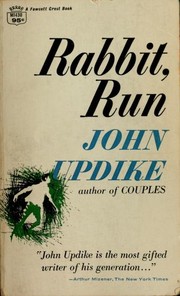
The first novel (1960) introduces Rabbit at 26, impulsive and fleeing domestic life — it establishes Updike's present-tense prose style and the moral ambiguity that defines the whole series. Read this first to meet the character at his rawest.
Set a decade later during the Apollo 11 moon landing and Vietnam, this 1971 sequel shows Rabbit now passive and bewildered as the world erupts around him — a direct thematic inversion of the first book that only lands fully after reading it.
The Saga, Part II — Middle Age and Decline
IntermediateFollow Rabbit through prosperity, physical decay, and death, completing the full arc of his life and understanding Updike's portrait of postwar American masculinity across four decades.
▸ Study plan for this stage
Pace: 10–12 weeks total: ~3–4 weeks for Rabbit is Rich (~467 pp, ~20–25 pages/day), ~4 weeks for Rabbit at Rest (~512 pp, ~20–25 pages/day), and ~2–3 weeks for Licks of Love / Rabbit Remembered (~359 pp, ~20–25 pages/day). Plan for 5–6 reading days per week, leaving 1–2 days for reflection, journaling, an
- Material prosperity as spiritual emptiness: In Rabbit is Rich, Harry's Toyota dealership wealth and 1970s consumerism mask a deepening existential hollowness, showing that the American Dream fulfilled is no more satisfying than the American Dream deferred.
- The body as mortality's messenger: Rabbit at Rest charts Harry's physical deterioration — his heart disease, obesity, and final cardiac arrest — as Updike's sustained metaphor for the decline of postwar American optimism and the aging male body politic.
- Generational repetition and the sins of the father: Nelson Angstrom's drug addiction, financial recklessness, and fractured relationships in both Rabbit is Rich and Rabbit at Rest mirror and invert Harry's own failures, raising questions about whether escape or growth is even possible across generat
- Eros, aging, and diminishment: Sexual desire remains central but shifts register across the two novels — from the swinger-era experimentation of Rabbit is Rich to the melancholy, guilt-ridden encounters of Rabbit at Rest — tracing how Updike links libido to vitality and its fading to death.
- America as backdrop and protagonist: Each novel is precisely dated to its historical moment (the 1979 oil crisis and Iranian hostage crisis in Rabbit is Rich; the Reagan/Bush era, AIDS, and crack cocaine in Rabbit at Rest), making Harry a barometer of national mood and collective anxiety.
- Grief, legacy, and the posthumous self: 'Rabbit Remembered' in Licks of Love shifts perspective to the community Harry left behind — especially his illegitimate daughter Annabelle — examining how a life reverberates after death and whether Rabbit's legacy is redemption or damage.
- Updike's prose style and free indirect discourse: The trilogy's close third-person narration collapses the distance between narrator and Harry's consciousness, requiring readers to distinguish Updike's irony from Harry's self-justifications and blind spots.
- The short story as counterpoint: The other stories in Licks of Love, though not about Rabbit, thematize similar concerns — middle-aged desire, regret, and American suburban life — and reward reading as a thematic coda to the Rabbit arc.
- How does Harry's financial success in Rabbit is Rich change — or fail to change — his fundamental restlessness, and what does Updike suggest this says about the promise of postwar American prosperity?
- Trace the role of Harry's heart condition across Rabbit at Rest: how does Updike use his physical decline as both realistic plot and sustained symbol, and what does Harry's final word ('Enough') mean in light of the whole tetralogy?
- In what specific ways does Nelson repeat, invert, or escape his father's patterns in Rabbit is Rich and Rabbit at Rest, and does Updike present generational change as possible or as an illusion?
- How does the perspective shift in 'Rabbit Remembered' — moving away from Harry's consciousness to Janice, Nelson, and Annabelle — alter the reader's retrospective judgment of Harry Angstrom as a husband, father, and man?
- What is the function of the specific historical contexts Updike embeds in each novel (the oil embargo and hostage crisis; the AIDS epidemic and crack cocaine), and how do they prevent Harry from being merely a personal story rather than a cultural one?
- Across Rabbit is Rich, Rabbit at Rest, and 'Rabbit Remembered,' how does Updike treat the theme of fatherhood — biological, emotional, and symbolic — and what verdict, if any, does the sequence deliver on Harry as a father?
- Prosperity-to-emptiness close reading: Select two passages from Rabbit is Rich in which Harry reflects on his wealth or possessions. Write a 400-word analysis showing how Updike's diction and free indirect discourse simultaneously inhabit Harry's satisfaction and undercut it with irony.
- Body-as-symbol timeline: Create a chronological chart tracking every significant reference to Harry's physical health across Rabbit at Rest (chest pains, eating, basketball, the final collapse). Annotate each entry with the parallel national/historical event occurring at the same time, then write a paragraph on what the juxtaposition reveals.
- Generational mirror exercise: Write two short character sketches (200 words each) — one of Harry at roughly age 45 (Rabbit is Rich) and one of Nelson at the same age as depicted in 'Rabbit Remembered' — then write a third paragraph comparing them to argue whether the apple fell far from the tree.
- Perspective rewrite: Choose a scene from Rabbit at Rest written from Harry's close-third perspective and rewrite it (300–400 words) from Janice's point of view. Reflect in a short note on what changes, what is lost, and what is gained — then compare your instincts to what Updike actually does in 'Rabbit Remembered.'
- Historical context research sprint: For each of the two main novels, identify three real-world events Updike weaves into the narrative. Write a one-page memo explaining how each event functions narratively — is it atmosphere, symbol, plot catalyst, or ironic commentary?
- Final verdict essay: After finishing 'Rabbit Remembered,' write a 600-word personal essay answering the question: 'Is Harry Angstrom a tragic figure, a comic one, or something Updike refuses to resolve — and what does your answer say about Updike's view of postwar American masculinity?' Use specific evidence from all three books in this stage.
Next up: By completing Harry's full arc from prosperity through death and posthumous legacy, the reader has now absorbed Updike's entire portrait of mid-century American masculinity, providing the critical foundation needed to zoom out and evaluate the tetralogy as a unified literary and cultural achievement — the work of the next stage.
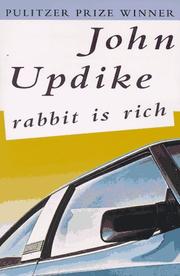
The 1981 Pulitzer Prize-winning third novel finds Rabbit comfortable but spiritually hollow in the Carter-era energy crisis — reading it after Redux makes the irony of his 'success' fully visible.
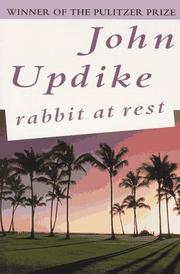
The 1990 Pulitzer-winning conclusion brings Rabbit to Florida and death in the Reagan years; its elegiac weight depends entirely on the accumulated history of the previous three novels.
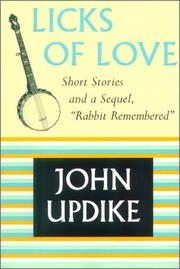
This 2001 novella (collected in Licks of Love) serves as the official coda, revisiting the Angstrom family a decade after Rabbit's death — read last among the fiction to close the saga on Updike's own terms.
Updike on Updike — Craft and Autobiography
IntermediateUnderstand the autobiographical and artistic intentions behind the Rabbit books directly from Updike, enriching re-reading and critical appreciation of the series.
▸ Study plan for this stage
Pace: 6–8 weeks total: Weeks 1–3 on Self-Consciousness (~20–25 pages/day, reading each of the 6 memoir-essays slowly and annotating); Weeks 4–7 on Odd Jobs (~25–30 pages/day, prioritizing the literary essays, Rabbit-related reviews, and self-interviews while skimming less relevant criticism); Week 8 reser
- Updike's autobiographical method: how Self-Consciousness transforms lived experience (Shillington childhood, faith crises, psoriasis, stutter, Vietnam-era guilt) into the raw material that animates Harry 'Rabbit' Angstrom
- The theology of the ordinary: Updike's Lutheran-inflected belief that mundane American life is spiritually charged, a conviction he articulates in Self-Consciousness and defends in Odd Jobs essays, and which underpins Rabbit's restless seeking
- Updike as self-critic: the prefaces, self-interviews, and retrospective essays in Odd Jobs where Updike explicitly discusses his intentions, methods, and misgivings about the Rabbit tetralogy
- The relationship between Updike's own class anxiety, suburban entrapment, and sexual guilt and Rabbit's parallel experiences — mapping the author's confessions in Self-Consciousness onto the novels
- Craft principles Updike espouses in Odd Jobs: the primacy of the sentence, the duty to describe the physical world precisely, the novelist as social historian, and the dangers of 'writerly' self-consciousness overwhelming story
- Updike's America as subject: how both books frame the Rabbit series as a sustained attempt to document postwar American middle-class life decade by decade, and what Updike says he was trying to capture in each installment
- The tension between autobiography and fiction: Updike's insistence (in both books) that Rabbit is NOT him, alongside the overwhelming evidence — which he also supplies — that Rabbit IS him, and how holding that tension enriches re-reading
- Updike's critical self-awareness about reception: his responses in Odd Jobs to charges of sexism, parochialism, and over-productivity, and how those defenses illuminate his artistic priorities
- In Self-Consciousness, which specific episodes from Updike's Shillington childhood and young adulthood most directly correspond to experiences or anxieties Rabbit Angstrom carries through the four novels — and how does Updike frame that correspondence?
- How does Updike use the essay 'On Being a Self Forever' (Self-Consciousness) to articulate a theological justification for writing about ordinary life, and how does that justification explain Rabbit's spiritual restlessness?
- In the self-interviews and Rabbit-related essays collected in Odd Jobs, what does Updike identify as the central dramatic question or 'motor' of the Rabbit series, and does his answer change across different essays written at different points in his career?
- What craft values does Updike champion in the critical essays of Odd Jobs, and where can you find those values either fulfilled or deliberately violated in the Rabbit novels you have already read?
- How do the two books together complicate the author-character relationship: what is Updike's explicit argument for Rabbit's independence from him, and what autobiographical evidence from Self-Consciousness undermines or qualifies that argument?
- Based on Odd Jobs, how did Updike conceive of the Rabbit novels as a collective historical document of American life, and what does he say he feared he got wrong or left out?
- Autobiography-to-fiction mapping: Create a two-column document. In the left column, list at least ten specific autobiographical disclosures from Self-Consciousness (e.g., the psoriasis shame, the stutter, the Shillington house, the draft-era guilt). In the right column, identify the precise scene, passage, or character trait in the Rabbit novels where that material resurfaces. Write a one-paragrap
- Close-reading a self-interview: Select one of Updike's self-interviews or author's notes from Odd Jobs that addresses the Rabbit books. Annotate it line by line: mark every claim Updike makes about his intentions, then go back to the relevant novel and find textual evidence that either confirms or complicates each claim. Write a 400-word response arguing whether Updike is a reliable interpreter of
- Craft manifesto extraction: Comb through the critical essays in Odd Jobs and extract every prescriptive statement Updike makes about how fiction should be written (sentences, description, social observation, etc.). Compile them into a one-page 'Updike Craft Manifesto.' Then score one chapter of a Rabbit novel against that manifesto — where does Updike follow his own rules, and where does he break
- Theological thread essay: Drawing exclusively on Self-Consciousness and Odd Jobs, write a 500–700 word essay answering: 'What does Updike believe fiction is for?' Use direct quotations from both books and connect your answer to at least two specific moments in the Rabbit novels.
- Comparative voice exercise: Choose a passage from Self-Consciousness in which Updike writes about himself in the first person, and find a thematically parallel passage narrated through Rabbit's consciousness in one of the novels. Write a 300-word stylistic comparison: How does the prose change? What does Updike allow Rabbit to feel or think that he will not allow himself in memoir?
- Reception and defense role-play: Odd Jobs contains Updike's responses to his critics. Choose one criticism he addresses (e.g., charges of sexism or insularity) and write a structured debate: first, steelman the critic's position using evidence from the Rabbit novels; then write Updike's counter-argument using his own words from Odd Jobs; finally, deliver your own verdict in a short paragraph.
Next up: Having internalized Updike's own autobiographical and artistic framework for the Rabbit series, the reader is now equipped to engage with external scholarly and critical perspectives — the next stage can productively introduce academic criticism and literary-historical reception of the novels, which will either confirm, challenge, or dramatically complicate the authorial self-portrait constructed
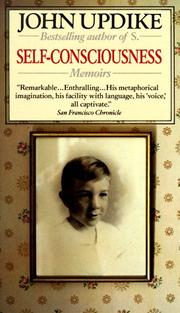
Updike's 1989 memoir illuminates the Pennsylvania working-class world and personal anxieties that gave birth to Rabbit Angstrom — essential for understanding how much of Updike is in his alter ego.
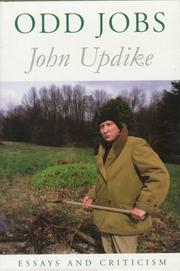
This major 1991 essay collection includes Updike's own reflections on the Rabbit project and American fiction, giving direct authorial commentary unavailable anywhere else.
Critical Depth — Scholarship and Context
ExpertEngage with serious literary criticism of the Rabbit tetralogy, placing it within American literary history and developing a fully analytical perspective on the series.
▸ Study plan for this stage
Pace: 8–10 weeks total: Weeks 1–4 cover Begley's "Updike" biography (~30–35 pages/day, reading with annotation focus on passages about Updike's life that map onto the Rabbit novels); Weeks 5–9 cover Boswell's "John Updike's Rabbit Tetralogy" (~20–25 pages/day, slower pace to allow close engagement with ea
- Biographical mapping: how Updike's Pennsylvania upbringing, religious crisis, sexual politics, and Cold War anxieties are transmuted — not merely transcribed — into Harry Angstrom's arc, as traced by Begley
- Updike's literary reputation and critical reception: Begley's account of how Updike was simultaneously celebrated and contested (charges of misogyny, suburban complacency, over-aestheticization) and what those debates reveal about mid-century American literary culture
- The tetralogy as a unified formal structure: Boswell's argument that the four novels constitute a single, architecturally coherent work rather than a series of loosely related sequels, and the thematic and structural devices that bind them
- Updike's theological framework — specifically his engagement with Karl Barth — as analyzed by Boswell: grace, sin, embodiment, and the sacred within the profane as organizing principles of the Rabbit novels
- Decade-by-decade cultural diagnosis: Boswell's reading of each novel as a precise sociological and ideological snapshot of its era (the 1950s, the 1960s, the 1970s, the 1980s), and how Updike uses Harry as an Everyman barometer of American self-deception
- Updike's prose style as a critical object: Begley's and Boswell's differing but complementary treatments of Updike's lyric realism, his use of free indirect discourse, and the tension between beauty of language and moral ambiguity of subject
- Gender, sexuality, and the male gaze: how both Begley (biographically) and Boswell (textually) grapple with the feminist critique of Updike, and what a sophisticated reader must do with that critique rather than simply accepting or dismissing it
- Updike within the American literary tradition: Boswell's placement of the tetralogy in relation to naturalism, Protestant realism, and the postmodern novel — and what distinguishes Updike's project from contemporaries like Roth, Bellow, and Cheever
- According to Begley, which specific episodes and pressures from Updike's biography most directly shaped the creation of Harry Angstrom, and where does Begley argue the biographical parallel breaks down or becomes misleading?
- What is Boswell's central thesis about the tetralogy as a unified formal and thematic structure, and what specific textual evidence does he marshal to support the claim that the four novels must be read as a single work?
- How does Boswell deploy Updike's Barthian theology to explain moments in the Rabbit novels that have often been dismissed as moral evasion or authorial indulgence — and do you find this theological reading persuasive or limiting?
- Begley documents a sustained tension between Updike's critical acclaim and his cultural marginalization by certain literary factions. What does this reception history reveal about the assumptions and fault lines of American literary criticism in the second half of the twentieth century?
- How do Begley and Boswell each handle the feminist critique of Updike, and where do their approaches converge or diverge? What is your own reasoned position on the charge after reading both accounts?
- Using Boswell's decade-by-decade framework, how does Updike's method of cultural diagnosis evolve across the four novels — does Harry become a more or less reliable register of American ideology, and what formal choices signal that shift?
- Biographical-to-textual annotation exercise: After finishing Begley, return to one chapter of any Rabbit novel and annotate it in two colors — one for moments Begley would identify as autobiographically sourced, one for moments that seem to deliberately depart from or invert Updike's own life. Write a 300-word reflection on what the departures reveal about Updike's artistic intentions.
- Critical dialogue paper: Write a 600–800 word essay staging a dialogue between Begley and Boswell on a single contested topic — for example, how to evaluate Updike's treatment of women. Represent each critic's position fairly before offering your own adjudication.
- Theological close reading: Select one scene from the tetralogy that Boswell analyzes through a Barthian lens. Re-read Boswell's analysis, then write your own 400-word close reading of the same scene, either extending, complicating, or pushing back against his interpretation using textual evidence.
- Reception history timeline: Using Begley's account of Updike's critical reception, construct a timeline of major reviews, controversies, and turning points in Updike's reputation. Annotate each entry with one sentence explaining what cultural or literary-political forces drove that moment of praise or attack.
- Structural mapping exercise: Drawing on Boswell's argument about the tetralogy's unity, create a visual or outline-based structural map of all four novels — tracking recurring symbols, character foils, theological motifs, and decade-specific cultural markers across the sequence. Identify two patterns Boswell does not discuss and note them for potential original analysis.
- Comparative positioning essay: Write a 500-word argument placing the Rabbit tetralogy within the American literary tradition, using Boswell's framework as your scaffold but incorporating at least two of your own observations about how Updike's project differs from or responds to the naturalist or postmodern traditions Boswell invokes.
Next up: Mastering the scholarly and biographical frameworks provided by Begley and Boswell equips the reader with the critical vocabulary and analytical confidence needed to produce original, independent literary argument — the foundation for any subsequent stage focused on primary research, comparative study, or original writing about the tetralogy.

This 2014 authoritative biography by Adam Begley is the definitive life-and-work study, tracing exactly how Updike's biography shaped each Rabbit novel — best read after completing all the fiction.

Boswell's focused scholarly study provides close readings of all four novels and the coda, addressing themes of theology, sexuality, and national identity — the most direct critical companion to the saga.
Discussion
Keep reading
Paths that share books, cover the same subject, or open a related topic.