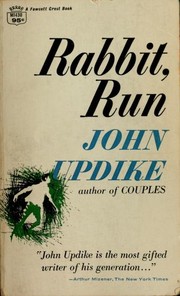
Start with Rabbit, Run. It is the first, it is the shortest, and it is the only sensible entry: Updike wrote the four novels roughly a decade apart, each set in the year of its writing, so the quartet is a serial portrait of one ordinary American man aging in real time against a country changing around him. Reading them out of sequence destroys the only structural idea the series has.
Be warned about what you are starting. Harry Angstrom is selfish, incurious and often cruel, and Rabbit, Run opens with him abandoning a pregnant wife and a small child. Updike does not redeem him and does not editorialise. Readers who need a protagonist to root for should stop at page one; readers who can tolerate a novelist watching a man clearly will find the prose some of the best written in postwar American fiction.
The four, in order
- Rabbit, Run (1960) — Harry at twenty-six, ex-basketball star, running from a marriage. Fastest and cruellest of the four.
- Rabbit Redux (1971) — the strangest book in the sequence. Harry at thirty-six, the Sixties arriving in his living room in the form of two houseguests. Many readers find its handling of race and its counterculture set-pieces dated and uncomfortable; it is also the most ambitious of the four.
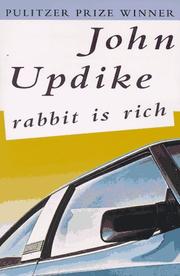
- Rabbit is rich (1981) — Harry prosperous, running a Toyota dealership in the gas-crisis years. Won the Pulitzer, and is the funniest and most relaxed book of the set. If someone tells you the quartet is unremitting, this is the rebuttal.
- Rabbit at rest (1990) — Harry at fifty-six, in Florida, eating himself to death. The longest, the slowest and the best. Won a second Pulitzer.
Is there a fifth Rabbit book?
Sort of. A novella called Rabbit Remembered, published in 2001, revisits the family a decade after Harry. It sits inside the story collection our catalogue lists as Licks Of Love. It is a coda, not a fifth novel, and reasonable readers disagree about whether it adds anything or softens an ending that was better hard. Read it only if Rabbit at rest left you unwilling to leave.
Where the quartet drags
Rabbit Redux is the honest stumbling block. Its middle section slows to a crawl and its politics have aged worst of the four. If you bounce off it, the pragmatic move is to skim to the fire and continue to Rabbit is rich, which needs comparatively little from it. Do not skip Redux entirely — the family losses in it drive everything afterwards — but you may read it faster than the others.
Reading around the novels
Updike's memoir Self-consciousness is the most useful companion, because it shows how much of Harry's Pennsylvania is Updike's own and how much is invention. Odd Jobs collects the criticism, and shows the range of a writer often reduced to the Rabbit books. Adam Begley's biography, listed here simply as Updike, is the standard life and is candid about a reputation that has been contested since the 1990s, particularly on his writing about women. For a scholarly reading of the quartet as a single structure, John Updike's Rabbit tetralogy by Marshall Boswell is the book to have.
Where to stop
Stop after Rabbit at rest. It is a complete ending — the finest closing pages of the four — and everything after it is epilogue. Read the coda only as a bonus.
If long serial fiction is your thing, browse more reading paths built the same way.
Follow the full ordered path here: Rabbit Reading Order: John Updike's Quartet.
Ready to learn something deeply?
Build a reading path — free