The Wars of the Roses: best books on England's dynastic bloodshed
This curriculum traces the Wars of the Roses from accessible narrative introductions through detailed political and military histories, finishing with scholarly analysis of the Tudor aftermath. Each stage builds on the last — first establishing the key players and storyline, then deepening into battles, dynastic politics, and revisionist interpretations, so that by the end the reader can engage confidently with primary-source-level scholarship.
Foundations: The Story & the Players
BeginnerGrasp the basic narrative arc — who the Lancasters and Yorks were, why they fought, and how the conflict ended — before encountering detailed names, dates, and battles.
▸ Study plan for this stage
Pace: 4–5 weeks, ~40–50 pages/day (approximately 280–350 pages total across both books)
- The dynastic claim: why Lancaster and York both believed they had the right to the English throne, rooted in Edward III's sons
- The cascade of triggers: how Henry VI's weakness, the loss of France, and factional court politics turned a succession dispute into civil war
- The major players and their motivations: the key nobles (Margaret of Anjou, Richard Duke of York, the Nevilles, the Tudors) and what drove their ambitions
- The broad narrative arc: from the first battle of St Albans (1455) through the Wars' end with Richard III's defeat and Henry VII's rise (1485)
- The concept of 'bastard feudalism' and how noble retainers and private armies made the conflict possible
- How the Wars disrupted England's economy, governance, and social stability across three decades
- The role of chance, personality, and individual decisions in shaping outcomes—not inevitable historical forces
- Why did both the House of Lancaster and the House of York believe they had a legitimate claim to the English throne?
- What were the key weaknesses or failures of Henry VI that made him vulnerable to challenge?
- Name three major noble families involved in the Wars and explain what each stood to gain or lose
- What was the basic sequence of events from the first battle of St Albans to the Battle of Bosworth Field, and who emerged victorious?
- How did the Wars of the Roses affect ordinary English people—merchants, farmers, and common soldiers?
- What role did Margaret of Anjou play in escalating the conflict, and why was she so controversial?
- Create a simple family tree showing Edward III's descendants and the lines that produced the Lancaster and York claims; annotate it with the key figures you encounter in each book
- Write a one-page summary of Henry VI's reign (before the Wars began) explaining why his rule created the conditions for civil war
- Track the major battles chronologically on a timeline as you read; note the winner, the key commanders, and how the balance of power shifted
- Write character sketches (200–300 words each) for 4–5 major figures (e.g., Richard Duke of York, Margaret of Anjou, Edward IV, Richard III) based on how Seward and Jones portray them
- Identify and list 3–4 turning points in the conflict where a different decision or outcome might have changed the course of the Wars
- After finishing both books, write a 500-word narrative summary of the entire conflict suitable for explaining to someone who knows nothing about the Wars
Next up: This foundation in the broad narrative and key personalities prepares you to dive into the next stage's deeper exploration of specific battles, political maneuvering, and the detailed consequences of the Wars on English institutions and culture.
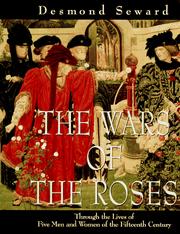
A highly readable, chronological narrative written for general audiences; it introduces all the key figures and battles without overwhelming the newcomer with academic apparatus.

Jones's vivid, journalistic style brings the Plantagenet world to life, giving essential context for the dynastic tensions that ignited the Wars of the Roses — perfect as a second beginner read to deepen the backdrop.
The Rival Houses: Lancaster & York in Depth
BeginnerUnderstand the specific personalities, ambitions, and political manoeuvres of the Lancaster and York dynasties, and how individual decisions shaped the conflict.
▸ Study plan for this stage
Pace: 6–7 weeks, ~40–50 pages/day. Begin with Wolffe's "Henry VI" (approximately 400–450 pages) over 3 weeks, then transition to Mortimer's "Warrior of the Roses" (approximately 400–450 pages) over 3–4 weeks. Allocate 1 week for review and synthesis.
- Henry VI's personality, mental health crises, and political weakness as a catalyst for factional conflict between Lancaster and York
- The Duke of Somerset's rise and fall, and how his failures in France destabilized Lancastrian authority
- Richard, Duke of York's claim to power, his military experience, and his strategic ambitions in the 1450s
- The role of patronage networks and noble factions in fragmenting royal authority during Henry VI's reign
- How individual decisions by key figures (Henry VI's passivity, York's assertiveness, Somerset's missteps) directly triggered escalation from political rivalry to armed conflict
- The Protectorate of 1454–1455 as a turning point: York's brief power and the First Battle of St Albans as the conflict's violent threshold
- The contrast between Lancastrian legitimacy (established dynasty) and Yorkist ambition (rising power seeking recognition and influence)
- How personal rivalries, family honour, and competition for the regency transformed dynastic tension into civil war
- What were Henry VI's key character flaws and mental health issues, and how did they directly enable the rise of rival factions?
- Why did the Duke of Somerset's military failures in France have such profound political consequences for the Lancastrian regime?
- What were Richard, Duke of York's primary motivations for seeking power—was it dynastic ambition, legitimate grievance, or both?
- How did the patronage networks and noble factions of the 1450s create the conditions for civil war?
- What was the significance of York's Protectorate in 1454–1455, and why did it collapse so quickly?
- How did the First Battle of St Albans (1455) represent a fundamental shift from political rivalry to armed conflict, and what role did individual personalities play in this escalation?
- Create a detailed character profile for Henry VI based on Wolffe's analysis: list his strengths, weaknesses, and key decisions, then explain how each weakness created political openings for rivals.
- Map the patronage networks of the 1450s using Wolffe's account: identify the key nobles aligned with Henry VI, Somerset, and York, and trace how these alliances shifted between 1450–1455.
- Write a 500-word analysis comparing Henry VI's passivity with Richard of York's assertiveness using specific examples from both books—how did these contrasting personalities drive events?
- Create a timeline of Richard of York's life (1411–1460) using Mortimer's biography, marking key military campaigns, political appointments, and moments of ambition or grievance. Annotate how each shaped his later actions.
- Debate exercise: Argue both sides—was the Wars of the Roses inevitable given Henry VI's weakness, or could individual decisions by York, Somerset, or others have prevented it? Use evidence from both books.
- Construct a decision-tree diagram showing the critical choices made by Henry VI, Somerset, and York between 1450–1455, and identify which single decision most directly triggered armed conflict.
Next up: By mastering the personalities, ambitions, and pivotal decisions of Lancaster and York's leaders in this foundational period, you will be prepared to trace how these individual rivalries escalated into the broader military campaigns, dynastic claims, and shifting alliances that define the full Wars of the Roses.
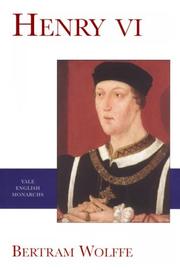
The definitive biography of the weak Lancastrian king whose failures sparked the wars; reading it now gives the reader a firm anchor in the Lancastrian perspective before turning to York.

Focuses on the Yorkist claimant at the heart of the rivalry, providing the essential counterpoint to Wolffe's Henry VI and clarifying why the dynastic challenge became inevitable.
Battles & Turning Points
IntermediateFollow the military campaigns in detail — key engagements like St Albans, Towton, Barnet, and Bosworth — and understand how battlefield outcomes translated into political change.
▸ Study plan for this stage
Pace: 4–5 weeks, ~40–50 pages/day. Skidmore's narrative-driven approach and detailed battle reconstructions benefit from steady, focused reading with time for reflection between chapters.
- The strategic geography and logistics of medieval warfare—how terrain, supply lines, and troop positioning determined outcomes at St Albans, Towton, Barnet, and Bosworth
- How individual battles functioned as political turning points: the shift from noble feuding to dynastic civil war, and the role of key commanders and their decisions
- The role of contingency and human agency in battle outcomes—how weather, morale, betrayal, and individual leadership shaped the course of the Wars
- Richard III's military reputation and the Bosworth campaign as the culminating conflict—understanding both the historical reality and later mythologizing
- The relationship between battlefield victory and political legitimacy—how military success translated (or failed to translate) into stable rule
- The evolution of English military tactics and technology during the period, including the transition from medieval to early modern warfare
- What were the key strategic differences between the battles of St Albans, Towton, Barnet, and Bosworth, and why did each represent a turning point in the Wars of the Roses?
- How did Richard III's military background and reputation shape his conduct of the Bosworth campaign, and what does Skidmore reveal about the historical Richard versus the Tudor myth?
- What role did geography, weather, and logistics play in determining the outcomes of the major engagements Skidmore describes?
- How did individual commanders' decisions and personal rivalries influence battlefield tactics and results?
- What evidence does Skidmore present about the transition from feudal levies to more organized military forces during this period?
- How did the outcome of Bosworth translate into political legitimacy for Henry VII, and what does this reveal about the relationship between military victory and dynastic rule?
- Create a detailed battle map for each of the four major engagements (St Albans, Towton, Barnet, Bosworth), marking troop positions, terrain features, and key decision points based on Skidmore's account
- Write a 500-word tactical analysis of one battle, explaining how Skidmore's reconstruction reveals the commander's strategic thinking and what factors determined the outcome
- Construct a timeline that links each major battle to the political consequences that followed—which noble houses rose or fell, and how did the military outcome reshape the succession
- Compare Skidmore's account of Richard III at Bosworth with one other historical source or popular portrayal; identify where Skidmore challenges or confirms the traditional narrative
- Create a 'decision tree' for the Bosworth campaign: identify the key moments where a different choice (by Richard, Henry, or their commanders) could have altered the outcome
- Annotate a chapter of Skidmore's text, marking passages that reveal logistics, morale, or contingency as factors in battle outcomes—then write a short reflection on how these 'invisible' factors shaped the Wars
Next up: Understanding how battles translated into political power through Skidmore's detailed military narrative prepares you to examine the broader political consolidation and dynastic legitimacy that followed—moving from the chaos of the battlefield to the challenges of stable governance.

Covers the climactic final battle and Henry Tudor's victory in forensic detail, bridging the military history of the wars with the political founding of the Tudor dynasty.
Key Figures & Revisionist Portraits
IntermediateInterrogate received wisdom about iconic figures — Edward IV, Richard III, and Margaret of Anjou — and develop a more nuanced, evidence-based view of the period.
▸ Study plan for this stage
Pace: 8–10 weeks, ~40–50 pages/day. *The Sunne in Splendour* (680 pp): 2–3 weeks; *Richard III* by Ross (300 pp): 2 weeks; *Margaret of Anjou* by Maurer (280 pp): 2 weeks. Allow 1–2 weeks for overlap, reflection, and comparative work.
- The distinction between historical fiction and historical fact: how Penman's narrative reconstructs Edward IV's reign while Ross and Maurer provide scholarly evidence-based reassessment
- Edward IV as a complex political operator: his military acumen, marriage strategy, and vulnerability to factional pressure, rather than a straightforward hero or villain
- Richard III's reputation as constructed by Tudor propaganda: examining the evidence for and against charges of usurpation, the Princes in the Tower, and his actual governance
- Margaret of Anjou's agency and political intelligence: moving beyond the 'she-wolf' stereotype to understand her role as queen, diplomat, and military strategist
- The role of patronage, legitimacy, and dynastic claim in shaping how contemporaries and later chroniclers portrayed these figures
- How revisionist scholarship uses primary sources (letters, chronicles, financial records) to challenge popular myths and literary traditions
- The intersection of gender, power, and representation: how Margaret's portrayal differs from male figures and what that reveals about medieval chronicling
- Contingency and accident in history: how personal decisions and unforeseen events shaped outcomes, rather than inevitable decline or triumph
- How does Penman's fictional portrayal of Edward IV in *The Sunne in Splendour* differ from the historical Edward presented in scholarly sources, and what does this reveal about the limits of historical fiction?
- What evidence does Ross present to challenge or complicate the traditional view of Richard III as a tyrant, and what gaps remain in our knowledge of his reign?
- How did Margaret of Anjou's position as a foreign-born queen and her lack of a son affect her political authority and the way contemporaries and later chroniclers portrayed her?
- Compare the three figures' use of marriage, alliance, and legitimacy claims as political tools. How did their strategies differ and why?
- What role did Tudor propaganda play in shaping the historical record about Richard III, and how can modern historians distinguish between myth and evidence?
- How do the three books collectively demonstrate the importance of reading against the grain of chronicles and literary sources to recover more nuanced historical portraits?
- Create a three-column comparison chart: list key events/decisions for Edward IV, Richard III, and Margaret of Anjou as portrayed in Penman vs. as analyzed in Ross and Maurer. Note where fiction and scholarship diverge and why.
- Write a 500-word character study of Richard III using only evidence cited in Ross's *Richard III*. Then write a second version using only Penman's fictional interpretation. Reflect on what each version reveals and conceals.
- Trace Margaret of Anjou's political moves across all three books (she appears in Penman and is the subject of Maurer). Create a timeline of her decisions and their consequences, annotating where the sources agree or conflict.
- Select one primary source passage cited in Ross or Maurer (e.g., a letter, chronicle entry, or legal document). Analyze how it supports or undermines the revisionist argument, and consider what it might have meant to a contemporary reader.
- Debate exercise: Prepare arguments for and against the proposition 'Richard III was a usurper and tyrant' using only evidence from Ross. Identify which claims rest on solid evidence and which remain speculative.
- Write a brief historiographical essay (800–1000 words) on how the portrayal of one figure (Edward IV, Richard III, or Margaret) has changed from Tudor times to the present, citing specific examples from all three books.
Next up: This stage equips you to read primary sources and specialized monographs with a critical eye, recognizing how bias, propaganda, and narrative convention shape the historical record—skills essential for the next stage's deeper engagement with original documents, regional perspectives, and the material conditions that sustained the Wars themselves.
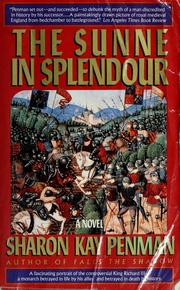
This acclaimed historical novel humanises Edward IV and Richard III with scrupulous research; reading fiction at this stage sharpens empathy for the characters before tackling revisionist scholarship.
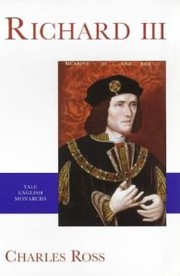
The standard scholarly biography of Richard III, cutting through Tudor propaganda to assess the man and king on the evidence — a natural follow-up to Penman's novelistic portrait.

Restores the Lancastrian queen to her rightful place as a central military and political actor, correcting the one-sided portraits encountered in earlier stages.
Synthesis & the Tudor Aftermath
ExpertSynthesise the entire conflict within its broader political, social, and dynastic context, and understand how the Tudor dynasty constructed — and mythologised — its own origins from the ashes of the wars.
▸ Study plan for this stage
Pace: 8–10 weeks, ~40–50 pages/day (approximately 2 weeks per book with time for synthesis and reflection)
- The Wars of the Roses as a dynastic civil war rooted in competing claims to legitimacy and succession, not merely a series of battles
- How Gillingham's synthesis reveals the economic, administrative, and social continuities beneath the political chaos
- The role of the nobility, magnates, and regional power bases in sustaining the conflict across three decades
- Henry VII's strategic use of marriage, law, and propaganda to consolidate Tudor power and delegitimise the York line
- The construction of Tudor mythology: how Henry VII and his successors rewrote the wars' narrative to justify their rule
- The transition from medieval feudalism to early modern centralised monarchy through the lens of the wars' aftermath
- The relationship between military victory (Bosworth) and political legitimacy—why military success alone was insufficient
- How the Tudor settlement represented both continuity with and rupture from the medieval political order
- What were the fundamental causes of the Wars of the Roses, and how did competing claims to the throne interact with broader social and economic tensions?
- How did Henry VII use marriage, legal instruments, and propaganda to consolidate power after Bosworth, and why were these tools as important as military victory?
- What is the relationship between the 'real' history of the wars (as Gillingham presents it) and the Tudor mythologisation of those events (as Penn explores)?
- How did the wars reshape the English nobility, and what role did the destruction of the old magnate class play in enabling Tudor centralisation?
- What continuities existed in English governance, law, and administration despite the apparent chaos of the wars?
- How did Henry VII's reign represent both a break from medieval kingship and a continuation of it?
- Create a detailed timeline of the Wars of the Roses (1455–1487) that maps key battles, shifts in power, and turning points alongside Gillingham's analysis of their causes—identify where military events align or diverge from political/social explanations
- Construct a genealogical chart of the York and Lancaster lines, then annotate it with Henry VII's marriage to Elizabeth of York and the resulting legitimacy claims—explain how this single union addressed multiple competing claims
- Write a comparative analysis (1,500–2,000 words) of how Gillingham presents a specific conflict (e.g., the Battle of Bosworth or the reign of Richard III) versus how Penn shows Henry VII later mythologised that same event in propaganda or legal documents
- Analyse Penn's account of Henry VII's first five years in power (1485–1490) and identify three specific policies (legal, financial, or dynastic) that addressed the root causes Gillingham identified in the wars themselves
- Create a 'propaganda audit': collect primary source excerpts (via Penn's citations) of Tudor-era claims about the wars, then evaluate them against Gillingham's historical synthesis—document where myth diverges from evidence
- Develop a synthesis essay (2,000–2,500 words) arguing whether the Wars of the Roses were fundamentally resolved by Henry VII's policies or merely suppressed, using evidence from both books to support your position
Next up: This stage equips you to understand how medieval dynastic conflict gave way to early modern centralised monarchy, preparing you to explore the subsequent Tudor and Stuart reigns with a critical eye toward how each generation inherited, adapted, or rejected the political settlement Henry VII forged.

A concise but analytically rigorous overview that reassesses causes, course, and consequences with scholarly precision — ideal for consolidating everything learned so far.

Examines Henry VII's reign in depth, showing how the first Tudor deliberately shaped memory of the wars to legitimise his dynasty — the perfect capstone that answers the question of what the conflict ultimately meant.
Discussion
Keep reading
Paths that share books, cover the same subject, or open a related topic.