The Lightbringer Series Reading Order: Where to Start
Lightbringer is five novels read in publication order with no exceptions, no prequels and no chronological alternative — Brent Weeks wrote it as one continuous story and it escalates in a straight line. The only real question readers ask is where the novella Perfect Shadow fits, and the honest answer is that it does not: it belongs to his other series entirely. This path takes the five books in order and then points you at the Night Angel books if you want more.
Start here
BeginnerLearn the chromaturgy magic system and the political shape of the Seven Satrapies, and decide whether the series' voice works for you.
▸ Study plan for this stage
Pace: 3-4 weeks. The Black Prism is around 620 pages but reads at thriller speed — short chapters, constant viewpoint switches, 50 pages an evening is normal. There is only one order for this series: publication order, all five books, no prequels and no chronological alternative. Give the first chapter yo
- Chromaturgy: drafters convert light of a specific colour into luxin, a physical substance with different properties per colour — the best-engineered magic system in modern epic fantasy and the reason to read the series
- The hard cost model — every drafter has a finite lifetime of drafting, visible in the halo, and going past it destroys them; the magic has an actual budget
- Gavin Guile as the Prism, the most powerful man alive, with five years to live and a list of five impossible things to do
- The Seven Satrapies and the Chromeria: a religious-political order built to manage drafters, which is the setting's real subject
- Kip as the deliberately unheroic entry point — overweight, unwanted, and funny about it in a way the series keeps weaponising
- The secret in Gavin's basement, which is the plot device the entire first book is constructed around
- Weeks's structural habit of ending every chapter on a hook, which is what makes 600 pages read like 300
- The colour wight material and what happens to drafters who break, which sets the stakes for everything later
- How does drafting work mechanically, and what does each colour physically do?
- What is the halo, and what does crossing it cost?
- What are Gavin's five goals, and what do they tell you about who he was before the book started?
- What is in the basement, and what does its existence say about the Prism's office?
- What does the Chromeria exist to do, and whose interests does it actually serve?
- Does the narrative voice work for you, and if not, is it worth continuing?
- Write out the colour spectrum and one property per colour. The plot repeatedly turns on which colour is available at a given moment.
- Track the halo state of every named drafter; it is the series' clock.
- Note every claim Gavin makes about himself in book one. Most of them are load-bearing later.
- Read the first chapter before buying the set. The register is the single biggest predictor of whether you will finish.
Next up: The first book's revelation turns a political thriller into a war, and the two middle volumes are where the series does its best work.

Gavin Guile, the most powerful man alive, has five years to live and a son nobody knew about. The magic here is unusually well engineered — colour drafting with a hard physical cost — and the first chapter tells you immediately whether the wisecracking register is for you.
The core
IntermediateFollow the war and the widening set of viewpoint characters through the two middle books, where the series is at its strongest.
▸ Study plan for this stage
Pace: 6-8 weeks for the two. The Blinding Knife is around 680 pages and The Broken Eye around 820, and both read fast but demand more attention than the first — the viewpoint count grows and the plot fragments across several cities. About 40-50 pages a day. Schedule a gap after The Broken Eye rather than
- The war beginning in earnest, and Kip's shift from comic relief to a genuine actor — most readers rate The Blinding Knife the best of the five for exactly this
- The Blackguard, its training, and the way Weeks uses a school-and-team structure to make a large cast legible
- The cards — the Nine Kings deck — as both a game and a mechanism for delivering the setting's buried history
- Andross Guile emerging as the series' best character: a manipulator whose plans operate across decades and multiple books
- The Broken Eye's turn from battles to conspiracies — the Order, the Third Eye, and a plot that runs on information rather than force
- Multiple viewpoint characters running in different cities, which is the structural change that makes book three the densest
- The escalating theological questions about Orholam and what the Prism actually is, planted well before they matter
- Weeks's willingness to remove a protagonist's advantages entirely and make them earn a new position
- What changes about Kip between the start of book two and the end of book three?
- What is Andross Guile playing for, and how far back does the plan go?
- What is the Order, and what do they believe?
- How does the Nine Kings deck function as exposition, and is it fair to the reader?
- Which viewpoint in The Broken Eye is the most reliable, and how do you know?
- What does the series claim about the relationship between the Prism and the god by the end of book three?
- Keep a running note of who knows which secret. The middle books are built almost entirely on asymmetric information.
- Track Andross's moves in retrospect after each book; nearly every one was set up earlier.
- Buy The Blood Mirror before finishing The Broken Eye. The cliffhanger is deliberate and severe.
- List the theological questions the series has raised but not answered. You will need the list for the finale.
Next up: The conspiracies converge, and the last two books move from political intrigue toward the explicitly religious ending the series has been building to.
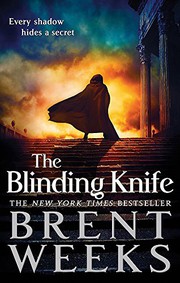
The war begins in earnest and Kip stops being comic relief. Most readers rate this the best book of the five, and it is the point at which the series stops feeling like standard epic fantasy.

The plot fragments across several cities and the political conspiracies take over from the battles. It is the densest volume and ends on the sharpest cliffhanger, so leave a gap in your schedule after it.
The finish
IntermediateSee the series through to its conclusion, with a clear sense of what the ending does and does not deliver.
▸ Study plan for this stage
Pace: 6-8 weeks for the two. The Blood Mirror is the shortest of the five at around 460 pages and is largely a repositioning volume — momentum dips here, which is worth knowing so you push through rather than concluding the series has collapsed. The Burning White is by far the longest at roughly 990 pages
- The Blood Mirror as a bridge book: characters relocated, pieces set, and comparatively little resolved
- Imprisonment and captivity plots in book four, which slow the pace deliberately and set up the finale's reversals
- The Burning White resolving the Gavin and Dazen material that the whole series has been circling
- The explicit theology of the ending — Orholam as an active presence rather than a setting detail, and what that does to the magic system retroactively
- Andross Guile's long game concluding, which is the most satisfying strand for most readers regardless of their view of the ending
- Kip's arc completing, and whether the series earns the position it puts him in
- Why the ending divides people: it reframes a hard-engineered magic system in terms of faith, which some readers experience as a payoff and others as a switch
- The five books as one continuous escalation, which is why publication order was never in question
- What is finally revealed about Gavin and Dazen, and were the clues fair?
- How does the ending change what chromaturgy has meant for five books?
- Does the theological turn arrive from nowhere, or can you find where it was planted?
- What does Andross's conclusion say about the series' view of ambition?
- Is The Blood Mirror necessary, or could the finale have absorbed it?
- Having finished, would you recommend the series to someone who dislikes explicitly religious endings?
- Before starting The Burning White, reread your list of unanswered theological questions from the previous stage.
- Note every point in the finale where an earlier scene is reinterpreted, and go back and check the original.
- Push through the middle third of The Blood Mirror at a fixed daily page count rather than by momentum.
- After finishing, write a paragraph on whether the ending is a payoff or a swerve. It is the conversation every reader of this series ends up having.
Next up: With Lightbringer complete, the remaining question is the novella that constantly gets misfiled into its reading order.

The shortest of the five and largely a repositioning book, setting the pieces for the finale. Expect momentum to dip here and keep going.

A very long conclusion that resolves the series and takes an explicitly theological turn that divides readers sharply. Go in knowing that the ending is the most argued-about part of Lightbringer rather than being blindsided by it.
Where Perfect Shadow actually belongs
IntermediateSettle the recurring order question — Perfect Shadow is not a Lightbringer book — and find the right doorway into Weeks's other series if you want it.
▸ Study plan for this stage
Pace: 3-4 weeks. Settle the question first: Perfect Shadow is NOT a Lightbringer book. It is a novella about Durzo Blint and it belongs to the Night Angel series, and it gets bundled into Lightbringer reading orders constantly because both are by Weeks and it appears in some combined editions. It has no b
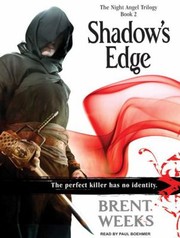
- Perfect Shadow is a Night Angel novella, not a Lightbringer prequel — the single most common ordering error around this author
- It is best read after The Way of Shadows rather than before, because its protagonist's history only carries weight once you have met him in the novel
- The Way of Shadows as Weeks's debut: rougher, nastier, and considerably darker than Lightbringer, with on-page child abuse and sexual violence that the later series does not match
- Durzo Blint as the character both books share, and the reason Perfect Shadow exists at all
- The wet-boy assassin premise, and how visibly it is early-career work compared with the engineering of chromaturgy
- What carries over from Night Angel into Lightbringer — the banter, the mentor relationships, the hard-cost magic — and what improved
- Reading order for Weeks overall: Lightbringer's five, then Night Angel's trilogy with the novella slotted after the first book
- Why does Perfect Shadow keep appearing in Lightbringer reading orders, and what does reading it there cost you?
- What does Perfect Shadow add to Durzo that The Way of Shadows leaves out?
- How does the Night Angel magic system compare with chromaturgy in rigour?
- What is noticeably early-career about the debut, and what already works?
- Which of the two series is the better book, and which is the better introduction to Weeks?
- Check the contents of any Weeks omnibus before buying; Perfect Shadow is bundled in several and the packaging implies a connection that does not exist.
- Read The Way of Shadows first, then the novella, and note how much of the novella depends on that order.
- Compare the first chapter of The Way of Shadows with the first chapter of The Black Prism to see what six years changed.
Next up: This closes the path: five Lightbringer novels in publication order, and the novella correctly filed where it actually belongs.

A novella about Durzo Blint, and it belongs to the Night Angel books, not Lightbringer. It gets bundled into Lightbringer reading orders constantly and it should not be: read it only alongside the series below, and ideally after The Way of Shadows rather than before.
The first Night Angel novel and Weeks's debut. Rougher and nastier than Lightbringer, but it is the correct next step if you want more of his work, and it is where Perfect Shadow's protagonist comes from.
Discussion
Keep reading
Paths that share books, cover the same subject, or open a related topic.