Wayfarers Reading Order: Where to Start
Wayfarers is unusual for a series: four novels sharing a universe but not a cast, so each one can technically be read alone. In practice publication order is still the right order, because the books get progressively less plotted and more diffuse, and the first is the one that teaches you how to read the rest. This path runs the four in order and then adds the rest of Becky Chambers's short fiction for readers who want to stay in this register.
Start Here
BeginnerMeet the Galactic Commons and learn what kind of book this is — a crew story with very low stakes and very high care.
▸ Study plan for this stage
Pace: 2–3 weeks for 445 pages. Set expectations before you open it, because this is where most people who dislike Wayfarers decide they dislike it. These books are deliberately low-conflict — the label usually attached is cosy science fiction — and The Long Way to a Small, Angry Planet has almost no antag
- The Galactic Commons is a multi-species political union in which humans are recent, minor and slightly patronised — the reversal of the usual space-opera default and the foundation of everything in the series
- The Wayfarer punches wormhole tunnels for a living, which is deliberately unglamorous infrastructure work rather than exploration or war
- Chambers builds aliens around biology and social structure rather than around a single gimmick: the Aandrisk view of family, the Grum, the Sianat pair and Dr. Chef's life stages each rewrite something humans take as given
- The book's tension comes from difference and accommodation — how people with incompatible needs share a small space — not from external threat
- Ashby's crew is the unit of narrative, and viewpoint rotates among them; expect character chapters rather than a single arc
- Lovelace, the ship's AI, and the question of AI personhood is seeded here and becomes the subject of the next book
- This is the entry point because it teaches you how to read the other three; the later books remove even the modest plot scaffolding this one has
- How does the Galactic Commons treat humanity, and what does that reframing do to the assumptions most science fiction makes?
- What does each alien species get wrong about human life, and what does that reveal about which human customs are arbitrary?
- Where does the novel generate tension without an antagonist, and what techniques does Chambers use in place of threat?
- What is the crew's actual job, and why does Chambers choose infrastructure work rather than exploration?
- How is AI personhood set up here, and what position does the book take by the final chapters?
- Did the low-conflict register work for you? Answer now, because it determines whether the rest of this path is worth your time.
- Read the first hundred pages before judging the book, but judge it honestly at that point. This is the one series where abandoning early is a reasonable and well-informed decision rather than a failure of persistence.
- Keep a short note per species — biology, family structure, one thing they find strange about humans. Chambers introduces a lot of them and the notes make the later books much easier.
- Notice what happens to your reading pace when nothing is at stake. Naming that adjustment is the single most useful preparation for Record of a Spaceborn Few.
- Mark the two or three moments where real danger does arrive. They are rare and Chambers spends them carefully, which is the clearest evidence that the low-conflict register is a choice.
- Read a chapter aloud to someone who does not read science fiction. The dialogue is the strongest thing in the book and it holds up detached from the genre.
Next up: You now know the Commons, the species and — more importantly — the register, which is exactly what the remaining three novels assume, since each abandons this cast and keeps only the world and the tone.

The only sensible entry point. A tunnelling ship, a mixed-species crew and almost no antagonist — it establishes the aliens, the politics and the tone of the whole universe, and it is the most conventionally plotted of the four. If its gentleness annoys you, the later books will annoy you more.
The Rest of the Quartet
BeginnerFollow three separate stories in the same universe and see the series widen from a crew to a civilisation.
▸ Study plan for this stage
Pace: 7–9 weeks for 416, 359 and 368 pages. Read them in this order. There is no cliffhanger pulling you between them, so gaps are fine, but do not shuffle the sequence: the books get progressively less plotted, and taking them in publication order lets you acclimatise rather than being dropped straight i
- A Closed and Common Orbit follows a character introduced at the end of the first book — an AI installed in an illegal synthetic body — alongside a second timeline about the woman who built her; it is widely considered the best of the four
- It is also the only one that genuinely depends on having read Small, Angry Planet, since its premise is that book's final development
- Record of a Spaceborn Few is set on the Exodus Fleet generation ships and has essentially no plot: several ordinary lives, a funeral trade, an archivist, a teenager who wants to leave
- Record is the most divisive book in the series and the truest test of whether the register works for you — read it third, when you trust the register enough to sit with it
- The Galaxy, and the Ground Within strands three aliens at a spaceport waystation for a few days and is the purest expression of what Chambers is doing: no humans, no plot, only accommodation
- It is the intended finale and should be read last even though it shares no characters with the first book
- Across all four, the connective tissue is the world and the ethical stance, not the cast — which is why 'series' is slightly the wrong word for what this is
- What does A Closed and Common Orbit argue about personhood, and how do its two timelines make the same argument differently?
- Why is Pepper's backstory told in parallel rather than as flashback, and what would be lost by ordering it conventionally?
- What holds Record of a Spaceborn Few together in the absence of plot, and does it hold?
- What is the Exodus Fleet's problem — why does a generation ship that has arrived somewhere still exist?
- In The Galaxy, and the Ground Within, what do the three stranded characters actually disagree about, and how is it resolved?
- Ranked by your own response rather than by reputation, which of the four is best, and what does your ranking say about what you want from fiction?
- Read A Closed and Common Orbit soon after the first book while Lovelace's situation is fresh. It is the one place in the quartet where continuity actually matters.
- For Record of a Spaceborn Few, read one point-of-view thread's chapters in sequence if you stall — skipping ahead within a single character's story and then going back is a legitimate way through a book with no plot to spoil.
- Keep a note of what each book says about how strangers are supposed to treat each other. Written out, the four positions form a single coherent ethics, which is the series' real achievement.
- After The Galaxy, and the Ground Within, go back to the first chapter of Small, Angry Planet. The distance travelled in tone across four books is more obvious from that end.
- Write one sentence defining cosy science fiction using only evidence from these four books. It is a term used loosely, and pinning it down is a genuinely useful exercise.
Next up: With the quartet finished and no fifth book to wait for, the question becomes where else this exact register exists — and the answer is mostly Chambers's own shorter work.

The direct sequel in the sense that matters — it follows a character introduced at the end of the first book, an AI in an illegal body, alongside a second story about the woman who built her. Widely considered the best of the four, and it does depend on having read Small, Angry Planet.
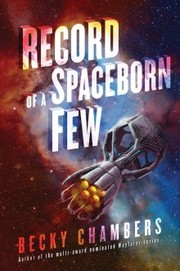
The Exodus Fleet generation ships, with essentially no plot and several ordinary lives instead. The most divisive book in the series; read it third, when you trust the register enough to sit with it.

Three aliens stranded at a spaceport waystation for a few days. It is the purest expression of what Chambers is doing and the intended finale, so it should be read last even though it shares no characters with the first book.
Chambers Outside Wayfarers
BeginnerRead the shorter work that carries the same sensibility, and find where to go once the quartet ends.
▸ Study plan for this stage
Pace: 1–2 weeks in total. These are short: To Be Taught, If Fortunate is 140 pages and A Psalm for the Wild-Built is 160, each a single evening. One edition note before you buy — the Monk and Robot books are commonly sold as a two-volume boxed set containing both A Psalm for the Wild-Built and its sequel
- To Be Taught, If Fortunate is a standalone novella about four scientists surveying exoplanets, unconnected to Wayfarers but the closest thing to it in sensibility
- It is harder science than the novels and has a sharper, more genuinely unresolved ending — the best evidence that Chambers's gentleness is a choice rather than a limit
- The somaforming premise — adapting the crew's bodies to each world rather than the world to them — inverts the terraforming assumption most science fiction runs on
- A Psalm for the Wild-Built is the first Monk and Robot novella: a tea monk and a robot walking through a post-industrial moon, asking what people actually need
- Monk and Robot is even quieter than the Wayfarers novels and deliberately so; it is the purest form of what readers mean by cosy science fiction
- The sequel, A Prayer for the Crown-Shy, must follow the first and completes a very short two-book arc — a real ending, and the right place to stop
- Both of these are novellas, so they can be read in an evening each, which makes them the easiest recommendation to give someone curious about the register
- What does somaforming in To Be Taught, If Fortunate change about the ethics of exploration compared with terraforming?
- Why does that novella end where it does, and what would a conventional ending have cost it?
- What question is Dex actually asking in A Psalm for the Wild-Built, and does the robot answer it?
- How does the Monk and Robot setting differ from the Galactic Commons in what it assumes about technology and recovery?
- Which of Chambers's books would you hand to someone who has never read science fiction, and why?
- Read To Be Taught, If Fortunate in one sitting. At 140 pages it is designed for it and the ending depends on the accumulation not being interrupted.
- Check which Monk and Robot edition you are buying before ordering — single novella or the two-volume set — to avoid paying twice for A Psalm for the Wild-Built.
- After both Monk and Robot novellas, write down what Chambers thinks people need. The books ask the question explicitly, which makes it fair to expect an answer.
- Compare the ending of To Be Taught, If Fortunate with the ending of The Galaxy, and the Ground Within. One is unresolved and one is quietly settled, and the contrast is the best short course in what Chambers can do.
Next up: This is the end of the path: four Wayfarers novels and three novellas in the same register, which is nearly everything Chambers has published, so the natural next move is outward to the other writers working in low-conflict science fiction, or back to Small, Angry Planet, which reads very differently once you know how the quartet ends.

A standalone novella about four scientists surveying exoplanets, unconnected to Wayfarers but the closest thing to it. Harder science and a sharper ending than the novels.

The first Monk and Robot novella, and the book most Wayfarers readers move to next: a tea monk and a robot walking through a post-industrial moon, asking what people need. Even quieter than the novels, and deliberately so.

The second and final Monk and Robot novella, which must follow the first. A short, complete ending, and the right place to stop.
Discussion
Keep reading
Paths that share books, cover the same subject, or open a related topic.