The Night Angel Trilogy Reading Order: Where to Start
Brent Weeks published all three Night Angel novels in 2008, three months apart, which is the single most useful fact about them: they were written as one book and released as three, so the trilogy reads as a continuous arc rather than three self-contained volumes. The order is publication order and there is no argument to be had about it. What does need explaining is everything around the trilogy — a prequel novella about Durzo Blint that is best read after book three rather than before it, and Night Angel Nemesis, which arrived fifteen years later and picks the story up well after the ending. This path takes the trilogy, places the extras, and then points at Lightbringer, the series Weeks wrote in between and the one most readers rate higher.
The trilogy
BeginnerRead the three books straight through as the single novel they were written as, and understand the wetboy-and-master relationship the whole thing turns on.
▸ Study plan for this stage
Pace: Six to eight weeks for 2,021 pages — The Way of Shadows 645, Shadow's Edge 656 and Beyond the Shadows 720 — and the pace matters less here than the continuity. All three were published within months of each other and were effectively written as one book, so read them consecutively with no gap: Shado
- The wetboy-and-master relationship between Kylar and Durzo Blint, which is the engine of all three books
- Apprenticeship as the trilogy's spine: what the trade costs to learn and what it costs to leave
- Three volumes written as one novel — the reason there are no recaps, no self-contained arcs and no natural stopping points
- The price Kylar pays for what he is, established early and collected in the final volume
- The abrupt widening in Beyond the Shadows from an assassin's story to armies and gods
- A debut's unevenness alongside real ambition, both most visible in the third book
- The trilogy's largest reveal, which the prequel novella would spoil if read first
- What does Durzo actually teach Kylar, and how much of it is technique rather than a way of seeing?
- In Shadow's Edge, what stops Kylar leaving the trade — circumstance, or something in him?
- Beyond the Shadows changes scale sharply. Does the trilogy earn the widening, or does it outgrow its own premise?
- Where can you see the debut in the prose, and where does Weeks get out of his own way?
- What has Kylar paid by the end, and was the trilogy honest about the bill from the beginning?
- Read all three with no other book in between. This is the one structural instruction that matters for this trilogy, and readers who break it consistently report the second volume as confusing.
- Mark the point in The Way of Shadows where the prose stops being a problem for you, and note the page. It is usually much earlier than the reputation suggests, and knowing where it was is what lets you recommend the book honestly.
- Keep a short list of what Kylar owes and to whom. The trilogy is an accounting exercise and the list is its plot.
- After Beyond the Shadows, write down what you think Durzo's own past was. The novella is next and it is built to be read against exactly that guess.
Next up: The trilogy's big reveal is behind you, which is the only condition under which the prequel novella and the late sequel can be read the way they were designed to be.
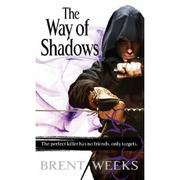
The starting point with no alternative: a street child apprentices himself to the city's best assassin. Be warned that the opening chapters are the grimmest in the trilogy and that Weeks's prose is at its rawest here — this is a debut, and it reads like one.
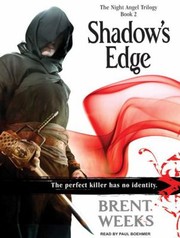
Published three months after the first and continuing directly from its last page, with Kylar trying to leave the trade. Read it immediately; the trilogy does not pause between volumes.
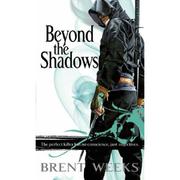
The conclusion, which widens abruptly from an assassin's story to armies and gods and resolves the price Kylar has been paying since book one. It is the volume where the trilogy's ambition and its unevenness are both most visible.
The extras, in the right place
BeginnerRead the prequel novella and the late sequel where they actually work, rather than where the chronology suggests.
▸ Study plan for this stage
Pace: Two to three weeks. Perfect Shadow is a 112-page novella on Durzo Blint's own past and reads in one or two sittings — read it fourth, not first. It is a prequel by chronology, but it was built to reward a reader who already knows what Durzo becomes, and taken first it gives away the trilogy's larges
- Durzo's past as a payoff rather than a set-up — the novella's whole design assumes you know the ending
- Chronological order and reading order coming apart, and why the trilogy is the case where the difference is largest
- What a 112-page novella can do that a chapter of backstory in the trilogy could not
- Night Angel Nemesis as the start of a new sequence, not a coda: what it opens rather than what it closes
- The gap in Weeks's craft between the debut trilogy and the later return, visible in the same characters
- Where the world has moved on, and how much of the trilogy a reader has to have kept
- Which specific detail of Perfect Shadow would have spoiled the trilogy if you had met it first?
- Does the novella change how you read Durzo's decisions in The Way of Shadows, or only how you feel about them?
- What is Night Angel Nemesis setting up, and does it need the trilogy or merely benefit from it?
- Compare a paragraph of Nemesis with one of The Way of Shadows. Name the difference precisely rather than calling it better.
- If a friend had read only the trilogy, would you tell them to continue? On what grounds?
- Read Perfect Shadow in one sitting, then reread the two or three trilogy scenes it recasts. That is the entire argument for putting a prequel fourth.
- Check the guess you wrote at the end of stage one against the novella.
- Before starting Night Angel Nemesis, write down what you remember of the trilogy's ending without looking. What has faded is what the sequel will have to rebuild for you, and knowing that in advance makes it a fairer read.
- Decide here whether Night Angel is a series you are continuing or one you have finished. Stopping after the novella leaves you with a complete, closed trilogy, and that is a legitimate ending to this path.
Next up: Having seen how much Weeks's craft changed between the debut and the return, the obvious next question is what he was writing in between.

A novella on Durzo Blint's own past. It is a prequel, but read it fourth: it is built to reward a reader who already knows what Durzo becomes, and read first it gives away the trilogy's largest reveal.

The 2023 return, set years after Beyond the Shadows and the opening of a new sequence rather than a coda. Read it only after the trilogy and the novella, and expect a noticeably more controlled writer than the one who wrote book one.
Lightbringer — where Weeks actually learned to write
IntermediateRead the series Weeks produced between Night Angel and its sequel, which is where most readers say his craft catches up with his ideas.
▸ Study plan for this stage
Pace: Six months at roughly a book a month — this is by far the largest stage on the path at 3,838 pages, and it is a full second series rather than an appendix to the first. The Black Prism is 659 pages, The Blinding Knife 688, The Broken Eye 795, The Blood Mirror 704 and The Burning White 992, so the vo
- The colour-based magic system as the most rigorously built thing Weeks has made, with real costs and hard limits
- Plotting as the visible difference between the debut and the later work — the same imagination, controlled
- Political and magical machinery designed to pay out later, which is why The Blinding Knife is the point the series becomes hard to put down
- A five-book structure with a genuine mid-series peak in The Broken Eye, far larger than anything Night Angel attempted
- The bridging volume problem: what a fourth book in a five-book series is for, and why it is where readers stall
- The theological turn of The Burning White, which readers split on — either the point of the whole series or a betrayal of it
- How to judge a divisive ending: whether it was set up or imposed
- What are the actual limits of the colour magic, and where does the series enforce them at the cost of a character?
- The Black Prism opens better than The Way of Shadows. Point to a specific structural choice that makes it so.
- What is being set up in The Blood Mirror, and could the same work have been done in fifty pages of The Broken Eye?
- Where in The Broken Eye does the series commit to a structure Night Angel never attempted?
- Is The Burning White's theological turn prepared for in the earlier books, or arrived at? Cite the evidence either way.
- Having read both series, which is the better book and which is the better first Weeks?
- Write out the rules of the colour magic from The Black Prism alone, then check them against The Blinding Knife. A system this explicit can be audited, and auditing it is most of the pleasure.
- Set a monthly pace and hold it through The Blood Mirror in particular. Naming the stall point in advance is the single most effective thing a reader of a five-book series can do.
- Track one political faction across all five books and note where its plans were laid. The payoffs are planted much earlier than they look.
- After The Burning White, write the case for the ending and the case against it, at a paragraph each, before reading anyone else's opinion. Then go and read the argument — it is the most interesting conversation Weeks's readers have.
- Compare the opening chapter of The Black Prism with the opening of The Way of Shadows side by side. Two debuts of a kind, one of them by a writer who had learned the job.
Next up: This is the end of the path: Night Angel is read in the order that protects its reveal, its extras are placed, and the series that shows what Weeks became has been read in full.

The first Lightbringer novel, with a colour-based magic system that is the most rigorous thing Weeks has built and a far better-plotted opening than The Way of Shadows. If the trilogy left you unconvinced, start again here.
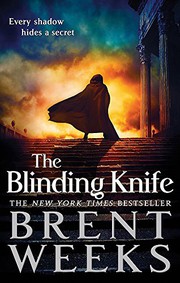
Second, and the book where the political and magical machinery starts paying out. It is the point at which Lightbringer becomes hard to put down.

Third, and the most tightly plotted volume of the five. Read it knowing the series is now committed to a much larger structure than Night Angel ever attempted.

The fourth book, and essentially a long set-up for the finale. It is the weakest link in the series and the one place a reader stalls, so treat it as a bridge.

The nine-hundred-page conclusion, and a genuinely divisive one — its theological turn is either the point of the whole series or a betrayal of it, depending on the reader. It closes this path on the argument worth having about Weeks.
Discussion
Keep reading
Paths that share books, cover the same subject, or open a related topic.