The Wayward Children Series Reading Order: Where to Start
Seanan McGuire's Wayward Children books are novellas — most are under two hundred pages — about children who fell through doors into other worlds and then got sent back. They alternate: one book pushes the story at Eleanor West's Home for Wayward Children forward, the next steps sideways to tell how one particular child found their door. Read them in publication order. The alternation is the design, and taking the prequels chronologically instead spoils the central reveal of the very first book, which is the one thing this series genuinely cannot survive.
Start Here: The First Three
BeginnerMeet the school and learn the rhythm of the series — one book forward, one book back — while the stakes are still small.
▸ Study plan for this stage
Pace: Two to three weeks. These are novellas of 176, 187 and 188 pages — each is comfortably one long evening, and most readers do a book in two sittings. Resist reading all three in a single weekend even though you can: the alternation between a forward book and a sideways one is easier to feel if you le
- The premise: children fall through doors into other worlds, live there, and are then sent back to a world that no longer fits them. Eleanor West's Home for Wayward Children is a school for the ones who came back and want to go again, and the adults around them think that is a delusion to be cured.
- The school classifies doors on axes — Nonsense against Logic, Wickedness against Virtue, with minor directions like Rhyme and Linearity. It is a real working system, not set dressing, and later books turn on which world a given child belongs to.
- Every Heart a Doorway is also a murder mystery, and the sequence in which its reveals land is why publication order is non-negotiable here. Reading the prequels first tells you the answer before the question is asked.
- Nancy, the narrator of the first book, is asexual, and the book says so plainly and repeatedly. Her world, the Halls of the Dead, is built around stillness, and the novella treats her orientation as a fact about her rather than as a problem to be resolved.
- Kade, introduced in the first book, is a trans boy. He was expelled from his fairyland for being a boy when the fairies had taken him as a girl, which is the series' clearest statement of its recurring idea: these worlds reject children for who they actually are, and the school is where they are bel
- Down Among the Sticks and Bones steps backwards to Jacqueline and Jillian, the twins from the first book, and is about parents who assign their children fixed roles before they can speak. The neglect is the horror, and the gothic world they find is the consequence rather than the cause.
- Beneath the Sugar Sky returns to forward motion and introduces Cora, a fat girl who was a mermaid, whose treatment by the world outside the door is handled directly. It also establishes that the series is willing to break its own rules about death.
- Every book centres a different protagonist. There is no series lead, and expecting one is the commonest reason readers find the middle books uneven — they are reading for Nancy in a book that is not about Nancy.
- What are the two main axes of world classification, and where would you place the Halls of the Dead, the Moors and Confection on them?
- Why does the school insist the children's worlds were real when every adult outside insists they were not — and what does Eleanor West personally have at stake in that?
- What does Every Heart a Doorway establish about Jack and Jill that Down Among the Sticks and Bones would spoil if read first?
- How does each of the three protagonists' world suit the specific child who found it? What does that say about how doors choose?
- What does Beneath the Sugar Sky change about the rules of death that the first book seemed to set?
- Start a one-page series index now: character, world, book, and where the world sits on the Nonsense–Logic and Wicked–Virtue compass. By book six there are a dozen protagonists and this page is what keeps them apart.
- After the first book, write down which door you think would have opened for you and where it sits on the compass. The series is explicitly built to prompt this, and later books get sharper when you have an answer of your own to test.
- Read the opening chapter of Down Among the Sticks and Bones as a piece about parenting rather than about fantasy. Note how many pages pass before either twin is allowed to want anything.
- Note the passages where the series states a character's identity outright — Nancy's asexuality, Kade's being trans — and notice how little plot machinery is spent justifying it. That flatness of statement is the series' house style and worth registering early.
Next up: You now know the school, the classification system and the alternating structure, which is exactly what the middle books rely on when they wander much further from Eleanor West's house.
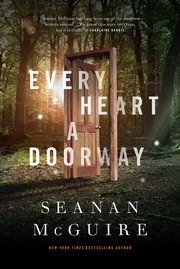
The only correct starting point, and non-negotiably so. Nancy arrives at a boarding school for children who have come back from portal worlds and cannot readjust, and then somebody starts killing students. It is a murder mystery, and reading the prequels first hands you the solution.
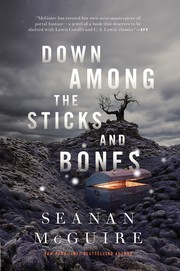
The first sideways step: how twin sisters Jack and Jill found the Moors. Most readers' favourite in the series, and the reason the chronological-order argument exists at all — but its ending only lands if you already know how their story turned out.

Back to the forward story, and a rescue quest into a nonsense world made of candy. Third, and the book that establishes the series can do broad comedy as well as gothic horror.
The Middle: The Series Finds Its Range
BeginnerFollow the alternation through its strongest stretch and see how far the door premise stretches.
▸ Study plan for this stage
Pace: Two to three weeks for three books of about 200 pages each. In an Absent Dream deserves the most room — it is the densest of the nine and the one most readers rate highest — so give it two or three sittings rather than one. Across the Green Grass Fields is a standalone and can be read whenever you l
- In an Absent Dream is Lundy's book, and it is about the Goblin Market, where every transaction must be settled at fair value and unpaid debts are collected from your body. It is the series' best sustained idea and its most argued-over ending.
- Fair value is a moral system, not a currency. The book uses it to ask what a childhood is worth and what a child can legitimately trade away, and the answer it reaches is genuinely bleak.
- Come Tumbling Down is the direct sequel to Down Among the Sticks and Bones and takes the ensemble back to the Moors. It is the one book in this stage that assumes a specific earlier volume rather than the series in general.
- The Moors run on lightning, mad science and a resident vampire, and the books use them to make the point that a world can be a good fit for a child without being safe.
- Across the Green Grass Fields is a clean standalone with a new protagonist, Regan, and the Hooflands. She is intersex, learns it as a child, and the betrayal that sends her through her door comes from a friend rather than from her family — a change of shape from the earlier books.
- Childhood trauma is the consistent engine across all three: a bargain that cannot be unmade, parents who made their daughters into instruments, a friendship that turns on a child for what her body is. The fantasy is the frame, not the subject.
- By this point the alternation has loosened. McGuire is no longer strictly one-forward-one-back, and the series is better read as a set of linked novellas around a shared house than as a serial.
- How does fair value work at the Goblin Market, and what specifically happens to a debtor who cannot pay?
- What is Lundy's central bargain, and would you have made it at her age? The book is engineered to make that question uncomfortable rather than rhetorical.
- Why do the Moors suit Jack and Jill so precisely, and what does that suggest about how the doors match children to worlds?
- What sends Regan through her door, and how does that differ from the domestic pressures that sent the earlier protagonists through theirs?
- Which of these three books works least well as a standalone, and what does it need you to have read first?
- Write out the rules of the Goblin Market as you understand them after finishing In an Absent Dream, then check them against the text. Readers routinely misremember the terms in ways that make the ending seem arbitrary when it is not.
- Add the three new worlds to your compass index and try placing the Goblin Market. It is the hardest one to site, and arguing with yourself about it is a real test of whether the classification system holds up.
- Reread the final ten pages of Down Among the Sticks and Bones immediately before starting Come Tumbling Down. The sequel opens at speed and assumes that ending is fresh.
- Pick the book in this stage that moved you least and write two sentences on why. Because each novella centres a different child, taste here is genuinely personal, and knowing which register leaves you cold tells you which later books to prioritise.
- Note where each book locates the harm: in a parent, in a bargain, in a friend, in the child's own choice. The pattern across the stage is the series' actual argument about how children get hurt.
Next up: The middle books push the door premise as far from the school as it goes, which sets up the later run where those wandering threads start being pulled back toward Eleanor West's house and toward its institutional opposite.

Lundy's story, in a world of bargains where every kindness incurs a literal debt. The most tightly constructed book in the run and the one that best justifies the novella length.

The direct sequel to Down Among the Sticks and Bones, returning to the Moors with the school's students in tow. Read it after that book, obviously, but also after Beneath the Sugar Sky, which assembles the party it uses.

A deliberate standalone with an entirely new protagonist and no connection to the school — a girl, a herd of centaurs, and a world that will not let her stay. If you want to sample the series without committing, this is the one book that works cold.
The Later Books
IntermediateFinish the run so far, as the sideways stories start feeding back into the main plot.
▸ Study plan for this stage
Pace: Two weeks. These three are the shortest in the series — 184, 160 and 160 pages — and Lost in the Moment and Found flows directly into Mislaid in Parts Half-Known, so plan to read that pair back to back. Where the Drowned Girls Go stands slightly apart and is best read first and on its own.
- Where the Drowned Girls Go introduces the Whitethorn Institute, the anti-Eleanor: a school that agrees with the parents, treats the doors as pathology, and sets out to make the children forget. It is the closest the series comes to naming its villain.
- Cora carries that book, and it follows directly from what happened to her in Beneath the Sugar Sky. Her decision to choose Whitethorn deliberately is only legible if you remember that earlier book.
- Lost in the Moment and Found opens with an author's note stating plainly that the book contains a stepfather grooming a child, and that no sexual abuse occurs on the page. Take the note at face value; it is accurate, and it is there because the opening chapters are the most distressing writing in th
- Antsy's door leads to a shop where everything lost eventually arrives, and its price is time — she pays in years of her own life without understanding the exchange rate. It is the same bargain logic as the Goblin Market, applied to a much younger child.
- Mislaid in Parts Half-Known picks Antsy up at the school and turns into the closest thing the series has to an ensemble adventure, gathering characters from across the run. It rewards the index you have been keeping.
- The later books feed sideways stories back into the main plot: Whitethorn, Antsy's ability to find doors, and the school's position in a world that wants these children fixed all converge here.
- The series is ongoing. This stage takes you to the end of the run as it currently stands rather than to a conclusion, and the last book ends on continuation rather than closure.
- What does the Whitethorn Institute actually offer its students, and why would a child choose it over Eleanor West's?
- Why does Cora go, and what does her reason say about the cost of the doors rather than their appeal?
- What is the price of Antsy's shop, and at what point does she understand it? What does the gap between those two moments do to the reader?
- How does Antsy's ability change what is possible for the other students, and why does that make her dangerous to the adults?
- Which threads are left deliberately open at the end of Mislaid in Parts Half-Known, and which older books do they reach back into?
- Read the author's note at the front of Lost in the Moment and Found before deciding whether to read the book, and decide deliberately. It is the one volume in the series where skipping is a reasonable choice, and it is written to let you make that choice informed.
- Set the Whitethorn Institute against Eleanor West's school point by point — admissions, therapy, what counts as recovery. The two institutions are constructed as a direct argument and the comparison is where the later books do their thinking.
- Use your compass index while reading Mislaid in Parts Half-Known and mark every returning character as they appear. The book assumes you know all nine volumes and does not reintroduce anyone.
- Having finished the run, rank the nine novellas and write one line on each. Because every book centres a different protagonist, your ranking is a fairly precise description of what you actually want from fantasy — and it will tell you which of the forthcoming volumes to pick up.
Next up: This completes the series as published; from here the only continuation is the next novella McGuire writes, and you have the school, the compass and every returning protagonist in place to read it the week it lands.

Cora transfers to the Whitethorn Institute, the school's cruel opposite, which teaches children that their doors were delusions. The darkest entry and the one that finally examines the premise of Eleanor West's from outside.

Antsy's story, and the one to approach with care — it opens with a grooming situation handled directly, and McGuire includes a note about it. Read it after Where the Drowned Girls Go, which introduces her.

Picks up immediately from Antsy's book and pulls several long-running threads together. The most recent, and the right place to stop until the next one — the series is ongoing rather than finished.
Discussion
Keep reading
Paths that share books, cover the same subject, or open a related topic.