The Legend of Drizzt Reading Order: Where to Start
Salvatore wrote Drizzt Do'Urden as a supporting character in an Icewind Dale novel, then went back and gave him an origin story that turned out to be far better than the book that introduced him. That is why the standard advice is chronological rather than publication order: begin with the Dark Elf Trilogy, where a drow renounces the only society he has known, and only then meet him as the ranger he becomes.
Start here: the Dark Elf Trilogy
BeginnerUnderstand who Drizzt is and what he gave up, in the trilogy that is both the chronological beginning and the best writing in the series.
▸ Study plan for this stage
Pace: 3-4 weeks for the three. These are short, fast tie-in novels — 300-330 pages each of very readable action prose — and a book a week is a normal pace. Read them in immediate succession; Sojourn ends exactly where the next stage begins. One thing to be clear about up front: this is CHRONOLOGICAL order
- Menzoberranzan as the series' best piece of invention: a matriarchal drow theocracy where assassinating a rival house is an accepted route to advancement
- Lolth's religion and the Academy — the institutional machinery that makes drow cruelty ordinary rather than exceptional
- Drizzt's central conflict is not good versus evil but whether an individual can reject the only morality he has been taught
- Zaknafein, his father and weapons master, and the relationship that supplies the emotional weight of the whole thirty-book series
- Guenhwyvar, the panther figurine, introduced here and used consistently for the next three decades of books
- Exile as the loneliest stretch of the series — years in the Underdark with almost no dialogue, which is where the character stops merely reacting to his upbringing
- Sojourn's argument that reaching the surface solves nothing: being visibly a dark elf is a second trap, and the prejudice is written straight
- Salvatore's fight choreography, which is the series' actual craft achievement — combat written with real spatial clarity
- What does Menzoberranzan reward, and how does that shape every drow character you meet?
- What does Zaknafein believe, and why can he not act on it?
- At what point does Drizzt make an irreversible choice, and what does it cost him immediately?
- What changes in Drizzt during the years alone in Exile?
- In Sojourn, what does the surface world do to him that Menzoberranzan did not?
- Why does the origin trilogy work better as an opening than as a prequel read later?
- Note how each fight is staged — footing, terrain, distance. Reading Salvatore's combat closely is most of the pleasure of the series.
- Track what Drizzt believes at the start of each book in one sentence. The trilogy is a three-step argument.
- Do not start with The Crystal Shard even though it was published first; the origin trilogy is both better and set earlier.
- Keep a note of drow names and houses — the Legacy of the Drow arc, four stages from here, assumes you remember them.
Next up: Sojourn leaves Drizzt on the surface with nowhere to belong, which is precisely the moment the first-published trilogy picks him up and gives him a family.
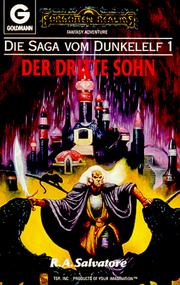
Menzoberranzan, the drow city, rendered as a genuinely horrifying matriarchal theocracy where family murder is a career path. Written after the Icewind Dale books but set first, and almost everyone agrees it is the right place to start.
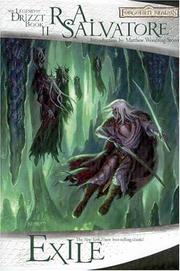
Drizzt alone in the Underdark with the panther Guenhwyvar, hunted by his own house. The middle book of the origin and where the character stops being a reaction to his upbringing and becomes himself.
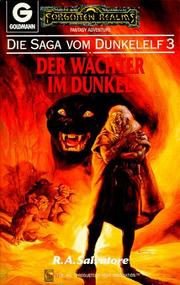
Reaching the surface and learning that being visibly a dark elf is its own trap. It ends exactly where The Crystal Shard begins, which is what makes the chronological order work so cleanly.
The Icewind Dale Trilogy
BeginnerRead the books Salvatore actually published first, and meet the companions who define the next twenty years of stories.
▸ Study plan for this stage
Pace: 3-4 weeks for the three. Same length and pace as the last stage. Set expectations for one thing: these are earlier work and the prose is rougher than the Dark Elf Trilogy, so reading in chronological order means the quality dips slightly here before recovering. That is a known cost of the chronologi
- The Companions of the Hall assembling — Bruenor, Wulfgar, Regis and Catti-brie — who carry the next twenty years of books
- The Crystal Shard, Crenshinibon, as an artefact with its own will, which returns as a plot thread much later in the sequence
- Icewind Dale itself: barbarian tribes, Ten-Towns, and a frontier setting that gives the early books their texture
- Streams of Silver and the quest for Mithral Hall, which sets up the dwarven politics running through the rest of the series
- Bruenor as the series' second-best character and the one whose arc most resembles a real life
- Artemis Entreri's first full appearance in The Halfling's Gem — the assassin built as Drizzt's mirror, and the series' most durable antagonist
- Wulfgar's transformation from captive to hero, which is set up here to be dismantled several arcs later
- How these books read differently once you already know what Drizzt gave up to reach the surface
- What does each companion want, and which of them is not there by choice?
- How does Crenshinibon corrupt the people who hold it, and what rules does it follow?
- What is Mithral Hall and why does Bruenor need it rather than merely want it?
- What makes Entreri an effective mirror for Drizzt rather than just a rival swordsman?
- Where does the rougher early prose show most, and does it matter?
- How does knowing Homeland change your reading of how others react to Drizzt here?
- Write one line per companion on why they follow Bruenor. The group's cohesion is the series' engine and it is stated early.
- Track Wulfgar's arc closely; it is set up here for a payoff four books later that most readers do not see coming.
- Note the first Drizzt-versus-Entreri fight in detail and compare it with their later meetings.
- If the prose feels thinner than the last stage, keep going — it improves markedly in the next arc.
Next up: With a home and a family established, the next arc brings Menzoberranzan to the surface after him, which is exactly what the origin trilogy was written to make possible.
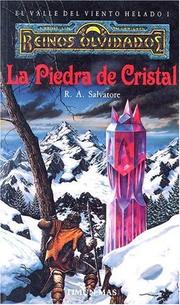
The first Drizzt novel ever published, and the one where Bruenor, Wulfgar, Regis and Catti-brie arrive. The prose is rougher than the Dark Elf Trilogy because it is earlier work, so expect a small step down in quality rather than up.
The quest to reclaim Mithral Hall, and the book where the group hardens into the fellowship the series runs on.
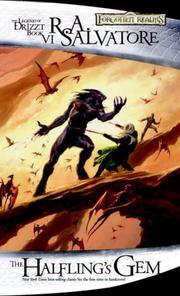
A chase to Calimport after Regis, and the first full appearance of Artemis Entreri, the assassin who becomes Drizzt's permanent counterweight.
Legacy of the Drow
IntermediateFollow the consequences of Homeland catching up with Drizzt, in the four-book arc most readers rate as the series' peak.
▸ Study plan for this stage
Pace: 4-6 weeks for the four. Around 300-350 pages each, still fast. This is the arc most long-time readers rate as the series' peak, and it is where the chronological order pays its dividend: the drow assassins and house politics only carry weight because you have walked through Menzoberranzan in Homelan
- Menzoberranzan sending assassins to Mithral Hall — Drizzt's past arriving as an organised military problem rather than a personal ghost
- The Legacy as the payoff for the entire Dark Elf Trilogy, and the clearest justification for the reading order this path uses
- Starless Night deliberately inverting Exile: Drizzt returns to the Underdark by choice, into the city he fled
- Siege of Darkness as the largest-scale battle Salvatore had attempted, and the resolution of the drow-politics thread that started in book one
- Lolth's silence and the Time of Troubles material, which is the Forgotten Realms setting intruding on the character's story
- Catti-brie and Drizzt's relationship developing across the arc, and the series slowly deciding what it is
- Passage to Dawn closing the arc with a sea voyage and a demon reckoning, and resetting the cast
- This is a genuine stopping point: ten books, a complete story from Menzoberranzan to closure
- Who orders the campaign against Drizzt, and what do they gain from it?
- How does Starless Night use the Underdark differently from Exile?
- What does the resolution in Siege of Darkness settle about Menzoberranzan, and what does it leave open?
- What does Passage to Dawn reset, and why does the series need a reset at this point?
- Which characters have changed most across the ten books so far?
- If you stopped here, would the story feel finished?
- Go back to your drow house notes from Homeland before starting The Legacy; you will use them.
- Compare the Underdark chapters of Starless Night with the equivalent stretches of Exile side by side.
- After Passage to Dawn, decide deliberately whether to continue. Ten books is a complete and satisfying arc.
- List what each companion has lost since The Crystal Shard.
Next up: With the drow threat settled and the cast reset, the next arc does something unusual for the series: it takes the fellowship apart.
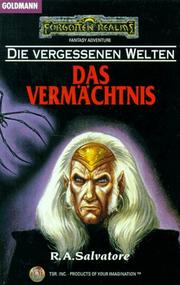
Menzoberranzan sends its assassins to Mithral Hall. The whole reason the Dark Elf Trilogy came first: this arc only pays if you have seen the city it draws on.
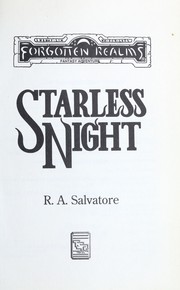
Drizzt returns to the Underdark voluntarily to end the threat at its source, which inverts Exile deliberately.
The largest-scale battle Salvatore had written to that point, and the culmination of the drow-politics thread.
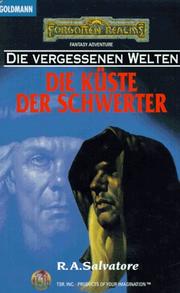
A sea voyage and a demon reckoning that closes the arc and resets the cast. A natural stopping point if you want a complete story in ten books.
Paths of Darkness
IntermediateWatch Salvatore break the fellowship apart and write the companions as separate people rather than a party.
▸ Study plan for this stage
Pace: 3-4 weeks for the three. Same length and reading speed as before, but the pacing inside the books is different — less questing, more character, and The Spine of the World in particular has very little action by the series' standards. Read the three together; Sea of Swords exists mainly to reassemble
- The Silent Blade finally disposing of Crenshinibon, closing a thread opened in The Crystal Shard fourteen books earlier
- Entreri and Jarlaxle in Calimport, and the beginning of the series' long fascination with its own antagonists as protagonists
- The Spine of the World is almost entirely Wulfgar's book, about post-captivity trauma, alcohol and failure rather than heroics
- That volume is the strongest argument for reading this arc rather than skipping it — the series is rarely willing to let a hero be this diminished
- The fellowship deliberately broken up so the companions can be written as separate people with incompatible needs
- Salvatore shifting from quest plots to character plots, which is what makes the later books read differently from the early ones
- Sea of Swords pulling the scattered cast back together and handing off directly to the orc war
- Jarlaxle emerging as the series' most interesting recurring character and the seed of several later spin-off series
- What is Wulfgar's condition in The Spine of the World, and does the book let him recover?
- Why does Salvatore break the party up at this point in the series?
- What do Entreri and Jarlaxle want from each other, and is it friendship?
- How does destroying Crenshinibon change the stakes of the later books?
- Does the shift from quest to character strengthen the series or slow it?
- Which companion has the least satisfying arc across these three, and why?
- Read The Spine of the World without skimming the non-action chapters; they are the reason it is here.
- Compare Wulfgar in The Crystal Shard with Wulfgar here, scene for scene.
- Track Jarlaxle's stated motives against his actions across the three books.
- Note where the series stops being about Drizzt for chapters at a time.
Next up: The companions come back together just in time for the largest war the series has staged, which is also the last place this path can honestly stop.
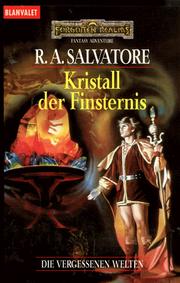
Destroying the Crystal Shard artefact and dealing with Entreri and Jarlaxle in Calimport. The tone shifts noticeably here toward character over quest.
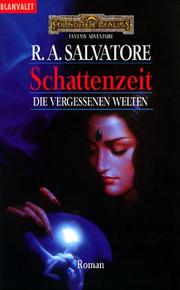
Almost entirely Wulfgar's book, about trauma and drinking rather than heroics. Unusual for the series and the reason this arc is worth reading rather than skipping.
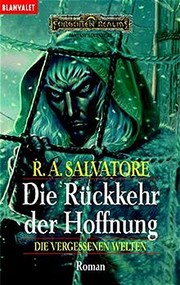
Pulls the scattered companions back together and hands the story to the next arc.
The Hunter's Blades Trilogy, and where to stop
IntermediateFinish at the last natural resting point before the series stretches into another twenty volumes.
▸ Study plan for this stage
Pace: 3-4 weeks for the three, at the same pace as the rest. Read the whole trilogy together — it is one continuous war. This is the end of the path and the reason matters: sixteen books gets you a complete, coherent story from Menzoberranzan to the Kingdom of Many-Arrows. Everything past The Two Swords r
- Obould Many-Arrows and an orc horde with an actual political strategy rather than a hunger for destruction
- Giving the enemy a coherent point of view is the freshest idea in the later books and the trilogy's real achievement
- The Hunter: Drizzt's dissociated combat persona, and The Lone Drow as the closest the series comes to questioning its own protagonist
- Grief as the driver of the middle book — Drizzt fighting alone because he believes his friends are dead
- The dwarven war of the North, fought as a campaign with logistics and terrain rather than as a series of duels
- The Kingdom of Many-Arrows left standing on the map, which is a genuinely unusual outcome for a fantasy series' villain
- Sixteen books as a natural complete arc: origin, fellowship, drow reckoning, dissolution, and a war that changes the world
- What lies past this point, so the decision to continue is made with open eyes rather than by momentum
- What does Obould actually want, and how does the trilogy make that a problem the heroes cannot simply fight?
- What is the Hunter, and what does the series say about Drizzt by giving him one?
- How does the resolution of the orc war differ from how the earlier arcs ended their villains?
- Which of the companions is most changed by the war?
- Reading sixteen books, what has the series been about besides swordfights?
- Do you want to continue past this point, and what would you be committing to?
- Read Drizzt's journal entries that open each chapter across the trilogy as a single document; they are the character's interior life.
- After The Two Swords, write a paragraph summarising the sixteen books. If it feels complete, stop here.
- If you do continue, look up the reading order of the post-2007 series before buying — the continuity is genuinely tangled and the publication order is not the chronological one.
- Compare the first fight in Homeland with the last fight in The Two Swords.
Next up: This is the end of the path: sixteen books, a complete arc, and a clear-eyed decision point about the twenty-plus volumes that follow.

An orc horde with an actual political strategy besieges the North. Salvatore giving the enemy a point of view is the freshest idea in the later books.

Drizzt fighting alone as the Hunter, the closest the series comes to interrogating its own protagonist.
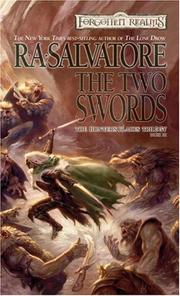
Resolves the orc war and leaves the Kingdom of Many-Arrows standing on the map. Stop here unless you are committed: everything after this runs to another twenty-plus novels across several relaunched series, and no path this length can honestly cover it.
Discussion
Keep reading
Paths that share books, cover the same subject, or open a related topic.